Más extensiones y acordes sus
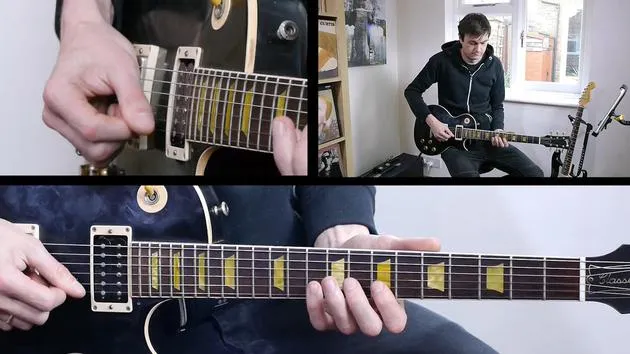
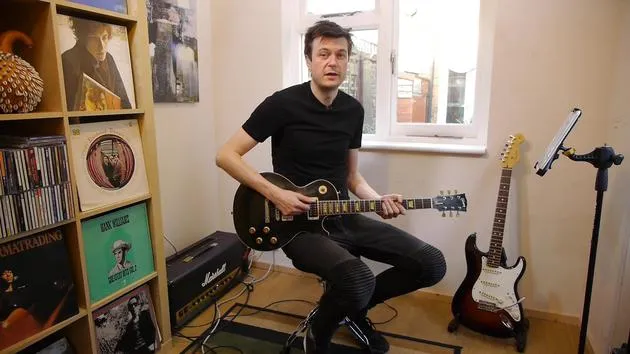
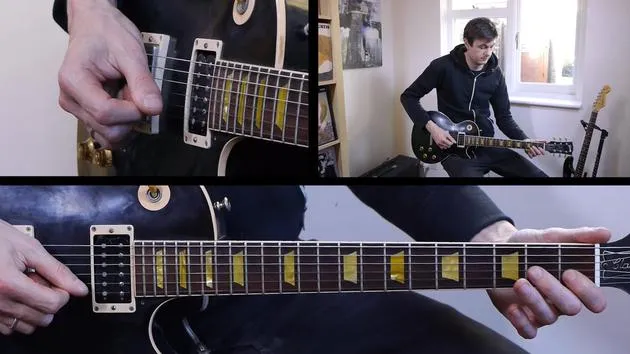
James desmitifica los nombres de acordes extendidos como novenas, oncenas y trecenas, junto con los acordes sus, y muestra cómo incorporar estos colores a tus improvisaciones de Grade 6.
Qué incluye el curso
46 lecciones (3h 57m) · 1 gratis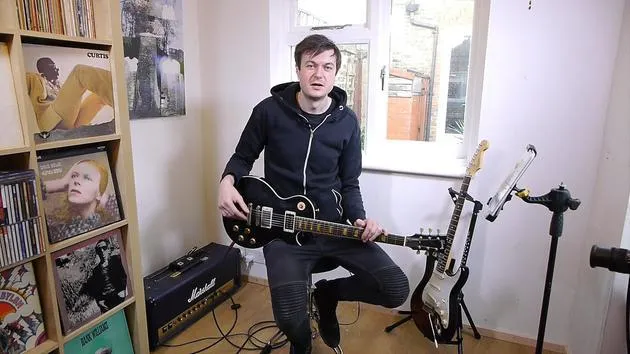
01. Introducción a los enfoques de la improvisación
1:00
02. Adornar una melodía
5:36
03. Reto: envía tu melodía
0:26
04. Acordes de séptima
6:38
05. Componer tu solo
8:53
06. Más extensiones y acordes sus
Estás aquí4:19
07. Comping en dos estilos musicales diferentes
8:36
08. Combinar comping rítmico y melódico
4:24
09. Improvisación rítmica y comping
9:55
10. Rasgueo avanzado y adornos
5:40
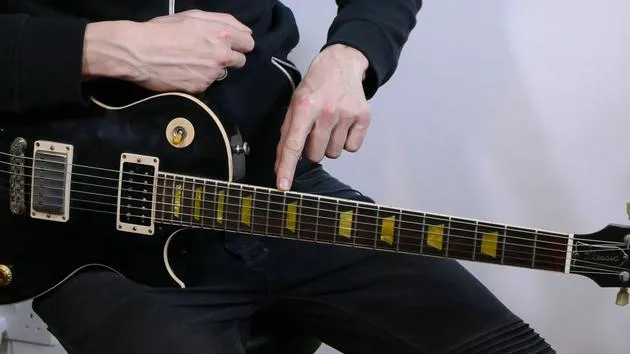
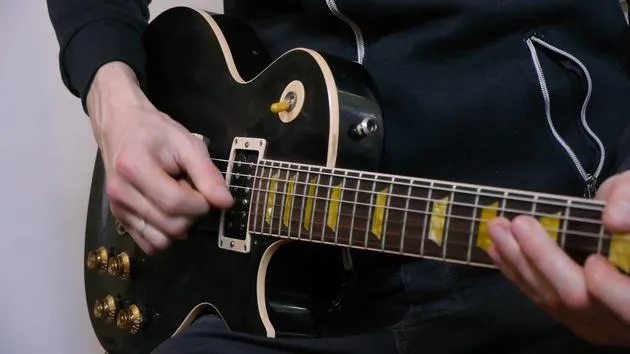
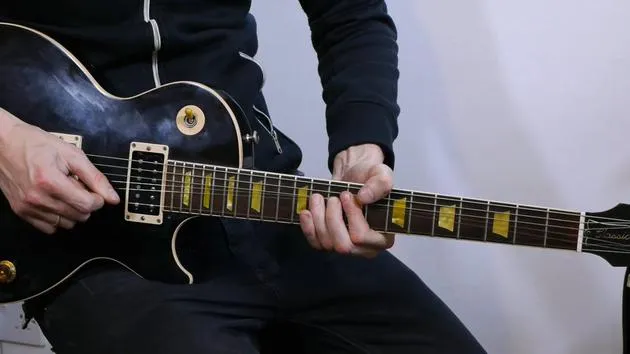
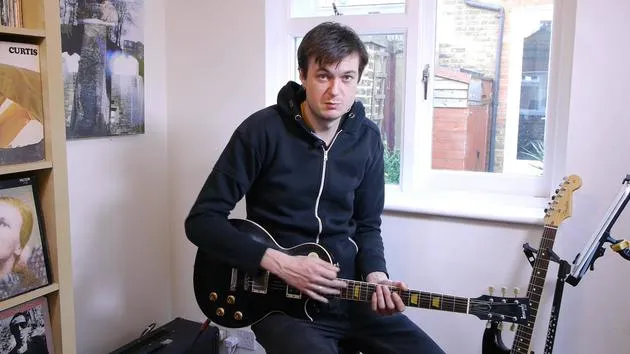
Transcripción de la lección
Understanding Chord Extensions Beyond the Seventh
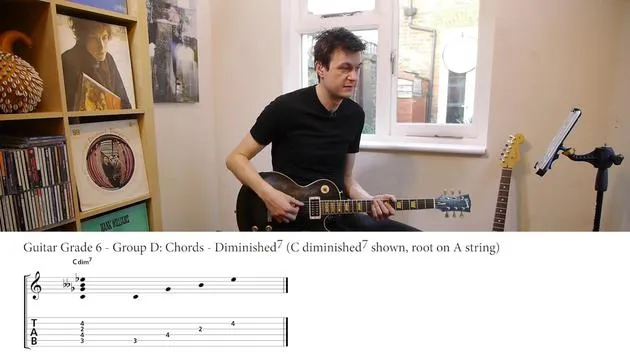
Okay, so we've talked briefly about the types of seventh chords and how we can incorporate that seventh degree into our improvisations.
Chord Extensions
What I wanted to discuss now is other extensions beyond the seventh. You may have come across these in charts for music that you've looked at or in the rock school books above the notation, just to let you know what chords are going on in the background.
You might have seen things like:
- G minor 9
- F11
- E7 sharp 9
- F13
These numbers are nothing to be scared of at all. They reference degrees of the scale that have been added to that chord to extend it, giving it a certain characteristic or color.
Example: A Minor 9
For example, if we take the A minor 9:
- To find the ninth degree, we play through our natural minor scale up to the ninth degree:
- 1, 2, 3, 4, 5, 6, 7, 8, 9
- We arrive at the B note.
This means that the ninth degree of our A minor scale is a B. We can then add this note on top of our A minor chord or an A minor 7 chord.
This creates a great-sounding chord. Knowing that this note is featured in the chord allows you to emphasize it in your improvisation.
You could do something simple, like:
- Sliding into that note
- Starting off your phrase with that extended note of the chord
It might create a discordant tone, which isn't necessarily a bad thing. You can use that tension and resolve it to a stronger chord tone later in your phrase.
Alterations of the Ninth
The same concept applies to any of the other chords we talked about. They can be sharpened or flattened. For example, with E7 sharp 9:
- You would go through and sharpen the ninth by one semitone.
- If it's a flat nine, you'll flatten the ninth by one semitone.
Suspended Chords
The only other type of chord I want to briefly touch on is suspended chords.
- The word "suspended" means that we've taken the third out of the triad.
For instance, let's consider D sus 2:
- A D major chord usually has a root, a third, and a fifth in it.
- A D sus 2 replaces the third with the second degree of the scale.
To find the second degree:
- Start on D and go up a tone.
- You get to E, which is the second degree.
So, in our D major chord, we replace the third (F sharp) with E (the second), creating that chord sound.
Sus chords have a brilliant sound. Because we've replaced the third, they are neither major nor minor, giving them that slightly mysterious vibe.
Practical Application
These concepts are certainly something to consider in your improvisations or compositions. Be mindful of these extensions or alterations in the chords as you play, as they can enhance your lead playing.
With that, we've discussed a lot of different ideas for approaching improvisation. If you want more stylistically specific examples, check out the performance analysis of the other tutors in their performance pieces.
Wherever there's a development section, there will be great ideas on how to approach those developments and improvisations.
So good luck with that! Have fun and enjoy it, it's a fantastic skill to develop. Although it can be challenging, you'll have loads of fun along the way, I'm sure.
Best of luck with it all!
46 lecciones
3h 57m de lecciones en vídeo estructuradas
Funciones de vídeo avanzadas
Ralentiza, repite un pasaje, sigue la partitura
Móvil, tablet y ordenador
Practica donde quieras
Garantía de satisfacción 100%
30 días de garantía de devolución