



Primeros pasos en la improvisación
Qué incluye el curso
38 lecciones (2h 32m) · 1 gratis
01. Introducción a los enfoques de la improvisación
1:00
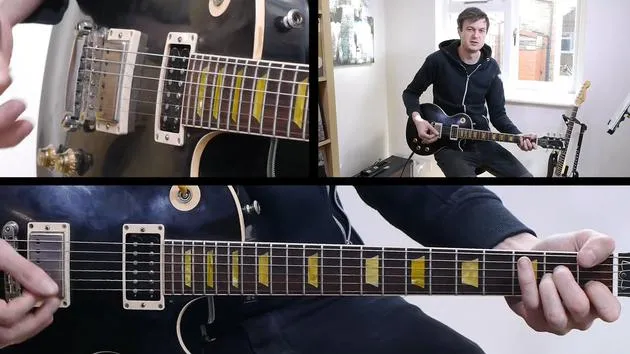
02. Primeros pasos en la improvisación
Estás aquí9:22
03. Improvisar usando notas del acorde
10:18
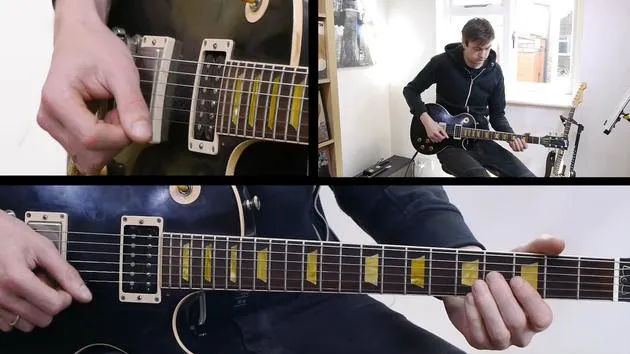
04. Tarea: Encontrar las notas del acorde
4:05
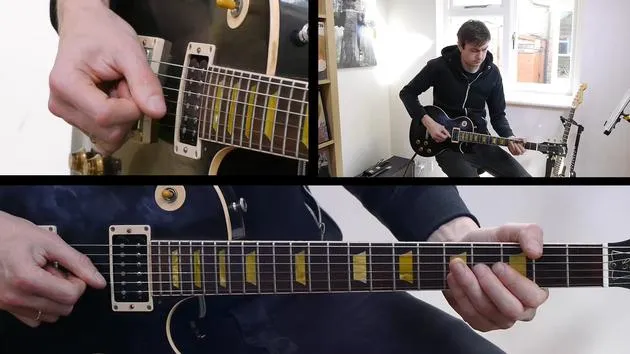
05. Añadir interés rítmico a tus solos
4:11
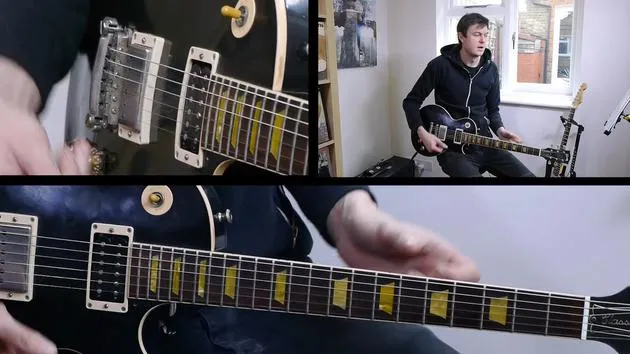
06. Tarea: Improvisar sobre un cambio de acorde
2:52
07. Reto: Envía tu improvisación
0:24
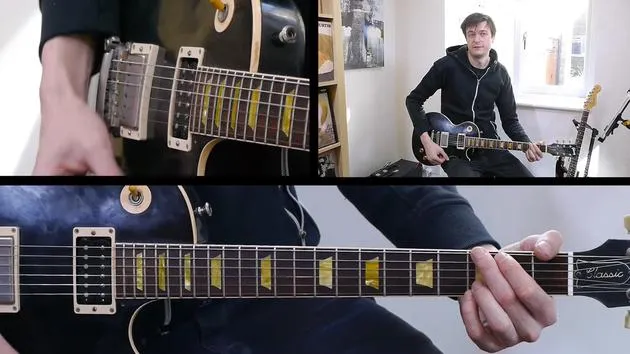
08. Improvisación rítmica y comping
9:55

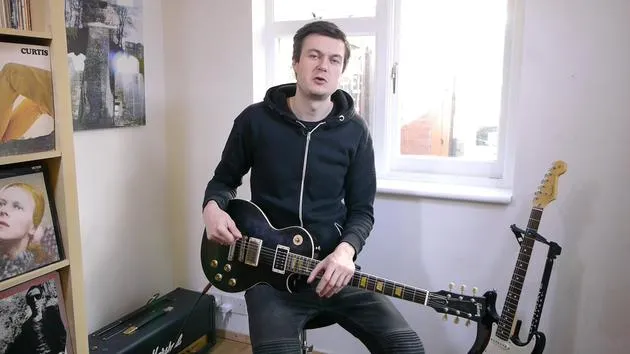
Transcripción de la lección
Improvisation Techniques for Guitar
Introduction
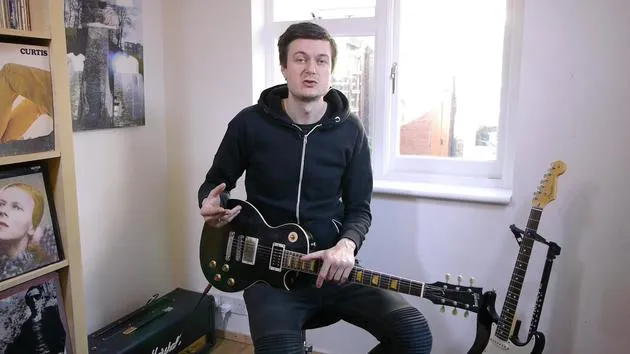
Hello, guys! Today, we're going to discuss improvisation and various methods of approaching it. Improvisation is the creativity and freedom to play whatever you're thinking in your head onto your instrument.
But remember, it doesn't just start and magically happen that way. There are lots of tools available to help us translate our thoughts onto the fretboard.
If you are taking the Rock School syllabus, this topic is particularly relevant for you, especially since there is an exam section dedicated to improvisation.
Let's dive in!
Understanding Chord Tones
What Are Chord Tones?
The first approach we'll examine is chord tones. If the term is new to you, chord tones are the notes that are featured in the chord we're playing over.
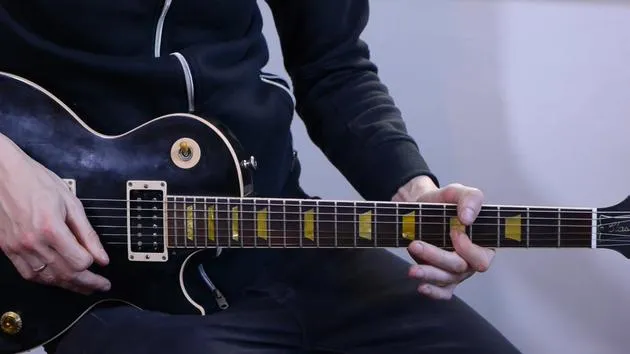
For example, when I play a C major chord, there are three chord tones:
- C
- E
- G
You might think you're playing five strings, but you're only playing three different notes: C, E, and G.
Structure of a Major Chord
In any major chord, the formula for constructing that chord includes:
- Root Note
- Third
- Fifth
These intervals come from a scale that you should be familiar with. If not, check your technical exercises in the Rock School books.
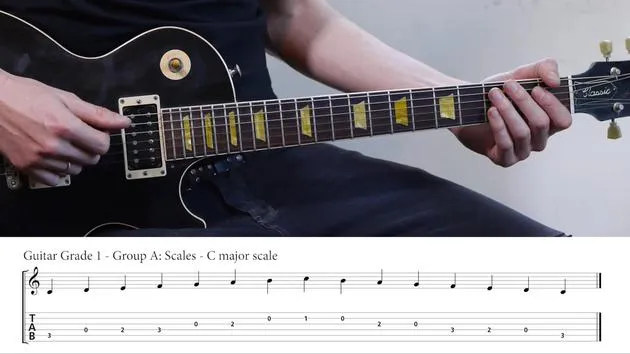
C Major Scale
Let's go through the C major scale:
- C (1)
- D (2)
- E (3)
- F (4)
- G (5)
- A (6)
- B (7)
When playing over a C major chord, the best notes to hit are the chord tones: C, E, and G.
Demonstration
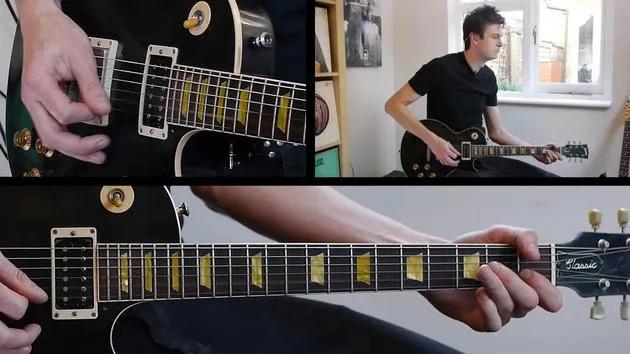
Let's demonstrate this over a C major chord. I'll set up a little loop on a C chord.
- C Major Chord Loop
- Play through the C major scale.
You should notice that when hitting the chord tones, they sound like they belong over that chord, while the other notes can be treated as passing tones toward the target notes.
Practicing with Different Keys
A great exercise to start with is identifying the chord tones from a major chord. Don't limit yourself to C! Try it in different keys:
- D
- G
Work through the major scale in the key you choose, finding notes 1, 3, and 5 ? your strong chord tones.
Understanding Minor Chords
Before moving on to chord progressions, let's quickly discuss minor chords.
Key Differences
There is just one note difference between a major chord and a minor chord:
- For A major: Root - Third - Fifth
- For A minor: Root - Flattened Third - Fifth
The third in the middle changes the sound from major to minor.
For an A minor chord, the three chord tones are:
- A (root)
- C (flattened third)
- E (fifth)
Demonstration: A Minor Chord
Let's play the chord tones for A minor:
- Root
- Flattened Third
- Fifth
Now, let's listen to the A natural minor scale. You'll hear that the chord tones sound strong, while there will be passing notes that introduce some tension on the way to these chord tones.
Creating Simple Phrases
You can create simple phrases using one non-chord tone and two chord tones. For example, play a B note and then resolve it to a C (a chord tone of our A minor chord).
Conclusion
When you're starting with improvisation, the variety of options can be overwhelming. Try restricting yourself with:
- Note restrictions
- Technical limitations
- Physical areas of the neck
By applying these restrictions, you can spark creativity and develop your improvisational skills effectively!
38 lecciones
2h 32m de lecciones en vídeo estructuradas
Funciones de vídeo avanzadas
Ralentiza, repite un pasaje, sigue la partitura
Móvil, tablet y ordenador
Practica donde quieras
Garantía de satisfacción 100%
30 días de garantía de devolución







