



I Got You (I Feel Good) – James Brown (Análisis)
Pete Riley desglosa la parte de batería de 'I Got You (I Feel Good)' de James Brown, trabajando sus patrones de dos compases y el cambio entre cross-stick y caja abierta.

Qué incluye el curso
29 lecciones (2h 46m) · 1 gratis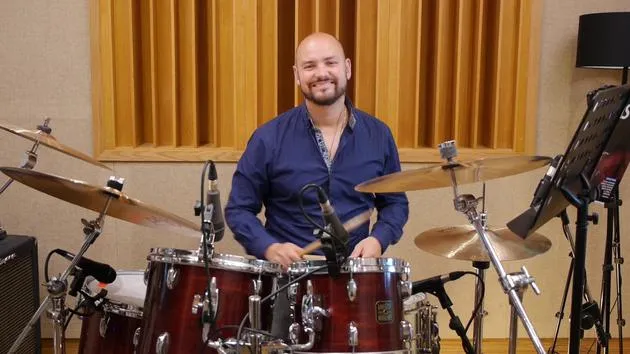
01. Chameleon - Herbie Hancock
2:55
02. Superstition – Stevie Wonder
3:00
03. Dutch Flowerz – Skream
2:42
04. Ziggy Stardust – David Bowie
2:46
05. Rock The Bells – LL Cool J
3:04
06. I Got You (I Feel Good) – James Brown
2:51
07. Mohair Mountain
3:01
08. Pop It In The Top
Lección gratis2:59
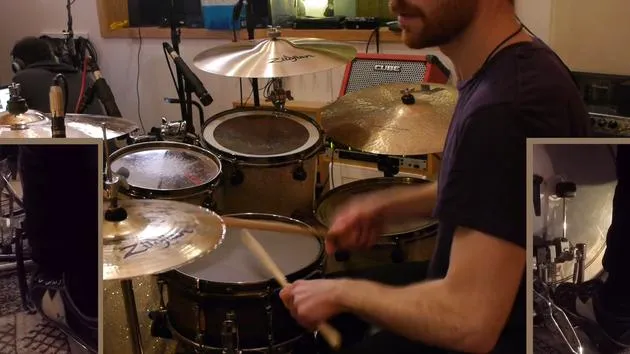
09. Mind Sweeper
2:35
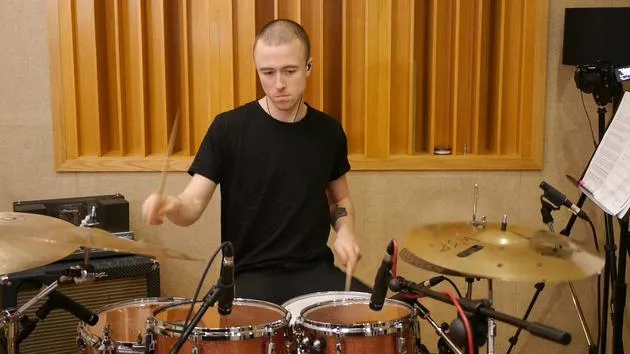
10. Favela
2:41
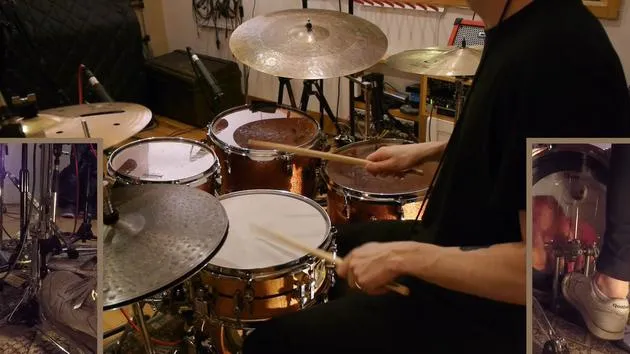
11. Space Future
2:47
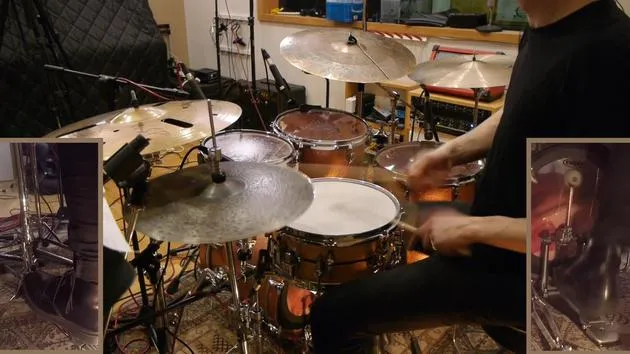
12. You Can Call Miguel
2:30
01. Ziggy Stardust – David Bowie (Análisis)
9:38
02. Dutch Flowerz – Skream (Análisis)
10:44
03. Superstition – Stevie Wonder (Análisis)
11:12
04. Chameleon - Herbie Hancock (análisis)
11:20
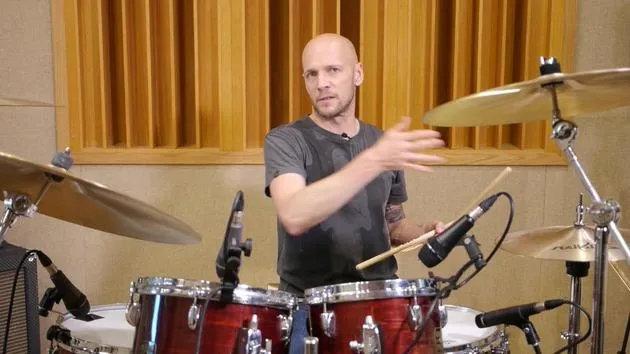
05. I Got You (I Feel Good) – James Brown (Análisis)
Estás aquí9:37
06. Rock The Bells – LL Cool J (Análisis)
12:16
07. Mohair Mountain (Análisis)
12:25
08. Pop It In The Top (Análisis)
7:14
09. Mindsweeper
10:40
10. Favela (análisis)
6:42
11. Space Future (análisis)
4:50
12. You Can Call Miguel (Análisis)
8:24
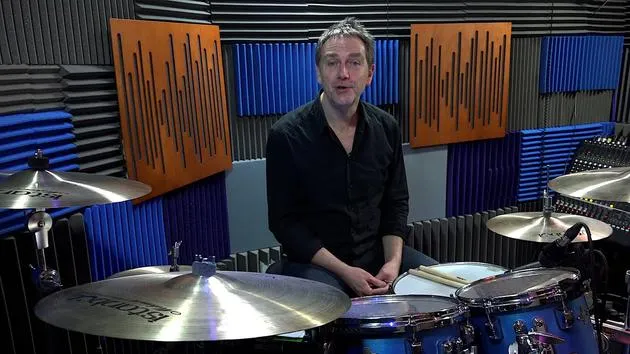

Transcripción de la lección
Music Lesson: I Got You (I Feel Good) by James Brown
Introduction
Here we're looking at James Brown's soul funk classic, I Got You (I Feel Good). The piece features several distinctive patterns, often a two-bar pattern, and moves between acrostic sound and an open snare sound. There are also syncopated figures to contend with as well.
Starting Patterns
We'll kick things off with the pattern that we hear at the top of the piece where we play acrostic sound. I tend to favor playing the stick the other way round.
When playing acrostic, it gives a thicker sound. Transitioning to the open snare, I would play the stick this way around.
"Of course, it's perfectly fine to do it this way, but if I quickly demonstrate the difference in sound, you'll hear that this way around gives a much stronger acrostic sound versus this."
Two-Bar Pattern
The first two-bar pattern that runs throughout all of the verses includes:
- Eighth notes on the hi-hat
- Cross stick on 2 and 4
- Two-bar bass drum pattern
At the top of the piece, it's preceded by a single bass drum note landing on beat two of what we could think of as a pickup bar. Here's how that sounds:
- 1, 2, 3, 4, 1, 2 on the bass drum.
So within that pattern, there are several components at play:
- Keep the eighth notes on the hi-hat as straight as possible. I'm not emphasizing a quarter note but rather just keeping them even.
Additionally, we have an open hi-hat that precedes each backbeat, which is down to closing the hi-hat in conjunction with the cross stick. This approach is prevalent in many of James Brown's tracks.
"This just precedes each backbeat and gives the groove that classic quality found in so many funk tracks."
From a technical standpoint, I generally play that with my heel down on the hi-hat, opening and moving the foot to achieve the open sound.
Ending the Verse
As I ended that pattern on the last eighth note of the bar, that's how we conclude each of the verses. We don't hit the downbeat that comes after it. Instead, we end the pattern on that last eighth note, leading us into the syncopated four-bar figure, which I'll demonstrate now. This syncopated figure appears at the end of each verse.
Play Tips:
- Ideally, when you're playing that syncopated figure, feel the quarter notes going by and be aware of where the downbeat of each bar is.
"Nothing lands on the downbeat, so you have to feel the 1, 2, 3, 4 to maintain your place."
The second time we hear that figure includes a beat four played on the last beat of the four-bar sequence.
Transition to the Bridge
Next, we transition into the bridge where we play quarter notes on the bell, preferably using the shoulder of the stick for a thicker sound instead of the tip of the stick, which will sound thinner.
We'll maintain the cross stick sound on the snare until the fourth bar of the bridge. Here are the components for the first two bars of the bridge:
- Two-bar bass drum pattern
- Ending with a snare drum fill of 16th notes into 2 eighth notes.
As for playing style, you can choose to stay in your right hand or play the last note with your left.
"Either way, that transition point is from the cross stick sound to the open snare."
Dynamics and Hi-Hats
At this point, we head over to the hi-hats with an increase in dynamics to forte, so be just a touch looser on the hi-hats compared to the verses.
Again, we include that open snare and an additional snare drum note at the end of beat two. Here's a slower playthrough of those last two bars.
Repeating Sections
At the end of the bridge, we head back and play the same sequence again, running through the verse and the bridge once more. We reach the fourth and fifth verses with the same two-bar pattern from the previous verses until we reach the outro.
Syncopated Figure Extension
The outro is based around the same syncopated four-bar figure seen earlier, but the final time it gets extended even further. Therefore, it's crucial to retain your place in terms of where the quarter note is.
I'll take it from the end of the verse and step the quarter note time with the hi-hat:
"Listen to how the time works in conjunction with these snare hits."
From the last two bars of time into the syncopated figure at the very end of the piece, watch out for the 24-bar that precedes the final crash.
Once again, it's essential to feel the quarter note and maintain awareness of where the downbeat of each bar is.
Conclusion
In essence, you'll want to feel the pulse, thinking of 1, 2, 3, 4.
To conclude, this is a really popular piece of music, one that's worth knowing and often gets played. Hopefully, with this analysis, you have all the parts to play accurately, and I'm sure you'll have fun playing along with the track as well!
29 lecciones
2h 46m de lecciones en vídeo estructuradas
Funciones de vídeo avanzadas
Ralentiza, repite un pasaje, sigue la partitura
Móvil, tablet y ordenador
Practica donde quieras
Garantía de satisfacción 100%
30 días de garantía de devolución







