



The Nod (Análisis)
Harry Pope desglosa 'The Nod', una pieza de hip-hop de Rockschool Drums Grade 4, con consejos para mantener el bombo y la caja firmes y parejos.
Qué incluye el curso
29 lecciones (2h 24m) · 1 gratis
01. Ready or Not – Fugees
2:34
02. Sweet Home Alabama – Lynard Skynard
2:10
03. Let’s Dance – David Bowie
1:58
04. Respect – Aretha Franklin
2:14
05. In My Place – Coldplay
2:21
06. Scary – Stormzy
1:54
07. Cold Pants
2:00
08. Attitude
1:59
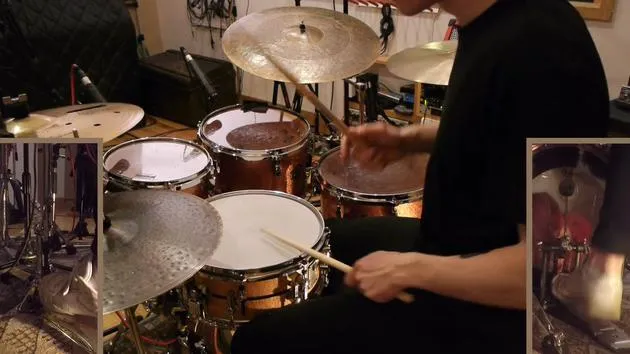
09. The Nod
2:00
10. Hammerblow
Lección gratis2:04
11. Jahmake Ska
1:58
12. Crop Duster
1:57
01. Let’s Dance – David Bowie (Análisis)
8:26
02. In My Place – Coldplay (Análisis)
10:16
03. Scary – Stormzy (análisis)
10:27
04. Respect – Aretha Franklin (Análisis)
9:50
05. Ready or Not – Fugees (análisis)
7:51
06. Sweet Home Alabama – Lynard Skynard (Análisis)
8:33
07. Noisy Neighbour (Análisis)
17:14
08. Cold Pants (Análisis)
4:24
09. Attitude (Análisis)
6:22
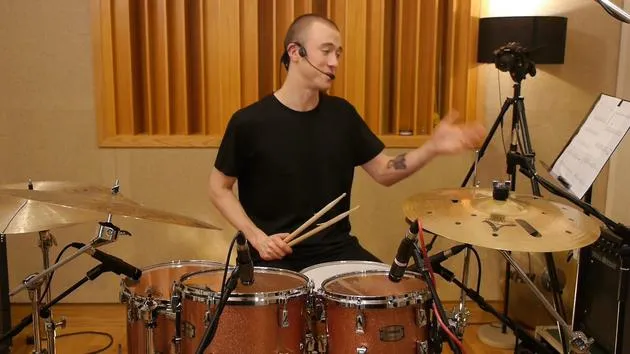
10. The Nod (Análisis)
Estás aquí4:18
11. Hammerblow (Análisis)
11:04
12. Jahmake Ska (Análisis)
4:00
Transcripción de la lección
The Nod: A Hip Hop Lesson
Hi!
So, The Nod is a hip hop track in grade four, and it's really sick. I really enjoyed it.
Solid Grooves
In that hip hop style, we want everything to be really, really solid. When you're playing the grooves, you want the kick and snare to be:
- Exact
- At the same volume each time
I can't stress that enough. The hip hop thing comes from samples, and they're all going to be the same volume. So, if you're playing a hip hop beat, the kick wants to be the same volume each time. Same with the snare drum.
Textures to Explore
There are some different textures to look at. We start with a rim click.
- Aim for a nice, solid, high-pitched rim click, that's really important. It's going to cut through the music.
The Groove at B
At B, we've got that lovely two-handed groove on the hi-hat and snare with a syncopated bass drum line. So:
- Count
- Be aware of that
- Watch your hands when you cross over
Just watch that you don't stumble over yourself. Give yourself room to move.
I've played rim shots when I played the groove at B on the track, but you don't have to play that. You can just play a normal snare drum; that sounds fine too.
I just like the way it cuts through the music; it sounds good to me.
Developing Section
That leads us nicely onto the developing section. A lot of hip hop involves programmed hi-hats that are intricate and really nice. So, what I've been doing is using some five-stroke rolls in kind of demi-semiquavers, really quick.
- It's a really effective way to add some color into your groove.
- You can work this out beforehand or improvise them; it's totally fine.
Helpful Rolls:
- Five stroke rolls
- Seven stroke rolls
- Nine stroke rolls
They all make it sound like you know what you're doing. If you check out some drummers in this style, you'll see what I mean.
Bars Groove and Fill
At D, we've got a bars groove followed by a bars fill each time. Now, I cannot stress this enough:
- Just because it says "fill," that doesn't mean to get as many notes as you can in that little space.
- That is not what you're aiming for at all.
You're still playing with the band. Even if it says "fill," you can stay within a groove idea. Something that would be really cool would be improvising within a groove style.
Remember, you still have to get that band back on beat one! For that crash cymbal, hit it on the first, third, and fifth bars of that section. It's really important.
Stay Steady
Don't lose yourself and try to overcomplicate it. People are going to like the sound of it a lot better if you just stay steady. So, really, really try and go for that.
Tricky Fill
There's also a tricky fill going into D itself, which goes:
Left, right, kick; left, right, kick; right, left.
It's tricky because you don't often lead with your left, so practice it real slow.
- Literally practice it like that for a while and then start leading into time.
- It sounds really cool. I like it.
Practice it with a metronome.
Recommended Drummers
In this genre, live hip hop drummers you should check out are guys like Questlove or Chris "Daddy" Dave. They are really masters of using all these colors while still having a solid and infectious groove behind their music. It's something I really respect.
So, check them out, listen to your teacher, and practice all this with a metronome before you play with the track. It will sound great!
I'll see you next time.
29 lecciones
2h 24m de lecciones en vídeo estructuradas
Funciones de vídeo avanzadas
Ralentiza, repite un pasaje, sigue la partitura
Móvil, tablet y ordenador
Practica donde quieras
Garantía de satisfacción 100%
30 días de garantía de devolución







