



Attitude (Análisis)
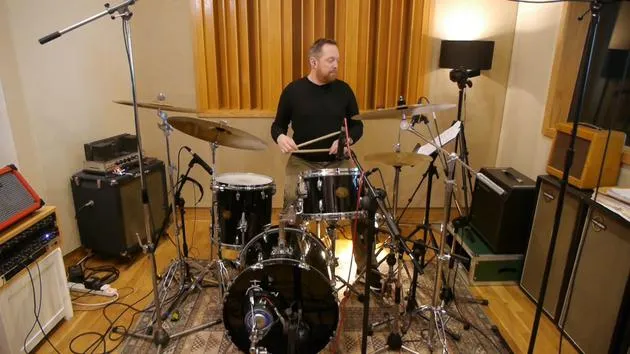
Pat Levett desglosa la pieza de batería de Grado 4 'Attitude', un tema de hard rock de finales de los 80, cubriendo acentos, control de baquetas y golpes descendentes en la sección inicial de tom de suelo.
Qué incluye el curso
29 lecciones (2h 24m) · 1 gratis
01. Ready or Not – Fugees
2:34
02. Sweet Home Alabama – Lynard Skynard
2:10
03. Let’s Dance – David Bowie
1:58
04. Respect – Aretha Franklin
2:14
05. In My Place – Coldplay
2:21
06. Scary – Stormzy
1:54
07. Cold Pants
2:00
08. Attitude
1:59
09. The Nod
2:00
10. Hammerblow
Lección gratis2:04
11. Jahmake Ska
1:58
12. Crop Duster
1:57
01. Let’s Dance – David Bowie (Análisis)
8:26
02. In My Place – Coldplay (Análisis)
10:16
03. Scary – Stormzy (análisis)
10:27
04. Respect – Aretha Franklin (Análisis)
9:50
05. Ready or Not – Fugees (análisis)
7:51
06. Sweet Home Alabama – Lynard Skynard (Análisis)
8:33
07. Noisy Neighbour (Análisis)
17:14
08. Cold Pants (Análisis)
4:24
09. Attitude (Análisis)
Estás aquí6:22
10. The Nod (Análisis)
4:18
11. Hammerblow (Análisis)
11:04
12. Jahmake Ska (Análisis)
4:00
Transcripción de la lección
Attitude: Music Lesson Overview
This song is based on late 80s hard rock from America, featuring influences from bands like Guns N' Roses.
Section 1: Foundation
- We start with lots of floor tom and distorted guitars playing together.
- Focus on accents; more stick control is required.
- Even if you practice on a pad, aim to get the accents up while keeping everything else low.
Down Strokes
- This technique involves playing down without allowing the stick to come back up.
- Work on quiet single strokes with random accents from both your left and right hand.
- This practice will significantly help with mastering the first section.
Section 2: Groove Development
- In this section, we introduce 16th semiquavers on the hi-hat, paired with a bass drum and snare drum dialogue underneath.
- Incorporate open hi-hats into your groove.
Section C: Enhanced Dynamics
- Transition to the bell and focus on a groove centered on the beat:
- Count: 1, 2, and 3, and 1, 2, and 3.
- Ensure you're pushing into beats one and three.
Dynamics
- Coming out of Section C, there will be a dramatic shift in dynamics:
- Drop from F to P in the space of one quaver.
- Make this transition as dynamic as possible; dynamics are crucial in drumming.
"Dynamics will, especially on drums, are your best friend. The more you play at one volume, the audience can become a little disengaged. You need to keep them switched on, and dynamics is a perfect way of doing that."
Section: Phrasing with Hits
- Practice phrasing with the hits: bosh, bosh, bosh.
- If you have two crash cymbals, one on each side, consider placing one on the side where you'll primarily be playing the ride.
Drum Solo Section
- The drum solo should be straightforward.
- Aim for strong hits; clarity and strength are key.
- Avoid complicated patterns that might detract from the song's overall strength.
Starting Point for Solos
- Think of it as having very strong fillings; don't overcomplicate things.
- If you're inclined, feel free to explore more complex ideas with your teacher.
Conclusion: Returning to the Beginning
- After the solo, return to section A to finish the song.
- Allow room for development; it's an opportunity to have fun and incorporate parts of the drum solo.
- End with a strong, confident finish: bosh, bosh, bosh.
Final Thoughts
This performance can vary every time you play it. Your interpretation should focus on phrasing with the music.
- Exploring Section C:
- Notice the heavier beat between beats one and three.
- You might consider skipping out those quavers to play crotchets instead, "bing, bing", for a different feel.
Unique Playing Style
There's never one definitive way to play. Develop your own ideas while keeping these pointers in mind:
- Focus on dynamics.
- Ensure strong endings, especially after sections and fills.
Good luck!
29 lecciones
2h 24m de lecciones en vídeo estructuradas
Funciones de vídeo avanzadas
Ralentiza, repite un pasaje, sigue la partitura
Móvil, tablet y ordenador
Practica donde quieras
Garantía de satisfacción 100%
30 días de garantía de devolución







