



Liquid Amber (lección)
Qué incluye el curso
13 lecciones (1h 28m) · 1 gratis
01. PCH (interpretación)
3:09
02. PCH (lección)
Lección gratis11:01
03. Liquid Amber (interpretación)
3:50
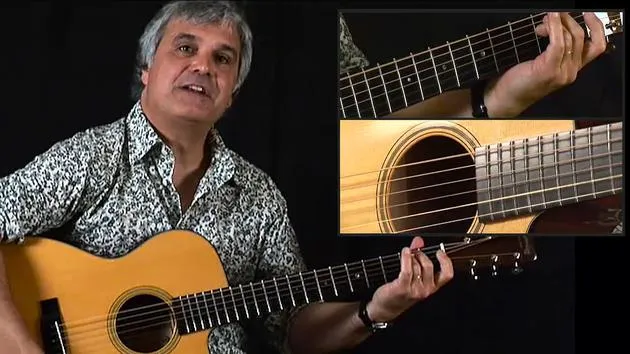
04. Liquid Amber (lección)
Estás aquí9:19
05. Gardenia (interpretación)
3:41
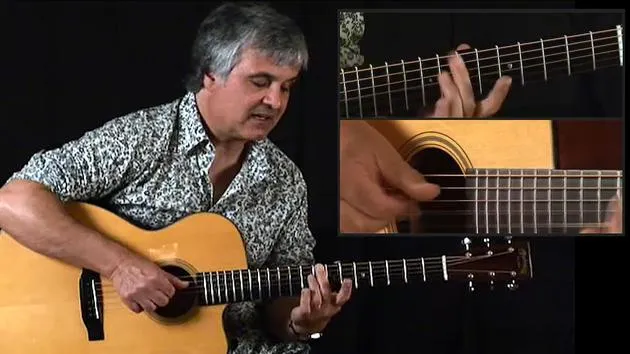
06. Gardenia (lección)
13:37
07. Mosaic (interpretación)
3:49
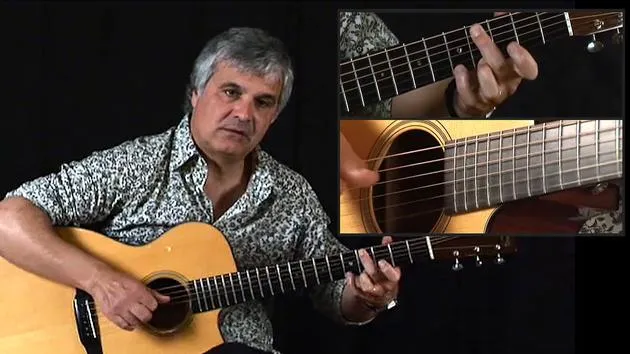
08. Mosaic (lección)
10:21
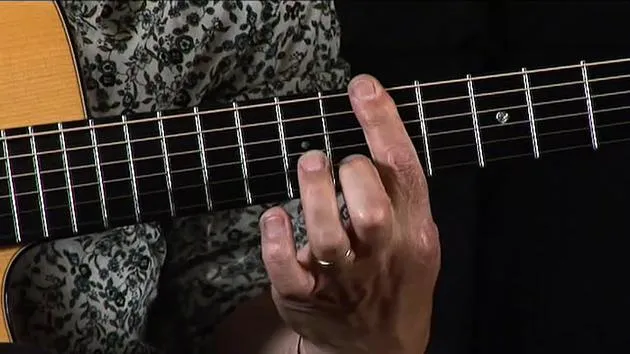
09. Stolen Glances (interpretación)
3:51
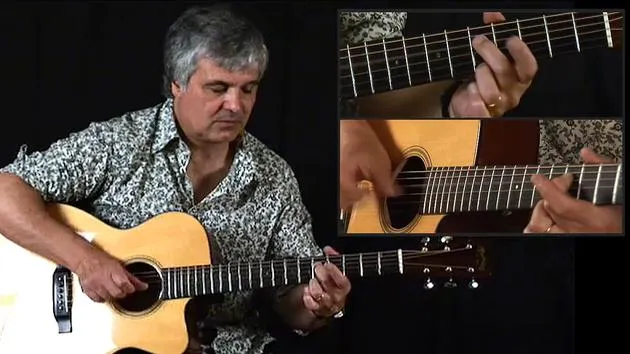
10. Stolen Glances (clase)
11:20
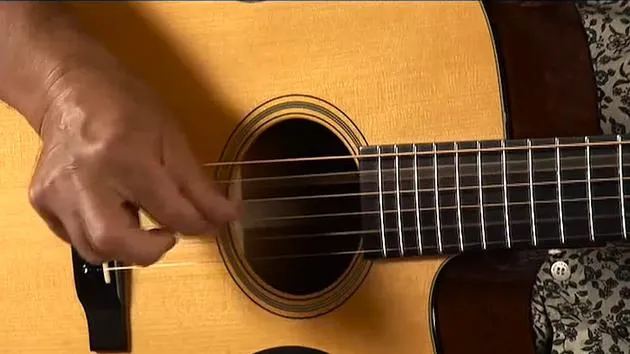
11. Bullet Train Boogie (interpretación)
3:52
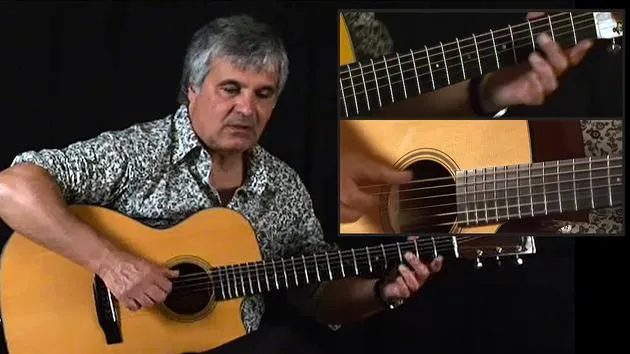
12. Bullet Train Boogie (lección)
8:42
13. Lección de cierre
1:30
Transcripción de la lección
Liquid Amber in E Minor: Exploring Melodic Minor Scale
Overview
In this lesson, we will explore the potential of the melodic minor scale in the context of Liquid Amber in E minor.
Review of the E Minor Scale
-
Ascending the harmonic minor scale introduces an augmented second which disrupts the smoothness of scale steps.
-
In the melodic minor scale:
- Ascend:
- At the sixth degree, replace the C with a C#.
- This creates a major sixth and continues to the major seventh.
- Descend:
- Return to the minor seventh, then minor sixth.
- Ascend:
The Blues Element
-
By adding the blues flattened fifth, we can create interesting harmonies. For example:
- In a B chord, combine:
- D# and D
- Include C natural in the melody before transitioning to an E minor 6th chord with a C#.
- In a B chord, combine:
-
For more on these harmonic relations, refer to my Volume 1 Essentials DVD, which contains a lesson on the tune Private Dick.
Main Melody of Liquid Amber
-
Opening Melody:
- Walk down the bass line while spreading the melody across four strings: B, G, F#, E.
- Use three adjacent scale tones on adjacent strings.
-
Bass and Melody Interaction:
- As the melody ascends, the bass line will move in contrary motion.
- Settle on an A first inversion chord, then progress to C7, B, and conclude on a B augmented chord.
-
Swing Repeat:
- Repeat the rhythm with a more swinging feel, leading back down to E minor.
Second Section Details
-
Transition over an A minor chord:
- Voiced with an A minor shape and a hint of A minor 6 an octave higher.
-
Progression includes:
- E minor 6, B augmented 7 sharp 9, then flat 9.
- Incorporate the bass note when needed.
-
Connecting Licks:
- Introduce melodic slides into E minor while the bass moves down.
- Shift to C7 chord, bending to A7 where G and C# form a tritone.
- Follow through to F#7 flat 9, then B7, and up the octave to an E minor 9 with a major 7.
Solo Section
- Alternate between A minor and E minor with variations:
- Example chords include A minor 7, A minor with major 7th and 9.
- Use colorful chords within the harmonic progressions, maintaining a minor 2 - E minor feel.
Coda Section
-
Lead into the coda with a harmonic flourish:
- Pick the harmonic on the third string of the 12th fret, touching with the index finger then plucking with the thumb.
- Combine with a hammer-on to the second fret of the first string followed by a pull-off.
-
Repeat the sequence while moving down the A string, ending with a harmonic on the 12th fret of the bottom E.
Improvised Ending
- The final section involves improvisation over a descending bass line from A, E, D, G#, C#, and C.
- Create flowing melodies, leveraging the dissonance of notes like D bass with a D# on top within the context of the melodic minor.
Conclusion
This lesson provides insights into the melodic minor scale in E minor, offering creative ways to enrich your musical expression.
13 lecciones
1h 28m de lecciones en vídeo estructuradas
Funciones de vídeo avanzadas
Ralentiza, repite un pasaje, sigue la partitura
Móvil, tablet y ordenador
Practica donde quieras
Garantía de satisfacción 100%
30 días de garantía de devolución
Conoce a tu gurú
Conoce a tu gurú
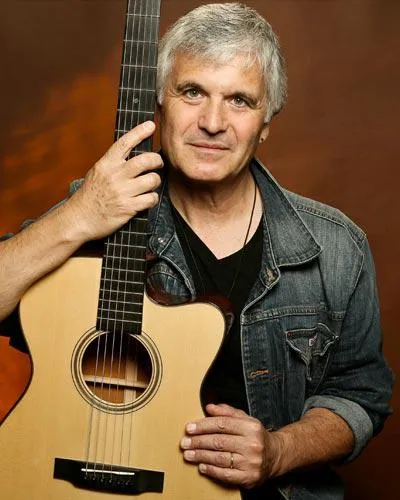
Laurence Juber se dio a conocer primero como guitarrista principal de Wings, la banda de Paul McCartney. Desde entonces ha construido una carrera como guitarrista fingerstyle, compositor y arreglista, trabajando en gran medida con la afinación DADGAD, que le valió el apodo de 'the Duke of DADGAD'.
Los lectores de Fingerstyle Guitar Magazine lo han votado Guitarrista del año, y la revista Acoustic Guitar lo ha incluido entre los mejores guitarristas, junto a una larga lista de álbumes en solitario y giras por todo el mundo.
En sus cursos enseña su técnica fingerstyle y la afinación DADGAD por la que es conocido, cómo combinar melodía, armonía y bajo en un arreglo para guitarra sola, y las piezas -como su emblemática 'Wooden Horses'- que lo reúnen todo.







