



El pulso: practicar el tempo y la articulación
Con
Bruce GertzBruce Gertz explica cómo relacionar el tempo y el groove con tu pulso natural, con un sencillo ejercicio de metrónomo para trabajar tu feel.
Qué incluye el curso
29 lecciones (1h 11m) · 1 gratis
01. El pulso: practicar el tempo y la articulación
Estás aquí6:19
02. El feel del walking bass de jazz
2:23
03. Straight time vs swing time, blues en G con shuffle
2:52
04. Latin feel con pulgar apagado
1:08
05. Funk, slap, semicorcheas y swing/funk con tresillos
2:39
06. Solo Jams swing/Funk
1:46
07. Swing blues
2:07
08. Double time, feel de balada
2:21
09. Rápido, Swing 320BPM, G Blues
1:26
01. Articulaciones para el estilo walking, pull-offs, notas fantasma (muertas), dobles pull-offs
4:05
02. Notas de anacrusa, saltos y caídas
Lección gratis2:25
03. Repaso de las articulaciones combinadas en líneas de blues, en do y do menor
1:53
04. Elección de notas en el funk
2:16
05. Tumbao latino: fundamentales, 5ªs, 7ªs, octava
2:47
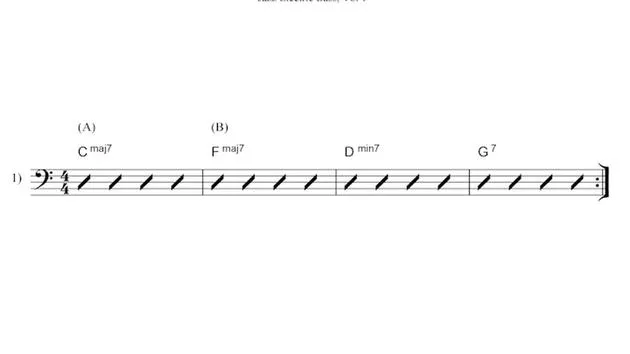
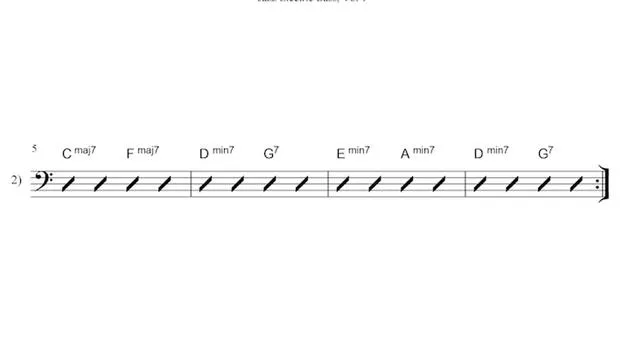
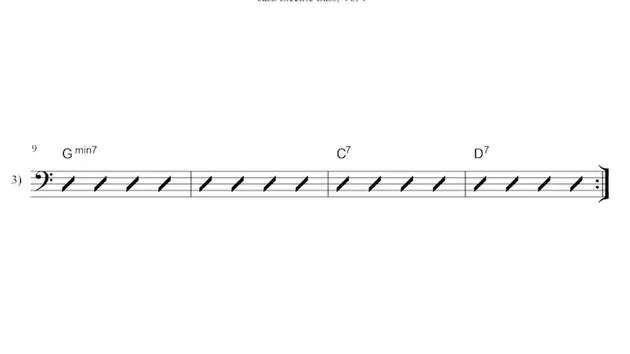
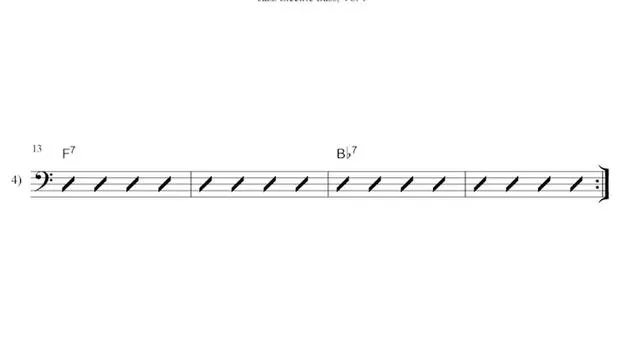
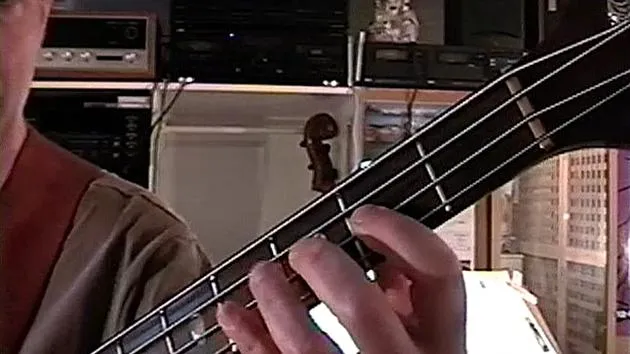
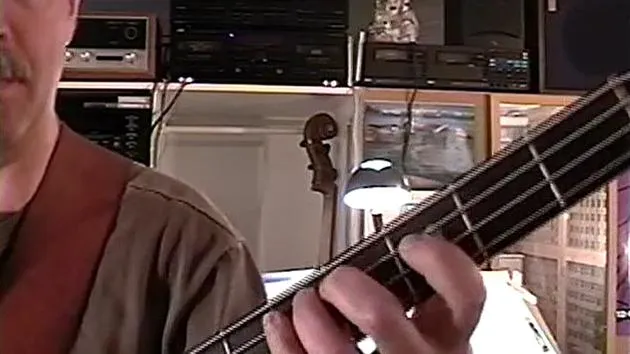
Transcripción de la lección
Music Lesson on Rhythm and Articulation
Hi, I'm Bruce Gertz.
Understanding Our Natural Rhythm
First off, we all have a pulse, which I believe is our own natural rhythm. Anytime we play rhythms or grooves, we should try to relate those to our pulse. This makes it more comfortable to play.
- If it's too fast, cut it in half.
- If it's too slow, double it up.
I'll explain this in a minute.
The Comfort Zone of Pulse
As I was saying about the natural time in our pulse, I think when we're relaxed, our pulse tends to be in the area of 72 beats a minute. When we're excited or exercising, however, our pulse can escalate to the high one hundreds or even the low two hundreds.
Generally, when we play music, we want to be fairly relaxed, but we can be excited too. I would say the most comfortable zone to feel the time would be somewhere between 72 and 120 beats per minute.
- If you play anything really fast, like 240, simply feel it in two at 120.
Tuning into External Time Sources
Here, I have a simple metronome. This is a good device for hearing a pulse outside of ourselves. Although we have this pulse inside, we don't always feel the time outside our bodies.
It's good to tune into an external time source such as:
- A metronome
- A drum machine
- Play-along CDs with drum tracks
I'll be using some of these to demonstrate swing time and straight time, as well as different interpretations in between.
First Exercise: Getting Accurate Time
Here's 120 beats per minute.
See? It feels pretty natural.
Establishing the Rhythm
Now, the first exercise I want to show you is how to get your time accurate.
-
Listen to the time and start to feel the rhythm:
1, 2, 3, 4. 1, 2, 3, 4. -
Now that I'm feeling that rhythm, I'm going to just play a note and try to lock it in with that rhythm:
One, two, three, four. -
Now, instead of just one note, how about if I play the note E and the note G, two beats each, two E's, two G's:
1, 2, 3, 4.
Changing Note Lengths
Notice I can change the length of these notes:
- Play them longer
- Play them full length
It has a certain sound timewise.
Now, listen to what happens when I put in some space and then less space.
- If I play the note short, it has a certain sound.
- If I play the note long, it has another sound.
Articulation
The way you play notes, long, short, hard attack, soft attack, these are known as articulation.
Other forms of articulation can include:
- Playing a note with the left hand and not with the right.
For instance, I might play the D on the A string and then play the E with my left hand and not with my right. It will sound like this:
1, 2, 3, 4.
I can go the other way too.
These are different forms of articulation. Some players even use pull-offs.
The important thing is that whatever you do, it has to be in the time to feel good.
29 lecciones
1h 11m de lecciones en vídeo estructuradas
Funciones de vídeo avanzadas
Ralentiza, repite un pasaje, sigue la partitura
Móvil, tablet y ordenador
Practica donde quieras
Garantía de satisfacción 100%
30 días de garantía de devolución
Conoce a tu gurú
Conoce a tu gurú
Bruce Gertz es un bajista (acústico y eléctrico), compositor, educador y autor galardonado. Es profesor de bajo en el Berklee College of Music, donde enseña desde 1976.
Bruce es beneficiario de la beca del National Endowment for the Arts Jazz Performance Award, del Massachusetts Cultural Council Musical Composition Award y de numerosos premios al mejor bajista de los Boston Music Awards, los A.S.C.A.P. Plus Popular Awards, así como de múltiples reconocimientos de la International Association of Jazz Educators y la Jazz Education Network. Bruce también forma parte de la junta directiva de la International Society of Bassists.
Ha actuado y grabado con artistas como Gary Burton, Jerry Bergonzi, John Abercrombie, Joey Calderazzo, Kenny Werner, Mick Goodrick, Kurt Rosenwinkel, Billy Hart, George Garzone, Mike Stern, Larry Coryell, Joe Lovano, Cab Calloway y Count Basie, entre muchos otros.
En Contemporary Bass Guitar Grooves, Bruce pone toda esa experiencia a tu servicio. Aprenderás a construir líneas de bajo sólidas y con swing y a encajar en grooves auténticos a través del funk, el jazz y la fusión, para que puedas sostener la base rítmica y desenvolverte con confianza en cualquier situación de banda.
Su extensa discografía e información adicional pueden encontrarse en www.brucegertz.com.







