



Afinación
Con
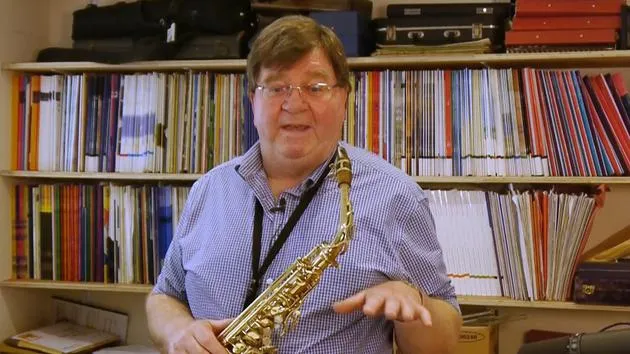
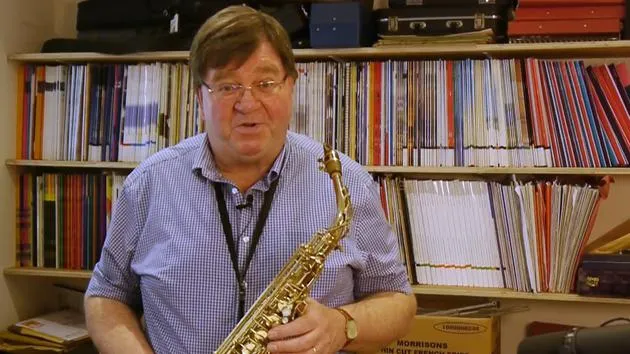
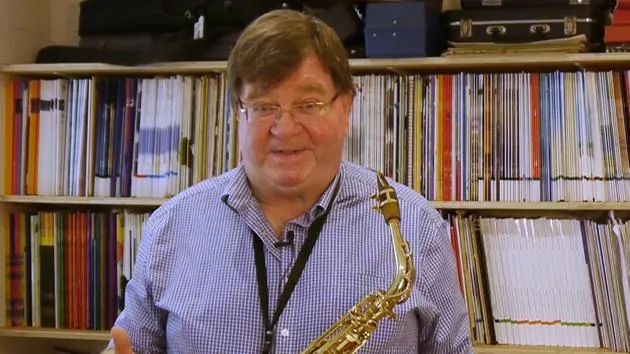
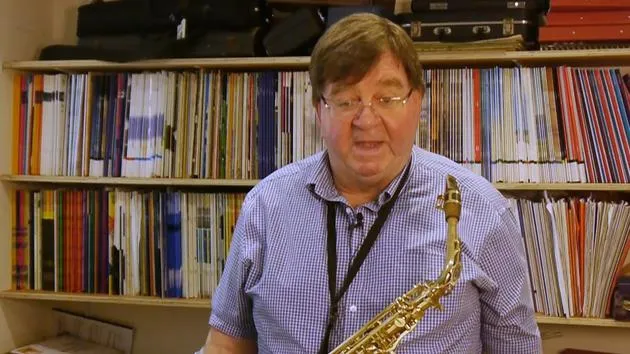
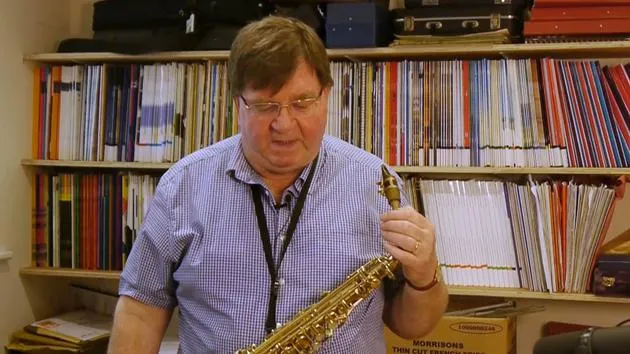
James RaePon tu saxofón afinado antes de tocar: James Rae explica cómo usar la nota de afinación del curso y mover la boquilla para subir o bajar la altura.
Copyright © 2023 Universal Edition (London) Ltd., All compositions by James Rae except where otherwise indicated.
Qué incluye el curso
42 lecciones (0h 56m) · 1 gratis
01. La nota B - digitación y ejercicios
6:15
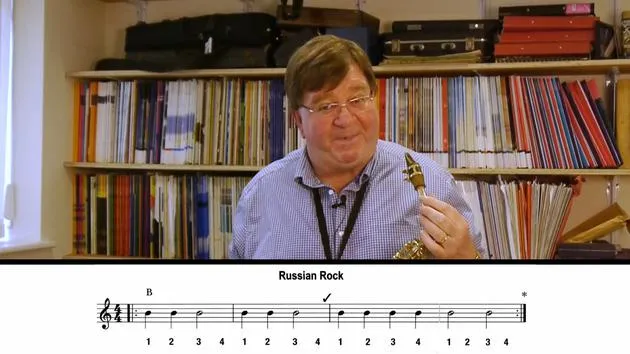
02. Russian Rock - Lección
1:22
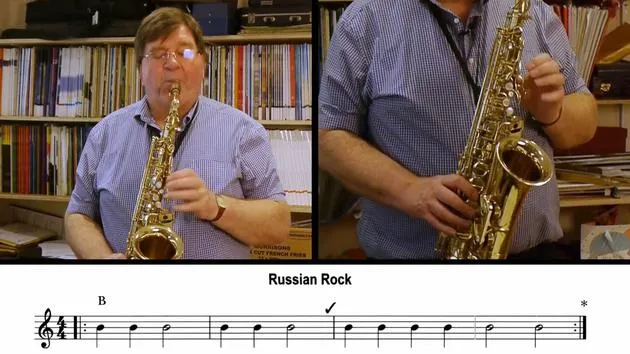
03. Russian Rock - Interpretación
0:24
04. Big Finale - Lección
0:21
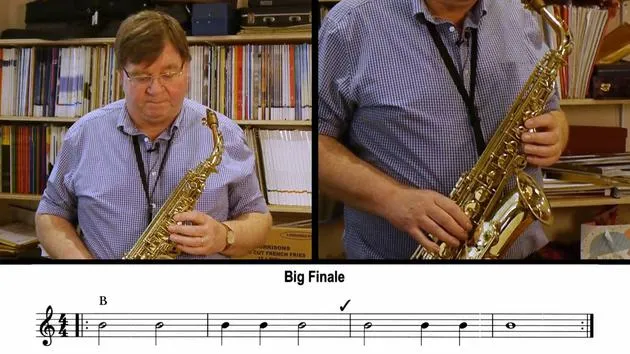
05. Big Finale - Interpretación
0:29
06. Swingin' - Lección
0:13
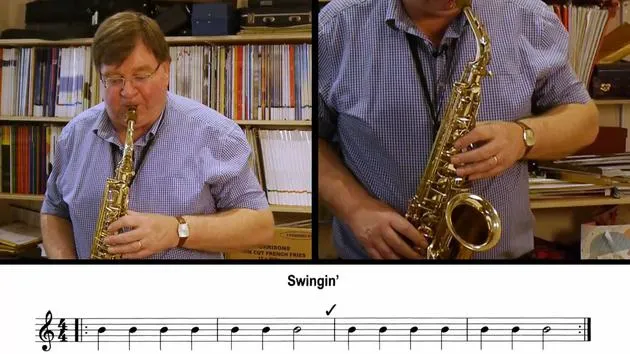
07. Swingin' - Interpretación
0:19
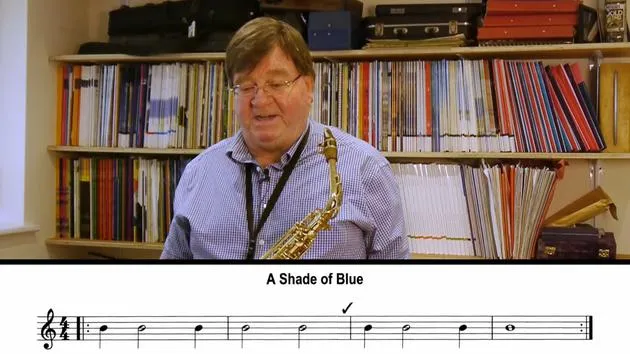
08. A Shade Of Blue - Lección
0:38
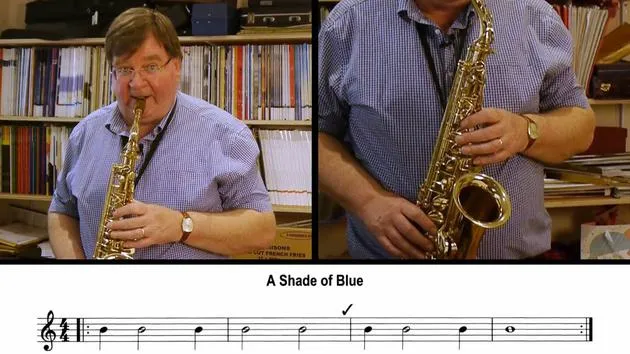
09. A Shade Of Blue - Interpretación
0:20
01. La nota Sol - Digitación y ejercicios
3:05
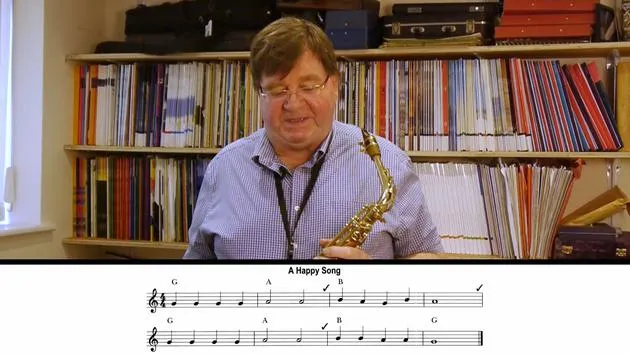
02. A Happy Song - Lección
0:42
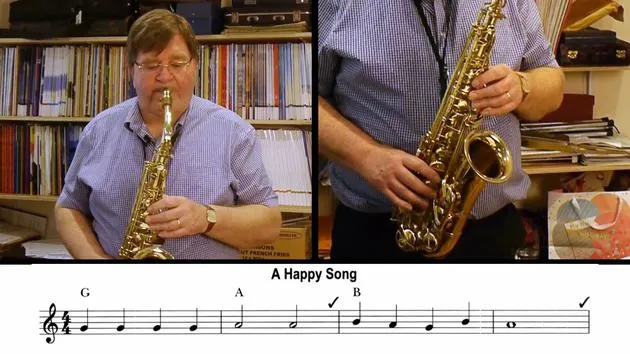
03. A Happy Song - Interpretación
0:21
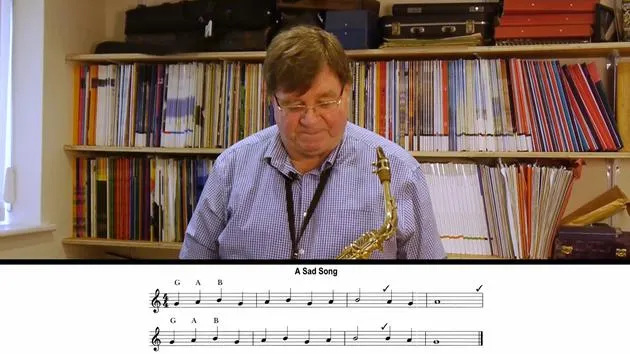
04. A Sad Song - Lección
0:15
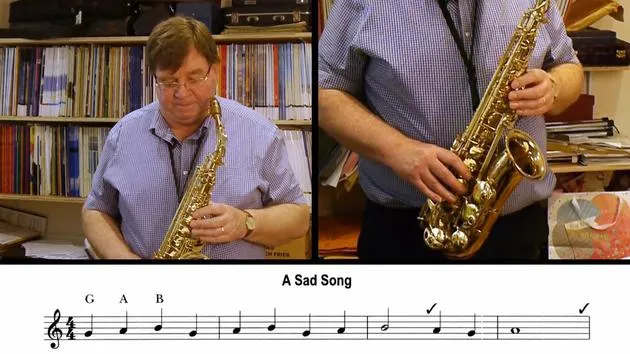
05. A Sad Song - Interpretación
0:26
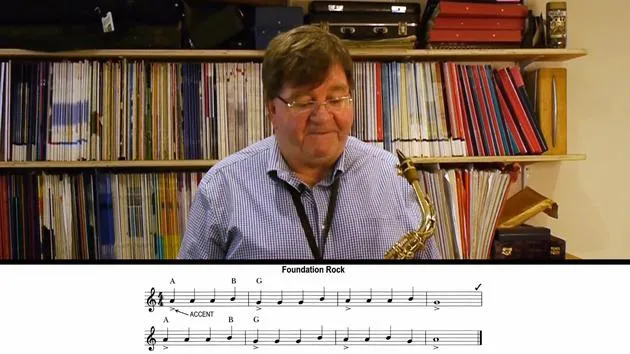
06. Foundation Rock - Lección
0:35
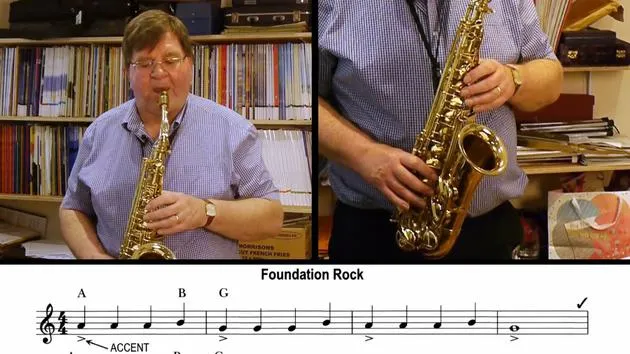
07. Foundation Rock - Interpretación
0:20
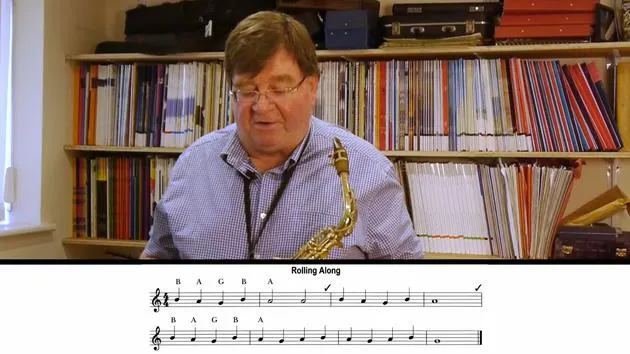
08. Rolling Along - Lección
1:19
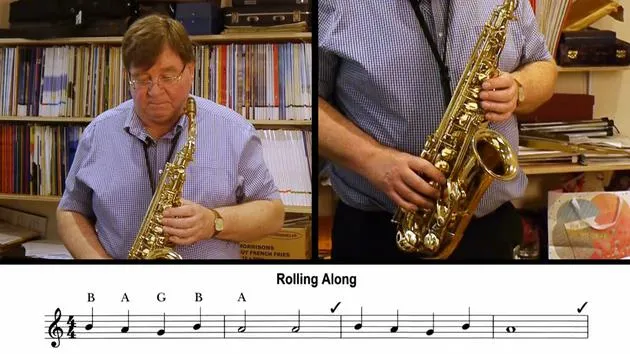
09. Rolling Along - Interpretación
0:21
01. La nota Do - Digitación y ejercicios
7:10
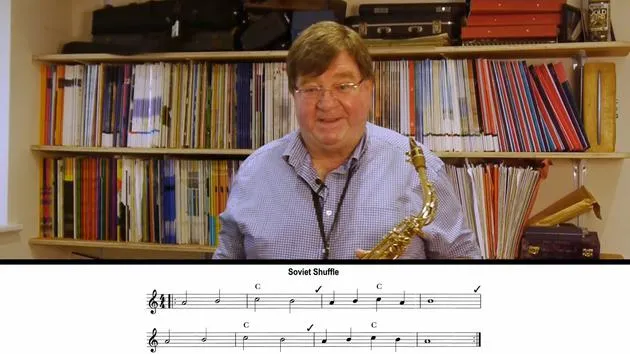
02. Sovient Shuffle - Lección
0:31
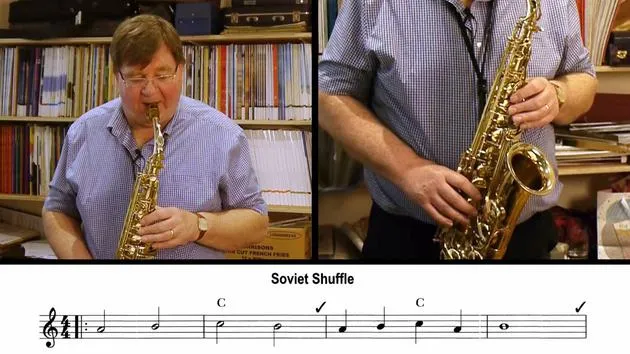
03. Sovient Shuffle - Interpretación
0:40
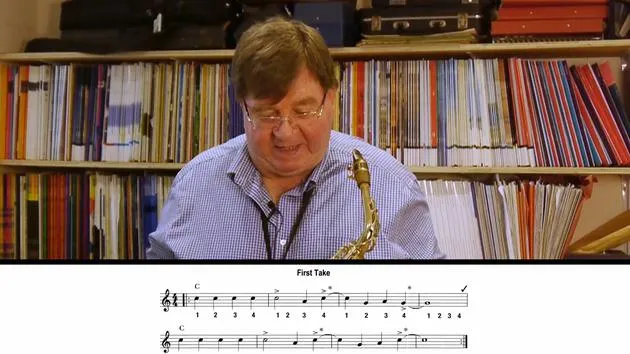
04. First Take - Lección
0:58
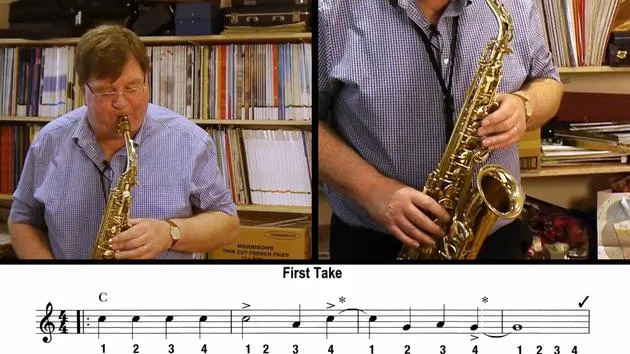
05. First Take - Interpretación
0:36
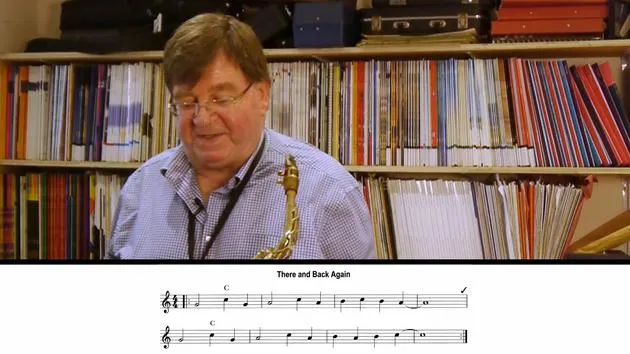
06. There And Back Again - lección
0:54
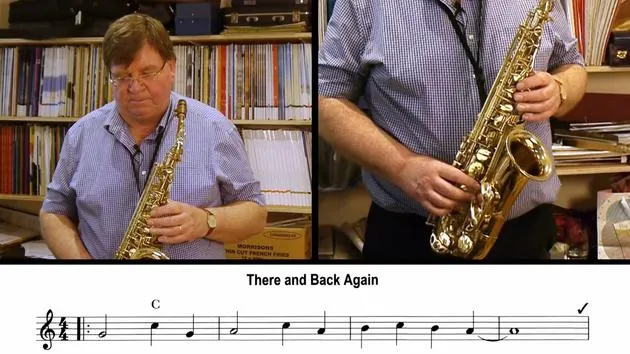
07. There And Back Again - Interpretación
0:40
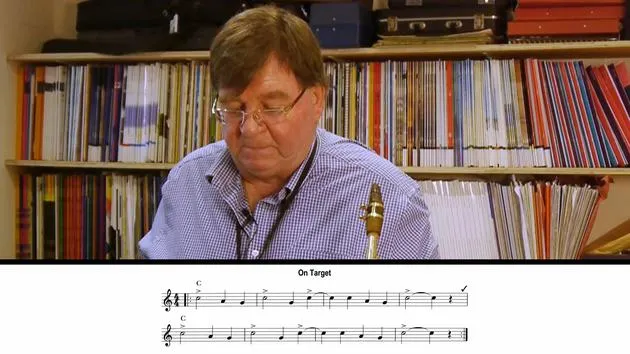
08. On Target - Lección
0:18
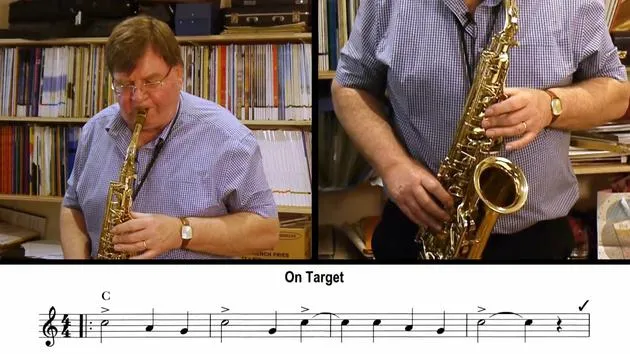
09. On Target - Interpretación
0:30
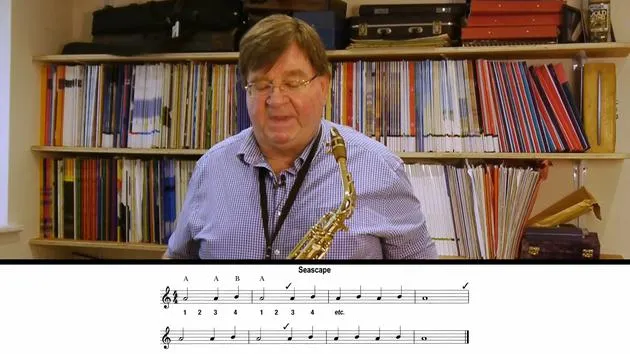
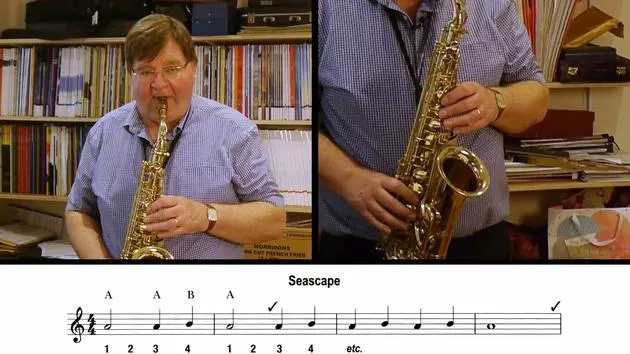
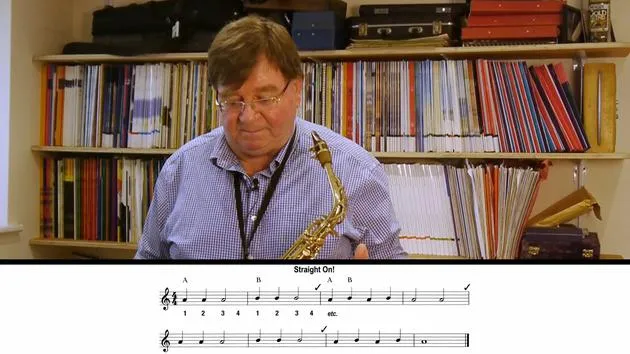
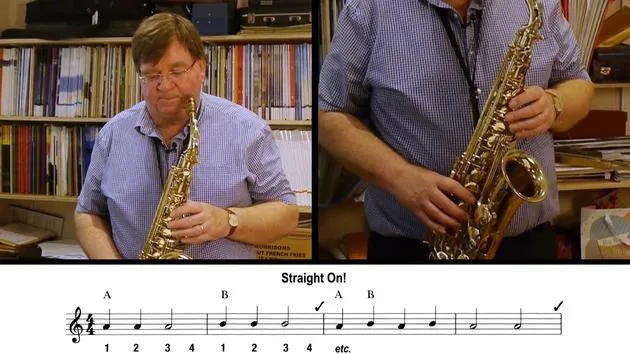
Transcripción de la lección
Tuning Your Saxophone
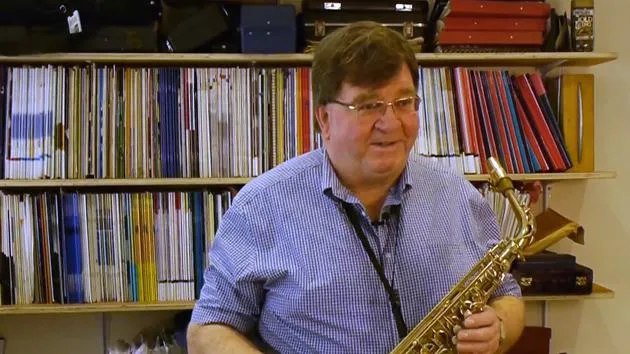
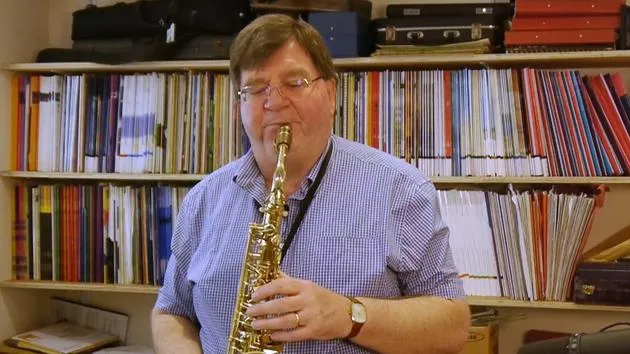
Before we commence playing, it's always a good idea to be in tune.
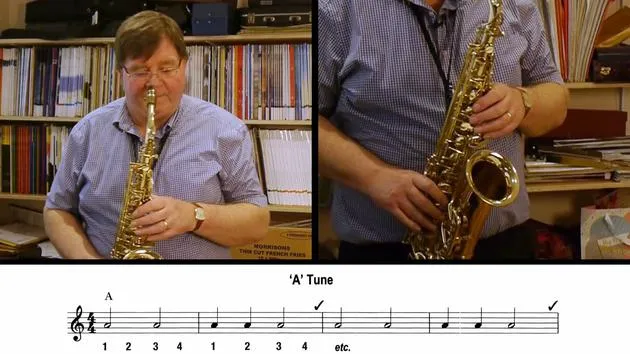
Tuning Note
- There is a tuning note on the first track of the course, which is a sustained written B for saxophone.
- If you're in tune with that, you're pretty bang on.
How to Tune Your Saxophone
-
Moving the Mouthpiece:
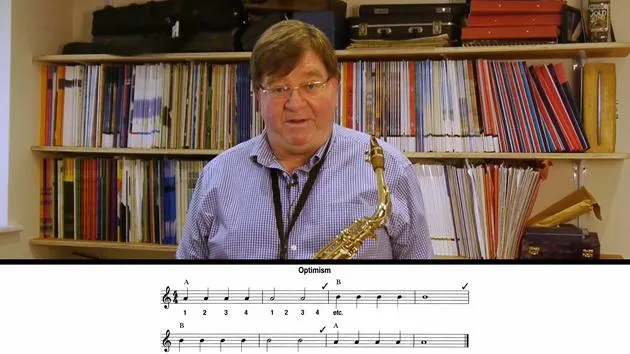
- You tune the saxophone by moving the mouthpiece.
- If the note is too sharp, pull it off to flatten it, then push it further on.
- If it is too flat, you would adjust it towards sharp, but we want it somewhere in the middle.
-
Mouthpiece Length:
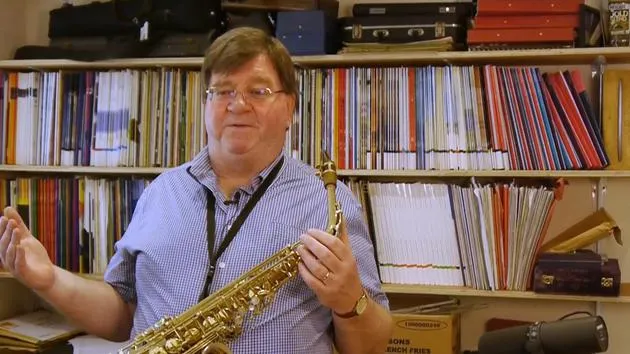
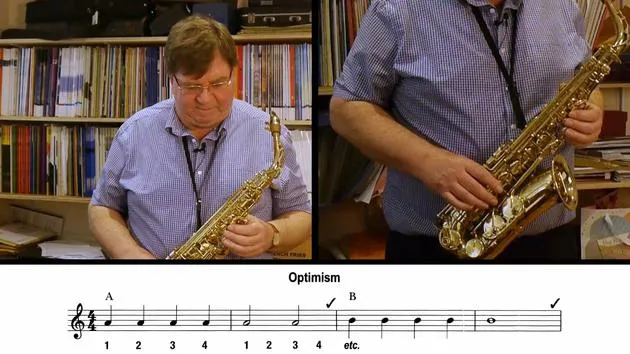
- On this saxophone, I have a long mouthpiece and show a little bit of cork.
- Many mouthpieces are much shorter, especially the jazz mouthpieces, which have a different lay.
- A shorter mouthpiece would typically show a good centimeter of cork.
- This saxophone has a standard general-purpose mouthpiece where you show just about that much to be in tune with the tuning note.
Getting the Perfect Pitch
- Track one produces this tuning note, and I tune to it so you can hear it smoothly in tune.
- If the instrument is flat, it will sound like this when you play with the tuning note.
- In that case, push the mouthpiece on a little further and try again until you achieve a perfect smooth tuning note.
Analogy: The Swimming Pool
I often liken it to a swimming pool. If you look at a swimming pool that hasn't been swum in, it is absolutely crystal clear.
- It's so still that you can't see the water at all; it looks like glass.
- When an instrument is in tune, it's the equivalent of that: no wobbles, no ripples, it's absolutely clear.
42 lecciones
0h 56m de lecciones en vídeo estructuradas
Funciones de vídeo avanzadas
Ralentiza, repite un pasaje, sigue la partitura
Móvil, tablet y ordenador
Practica donde quieras
Garantía de satisfacción 100%
30 días de garantía de devolución
Conoce a tu gurú
Conoce a tu gurú
James Rae nació en Tyneside en 1957. Estudió clarinete, clarinete bajo, piano y composición en la Guildhall School of Music and Drama de 1975 a 1979, bajo la tutela de los profesores Yona Ettlinger, Stephen Trier, Meriel Jefferson y Patric Standford, respectivamente. Desde que dejó la Guildhall, ha desarrollado una carrera muy exitosa y variada en tres ámbitos: la interpretación, la composición y la enseñanza.
James Rae ha trabajado en numerosas producciones del West End y del Royal National Theatre, incluida la galardonada Oresteia de Sir Peter Hall con música de Sir Harrison Birtwistle, y ha recibido numerosos encargos como freelance con algunas de las principales orquestas y conjuntos del país. Es el líder del Phoenix Saxophone Quartet, que a lo largo de los años ha ofrecido numerosos recitales y emisiones para la BBC, y ha grabado la obra completa de Carey Blyton en dos álbumes, 'The Return of Bulgy Gogo' y 'Sherlock Holmes meets Dr Who'.
Como compositor, James Rae es uno de los autores de música educativa para viento más publicados de Europa, con más de 250 publicaciones en su haber, editadas principalmente por Universal Edition. Su música incluye cuadernos de estudio instrumental, sonatas, métodos, transcripciones barrocas, clásicas y de jazz, además de numerosos volúmenes de dúos, muchos de los cuales figuran en todos los principales programas de examen de viento del mundo. También ha escrito cuatro musicales para colegios con Mike Cornick, y entre sus encargos de mayor envergadura se encuentran The Turn of a Wheel, una gran obra para banda de concierto estrenada en noviembre de 1999 para la North Tyneside Concert Band, de la que fue miembro fundador de niño, y la obertura Moving On en 2012.
James Rae ha trabajado ampliamente como asesor de programas y compositor tanto para la Associated Board como para el Trinity College London, y ha participado de forma destacada en el desarrollo de los requisitos de lectura a primera vista para viento madera de ambos comités de examen. Como profesor, ha ocupado numerosos puestos tanto en el sector público como en el privado, y actualmente trabaja en la King's College School Wimbledon, donde dirige la Wind Orchestra y la Concert Band, y en la Shrewsbury House School de Surbiton, donde entrena a tres grandes bandas y a un grupo de cámara. Esa experiencia docente recorre toda su serie de saxofón para MusicGurus, que te lleva paso a paso desde tus primeras notas hasta convertirte en un intérprete seguro y con estilo: First Notes, New Keys & Low Notes, Expanding Your Range, Scales & High Notes, Extended Range & Rhythm, y Polish & Style.







