



La embocadura y los primeros sonidos
Con
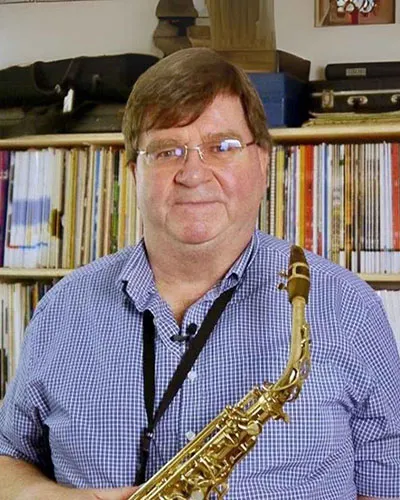
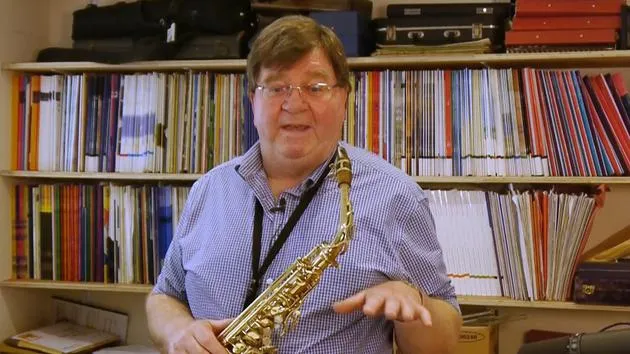
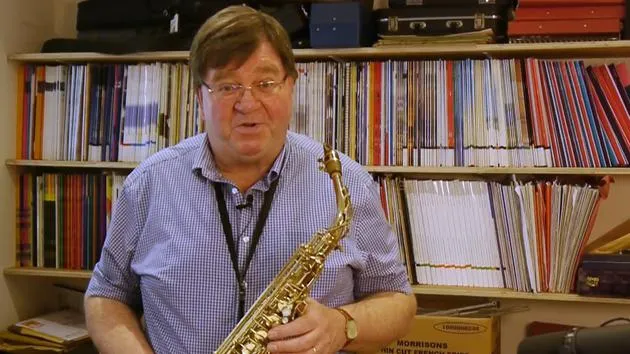
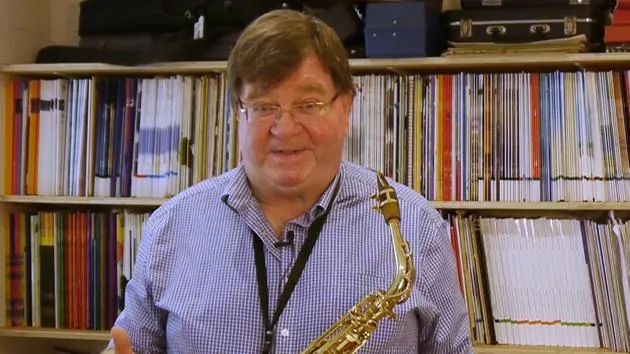
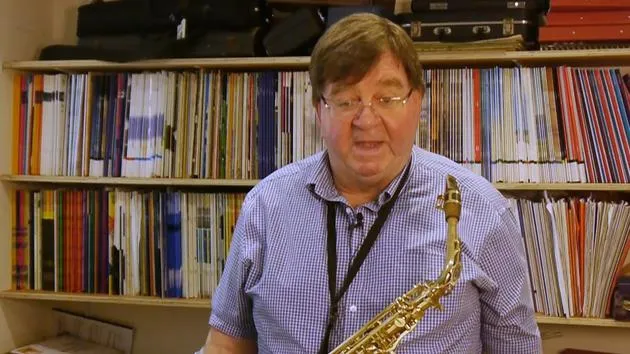
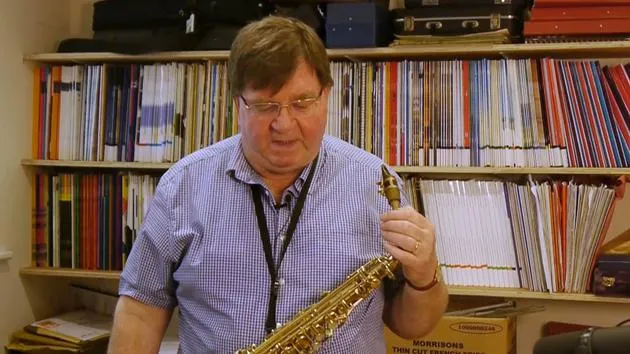
James RaeJames Rae te muestra cómo formar la embocadura —colocando los labios y los dientes alrededor de la boquilla del saxofón— y producir tus primeras notas.
Copyright © 2023 Universal Edition (London) Ltd., All compositions by James Rae except where otherwise indicated.
Qué incluye el curso
42 lecciones (0h 56m) · 1 gratis
01. La nota B - digitación y ejercicios
6:15
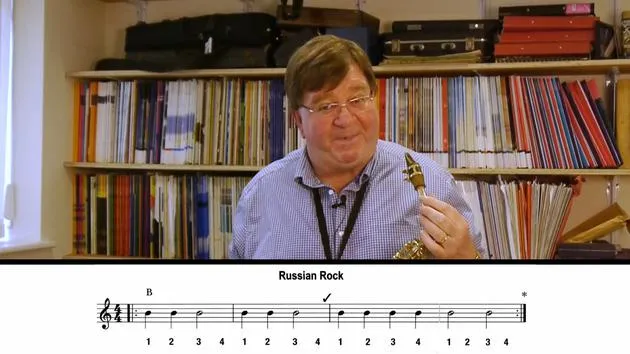
02. Russian Rock - Lección
1:22
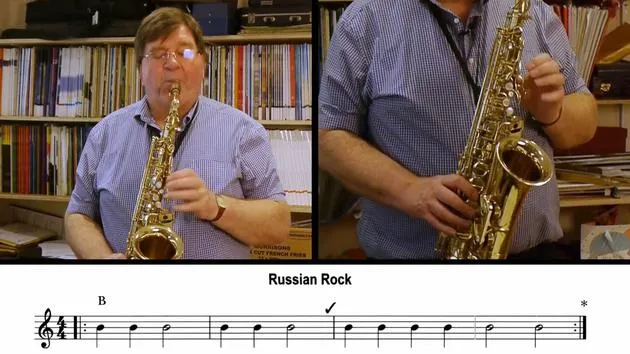
03. Russian Rock - Interpretación
0:24
04. Big Finale - Lección
0:21
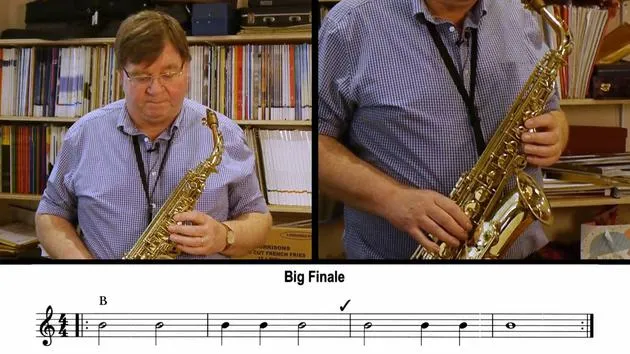
05. Big Finale - Interpretación
0:29
06. Swingin' - Lección
0:13
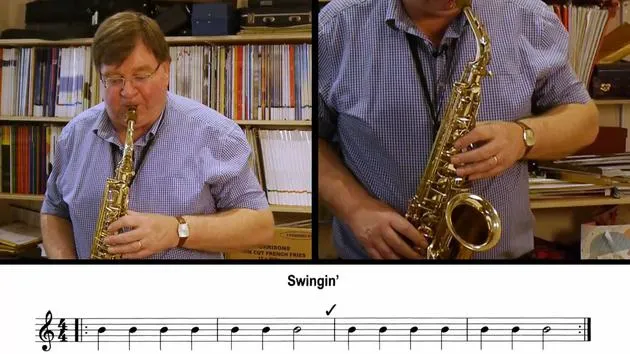
07. Swingin' - Interpretación
0:19
08. A Shade Of Blue - Lección
0:38
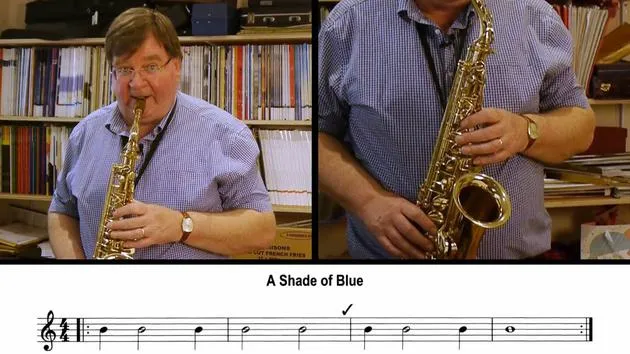
09. A Shade Of Blue - Interpretación
0:20
01. La nota Sol - Digitación y ejercicios
3:05
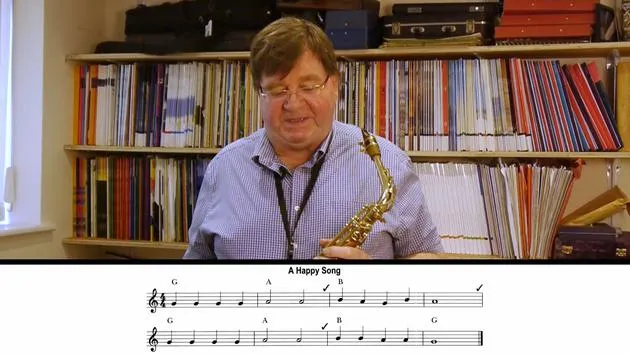
02. A Happy Song - Lección
0:42
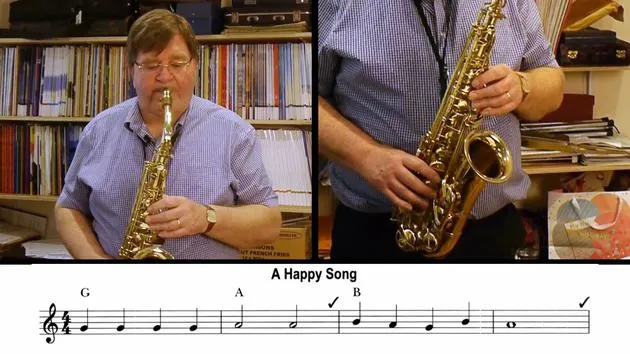
03. A Happy Song - Interpretación
0:21
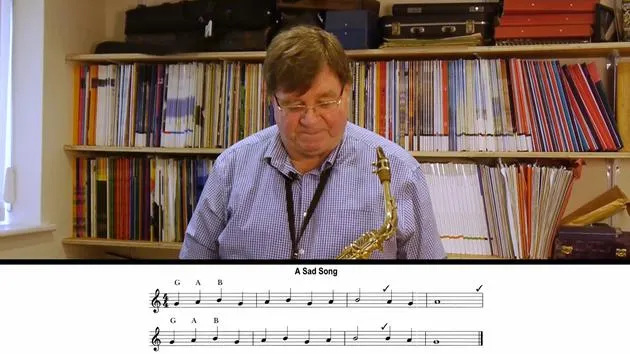
04. A Sad Song - Lección
0:15
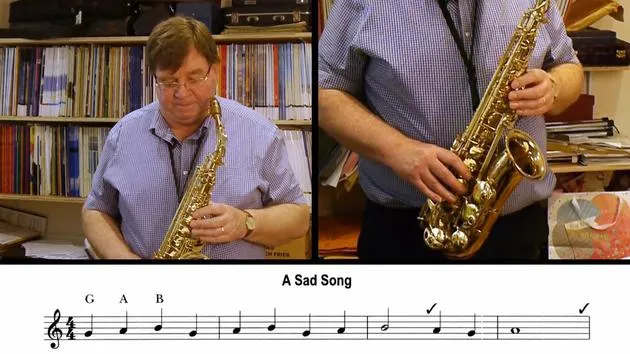
05. A Sad Song - Interpretación
0:26
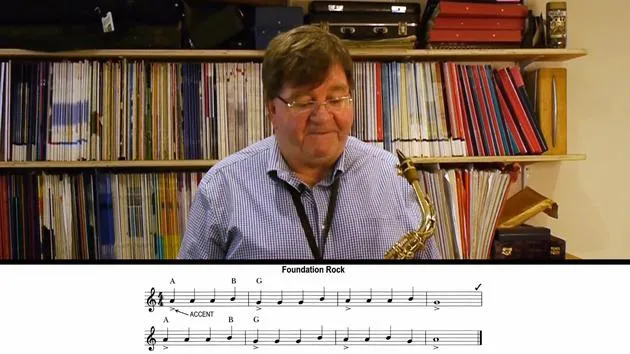
06. Foundation Rock - Lección
0:35
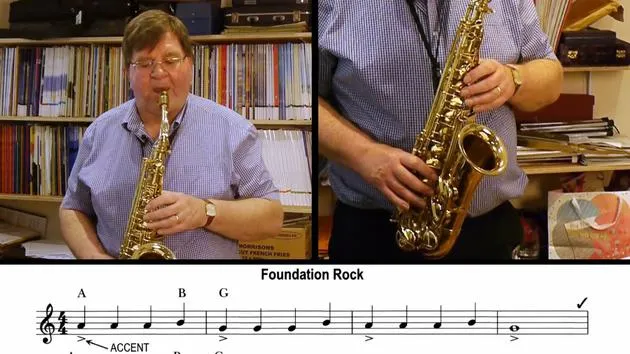
07. Foundation Rock - Interpretación
0:20
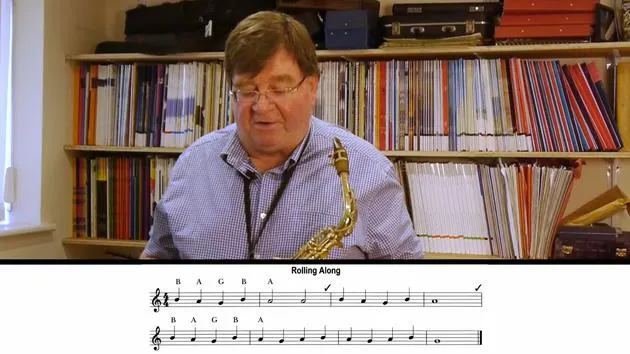
08. Rolling Along - Lección
1:19
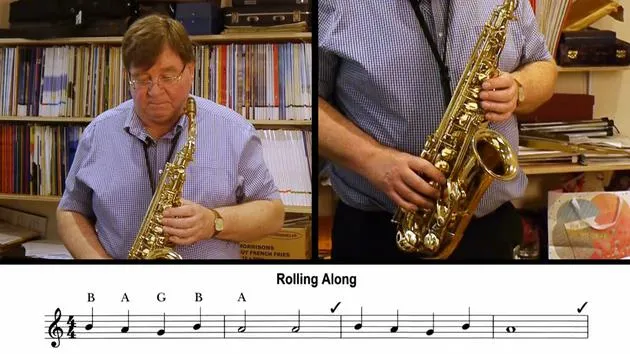
09. Rolling Along - Interpretación
0:21
01. La nota Do - Digitación y ejercicios
7:10
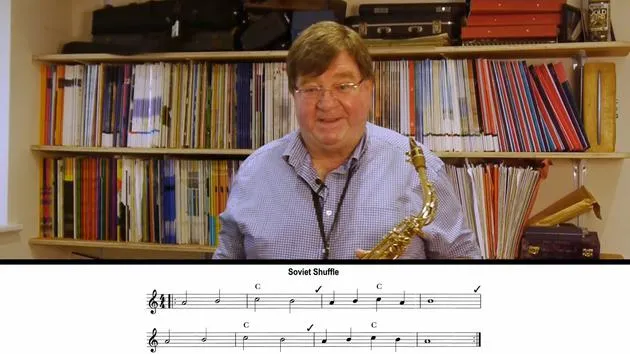
02. Sovient Shuffle - Lección
0:31
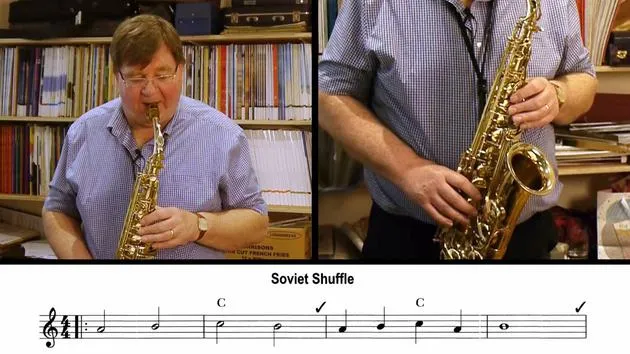
03. Sovient Shuffle - Interpretación
0:40
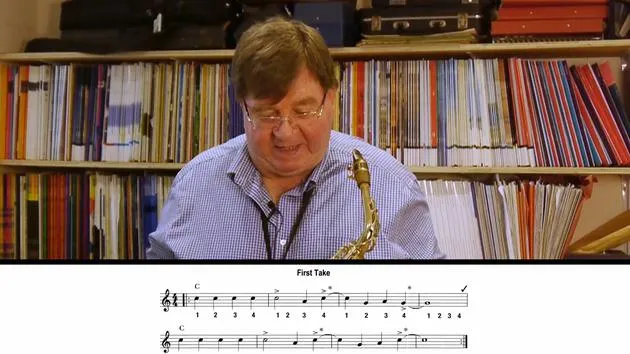
04. First Take - Lección
0:58
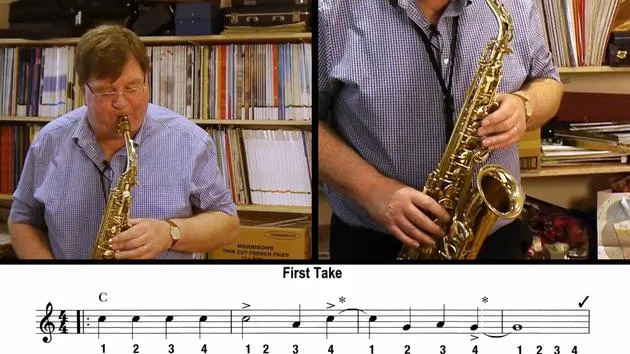
05. First Take - Interpretación
0:36
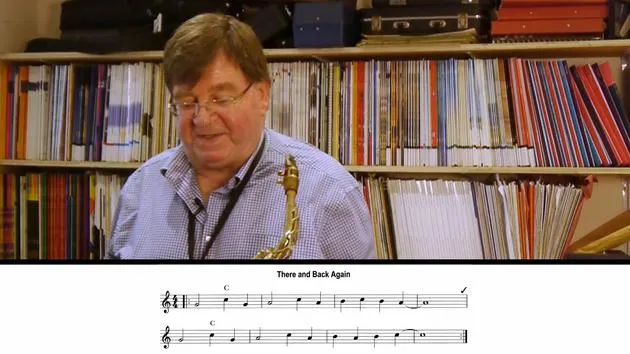
06. There And Back Again - lección
0:54
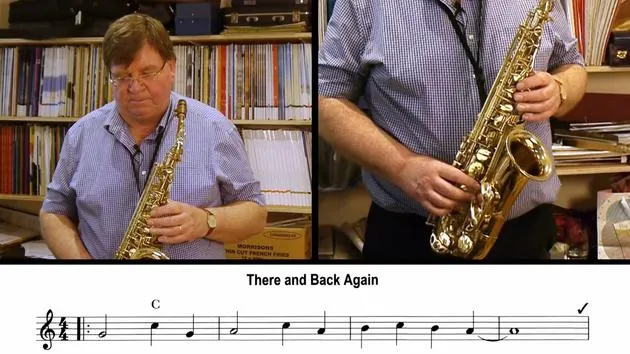
07. There And Back Again - Interpretación
0:40
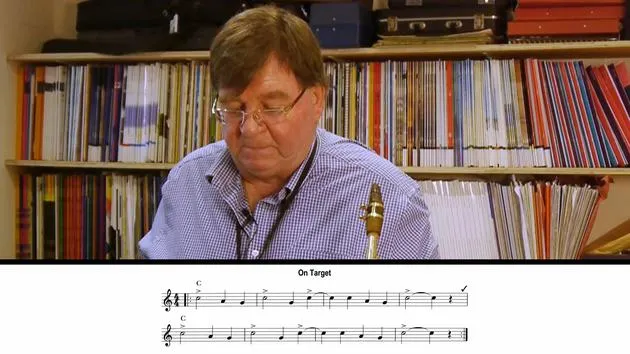
08. On Target - Lección
0:18
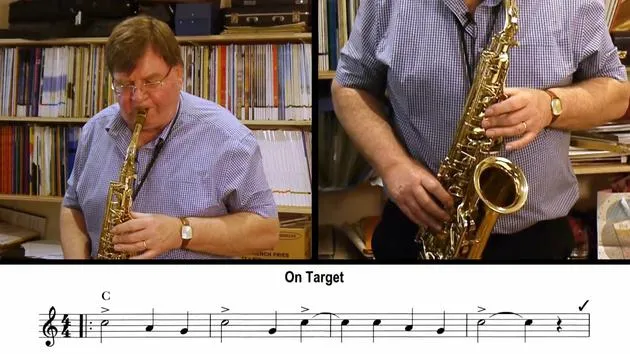
09. On Target - Interpretación
0:30
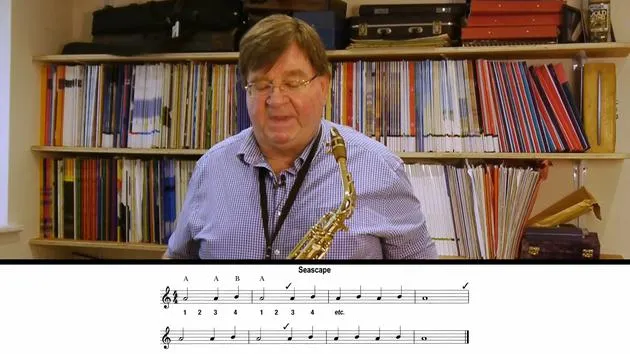
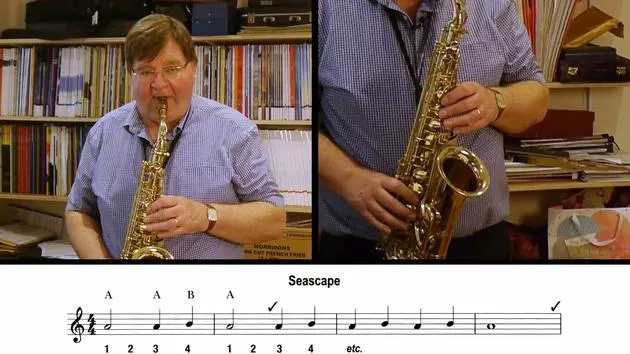
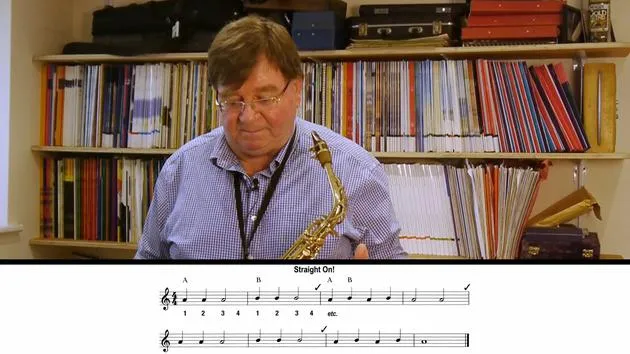
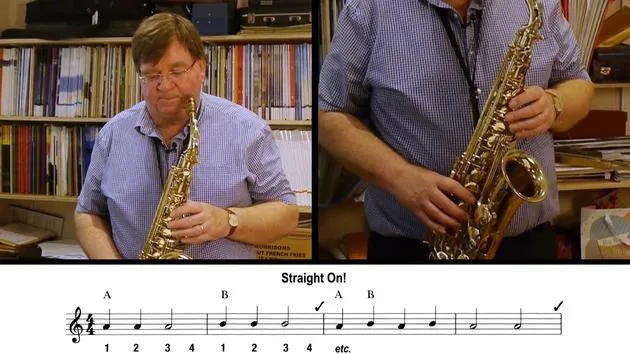
Transcripción de la lección
Understanding Embouchure
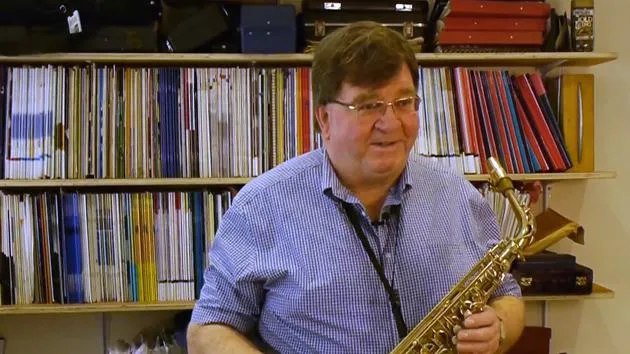
This brings us to the embouchure.
There is no English word which is the equivalent of embouchure. If there were, it might be something like mouthage. But it refers to the position of your mouth around the mouthpiece, especially in the case of the saxophone.
Proper Mouth Position
Here's how to achieve the correct embouchure:
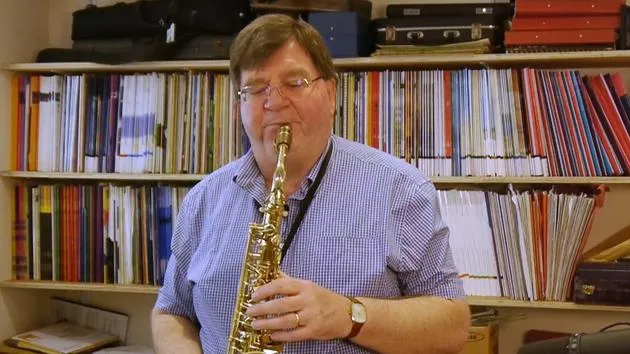
- Stretch your bottom lip over your bottom teeth very gently (not too firmly).
- Rest your upper teeth on the top of the mouthpiece, slightly over a centimeter from the end.
- Seal off and blow.
Importance of Air Supply
Air is the most important ingredient in any wind instrument, hence the name wind instrument. A good air supply is essential for a good sound.
- Avoid chewing the mouthpiece; otherwise, it will sound unpleasing.
- Don't take in too much air, as that creates a honky sound. We want to aim for a balance.
Positioning the Mouthpiece
When putting the mouthpiece into your mouth:
- Ensure there is about a centimeter of reed beyond your bottom teeth so that your tongue can touch it.
Tonguing Technique
When we use the technique called tonguing (which we'll discuss later), remember: it's about the sound you want.
- It's essential not to blow your cheeks out; adopt a smiling position while blowing.
- Otherwise, aside from looking like a hamster, it will sound unpleasant.
Avoiding Common Mistakes
- If you take too much in, you'll get a honk.
- To avoid that, just make sure you take in just over a centimeter.
- Too little air results in a very stuffy sound.
It's a balance you will find with regular practice.
Throat Position
What goes on in the throat is very important:
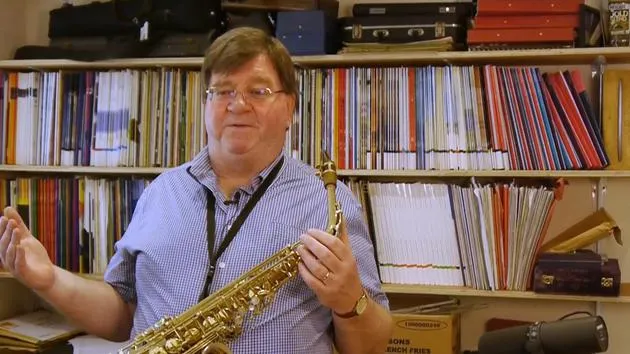
- Always maintain a relaxed throat position, as if you're yawning.
- When you yawn, your oral cavity is large; this allows for better resonance.
You should avoid being tense, as that leads to a thin and reedy sound. A yawning position or hot potato in the mouth position works well.
Developing Good Saxophone Sound
Bringing all these elements together results in a nice, smooth saxophone sound. It goes without saying that you have to practice:
- Regular practice develops your lip muscles and breathing muscles.
- Practice is essential because it cannot be crammed.
Think of it like eating food: you eat food every day; you don't eat several Sunday lunches at once and skip the rest of the week. Your body won't function that way, and the same goes for playing an instrument, it's about gradual muscle development.
Final Thoughts
Music ultimately is an art, but to reach an artistic level (like in ballet), you must involve a significant amount of physical activity.
To develop your embouchure muscles, practice long notes.
- When playing long notes, don't just blow and grin; listen to what you're doing and aim to improve.
- Think of it like focusing the lens of a camera, the sound becomes more refined with careful attention.
42 lecciones
0h 56m de lecciones en vídeo estructuradas
Funciones de vídeo avanzadas
Ralentiza, repite un pasaje, sigue la partitura
Móvil, tablet y ordenador
Practica donde quieras
Garantía de satisfacción 100%
30 días de garantía de devolución
Conoce a tu gurú
Conoce a tu gurú
James Rae nació en Tyneside en 1957. Estudió clarinete, clarinete bajo, piano y composición en la Guildhall School of Music and Drama de 1975 a 1979, bajo la tutela de los profesores Yona Ettlinger, Stephen Trier, Meriel Jefferson y Patric Standford, respectivamente. Desde que dejó la Guildhall, ha desarrollado una carrera muy exitosa y variada en tres ámbitos: la interpretación, la composición y la enseñanza.
James Rae ha trabajado en numerosas producciones del West End y del Royal National Theatre, incluida la galardonada Oresteia de Sir Peter Hall con música de Sir Harrison Birtwistle, y ha recibido numerosos encargos como freelance con algunas de las principales orquestas y conjuntos del país. Es el líder del Phoenix Saxophone Quartet, que a lo largo de los años ha ofrecido numerosos recitales y emisiones para la BBC, y ha grabado la obra completa de Carey Blyton en dos álbumes, 'The Return of Bulgy Gogo' y 'Sherlock Holmes meets Dr Who'.
Como compositor, James Rae es uno de los autores de música educativa para viento más publicados de Europa, con más de 250 publicaciones en su haber, editadas principalmente por Universal Edition. Su música incluye cuadernos de estudio instrumental, sonatas, métodos, transcripciones barrocas, clásicas y de jazz, además de numerosos volúmenes de dúos, muchos de los cuales figuran en todos los principales programas de examen de viento del mundo. También ha escrito cuatro musicales para colegios con Mike Cornick, y entre sus encargos de mayor envergadura se encuentran The Turn of a Wheel, una gran obra para banda de concierto estrenada en noviembre de 1999 para la North Tyneside Concert Band, de la que fue miembro fundador de niño, y la obertura Moving On en 2012.
James Rae ha trabajado ampliamente como asesor de programas y compositor tanto para la Associated Board como para el Trinity College London, y ha participado de forma destacada en el desarrollo de los requisitos de lectura a primera vista para viento madera de ambos comités de examen. Como profesor, ha ocupado numerosos puestos tanto en el sector público como en el privado, y actualmente trabaja en la King's College School Wimbledon, donde dirige la Wind Orchestra y la Concert Band, y en la Shrewsbury House School de Surbiton, donde entrena a tres grandes bandas y a un grupo de cámara. Esa experiencia docente recorre toda su serie de saxofón para MusicGurus, que te lleva paso a paso desde tus primeras notas hasta convertirte en un intérprete seguro y con estilo: First Notes, New Keys & Low Notes, Expanding Your Range, Scales & High Notes, Extended Range & Rhythm, y Polish & Style.







