



Rossini, William Tell and The Thievish Magpie
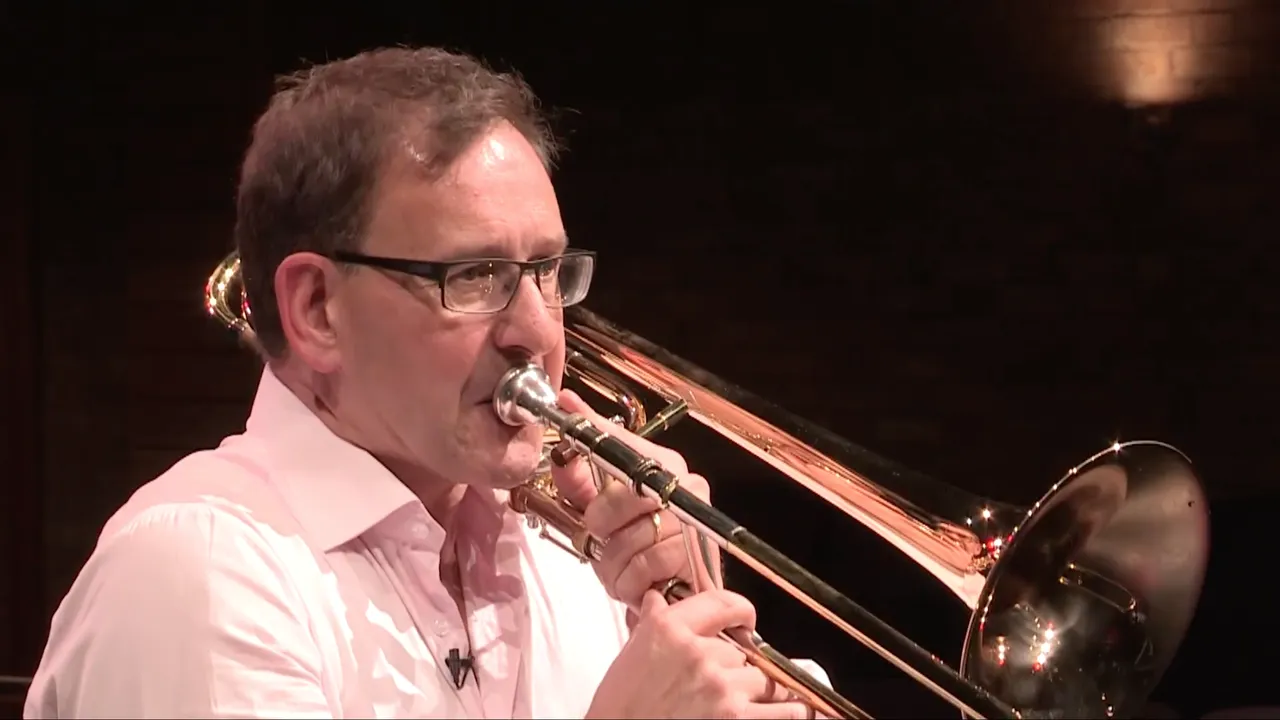
Qué incluye el curso
10 lecciones (2h 21m) · 1 gratis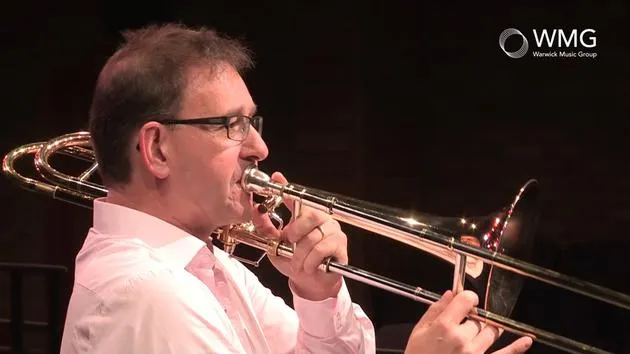
01. Breathing, part 1
Lección gratis6:59
02. Rossini, William Tell and The Thievish Magpie
Estás aquí14:54
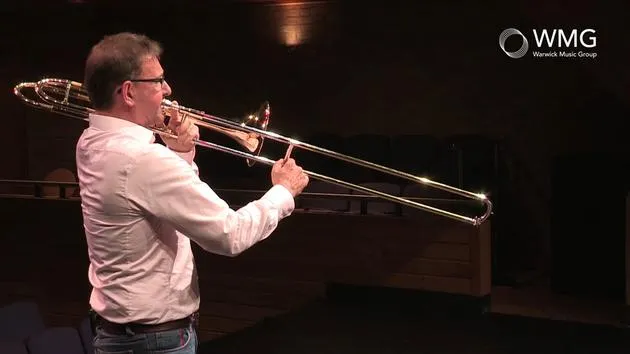
03. High Range Building
8:50
04. Detached Articulation
18:50
05. Mahler's Third Symphony
22:21
06. Mozart Requiem
13:41
07. Ravel's Bolero
11:35
08. Legato
17:55
09. The Philosophy of Warm Up
14:04
10. Wagner, Ride of the Valkyries and Prelude to Act 3 of Lohengrin
12:20
Transcripción de la lección
Rossini Excerpts: Preparing for Auditions
In this video, I'd like to discuss and perform the two famous Rossini excerpts that come up in so many auditions: William Tell and The Thieves' Magpie. I don't mind admitting William Tell is the one that I really don't like. So this is how I go about preparing it.
Understanding William Tell
Firstly, when we do William Tell, we have to understand the motion of the intervals, etc. Until we really understand how the notes relate to each other. Now, of course, every time this comes up in an audition, you've got an entire audition commission going and tapping their way through it. Usually, most of them are tapping at different times, but that's what they do to make sure that we play in time.
My Approach to William Tell
My approach to William Tell is this:
- First of all, we have to ensure the air runs through constantly; if we don't, we have a problem.
- I will go much too long. It doesn't sound very pretty, but I'm making sure that the air runs through.
- Gradually, I shorten the notes, still not being too accurate with the slide, but making sure that everything is running smoothly.
After that:
- I try to make sure that the slide stops in each position, but only for a small amount of time. If we stop too much, everything freezes up.
- We still have to pay attention to landing on the right notes and staying there, so we just stop on the slide to a certain extent.
The Importance of Slide Technique
I then pay attention to my slide technique:
- If we stop the slide on every note too rigorously, it breaks the flow and stops the airflow.
- There's no flow in the music at all, so we have to keep the line going a little bit.
- Just stop the slide ever so slightly to get the notes there.
The main point to all of this is to keep the direction of the air going. If the direction of the air stops, we're in big trouble.
Long Notes and Musical Shape
Many questions come up about the long notes:
- Do we make a diminuendo?
- Do we hold it through?
Obviously, in the orchestra, we've got LA with the violins, so it would be natural to come away a little bit, making it musical if possible, just fading away gently with the music.
Two Important Points:
- I hear this a lot; I don't understand why people play those quarters quite so long. The musical shape is quite light, and we can come away on it.
- At letter D, we have a series of notes with sforzati on and then without. It also needs to have a musical line, and you hear the difference between the notes with sforzati and those without.
Performance of William Tell and The Thieves' Magpie
Here is a performance of William Tell, again with The Thieves' Magpie. It's very important that we understand the musicality of it. We hear the way the music modulates, and we have to keep this in mind when we play.
Approaches to The Thieves' Magpie
There are two different approaches to this:
- The one trombone version, which is quite light.
- The heavier version.
It's really up to you to find out what the orchestra you're auditioning for wants. There are two legitimate ways of doing it:
- One that I actually enjoy for its lightness.
- One that I enjoy because I'm a trombonist.
Key to Timing in The Thieves' Magpie
The key to playing this in time is:
- In bar three of the excerpt, there's a dotted quarter tied over to an eighth, a quarter tied over to a quaver.
- If we stop to breathe, then we never get back in tempo. If we breathe, that doesn't work. We have to continue that note through, etc.
I will now give a performance of the first excerpt of The Thieves' Magpie.
Importance of the First Note
Two things are very important within that:
- I hear so often a nondescript first note, as if the excerpt starts on bar two or even sometimes bar three.
- When we play this, the human ear and brain can go back and determine whether the first measure was in tempo or not.
We have to have that click track running in our minds the whole time.
How fast do we want to do it? The tempo is running through that half note in bar one, so the first note is part of the phrase.
Practice Techniques
The other thing that will help with your practice is the section that goes:
- Practice this without any tongue. If you find that difficult, refer to the video on Detached Articulation.
- Practice without the tongue, then add the tongue little by little to achieve the bounce you want when performing.
Lightness in Eighths and Quavers
It's much the same for excerpt two of The Thieves' Magpie. One thing I haven't covered yet is how we get the lightness into the eighths and quavers.
Tips for Lightness:
- If we follow the golden rule of not stopping the air, we won't get very light, crisp eighths at all.
- That kind of semi-legato is always a good way to start trying to play something fast and light.
Whistling Technique
Here may be a new concept for you: Think of whistling. You can practice this technique without making a sound. Focus on getting the air right without playing.
I will now demonstrate that fully with excerpt three of The Thieves' Magpie.
Managing Breath and Expression
Now that our quavers are lightening up, we can address another issue in the first exercise of The Thieves' Magpie:
- If we're not careful, we can run out of breath because we're playing it too long.
- Once we get the whistling articulation in there, we won't use as much breath.
You'll also hear some rising and falling in the line as I back off, saving air again. Check this with the orchestra you're auditioning for; it may not go down too well with the audition committee if you're a little too over-expressive with it, but that's a way of saving air on this part of the excerpt.
Remember the Basics
So let's remember the basics:
- Practice with a metronome. Stay in tempo.
- Practice with the metronome both slower and faster than you're comfortable, as you never know what will happen with a conductor or audition committee.
- You can always be asked to play some of these things faster or slower.
- Keep the tongue light. Don't push with the tongue against the teeth, as this closes the throat.
- Keep the line of the air moving.
If you have any further issues relating to these excerpts and articulation, refer to the coaching video on Detached Articulation; I'm sure that will help you immensely.
10 lecciones
2h 21m de lecciones en vídeo estructuradas
Funciones de vídeo avanzadas
Ralentiza, repite un pasaje, sigue la partitura
Móvil, tablet y ordenador
Practica donde quieras
Garantía de satisfacción 100%
30 días de garantía de devolución
Conoce a tu gurú
Conoce a tu gurú
Ian Bousfield ha estado en la cima de la profesión durante más de un cuarto de siglo, destacando quizá en más facetas del mundo de la música que cualquier otro trombonista hasta la fecha. Su carrera ha incluido tocar en dos de las orquestas reconocidas entre las cuatro mejores del mundo, una de las cuales está considerada quizá la mayor orquesta de ópera; actuar como solista al más alto nivel posible con orquestas, bandas de metales y con instrumentos de época; grabar como solista en sellos de primer nivel; tocar temas principales de superproducciones de Hollywood y enseñar en la Royal Academy de Londres.
Como solista, Ian ha actuado, entre otras, con la Vienna Philharmonic, la London Symphony, la London Philharmonic, la BBC Philharmonic, la Halle Orchestra, la Sapporo Symphony y la Austin Symphony. Ha trabajado con los siguientes directores: Riccardo Muti, Michael Tilson Thomas, Sir Neville Marriner, Kent Nagano, Ion Marin y Matthias Bamert, y EMI, Camerata, Chandos y Doyen se cuentan entre los sellos para los que Ian ha realizado varias grabaciones en solitario a lo largo de los años. Probablemente los dos momentos culminantes de la carrera solista de Ian hasta la fecha hayan sido la interpretación del Concierto de Nino Rota con la Vienna Philharmonic y Riccardo Muti (2008) tres veces en Viena, además de en el Lucerne Festival y en Tokio, y el estreno mundial de Stargazer de Jonathan Dove, escrita para él y dedicada a él, con la London Symphony Orchestra bajo la dirección de Michael Tilson Thomas (2007). Ha actuado con todas las grandes bandas de metales del mundo, grabando con muchas de ellas. Ha actuado como solista prácticamente en todas partes del mundo y, como clínico, ¡probablemente sea más fácil mencionar los conservatorios y festivales en los que no ha aparecido!







