



Consejos para profesores n.º 1: cómo empezar usando la improvisación
El objetivo de tu primera sesión de conjunto reducido es lograr que los alumnos toquen juntos mediante la improvisación desde el primer momento, manteniendo un ambiente cómodo y ofreciéndoles un manto musical de seguridad.
Qué incluye el curso
8 lecciones (0h 46m) · 1 gratis
01. Introducción a los conjuntos creativos con Andrew Quartermain
4:44
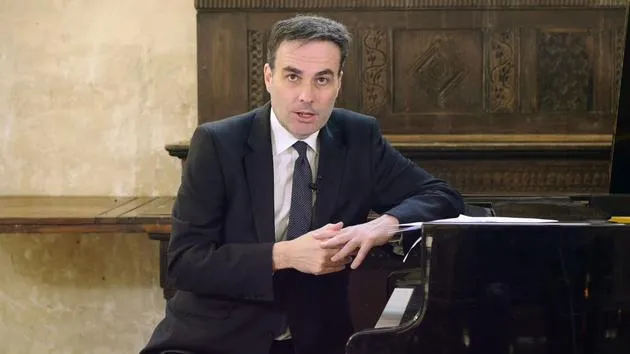
02. Consejos para profesores n.º 1: cómo empezar usando la improvisación
Estás aquí3:16
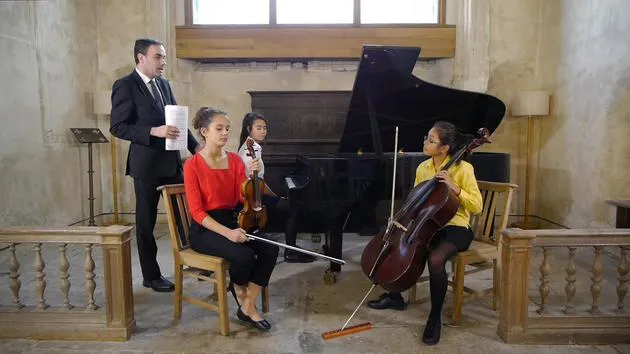
03. Ejercicio con alumnos
7:36
04. Consejos para profesores n.º 2 - Añadir interés
3:36
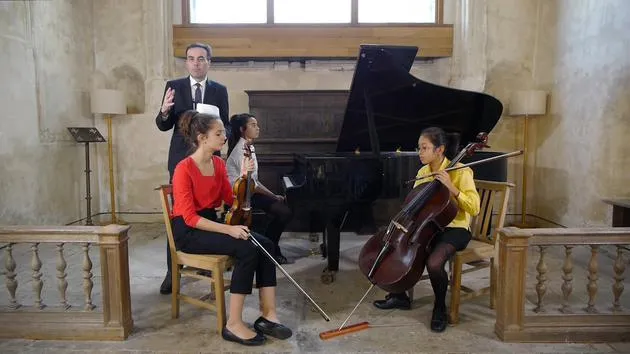
05. Ejercicio con alumnos
7:49
06. Consejos para profesores n.º 3 - Responder a sus necesidades
4:18
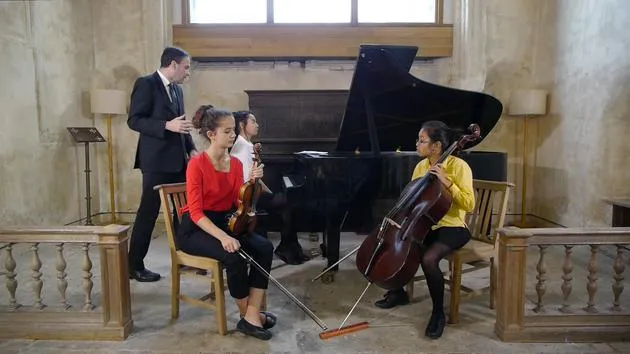
07. Ejercicio con estudiantes
10:19
08. Consejos para profesores n.º 4 - Superar el bloqueo del escritor
4:32
Transcripción de la lección
Leading an Exciting First Session with Small Ensembles
The really important thing when you're leading this first exciting session with the small ensemble is to give your students a kind of musical blanket of security.
Avoiding the Theory Trap
The last thing we want is for them to see improvisation as some separate skill that they've got to learn. This would defeat the very object of this first session, which is all about:
- Cutting to the chase
- Experiencing small ensemble performance right from that session one.
We don't want to scare them off with the idea that this is something to do with theory, modulation, or understanding counterpoint.
Comfort Over Complexity
We don't want them to feel that they need Grade 5 theory to take part in this. It's all about breaking it down and making it comfortable for them.
Leading From Any Instrument
Now, it can be led from any instrument. Most schools have a piano, and many teachers are piano trained, even if it's not their first study. I'm a pianist, so I tend to lead this on the piano.
However, the areas I'm talking about here are not specific to pianistic skills. This could be led from:
- A cello
- A wind instrument
- Even percussion
Setting Up a Musical Travelator
This is all about pulse and phrase. What we're doing here is setting up a musical travelator for our students to step on.
Key Principles
The key is simplicity. To achieve this, we need to:
- Keep a pulse going
- Emphasize the upbeat
This way, they're always feeling that sense of lift and direction. For example, even with just one hand on the piano and a simple three-note pattern, we can create a feeling of continuity and lift.
Practical Examples
Something like this, for example:
- Even one note that makes them feel secure is important.
- Another example could be a simple cycle that they can internalize and really feel.
It's crucial that when you get that cycle of pulse going, they are not counting bars or worrying about how many phrases it is. They're just feeling it naturally.
The Magical Moment of Sound
As a teacher, you will feel that magical moment when you can step back from leading them. This will be the point where:
- They're playing very securely
- They're feeling the pulse
Then you can suddenly stop. At that moment, they are making chamber music and performing as small ensemble musicians.
Navigating Mistakes
It might be that you stop and the moment is slightly off, causing the performance to collapse. In that case, not a problem! You can go right back to giving them that pulse again.
Conclusion
It will work; it will happen within session one, as long as pulse and phrase are placed as the most important points.
8 lecciones
0h 46m de lecciones en vídeo estructuradas
Funciones de vídeo avanzadas
Ralentiza, repite un pasaje, sigue la partitura
Móvil, tablet y ordenador
Practica donde quieras
Garantía de satisfacción 100%
30 días de garantía de devolución







