



Sick Boogie (lección)

Lesson time: (8min 56sec)
Kenny Sultan enseña su rápido blues fingerstyle 'Sick Boogie' en la tonalidad de mi, compartiendo trucos de mano derecha para que notas casi idénticas suenen distintas.
Course preview
This lesson is part of the course Clases de guitarra de blues tradicional
Watch a preview of the full course below.
Lesson transcript:
Sick Boogie Music Lesson
Our next song is going to be the Sick Boogie. My engineer named this song because we just made it up on the fly.
Song Characteristics
- Key: E
- Speed: Fast
- Style: Different from other E songs
- First one: slipping and dripping slow
- Second one: Lightland strikes medium pace
- This one: out of control
Techniques Overview
Let me show you some tricks on how we can almost play the same notes but make them sound differently.
- Right Hand Techniques:
- Very little bass.
- No time for monotone sound.
Here's how I start off with the boogie:
"Okay. Now that boogie's pretty quick and if I just played a straight boogie there, not much juice to that."
I add an octave right here, that E, with my first finger on the right hand. I am getting this in slow motion, of course.
Then, I'm going down to the A and adding it on the A note.
Speed and Technique
Now up to speed, it's not that clean. I'm not really hitting the note; it's more of A at best, I think.
"Let's check it out again, see how much more that adds than just."
This is the technique I always use on faster boogie-type blues, whether it be an E or an eniki.
- When I go into the B7 chord:
- No time for monotone.
- Our medium-paced shuffle.
Remember our slow one? No leisure here. We're going fast.
To accomplish what we need to do, I alternate the bass on my right hand:
"So just a regular alternating bass like this. It's a great rhythm for backing up somebody's singing."
Chords and Progression
Now, what I'm going to do is move up the neck and make what I call the Freddy King chord.
- Remember Hideaway? We steal from everybody.
- I'm a shameless mugger and stealer, or borrower, of licks.
This is a chord from Hideaway, and it's kind of a weird E9th. I'm going to go from this 9th to this 9th, a 9th back to this 9th, and it's going to sound like this in full speed.
"All it is is a right-hand sort of strum."
Strumming Technique
I've learned how to strum with finger picks now because I only play with finger picks. You don't have the luxury of having that flat pick and that up strum.
- If I try to up strum at least myself with this thumb pick, it's going to come off.
- So, I use my fingers for most of my up strums, and then...
And if you're brave enough, you can come up here to the B. But I usually go back down.
Double Stops and Alternative Bass
The same double stops we used before on the slower songs can be used again all the way up the neck.
- We don't have time for any bass here; it's all right hand.
- What I do is go back and forth with my thumb and finger as fast as I can.
One of the tricks to help with this is:
- Finger Placement: Put your finger a little bit behind your thumb to avoid them getting in each other's way.
"This is how I do single string rods, and also how I do strum double strums."
Practice Example
I'll start off like this and I'm going to go again...
"Whoa. Okay, slow that down."
Same thing we did four and then add a D.
Moving the B7 Position
Another thing I do is take this B7 position and move it up to E7:
- Great finger-picking chord!
- Now I can use an alternating bass right here.
I can play real fast when I alternate. So I'll go from this to maybe back to my favorite A chord.
"There are a lot of things you can do with this A and then back up to here and then I'll go to the B7."
That's an A seventh up two frets, and a seven E, and then whatever turnaround comes to mind.
Summary of Techniques
- Techniques to Remember:
- Alternate bass.
- E7 and D7 up two frets for different speeds (slow blues, medium blues, and fast blues).
The hardest part about this song is trying to figure out what to play next because you're moving so fast.
Key Takeaways
- Octave Off Your Boogie.
- New Chords Up the Neck: 9th chords that sound great together.
- Right Hand Strum: Get used to doing that.
And that's a sick boogie!
"And that's, I guess, why he named it that. Good luck!"
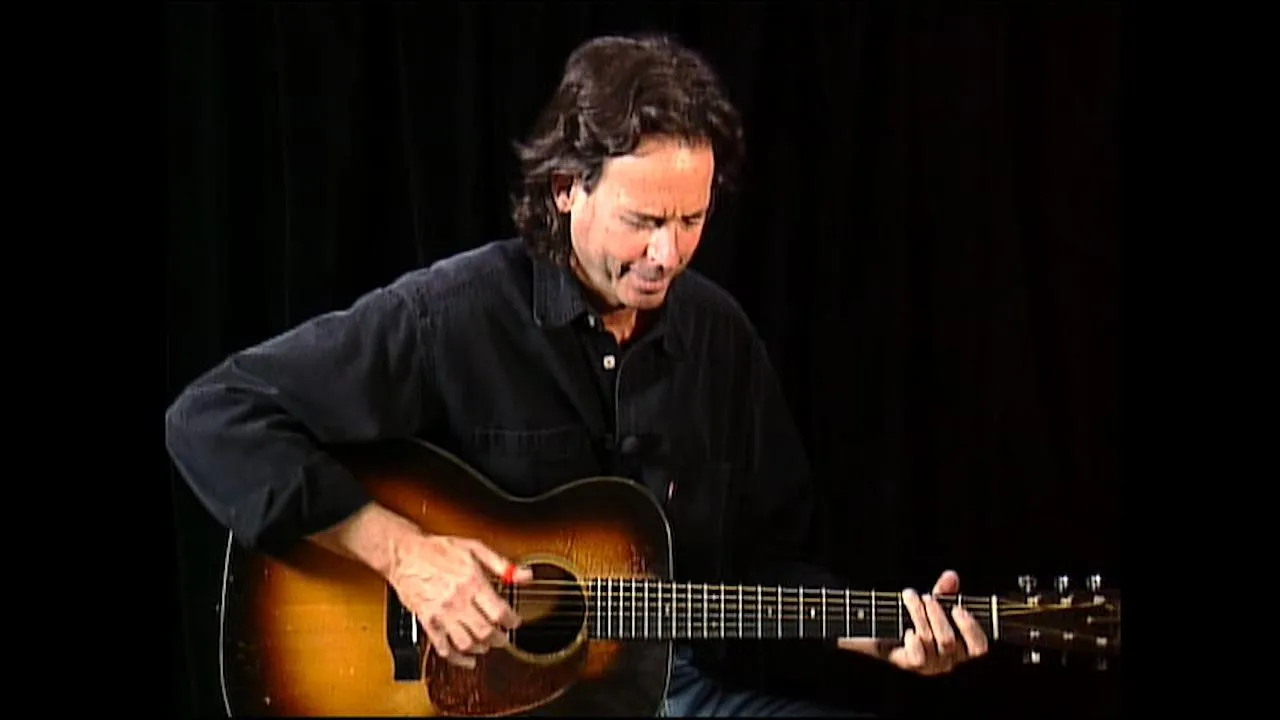
About the instructor
Kenny Sultan es autor superventas de libros de música y vídeos didácticos sobre guitarra de blues, y es el guitarrista de un dúo de blues junto a Tom Ball. Juntos y por separado han trabajado en incontables bandas sonoras de cine y televisión, anuncios y sesiones. Han aparecido en televisiones de todo el mundo, protagonizaron los anuncios de los “Levi's 501 Blues”, han tocado para audiencias de 300 millones de personas a través de Voice of America y son invitados habituales de la National Public Radio. Han compartido escenario con figuras como Bob Dylan, Stevie Ray Vaughan, The Allman Brothers, Joe Bonamassa, Ray Charles, Joe Cocker, Elvis Costello, y la lista es larga... Como en casa allá donde van, Tom y Kenny encajan en festivales de blues, folk, bluegrass y jazz, y su amplia trayectoria docente los convierte en una elección natural para campus universitarios o salas que programan talleres. Como su música es una mezcla de estilos de raíces americanas, son habituales en el extranjero, donde cosechan críticas entusiastas. Ese mismo bagaje docente es lo que aprovechas aquí. Kenny te introduce en la guitarra de blues tradicional desde cero -patrones de fingerpicking, bajo alternado, turnarounds y los licks clásicos que definen el estilo- para que construyas un auténtico repertorio de blues acústico que de verdad puedas tocar. “Una forma de tocar estupenda.” --Blues Revue “Tan bueno como cualquiera en el blues acústico.” --Sing Out read more