



Lightning Strikes (lección)
Con
Kenny Sultan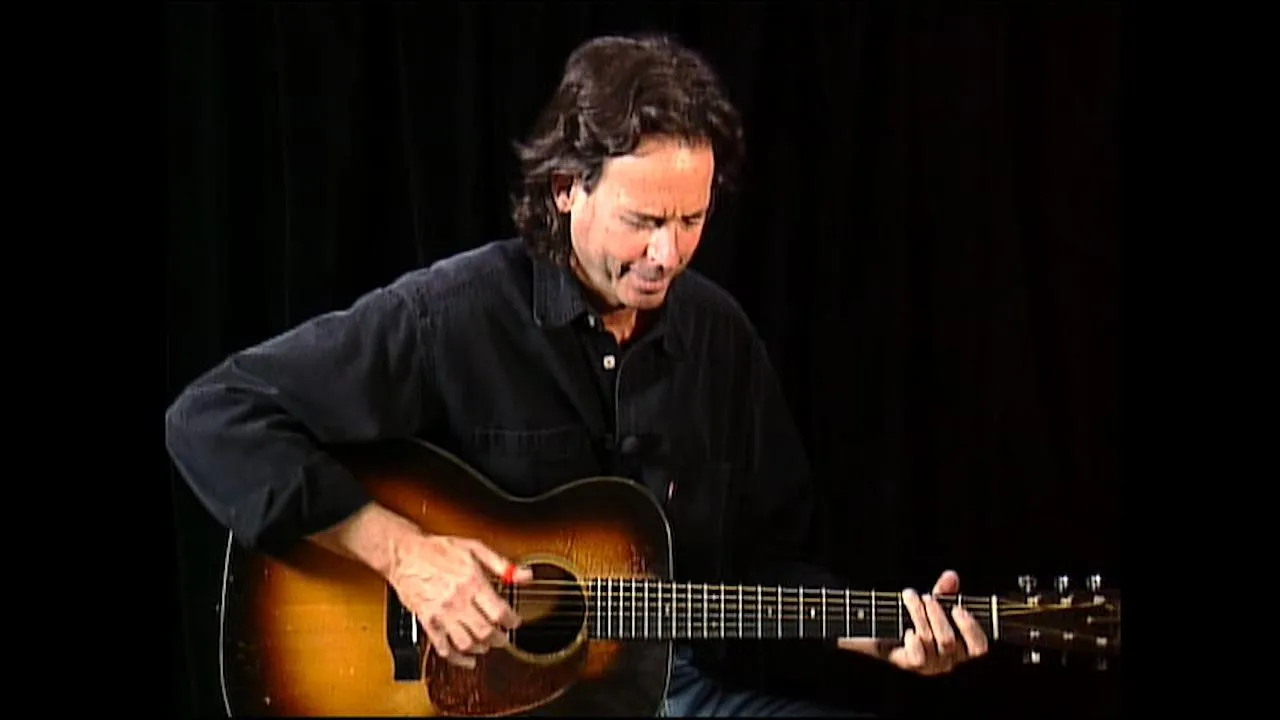
Qué incluye el curso
12 lecciones (1h 18m) · 1 gratis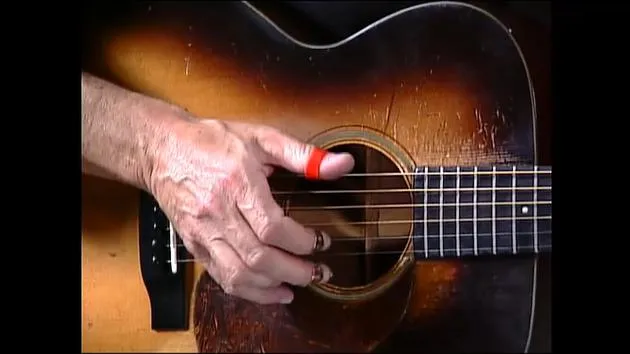
01. Slippin' And Drippin' (interpretación)
Lección gratis4:17
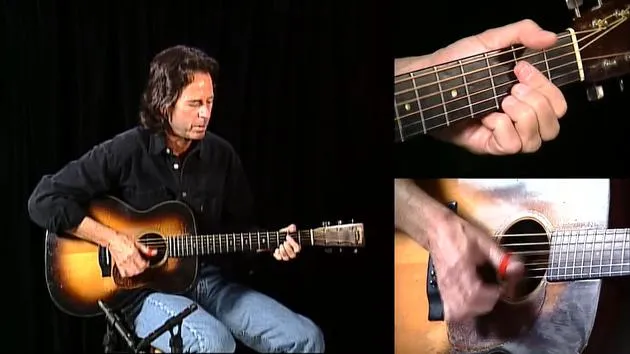
02. Slippin' And Drippin' (lección)
10:29
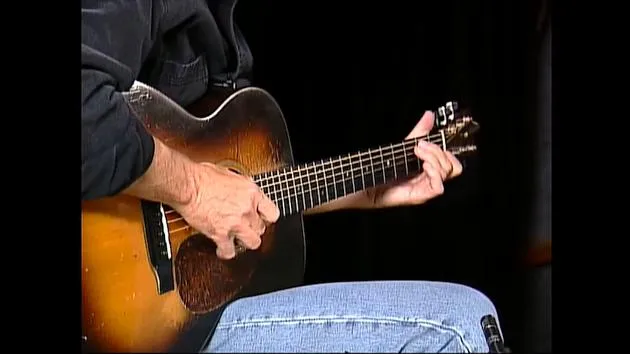
03. Lightning Strikes (interpretación)
2:50
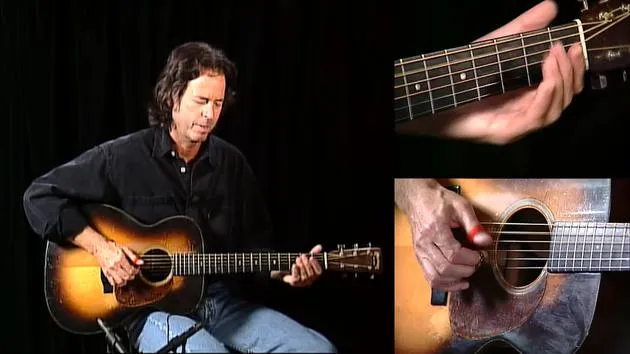
04. Lightning Strikes (lección)
Estás aquí9:37
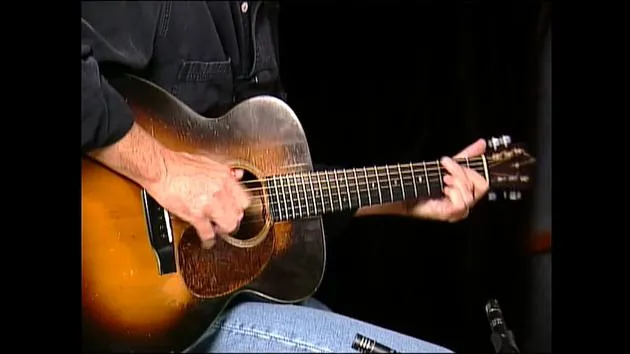
05. Sick Boogie (interpretación)
2:31
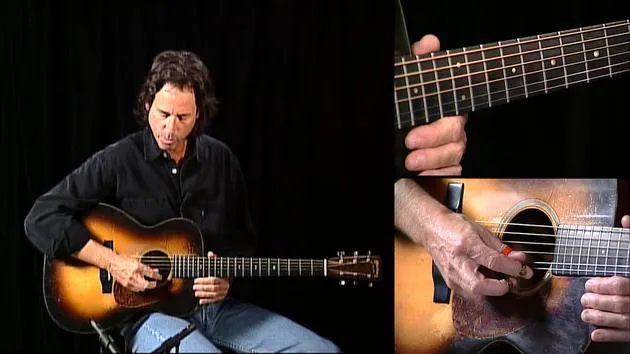
06. Sick Boogie (lección)
8:56
07. If The Shoe Fits (interpretación)
4:18
08. If The Shoe Fits (lección)
9:19
09. Honky Tonk (interpretación)
3:49
10. Honky Tonk (lección)
10:04
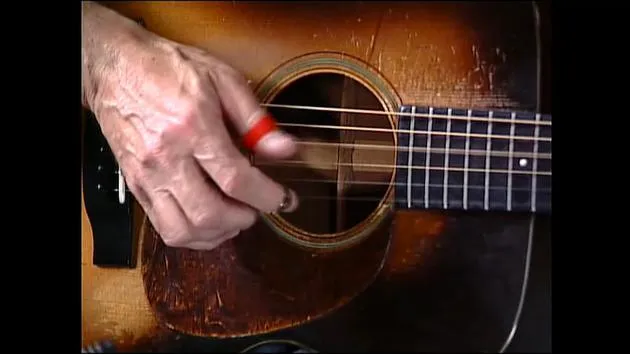
11. Cascade Rag (interpretación)
3:12
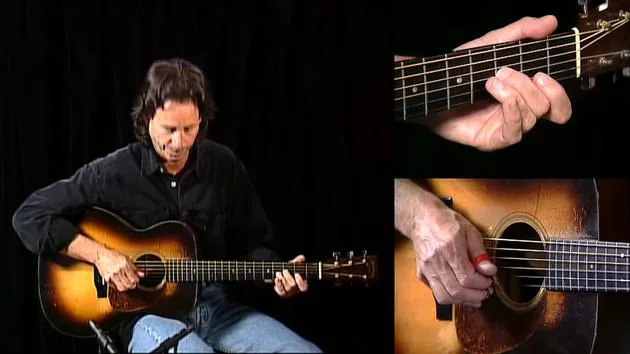
12. Cascade Rag (lección)
9:14
Transcripción de la lección
Music Lesson: Lightning Strikes in E
Our next tune is going to be Lightning Strikes, and this is going to be in the key of E again.
Overview of Songs in E
On this DVD, I'm going to play three songs in E:
- One slow: which we just did, called Slipping
- A medium pace: like Lightning Strikes
- A fast one: called The Sick Boogie
This will show you what you can do in the key of E. As I've mentioned before, acoustic guitar and blues guitar are predominantly in the key of E. I'll demonstrate how you can play the same notes but create a different song from them.
Playing Lightning Strikes
For Lightning Strikes, we're going to do a straight shuffle, medium-paced shuffle.
- If you read it in a book, it would look like this.
- But again, we're not doing the book today; we're going behind the scenes.
Right Hand Technique
- Right-hand slap: This will be the rhythm, hitting against the strings.
- Strings hitting against the fretboard create that sound.
I'll give a little kick with my finger on the last eighth note. It's going to sound like this:
- The technique here is driving the right hand into the strings.
Alternative Sound
If you can't do that, you can still get a pretty good sound by just muting right here. However, you don't really want to get this sound:
"Peter, Paul, and Mary Blues."
You want a little funkier thing going. The last kick is just a brush up with the first finger for me, and it goes like this:
To accomplish that:
- My left hand comes off a little bit.
- As I bring it back down to the shuffle, it mutes out that first string. Otherwise, it would keep ringing, which doesn't sound great.
So you want to go: (demonstrate sound). That's full Lightning Hopkins right here. Everything has that in there.
- Same with A: just open E and back gives it that little extra kick.
- B7: And that lick in A is a basic blues that you'll use a lot.
Differences in Chords
When I do it in E, the only difference is that I hit the D note instead of the D flat.
- Here's what I do on the A chord. We'll see that a lot: Basic turnaround.
Now we'll continue and add some fills.
Adding Fills
The fill was just playing the shuffle:
- Same thing on A.
You can do anything there within the key of E:
- I just picked that because it sounded pretty cool.
"But you could go... so it's just a little area to fill in."
Going Up the Neck
Now from there, we're going to go up the neck a little bit:
- I'm going to go up here to the 10th and 12th frets and use double stops.
I use double stops a lot in my playing, two notes at once. A very common one is right up here, this E7. We used it before in Slipping and Dripping.
- We're going to use a lot of the same things but in different ways so they sound different.
"How to play blues in E using the same notes but creating many different songs, it's my specialty."
I've been doing it for a living for a long time and fooling some people at it.
Double Stop Technique
The double stop is going to go:
- If I was playing slow blues, I'd go triplets.
- But for mid-tempo blues, there's not enough time, so I'll go:
(A demonstration of the sound).
A lot of times on these double stops, I'll put that open E in:
- I'll slide into the A.
- Now on the fifth fret, sort of this F major seventh, moved up here, and I'll go:
There's a little slide at the beginning of that, and I do that a lot in my playing:
- The slide happens with my first finger and I'll slide, missing the first string.
- As I slide into the chord, I hit the bass.
That can happen anywhere on the guitar, whether I go down lower or up higher for E.
New Chord
Now, another cool chord coming up here to the seventh and eighth frets.
- We would normally play it this way, but I'm going to make a larger chord, add that E note there, and slide into it like this, then up to this E7.
Now for the A:
- Back to some double stops again.
- Really common triplets, slow blues with the A note but at this tempo like that or maybe like this or no bass.
These can be used anywhere. If you want to use them in B, just a little trick, you know.
Keeping It Simple
I try to make it as simple as possible:
"Trust me, there's enough other stuff going on. If I'm out of tune a little bit, it's the blues, so it's totally cool."
Conclusion
In this lesson, what we want to focus on is getting a lot of rhythm in our shuffle.
- Remember, it's high speed.
- Triplets will not work unless you're really fast.
- So again, use eighth notes instead of sounding rushed.
Keep in mind to use strong monotone in your rhythm when I'm not shuffling Lightning Strikes.
12 lecciones
1h 18m de lecciones en vídeo estructuradas
Funciones de vídeo avanzadas
Ralentiza, repite un pasaje, sigue la partitura
Móvil, tablet y ordenador
Practica donde quieras
Garantía de satisfacción 100%
30 días de garantía de devolución
Conoce a tu gurú
Conoce a tu gurú
Kenny Sultan es autor superventas de libros de música y vídeos didácticos sobre guitarra de blues, y es el guitarrista de un dúo de blues junto a Tom Ball.
Juntos y por separado han trabajado en incontables bandas sonoras de cine y televisión, anuncios y sesiones. Han aparecido en televisiones de todo el mundo, protagonizaron los anuncios de los “Levi's 501 Blues”, han tocado para audiencias de 300 millones de personas a través de Voice of America y son invitados habituales de la National Public Radio. Han compartido escenario con figuras como Bob Dylan, Stevie Ray Vaughan, The Allman Brothers, Joe Bonamassa, Ray Charles, Joe Cocker, Elvis Costello, y la lista es larga...
Como en casa allá donde van, Tom y Kenny encajan en festivales de blues, folk, bluegrass y jazz, y su amplia trayectoria docente los convierte en una elección natural para campus universitarios o salas que programan talleres. Como su música es una mezcla de estilos de raíces americanas, son habituales en el extranjero, donde cosechan críticas entusiastas.
Ese mismo bagaje docente es lo que aprovechas aquí. Kenny te introduce en la guitarra de blues tradicional desde cero -patrones de fingerpicking, bajo alternado, turnarounds y los licks clásicos que definen el estilo- para que construyas un auténtico repertorio de blues acústico que de verdad puedas tocar.
“Una forma de tocar estupenda.” --Blues Revue
“Tan bueno como cualquiera en el blues acústico.” --Sing Out







