



Dans A Sailheu - Tavarn - Danse des Deux Pommes Frites (lección)
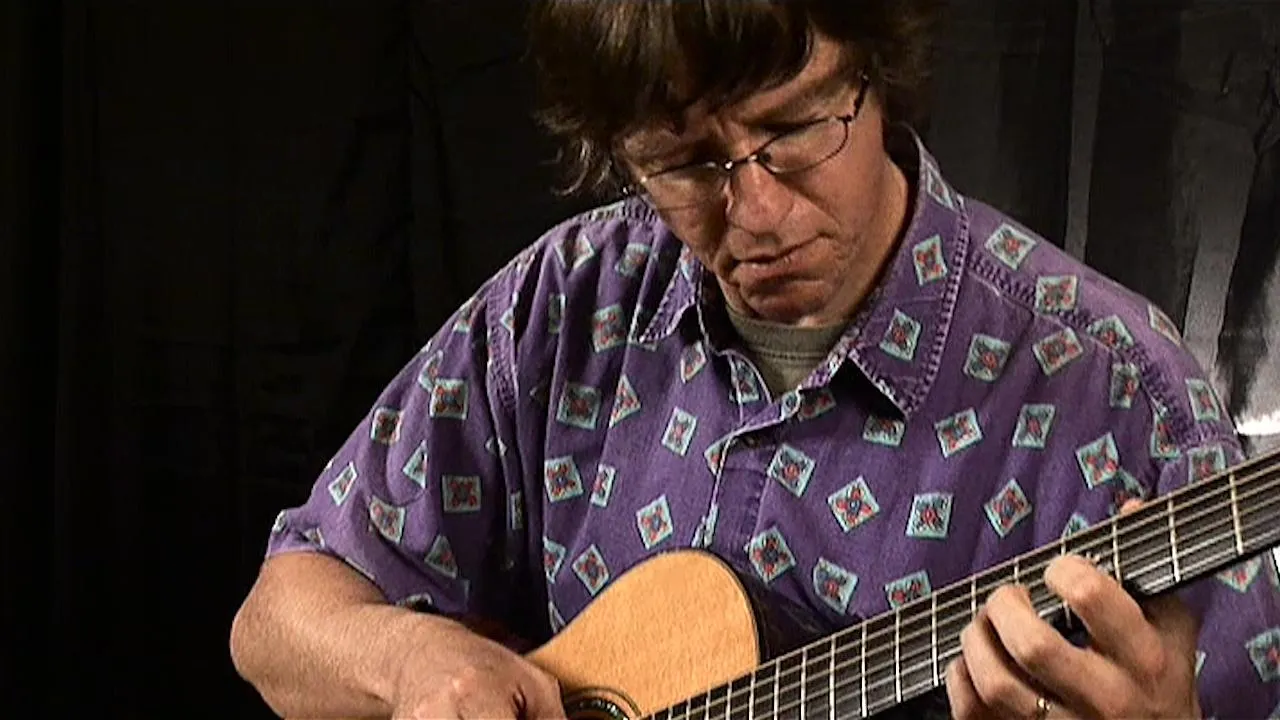
Steve Baughman enseña tres temas de guitarra celta en afinación Orkney, centrándose en las sencillas técnicas de mano derecha que impulsan su groove.
Qué incluye el curso
13 lecciones (1h 9m) · 1 gratis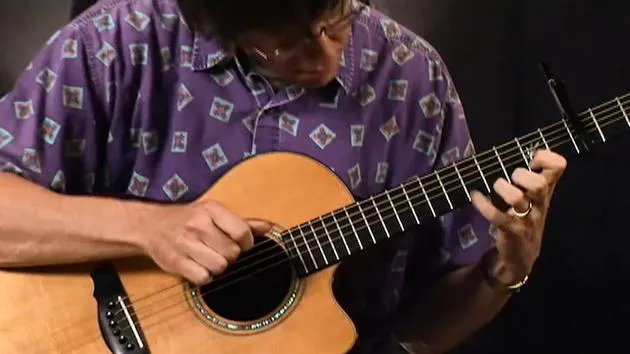
01. Dans A Sailheu - Tavarn - Danse des Deux Pommes Frites (interpretación)
Lección gratis5:10
02. Dans A Sailheu - Tavarn - Danse des Deux Pommes Frites (lección)
Estás aquí10:24
03. Little Beggar Man (interpretación)
1:54
04. Little Beggar Man (lección)
8:24
05. Loch Lomond (interpretación)
3:20
06. Planxty John Irwin (interpretación)
3:33
07. Planxty John Irwin (lección)
1:29
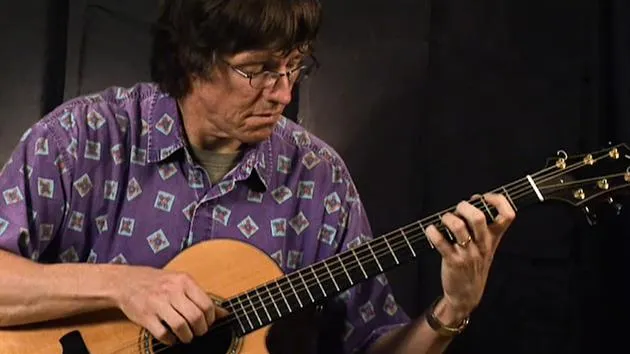
08. Cool A Jig - The Choice Wife (interpretación)
4:09
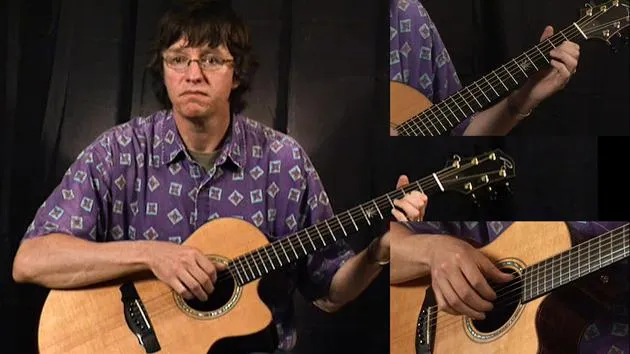
09. Cool A Jig - The Choice Wife (lección)
6:09
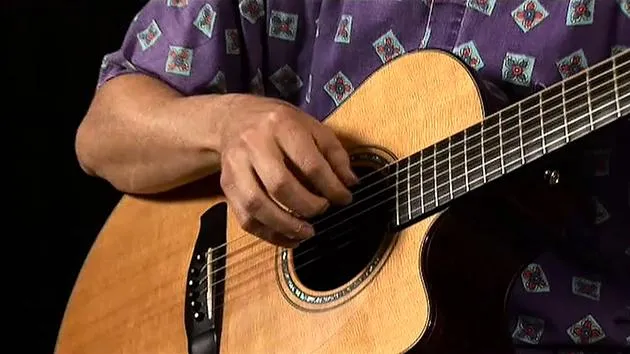
10. Neil Gow's Lament - Devil In The Kitchen - The Tushgar (interpretación)
6:24
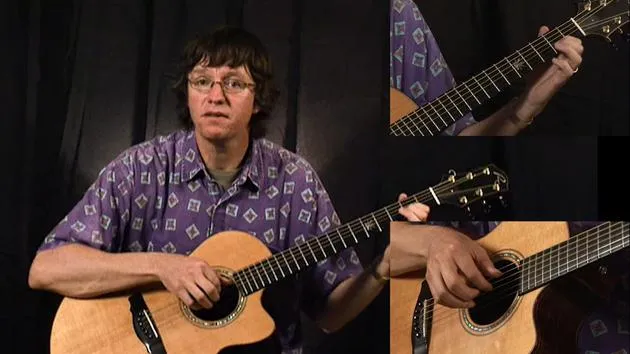
11. Neil Gow's Lament - Devil In The Kitchen - The Tushgar (lección)
11:08
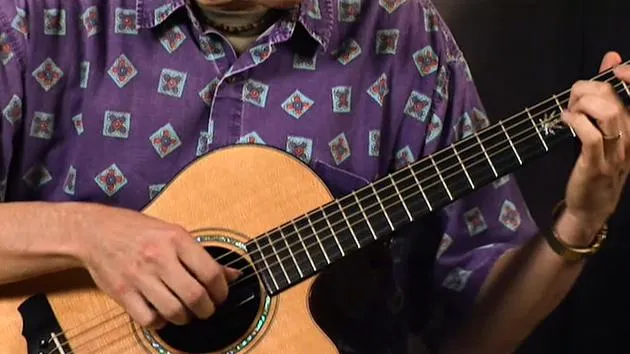
12. Paddy Fahy's Jig (interpretación)
2:40
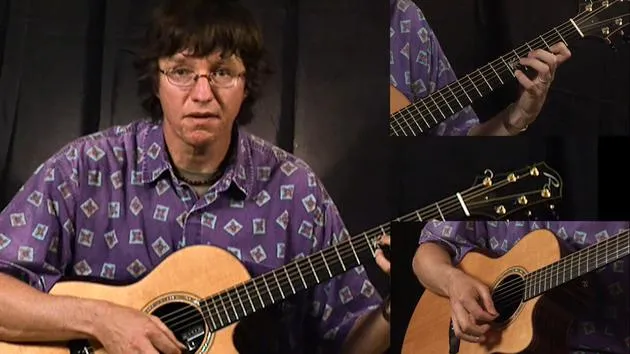
13. Afinación Orkney (lección)
4:43
Transcripción de la lección
Right Hand Techniques in Music
There were some really fun, kind of exciting, cool right hand things happening in the second and third pieces that I just played. They involve really pretty simple techniques, but they can be quite powerful. Let me show you the most basic technique that I was using.
Basic Groove and Tuning
Keep in mind, when you go back and look at the tab, you'll see that I'm departing from these techniques frequently. However, these techniques still provide the basic groove to the pieces you heard.
Tuning
- Orkney Tuning: C, G, D, G, C, D
(Note: This tuning has nothing to do with the Orkney Islands in the north of Scotland.)
Capo
I usually don't have a capo on, but for these three pieces, I decided to use one. I'll take it off soon.
Right Hand Technique
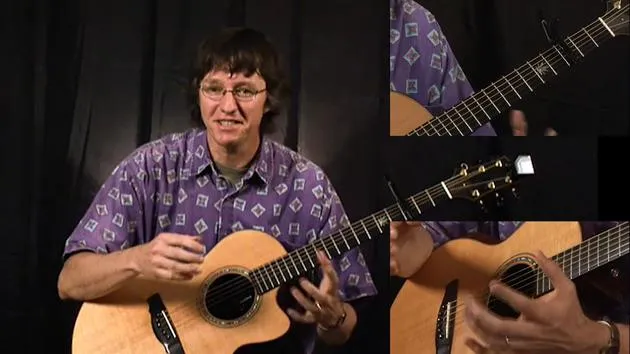
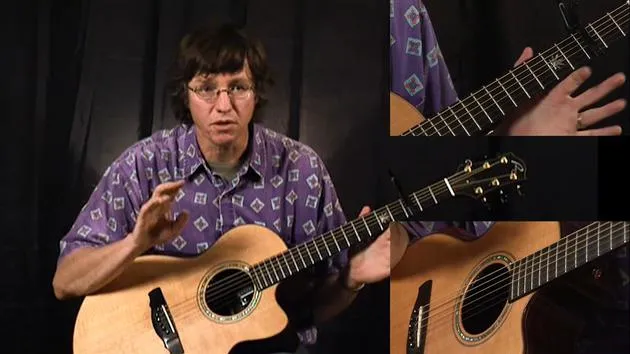
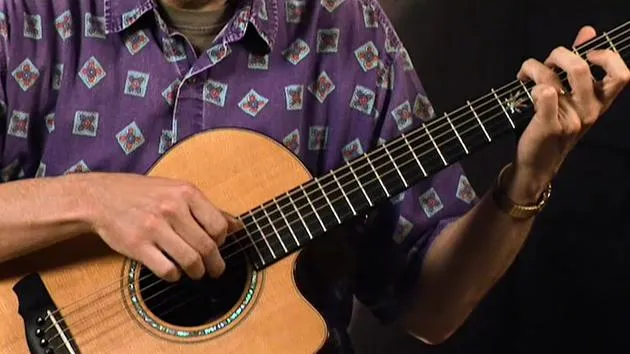
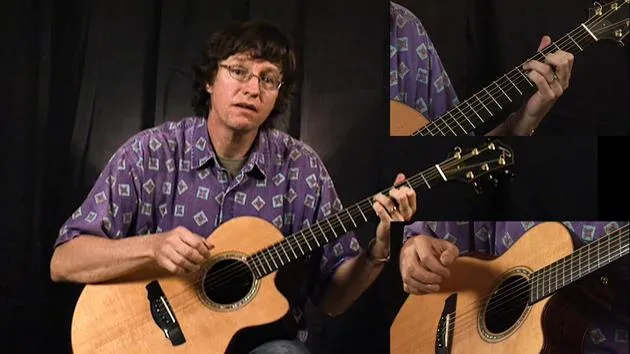
The technique I'll be using focuses on the right hand. This might be a good time to remind you about the angle function on your DVD remote. We're high tech here! You can isolate my left hand when you want to, my right hand, or just look at the full-body picture here.
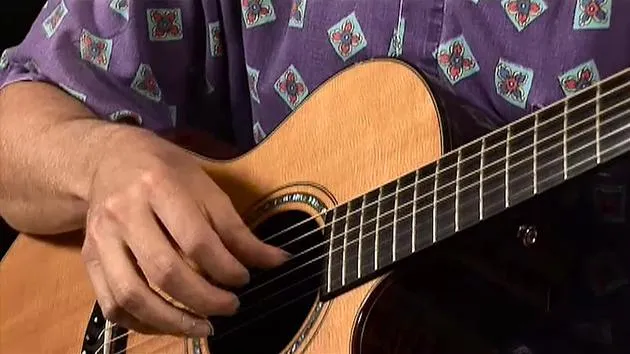
I recommend going to the right hand function because I'll be discussing a pretty important right hand technique.
Basic Pattern
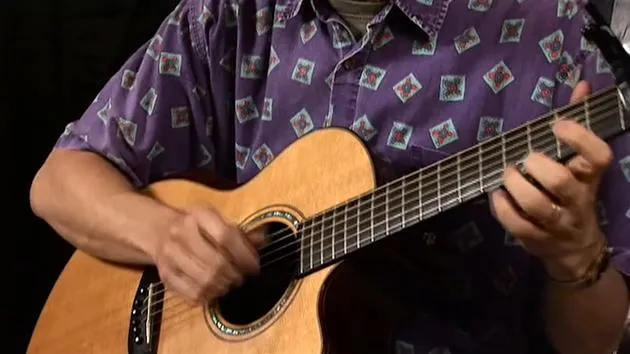
That's the basic pattern. It's deceptively simple. You want to keep practicing this at home, in your car, or at work until you've internalized it.
- Technique: It involves a pinch followed by a downward pluck with the back of my fingernail.
- Effect: This gives you a flat-picking effect.
Introducing the Breton Riff
Now, I'm going to introduce the Breton riff. This is our pump primer riff for the techniques I will be showing you. It's just a little riff I came up with for this project to give you something fun to practice these techniques with.
Riff Example
Here's how the riff goes, and I'm going to play it a few times using just this basic technique.
"I could go on and on. That's really fun and really easy once you get this pattern in you."
All that sound I just made, a melody with bass happening with a groove, came from this simple technique.
Modifying the Technique
Now, I'd like to modify the technique ever so slightly. I'll keep the same groove but introduce more than one string during the first pass. It doesn't matter what strings I use yet; it's just about expanding the technique.
How It Sounds
This is how it sounds on our Breton riff. The old way becomes the new way. It fills it out, and while it doesn't necessarily make it better or worse, it's an option for your arsenal of techniques.
Important Note
It's crucial to remember, it's not important in this particular Breton riff, but when creating a right hand groove, if there's a note needed in your melody that's not in your right hand pattern, you can always grab that note with your left hand.
Counterintuitive Technique
This idea might be difficult at first, as it involves a new technique combined with a funky rhythmic style.
"Just this."
Middle Finger Thwack
Let me show you another variation on the Breton riff. This is the infamous middle finger thwack, a technique I learned from Martin Simpson. It's very useful but not necessarily suitable for an entire piece.
How It Works
- Technique: Take your middle finger, dig it into the base of your thumb, and flick it off like you're flicking a booger.
- Application: Isolate one single string for it. This can create a lot of noise and might sound awful if you don't hit the right string, but that's okay.
Riff Incorporation
Now, let me incorporate that into the riff.
"By the way, this is probably one of the most difficult patterns I'll be showing you."
If you get frustrated, don't give up! This requires practice.
Final Variation: Palm Slap
Lastly, let's explore the palm slap technique. I'll start with the very basic pattern I showed you earlier, but during the downward motion, I'll gently slap the strings.
Technique Explanation
- You want to keep the slap gentle and percussive.
- During the slap, you can either:
- Hit the string on your way down, or
- Skip the downward pluck entirely and create your melody note with your left hand.
Sound Example
What my right hand did there was simply this. I didn't need to do any downward plucking because I made the notes with my left hand.
"You can also help the melody along by keeping your downward pluck happening along with the slap."
That's really important! Thank you for participating in this lesson!
13 lecciones
1h 9m de lecciones en vídeo estructuradas
Funciones de vídeo avanzadas
Ralentiza, repite un pasaje, sigue la partitura
Móvil, tablet y ordenador
Practica donde quieras
Garantía de satisfacción 100%
30 días de garantía de devolución
Conoce a tu gurú
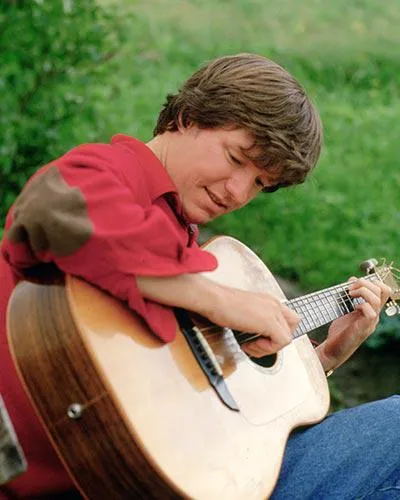
Conoce a tu gurú
Steve Baughman es uno de los verdaderos originales de la guitarra fingerstyle, un intérprete cuyo trabajo acústico de raíces celtas y afinaciones abiertas ha cosechado el aplauso de la crítica a ambos lados del Atlántico.
'De vez en cuando aparece un álbum capaz de cambiar tu forma de entender la música de guitarra; Farewell to Orkney de Steve Baughman es uno de ellos... Imprescindible para todos los amantes de la guitarra y, en especial, de la música celta.'
--Acoustic Guitar Magazine
'Una estrella de la guitarra fingerstyle: muy hábil, reflexivo, discretamente audaz, profundamente lírico y juguetón.'
--Radio National, Australia
'El arte y la musicalidad de Steve son de clase mundial, con una dinámica, un timing y una interpretación que siempre hacen aflorar la esencia emocional de la canción.'
--Sing Out Magazine
'...innovación técnica, virtuosismo e intensidad.'
--Acoustic Guitar Magazine
'Un virtuosismo increíble... pone de relieve la belleza serena de la guitarra acústica de afinación abierta.'
--Marin Independent Journal (Lástima que no sea el Washington Post. Pero me conformo.)
Su álbum Farewell to Orkney figuró entre los 'Mejores álbumes de 2013' de Acoustic Guitar Magazine.
Y luego está el reconocimiento que Steve no acaba de tomarse en serio. Está en la lista de Digital Dream Door de los 100 mejores guitarristas de fingerstyle de todos los tiempos, que incluye a algunos ya fallecidos. 'Antes ponía esto en mi material de prensa. Pero luego pensé que era solo la opinión aislada de algún tío o tía en algún rincón del ciberespacio. Cualquiera puede hacer una lista. Además, ¿cuántos guitarristas de fingerstyle puede haber, al fin y al cabo? Debe de ser difícil no entrar en el top 100. Sospecho que los puestos del 81 al 100 son todos nombres inventados. Mientras hayas sacado un CD de guitarra, estás en el top 80. Creo que yo era el 77. A lo mejor ahora me borran de la lista por haber dicho todo esto. Pero agradezco la pasión de quienquiera que la elaborara. Gracias por incluirme; impresionó a mi madre. Puede que ya no lo haga.'
En Celtic Guitar Solos, Tunes & Techniques, Steve comparte las afinaciones abiertas y los enfoques de fingerstyle que hay detrás de ese sonido, para que puedas tocarlo tú mismo.







