



Lenguaje corporal
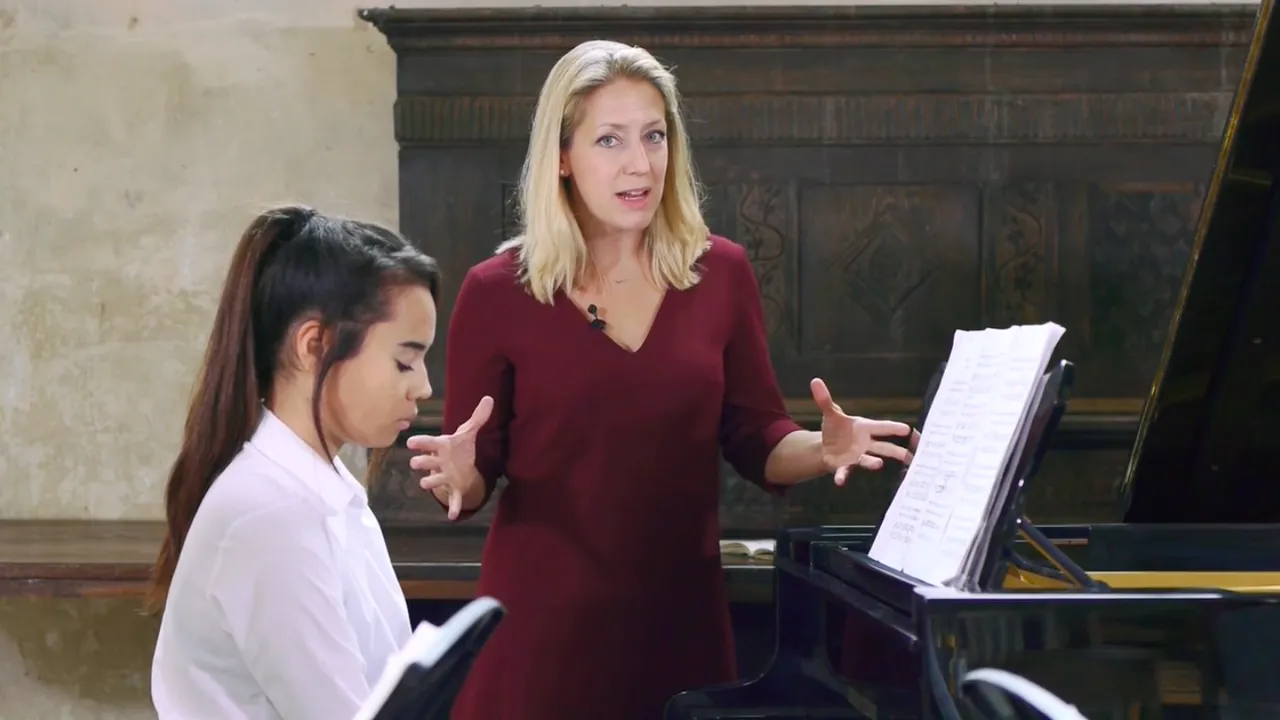
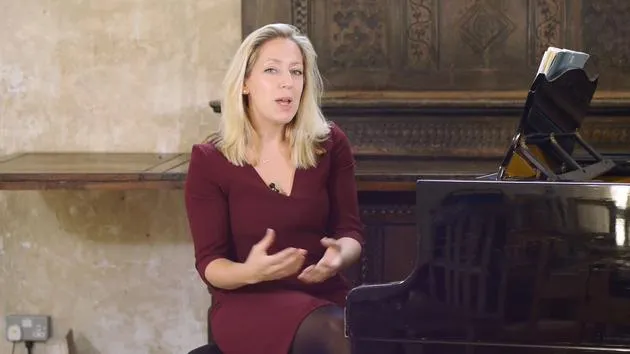
Annabel Thwaite explora cómo la postura y el lenguaje corporal ayudan a los músicos de cámara a producir el sonido con libertad, reducir la tensión y mantenerse conectados entre sí.
Qué incluye el curso
8 lecciones (0h 25m) · 1 gratis
01. Presentación de Annabel y desarrollo de un grupo de cámara ya formado
Lección gratis1:45
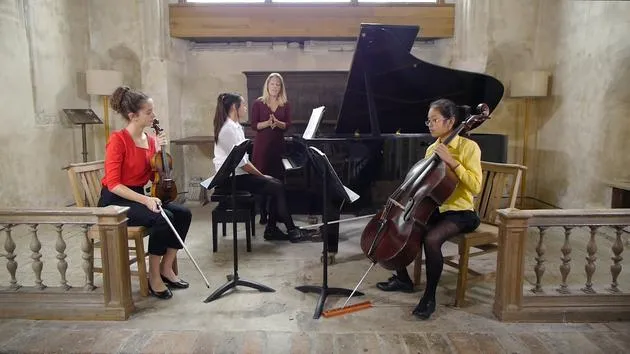
02. El sonido completo (el miembro invisible del grupo)
3:28
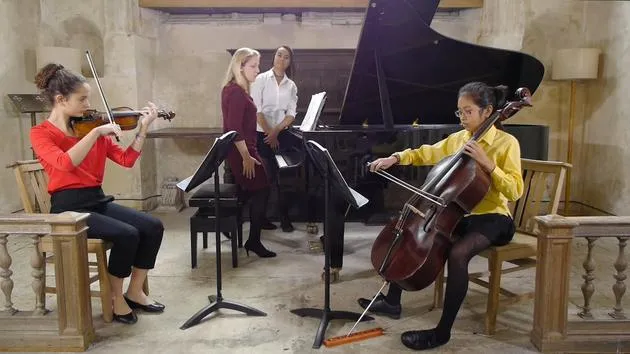
03. Lenguaje corporal
Estás aquí3:44
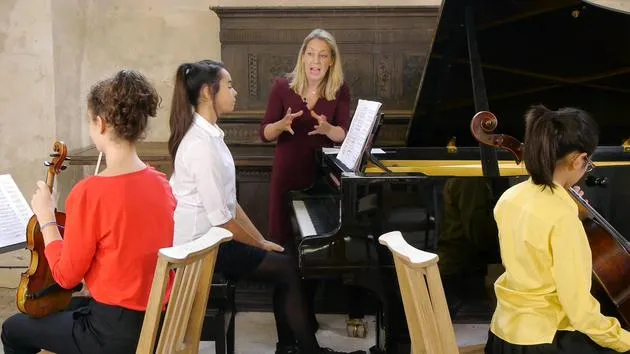
04. La importancia de la respiración
3:28
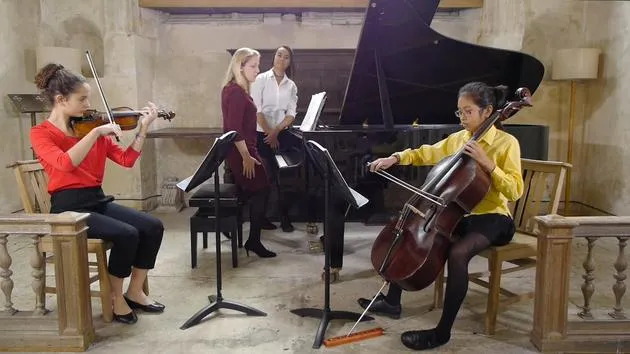
05. ¡Sigue al líder! Un juego divertido
4:00
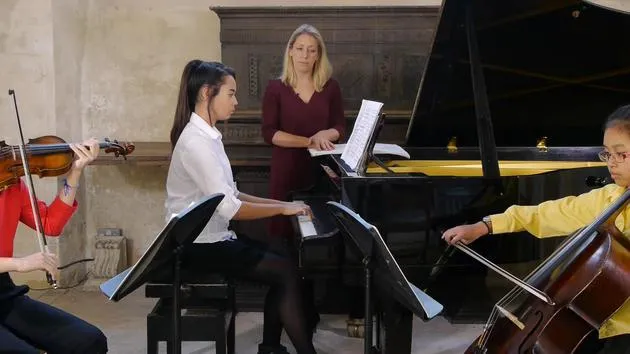
06. Estudiar la partitura
4:05
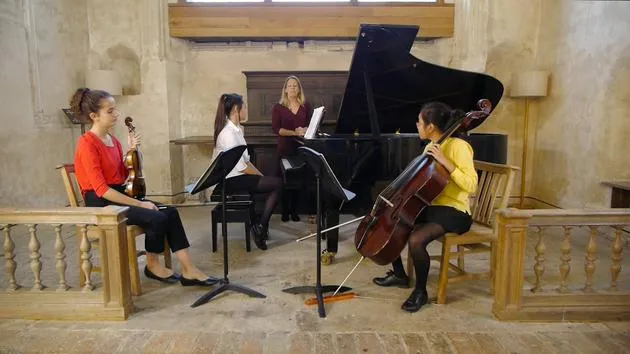
07. Una conversación musical y la ley de Pareto
2:44
08. Más allá de la sala de ensayo
2:14
Transcripción de la lección
Music Lesson: Body Language and Posture
The Importance of Body Language
I think your demeanor and posture are incredibly important as a musician.
- Using your body to maximum effect allows the sound from your instrument to be released very freely and naturally.
- In a chamber group, body language is crucial; the aura you project should transmit energy while also allowing you to receive it.
Music Stands
Often, people see music stands as a barrier between the performer and the audience, but we certainly don't want to view them as barriers between our beautiful musicians.
- Ideal Height:
- Having your music stand at the correct height is perfect.
- If it's too low, instruments may appear cramped, making it difficult to play.
Imagine if the stand were smaller, playing would feel quite cramped, wouldn't it?
Practicing with Confidence
You could allow a shy first violinist or recorder player to stand and be more aware of their posture, embracing a more soloistic approach.
- Activity:
- Family, you wouldn't mind standing and imagining you were a soloist. Please play the beginning for me.
- Response: "Lovely! How did that feel?"
- It felt more free, and I was able to move around more freely.
Practical Tips for Musicians
- Practice Suggestions:
- In their practice room, the teacher should encourage students to practice standing up.
- They should also keep the feeling of freedom and incorporate it while practicing with the stand low.
Brief Word About Posture
When sitting down, these musicians should aim for stability.
- Foot Placement:
- Both feet should be planted on the ground, providing a sense of stability.
- This approach works the major muscle groups from the waist down and allows for more freedom in the upper body.
- Both feet should be planted on the ground, providing a sense of stability.
Peripheral Vision in Practice
In the practice room, students could work on their peripheral vision.
- Moving to a pianist, this concept applies to a bass quartet or any musician left or right of center.
- For example, if Nikki started to turn her head a lot, it might disrupt her and make her nervous about the notes, especially later in the piece when there are more complexities.
Recommendations for Practice:
- I would really suggest that in the practice room, she remains aware and practices moving her eyes away from the score. This will enhance her compatibility with the rest of the group.
This isn't always possible, and I personally prefer looking at the score while doing something else.
- Now, let's move on to discussing breath, which is our next topic.
8 lecciones
0h 25m de lecciones en vídeo estructuradas
Funciones de vídeo avanzadas
Ralentiza, repite un pasaje, sigue la partitura
Móvil, tablet y ordenador
Practica donde quieras
Garantía de satisfacción 100%
30 días de garantía de devolución
Conoce a tu gurú

Conoce a tu gurú
Reconocida como una de las pianistas más versátiles y carismáticas de Gran Bretaña, Annabel Thwaite disfruta de una carrera diversa como solista, música de cámara, artista de grabación, docente y examinadora, y ha ganado todos los principales premios de acompañamiento, incluidos los prestigiosos Kathleen Ferrier, Gold Medal y Richard Tauber Piano Prizes. Ha colaborado con artistas de renombre como Roberto Alagna, Bryn Terfel, David Kempster y "Only Men Aloud!"
Annabel ha grabado para Universal records con el "Scottish Tenor", cuyo álbum fue nominado a un Classical Brit Award y suena con regularidad en Classic FM. Dos veces acompañante del Festival of Welsh Male choirs, sus actuaciones en el Royal Albert Hall fueron grabadas por Sain y emitidas en S4C. También es pianista de sesión de cine, habiendo grabado en Abbey Road la música de la película "Awake", la serie de la BBC sobre Jane Austen "Emma", "The Secret Diaries of Miss Anne Lister" y, más recientemente, ha aparecido tanto en Blue Peter como en "The Rob Brydon Show".
"...sin duda ayudada por los acompañamientos de piano evidentemente brillantes de Annabel Thwaite... sumamente disfrutable."
En sus cursos de MusicGurus —Learn Christmas Classics on Piano, Learn Classical Favourites on Piano y Growing Chamber Groups and Small Ensembles— Annabel comparte la musicalidad que hay detrás de esa carrera versátil. Aprenderás a dar vida al piano a piezas navideñas y clásicas muy queridas, a desarrollar tu toque y tu fraseo y, apoyándote en su experiencia premiada como acompañante, a descubrir cómo escuchar, liderar y tocar en conjunto al hacer música con otros músicos en grupos de cámara y pequeños conjuntos.







