



Introducción a los acordes de séptima menor
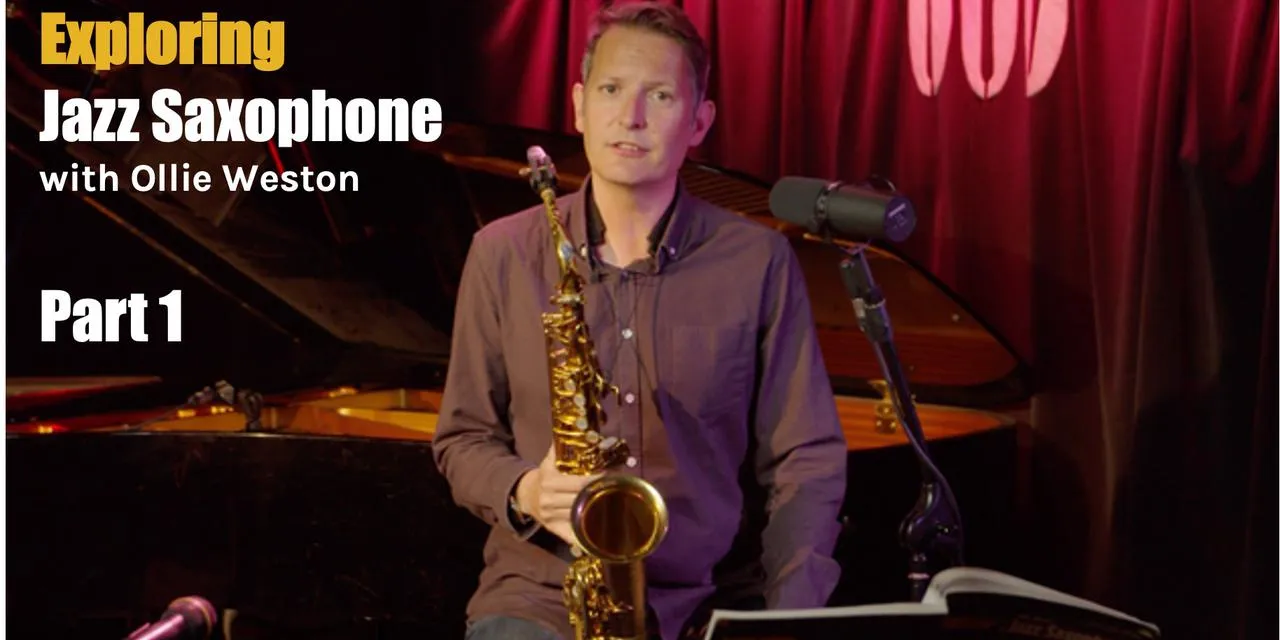
Lesson time: (3min 32sec)
Ollie Weston explica cómo se construye el acorde de séptima menor —un pilar del jazz—, bemolizando la tercera y añadiendo la séptima, con sol menor como ejemplo.
Course preview
This lesson is part of the course Exploring Jazz Saxophone: Parte 1 - Primeros pasos
Watch a preview of the full course below.
Lesson transcript:
Introduction to the Minor Seventh Chord
In this lesson, I'm going to introduce the minor seventh chord, which is another staple of the jazz repertoire and obviously deals with the minor tonality.
G Major Modification
In G major, to make it sound minor, I'm going to change my third:
- Instead of B natural (my major third), I'm going to flatten that by a semitone, like I've done in the blues before.
To build a chord of G minor, we can do exactly the same thing as we've done with major chords: root, third, fifth.
Adding the Seventh
Since we're playing jazz, we're going to put the seventh on as well.
- Our chord tones of a G major 7 chord would be:
- G
- B
- D
- F sharp
Changing to A Minor 7 Chord
To change to an A minor 7 chord, I need to change two notes:
-
The third: For it to qualify as minor, it must have a B flat.
- So it will sound like this:
"A minor major seven chord."
It's a kind of hybrid, I guess. It's got a minor third, but a major seven.
- Against the piano, it will sound like this. You hear that chord a lot in suspense films; it has a very unique character of its own.
Flattening the Seventh
To make a minor seventh for jazz, I also want to flatten my seventh:
-
My F sharp is going to become an F natural.
-
So against the piano chord, it'll sound like this.
Scale Components
In exactly the same way as major chords, I have chord tones:
- Root
- Third
- Fifth
- Seventh
- And in between, passing tones:
- A second (which is A in this case)
- A fourth (which is C in this case)
- A sixth (which is E natural in this case)
The Dorian Mode
The whole scale is going to sound like this.
- This scale I've ended up with is a variation on a minor scale called A mode, specifically Dorian mode.
You might have learned about harmonic minor scales and melodic minor scales. All these will come up in jazz.
However, for this example and for static minor seven chords, I'm going to play this Dorian scale, which again sounds like this.
About the instructor
Desde que se graduó en el Leeds College of Music (BA Hons) y en la Guildhall School of Music (Post Graduate Diploma in Performance), Ollie ha construido una carrera intensa y variada en la música. Como saxofonista ha actuado en directo y en estudio con artistas tan diversos como Amy Winehouse, Tim Minchin, Bonobo, Frank Turner, la London Jazz Orchestra, la Hackney Colliery Band, el Ambient Jazz Ensemble y la Nelson Riddle Orchestra. También es colíder del cuarteto de jazz 'Time Is Of The Essence', y compone y arregla material para esta y otras agrupaciones. Ollie está activo en la educación musical, actualmente como responsable del curso del departamento de jazz de la Guildhall School of Music and Drama (escuela junior), donde dirige conjuntos de jazz, big band y clases de teoría. Ha escrito una serie de libros 'Exploring Jazz' para Schott Music que se publican en todo el mundo y figuran en los temarios de examen del Reino Unido. Ollie también ha impartido talleres para la Oxford University, Pro Corda Strings y BABSWE, así como en las escuelas de verano de la Guildhall School of Music. En sus cursos Exploring Jazz Saxophone, Ollie te lleva desde los primeros pasos hasta improvisar con confianza sobre canciones y secuencias de acordes, desarrollando las habilidades de improvisación que ponen a tu alcance el vocabulario de un auténtico músico de jazz. read more