



Combinar la escala de blues y las corcheas swing
Con
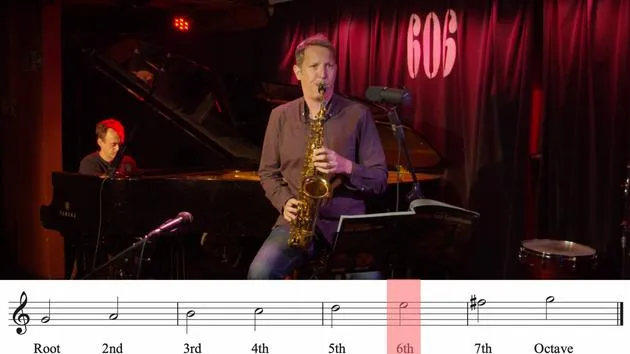
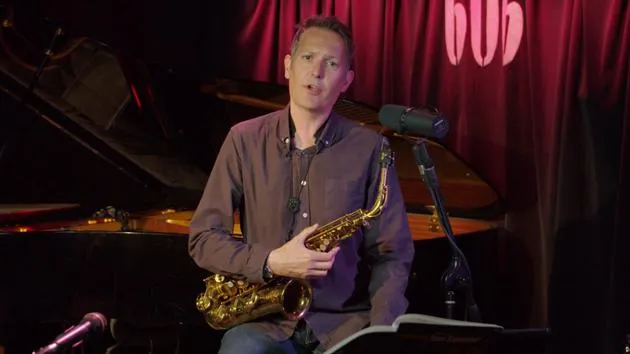
Ollie WestonOllie Weston combina la escala de blues con corcheas swing, transformando una melodía mayor y brillante en una bluesera al bajar las terceras, quintas y séptimas.
Qué incluye el curso
51 lecciones (2h 9m) · 1 gratis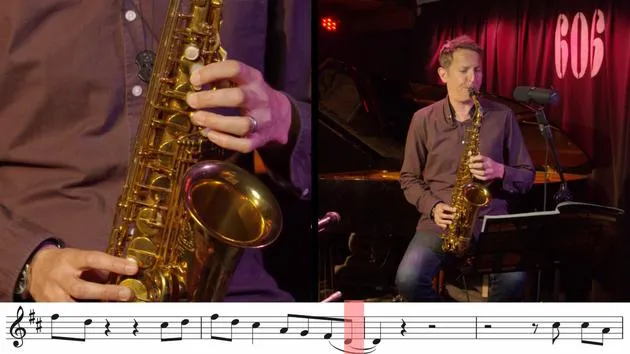
01. Introducción + demostración de Leaving Town
Lección gratis3:02
02. La escala de blues
2:48
03. Corcheas swing
1:42
04. Combinar la escala de blues y las corcheas swing
Estás aquí3:57
05. Recorrer la forma de blues usando las notas fundamentales
1:18
06. Escribe tu propio blues
0:59
07. Leaving Town Blues - Improvisa
4:13
08. Repaso de la improvisación
0:49
01. Introducción a los acordes de séptima menor
3:32
02. Entrenamiento de la escala dórica
1:40
03. Lick con acorde de séptima menor
2:22
04. Patrones de pentatónica menor
3:51
05. Rutina de pentatónica menor
1:52
06. Escala pentatónica vs. escala de blues
1:59
07. So Far so Good - Introducción
1:09
08. So Far so Good - Head
1:37
09. Extensiones de acordes menores
2:45
10. Ideas rítmicas
2:13
11. So Far so Good - Interpretación con solo
3:50
01. Introducción a los modos
6:09
02. Ejercicio de modos diatónicos
4:04
03. Modos con una fundamental estática
1:58
04. Ejercicio de modos con raíz estática
1:06
05. Repaso de los modos con fundamental estática
0:34
06. Ejercicio de frases para los modos
1:07
07. Ejercicio de frases para los modos (demostración)
1:29
08. Ejemplos de canciones
1:56
09. First Impresssions - Acordes y armonía
4:06
10. First Impressions - Interpretación
4:06
11. First Impresssions - Introducción y análisis
3:30
Transcripción de la lección
Blues Scale and Swing Quavers Lesson
Introduction
In this lesson, we're going to put together the blues scale and the swing quavers, and start to alter melodies to create melodies using the blues sound.
Major Melody Example
Here's what we'll do:
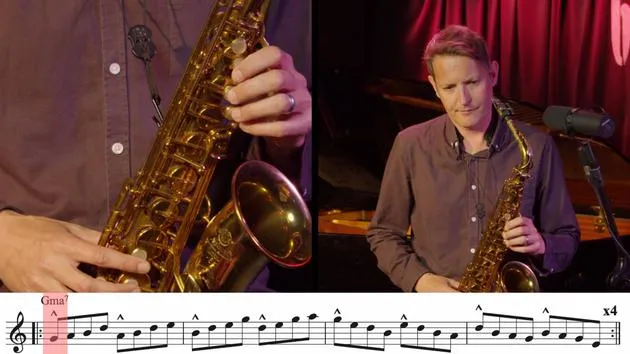
- I've written a very major sounding melody in the same way as "Leaving Town," but without any blues touches.
- The exercise is to try and turn it into a blues melody yourself.
Original Melody Sound
Here's how the melody sounds with no blues at all:
"1, 2, 1, 2, 3, 4."
Hopefully you're hearing that melody. While the swing is authentic, the notes sound too major, too bright, and they're not really evoking the sound of the blues.
Altering Melodies
You've got lots of options to change:
- Thirds
- Sevenths
- Fifths
For example:
- In the first phrase, I could change my C sharp to a C natural.
- If I want to go really bluesy, I could change the third as well (the F).
It's really yours to take control of:
- You can choose to make everything bluesy and really create a full-on blues-sounding tune.
- Alternatively, you can add blues touches to it and change certain notes.
- Aim to make each performance a little different, and learn to experiment with these sounds through the sequence.
Understanding the 12 Bar Blues
So far, we've talked about the melodic properties of the blues and the rhythmic swing feel to capture authenticity.
12 Bar Sequence
I haven't really talked yet about the 12 bar blues sequence itself:
- As the name suggests, it's a 12 bar sequence of chords that moves throughout the performance.
- It consists of three chords:
- Chord I: D
- Chord IV: G
- Chord V: A
As the lessons progress, you'll learn how to flesh out these chords and play different notes, scales, and lines over them.
Demonstrating the Blues
For the moment, I'm just going to focus on the bass notes so that your saxophone can effectively double what the bass player is doing, allowing you to hear how the chords move through the sequence.
Playing the Root Notes
- The first time through, I'll play long notes on each of the roots of the chord (D, G, and A).
- To demonstrate how a 12 bar blues is constructed, in the second chorus, I'll add a few rhythmic variations.
- I won't change any notes, but I'll incorporate some more authentic sounding rhythms and syncopations to make it sound a bit more effective.
What's a Chorus?
Good point! Each time a 12 bar cycle is repeated, it's called a chorus of the blues.
- Each time through, the melody is called a chorus.
- For a solo, each lap of the 12 bar sequence is also called a chorus.
Performance Demonstration
In this demonstration of the root notes of the blues:
- I'm going to play one chorus that is 12 bars of root notes.
- On my second chorus, I'll play a rhythmic figure with exactly the same notes to make it a bit more interesting and authentic.
51 lecciones
2h 9m de lecciones en vídeo estructuradas
Funciones de vídeo avanzadas
Ralentiza, repite un pasaje, sigue la partitura
Móvil, tablet y ordenador
Practica donde quieras
Garantía de satisfacción 100%
30 días de garantía de devolución
Conoce a tu gurú
Conoce a tu gurú
Desde que se graduó en el Leeds College of Music (BA Hons) y en la Guildhall School of Music (Post Graduate Diploma in Performance), Ollie ha construido una carrera intensa y variada en la música. Como saxofonista ha actuado en directo y en estudio con artistas tan diversos como Amy Winehouse, Tim Minchin, Bonobo, Frank Turner, la London Jazz Orchestra, la Hackney Colliery Band, el Ambient Jazz Ensemble y la Nelson Riddle Orchestra. También es colíder del cuarteto de jazz 'Time Is Of The Essence', y compone y arregla material para esta y otras agrupaciones.
Ollie está activo en la educación musical, actualmente como responsable del curso del departamento de jazz de la Guildhall School of Music and Drama (escuela junior), donde dirige conjuntos de jazz, big band y clases de teoría. Ha escrito una serie de libros 'Exploring Jazz' para Schott Music que se publican en todo el mundo y figuran en los temarios de examen del Reino Unido. Ollie también ha impartido talleres para la Oxford University, Pro Corda Strings y BABSWE, así como en las escuelas de verano de la Guildhall School of Music.
En sus cursos Exploring Jazz Saxophone, Ollie te lleva desde los primeros pasos hasta improvisar con confianza sobre canciones y secuencias de acordes, desarrollando las habilidades de improvisación que ponen a tu alcance el vocabulario de un auténtico músico de jazz.







