



Análisis de András Schiff de No. 4 Moderato
Lesson time: (18min 2sec)
Course preview
This lesson is part of the course Schubert - Moments Musicaux n.º 1, 3 y 4
Watch a preview of the full course below.
Lesson transcript:
Music Lesson
Introduction
And the next one, please. It's the same movement, but it's a different expression. This is not cozy; this is very tragic.
Expression and Emotion
- Please, you played it also because if you think of Bach, you know. But it's something else.
- This is mysterious. It shouldn't be so clear because you have harmonies.
- When you play it like this, you hear the "La Cremosa" of Mozart's Requiem.
Playing Techniques
- Again, the Neapolitan sixth. Please, it's too many fingers.
- Play me a choral.
- Yeah, very good.
- Now play it as it's written.
Replaying the Piece
- Okay, now I play again.
- The left hand again: this is too staccato; make this one a little longer.
- Very much better.
Character of the Piece
Now, just think of it:
- The tone fall, the character of the piece, and what we had.
- The first one, you see sunlight, sunshine. This is very dark, not just because it's in minor.
- And then it gets desperate. This is the most tragic piece of the Moma Musical.
Tempo and Rhythm
Okay, let's go from when this was jumping.
- Do more of that duck till "yum yum" phrase.
- Tempo, tempo, tempo. Very strict, but I would not slow down because you spoiled the surprise.
- Yum pom pimp. Again, the silence. Silence is the most beautiful thing in music.
Establishing a Rhythm
- But why a new tempo? I think the same tempo.
- Now get this: the movement of the trio section, the middle part, has a little accent on the syncopation.
- It's misleading because the listener hears: 1, 2, 3, 4; 1, 2, 3, 4; 1.
- But Schubert says 1, 2, 3 for 1, 2, 3; for 1, 4.
- We must establish this rhythmic pattern. After we can talk about details.
Playing Details
- A little more accent on the syncope: 1, 2, 3, 4; 1, 2, 3, four; 1, 2, 3, four.
- Okay, and now play legato.
Imagining the Scene
What's legato?
- Now try to think that the C sharp minor section is less Schoenam?llerin and more winterize.
- We are out in the cold, but we would like to be in a warm room.
Transition in Playing
- And this is the warm room.
- In your dream, you sit too long on the middle note. That's very good.
- There is a little bump that I don't need, you know, because it has to have a wonderful lilt swing.
Left Hand Technique
This is also your left hand is too heavy there. Be careful.
- So long. Too long.
Continuing with the Piece
Let's go on now. Very good.
- Now this is a question mark and answer.
- Don't do that; it's not a clever finger.
- Can you reach that? Yes, of course. Very good.
Theme of Wandering
It's one of those songs of wandering, you know.
- He's an unhappy wanderer.
- After coming back from the warm room, which was only in his dream, we are back on the road in ice.
- Sing. No, silence. This is so poetic.
Concluding Thoughts
And again, he thinks of the warmth, but only for two bars. Then it's interrupted, and then there is this epilogue.
- But there is no hope.
Play this again.
- But yes, it's beautiful.
- This is again: you have such a drama, so much happening in so little time.
- You have to put all the emotions and all the feelings within that time frame.
But it was very good.
Thank You
Now, thank you very much.
About the instructor
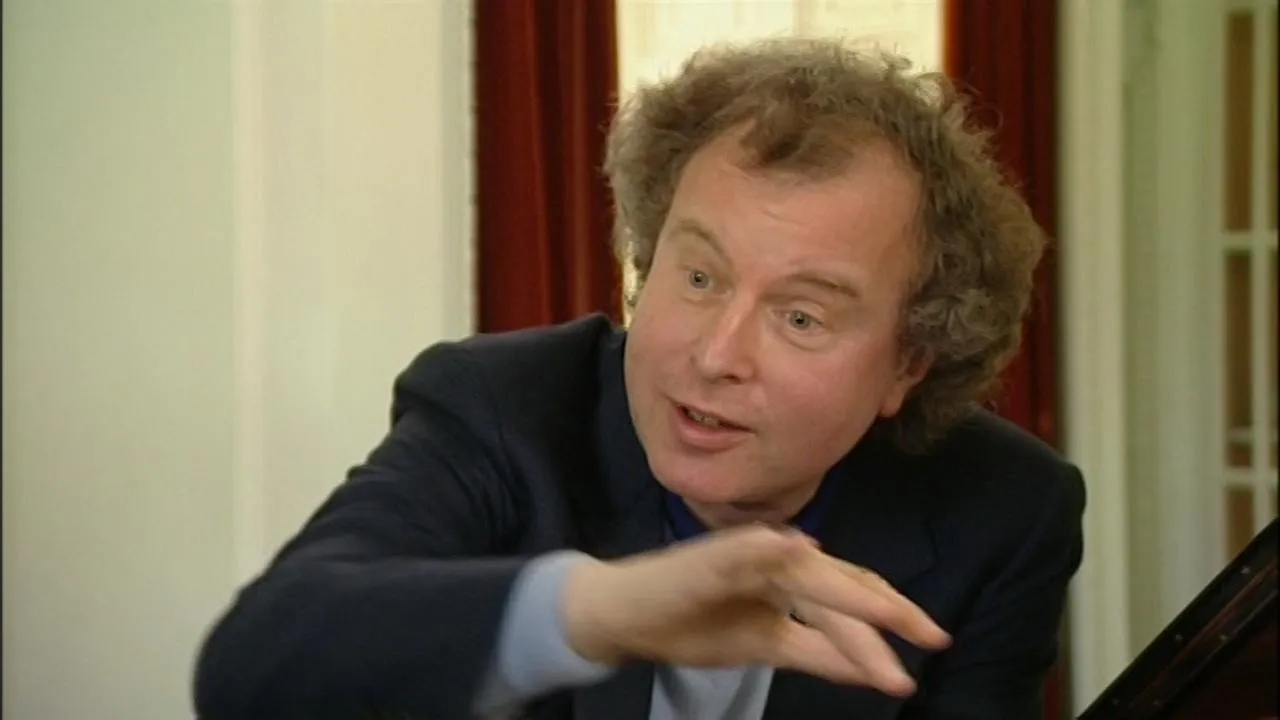
András Schiff es uno de los miembros más destacados de una generación de pianistas húngaros nacidos en los años posteriores a la Segunda Guerra Mundial, junto a artistas como Zoltán Kocsis, Dezso Ránki y Jenő Jandó. De este notable grupo, Schiff ha alcanzado la mayor reputación internacional, no solo por su decisión de desarrollar su carrera fuera de Hungría, sino también gracias a su sentido del toque finamente matizado y a una memoria impresionante que le permite presentar, en conciertos y grabaciones, amplias porciones de la obra de un compositor. Schiff nació en Budapest el 21 de diciembre de 1953 y estudió con el compositor húngaro Pal Kadosa y Ferenc Rados (que también enseñaron a Kocsis y Ránki), y con el clavecinista inglés George Malcolm. Debutó en Budapest a los 19 años, seguido de apariciones en concierto por toda Europa y Estados Unidos. Su reputación creció con actuaciones galardonadas en el concurso de Moscú de 1974 y en el Leeds Festival de 1975. András Schiff trabaja con la mayoría de las grandes orquestas y directores internacionales, pero él mismo dirige la mayor parte de sus interpretaciones de conciertos para piano de Bach, Beethoven y Mozart. En 1999 creó su propia orquesta de cámara, la Cappella Andrea Barca, con la que trabaja cada año como director y solista, como hace también con la Philharmonia Orchestra y la Chamber Orchestra of Europe. El estilo de Schiff, en el que un toque inusualmente sensible se combina con una atención a la claridad contrapuntística, lo ha convertido en uno de los principales intérpretes de Bach de la actualidad. Ha grabado la música completa para teclado de Bach, así como las sonatas completas y los fragmentos de sonata de Franz Schubert, cuya introspectiva música para teclado se adapta bien al temperamento de Schiff. Completó un ciclo de sonatas de Beethoven en ECM en 2009, y en 2011 recibió el Premio Schumann de la ciudad de Zwickau por su interpretación y difusión de la música de Schumann. En 2001, Schiff comenzó a revisar y regrabar las obras de Bach. Además de las esperables obras románticas centroeuropeas, la música de Béla Bartók y Leos Janácek ocupa un lugar destacado en el repertorio de Schiff. En sus cursos de MusicGurus sobre los Moments Musicaux n.º 1, 3 y 4 de Schubert, la Partita n.º 2 de Bach y las últimas sonatas para piano de Beethoven, Schiff te introduce en ese mundo interpretativo, compartiendo cómo piensa el fraseo de voces, el toque, la claridad contrapuntística y la estructura para que puedas aportar verdadera profundidad y comprensión a estas obras en el teclado. read more