



Análisis de András Schiff del No. 3 Allegro Moderato
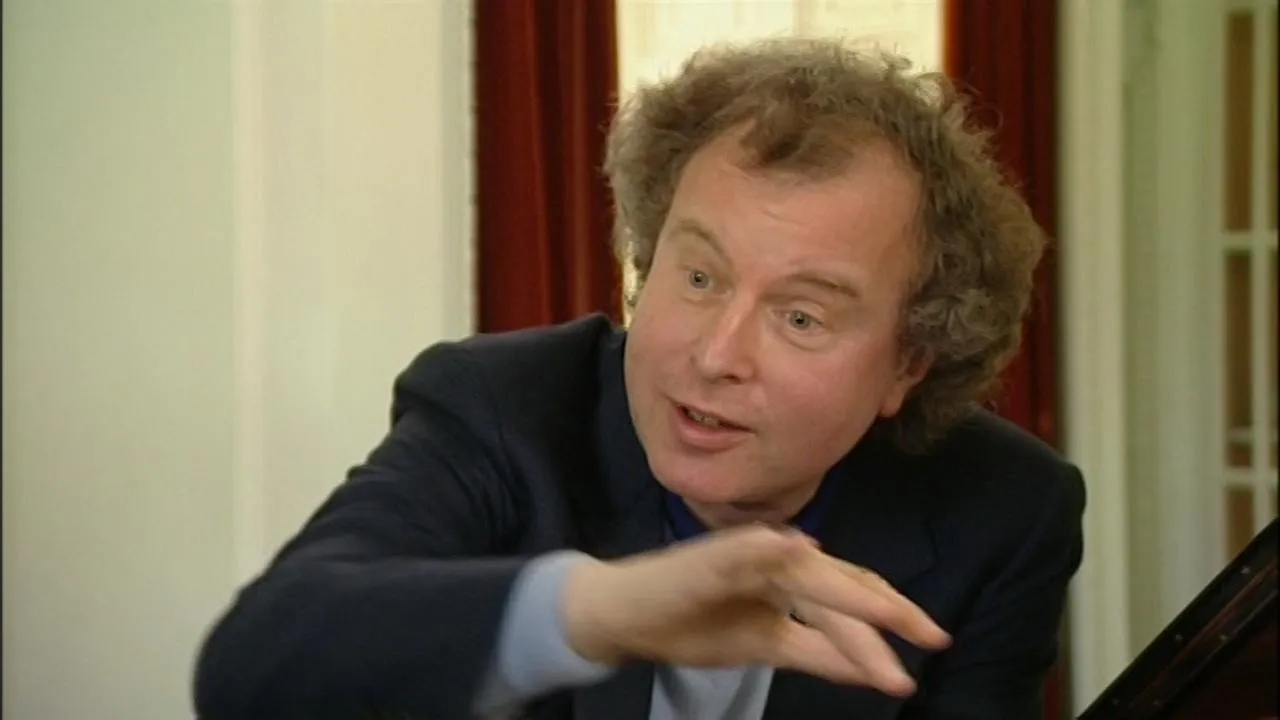
Qué incluye el curso
4 lecciones (0h 57m) · 1 gratis
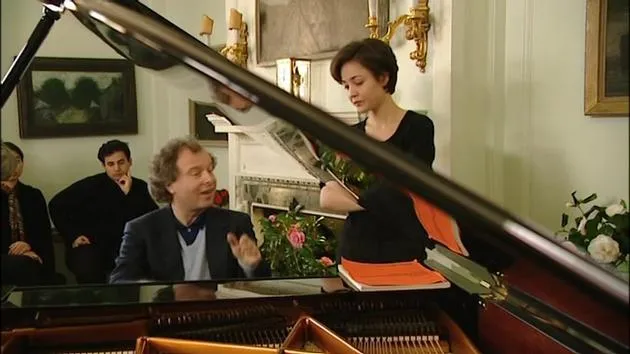
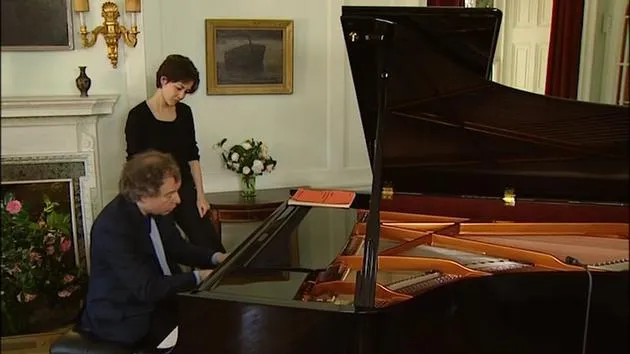
Transcripción de la lección
Music Lesson
Introduction: "So please begin the third piece again."
Context: "Okay. Thank you. Now, you live in Vienna, so you have seen a coach with horses in Vienna. Now it's a touristy attraction. But in Schubert's time, this was the normal form of transportation. He must have seen this all the time in front of his house. And I really heard the horses here."
Local Atmosphere: "Also, if you go to Grinzing or one of those little towns around Vienna, where you have taverns and where they have wine and food, this is where Schubert liked to sit with his friends. There you have little music bands, and if somebody plays the viola there, or if you hear a gypsy band, then there's this viola player always playing."
Musical Interpretation: "So, whatever you play on the Abo a little later, it can sound, of course, a little more sinister. But just let this... Let's get this movement. It's much too loud, you know. I am not hard of hearing; I have good ears. Please, there is no movement, you know?"
Getting into the Tune: "Okay, now. Now let's get the tune. There's just a little more inflection. Again, you have to separate the melody from the accompaniment. I mean, this is not a Bachian piece where every voice is equal. Here, there is definitely a melody, an accompaniment, and harmony."
About the Accompaniment: "And the accompaniment is short. It has all the different moods, but it's a wonderful little composition, you know, very round. There's a wonderful recording with Cazals playing this on the cello, and he brings a new element. He says, 'Yum,' I love that very much. But let's get back to the original."
Revisiting Technique: "Yeah. So play from the beginning. No robot! Why do you start with a hesitation? If you would sing this, it's too pianistic. It's not singing. Yes. And these are short notes. I have a problem with your repeated notes. You say 'tam, tam, tam' three times. 'Tam.' It's too percussive, you know?"
Composing Words: "It's a song. You have to compose words for it."
Technical Notes:
- Key: A flat major
- Technique: Long bow
- Phrase: "Yadadadadin."
- "Maybe change the fingers, please. Not everything, wisdom. Yes."
Practicing Together: "Alright. Now I play the left hand and you play the right hand. Okay, now we go. Let's go on. Okay, now you do it alone. But it's the right pulse, you see? Just a question of some warms in that."
Final Thoughts: "Piano, piano, piano. Here we have the major accent, a small accent, long thumb."
4 lecciones
0h 57m de lecciones en vídeo estructuradas
Funciones de vídeo avanzadas
Ralentiza, repite un pasaje, sigue la partitura
Móvil, tablet y ordenador
Practica donde quieras
Garantía de satisfacción 100%
30 días de garantía de devolución
Conoce a tu gurú
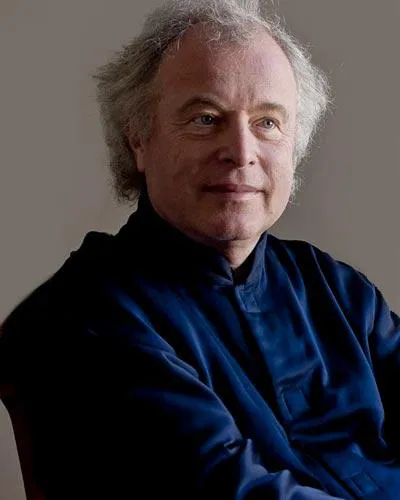
Conoce a tu gurú
András Schiff es uno de los miembros más destacados de una generación de pianistas húngaros nacidos en los años posteriores a la Segunda Guerra Mundial, junto a artistas como Zoltán Kocsis, Dezso Ránki y Jenő Jandó. De este notable grupo, Schiff ha alcanzado la mayor reputación internacional, no solo por su decisión de desarrollar su carrera fuera de Hungría, sino también gracias a su sentido del toque finamente matizado y a una memoria impresionante que le permite presentar, en conciertos y grabaciones, amplias porciones de la obra de un compositor.
Schiff nació en Budapest el 21 de diciembre de 1953 y estudió con el compositor húngaro Pal Kadosa y Ferenc Rados (que también enseñaron a Kocsis y Ránki), y con el clavecinista inglés George Malcolm. Debutó en Budapest a los 19 años, seguido de apariciones en concierto por toda Europa y Estados Unidos. Su reputación creció con actuaciones galardonadas en el concurso de Moscú de 1974 y en el Leeds Festival de 1975.
András Schiff trabaja con la mayoría de las grandes orquestas y directores internacionales, pero él mismo dirige la mayor parte de sus interpretaciones de conciertos para piano de Bach, Beethoven y Mozart. En 1999 creó su propia orquesta de cámara, la Cappella Andrea Barca, con la que trabaja cada año como director y solista, como hace también con la Philharmonia Orchestra y la Chamber Orchestra of Europe.
El estilo de Schiff, en el que un toque inusualmente sensible se combina con una atención a la claridad contrapuntística, lo ha convertido en uno de los principales intérpretes de Bach de la actualidad. Ha grabado la música completa para teclado de Bach, así como las sonatas completas y los fragmentos de sonata de Franz Schubert, cuya introspectiva música para teclado se adapta bien al temperamento de Schiff. Completó un ciclo de sonatas de Beethoven en ECM en 2009, y en 2011 recibió el Premio Schumann de la ciudad de Zwickau por su interpretación y difusión de la música de Schumann. En 2001, Schiff comenzó a revisar y regrabar las obras de Bach. Además de las esperables obras románticas centroeuropeas, la música de Béla Bartók y Leos Janácek ocupa un lugar destacado en el repertorio de Schiff.
En sus cursos de MusicGurus sobre los Moments Musicaux n.º 1, 3 y 4 de Schubert, la Partita n.º 2 de Bach y las últimas sonatas para piano de Beethoven, Schiff te introduce en ese mundo interpretativo, compartiendo cómo piensa el fraseo de voces, el toque, la claridad contrapuntística y la estructura para que puedas aportar verdadera profundidad y comprensión a estas obras en el teclado.







