



Análisis de András Schiff del n.º 1 Moderato
Qué incluye el curso
4 lecciones (0h 57m) · 1 gratis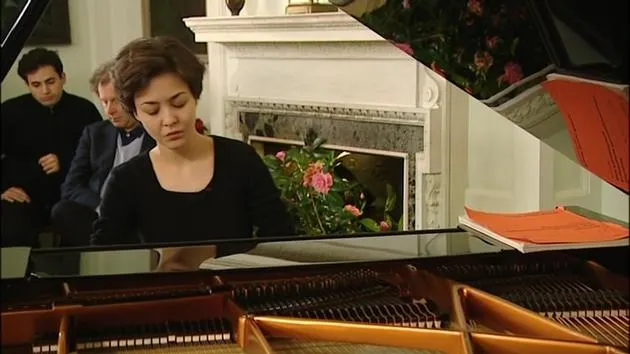
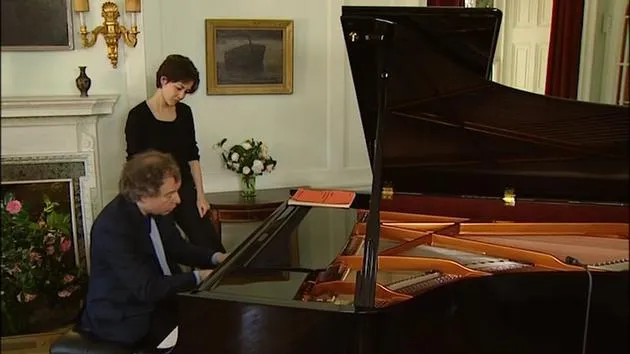
Transcripción de la lección
Musical Moments with Franz Schubert
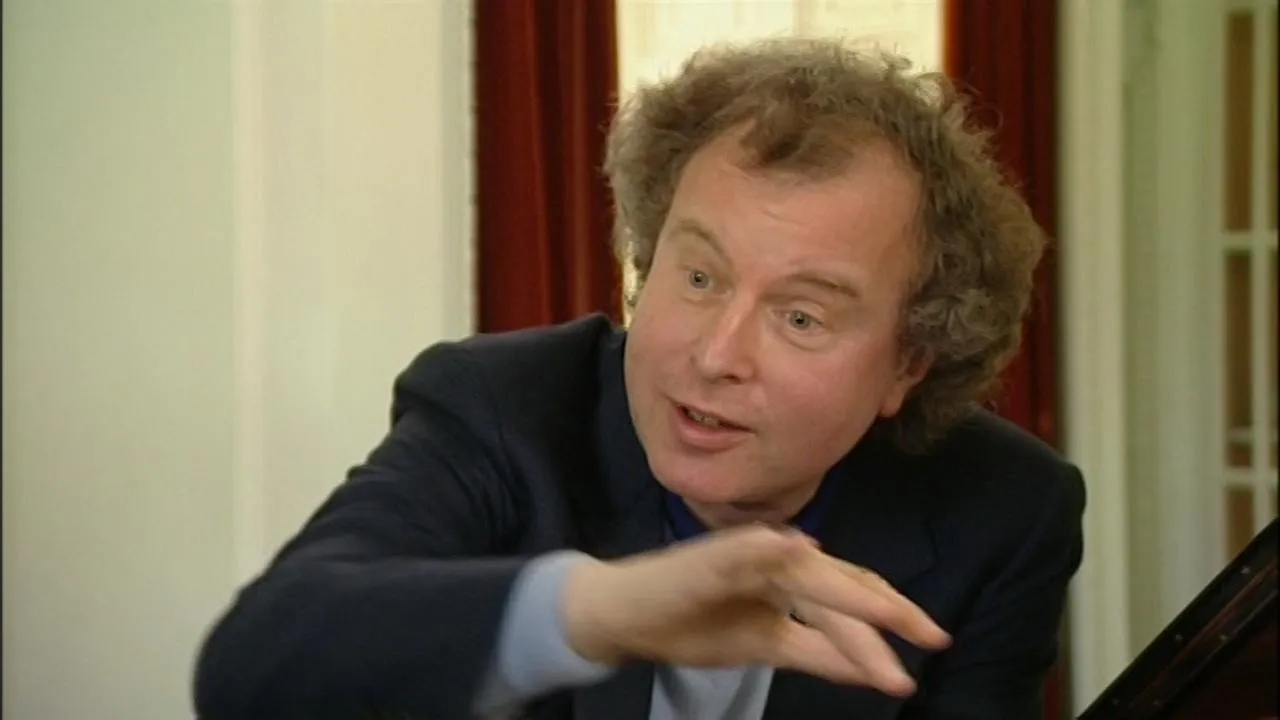
Now we have here Maumam Musico, a musical moment of Franz Schubert. Wonderful music!
Intimacy in Schubert's Music
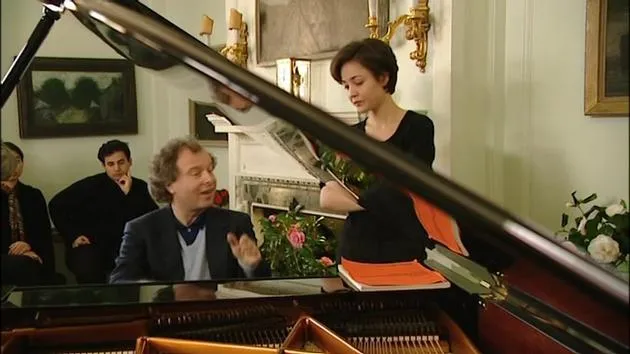
What does this title suggest? It could be called anything, but to me, it suggests intimacy. And we are in a wonderful room here.
- You don't have to play as you would in the Royal Festival Hall.
- You must scale your playing to the room, the acoustics, and the surroundings.
Of course, if you play Maumam Musico in the Royal Festival Hall, it's not a very good idea, mind you. But then you will play it differently.
To me, Schubert's music is the most touching and intimate. It's capable of great dramatic outbursts. But what makes Schubert's music unique is the soft music, how many colors you have from piano downwards:
- Pianissimo
- Triple pianissimo
- Quadruple pianissimo
- Thousands of colors
And you are not using that. It's much too loud for the room and for the music.
The Nature of the Music
Let me show you: while we are playing in a room, the music is about nature.
- We have a horn call.
- I always see pictures of nature in front of me: forests and a horn call in the forest.
These days in Britain, we talk a lot about fox hunting. I am not a fan of fox hunting myself, but in Schubert's days, there was a lot of hunting.
This Jagdorn, we know Schubert's wonderful song cycle Die schTripletne M?llerin, and it's full of these images. To me, this cycle Maumam Musico is very close to the SchTripletne M?llerin.
Schubert is the greatest song composer of all time, and these are songs without words.
Technique and Expression
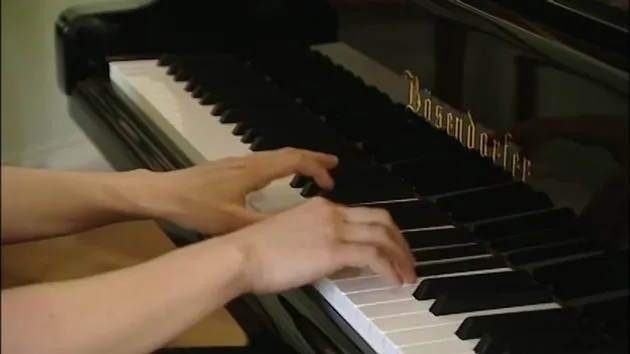
So please hear accents, but small accents. You must voice your chords. The piano is a polyphonic instrument, so when you play six notes together, you shouldn't play all of them with equal strength.
Here's a cooking analogy:
- If you put a little more salt, a little more pepper, a little more nutmeg, you just taste it.
Alright, let's try from the beginning.
"Please play for me this horn call: Yum Ba Ba. Once more. That's right. Now, from the beginning."
Be careful! We have the triplets. Don't play rubato here, because Schubert composed triplets and duplets.
- 1, 2, 3, 14 , You always change.
I would be much stricter with the tempo. Romantic music is full of emotions, but it doesn't mean it's without tempo.
Balance and Tone
Let's go on. The tone quality is not beautiful. Even if you play forte, not hard, please.
In the forest, you have different birds:
- What's that ugly black bird? A crow.
- And then there are very nice birds.
Play the grace notes gracefully. There is great domestic warmth in this to me.
The SchTripletne M?llerin is in springtime and in summer; then you have Winterreise, the winter journey.
- That one has ice and snow, but this is in springtime. It's all green and flowers.
Adjusting Dynamics
Now the second half, please. Why is this hard?
You see, it's because the balance is not right. The left hand is too strong. The modern piano has much thicker bass strings than a piano from Schubert's time. So, you have to watch the left hand.
Really?
- Uh huh.
- Look good, but don't stop all the time.
Come on! 1, 2, 3. I don't hear the bird call. Where is the rest?
If you pedal through the rest, it's not good. We lost the tempo.
You have to lead the listener who doesn't have the score in front of them. They must understand rhythmically, metrically, what you are playing, doing all the details.
Major and Minor
Schubert always plays between minor and major. We often think of major as happy and minor as sad, but it's nonsense.
- I feel that with Schubert, the major is the tragic one, so the minor is more...
You have to play rhythmically. And here, this can only...
You have this move, this wonderful flowing triplet. It always means water, you know, a brook flowing.
So do the middle section, please.
- No G major.
Alright. Can this be a gentle brook? It's a very loud one.
Please play. You don't have to whisper, but I think that the palette of colors of a pianist is very important.
Technique and Imagination
Technique is not just about playing fast and loud and accurately, but the colors and the imagination.
You also have to trust your listeners. Of course, we live in a world dominated by disco music and rock music, and many people are hard of hearing.
But we have to trust that there are still people out there who can listen to fine nuances.
- Alright? Yes, beautiful! Now all the way through.
This is very typical of Schubert. The fifth of the chord, it's like a bell calling.
- Here. The simpler, the better.
Now again, all the pieces that you play, every piece by Schubert has a basic rhythm.
Just play me the left hand here. You have to have this.
- Don't move from that. Okay?
Very good. Together.
The Reality of Major and Minor
These are again, two horns, the horn quintet. Minor.
To me, the minor is reality. The major is a wish, a dream. We would all like to be somewhere else, but this is where we are.
Life is not so easy to put up with, not for Schubert. But he had his dreams.
So do this, G Minor please.
But there's breath.
Again, the opening of...
You have to think. If I was the director of Austrian Radio, I would make this the signal. A beautiful signal.
Why have they never thought of this?
Please.
But you see, what's most important is the rest. If you take away your hand, there is no tension.
This frozen time is very important, so the listener remembers this outburst.
Final Touches
Not... and the transfiguration. It's a different world. Very good.
Now, the accented notes are not with pedals.
Alright? Just a little more cozy. Gem?tlich.
You don't have to write a four-hour long opera like Mr. Wagner to achieve something great. You can do it in two minutes. That's Schubert's unique greatness.
4 lecciones
0h 57m de lecciones en vídeo estructuradas
Funciones de vídeo avanzadas
Ralentiza, repite un pasaje, sigue la partitura
Móvil, tablet y ordenador
Practica donde quieras
Garantía de satisfacción 100%
30 días de garantía de devolución
Conoce a tu gurú
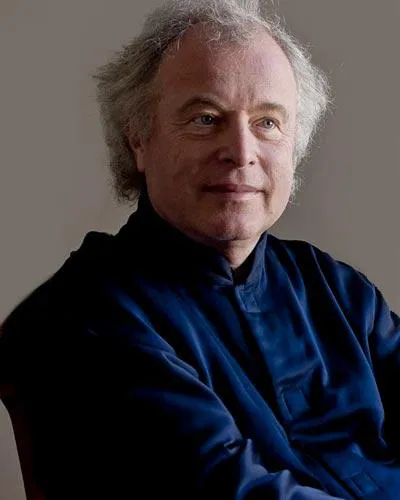
Conoce a tu gurú
András Schiff es uno de los miembros más destacados de una generación de pianistas húngaros nacidos en los años posteriores a la Segunda Guerra Mundial, junto a artistas como Zoltán Kocsis, Dezso Ránki y Jenő Jandó. De este notable grupo, Schiff ha alcanzado la mayor reputación internacional, no solo por su decisión de desarrollar su carrera fuera de Hungría, sino también gracias a su sentido del toque finamente matizado y a una memoria impresionante que le permite presentar, en conciertos y grabaciones, amplias porciones de la obra de un compositor.
Schiff nació en Budapest el 21 de diciembre de 1953 y estudió con el compositor húngaro Pal Kadosa y Ferenc Rados (que también enseñaron a Kocsis y Ránki), y con el clavecinista inglés George Malcolm. Debutó en Budapest a los 19 años, seguido de apariciones en concierto por toda Europa y Estados Unidos. Su reputación creció con actuaciones galardonadas en el concurso de Moscú de 1974 y en el Leeds Festival de 1975.
András Schiff trabaja con la mayoría de las grandes orquestas y directores internacionales, pero él mismo dirige la mayor parte de sus interpretaciones de conciertos para piano de Bach, Beethoven y Mozart. En 1999 creó su propia orquesta de cámara, la Cappella Andrea Barca, con la que trabaja cada año como director y solista, como hace también con la Philharmonia Orchestra y la Chamber Orchestra of Europe.
El estilo de Schiff, en el que un toque inusualmente sensible se combina con una atención a la claridad contrapuntística, lo ha convertido en uno de los principales intérpretes de Bach de la actualidad. Ha grabado la música completa para teclado de Bach, así como las sonatas completas y los fragmentos de sonata de Franz Schubert, cuya introspectiva música para teclado se adapta bien al temperamento de Schiff. Completó un ciclo de sonatas de Beethoven en ECM en 2009, y en 2011 recibió el Premio Schumann de la ciudad de Zwickau por su interpretación y difusión de la música de Schumann. En 2001, Schiff comenzó a revisar y regrabar las obras de Bach. Además de las esperables obras románticas centroeuropeas, la música de Béla Bartók y Leos Janácek ocupa un lugar destacado en el repertorio de Schiff.
En sus cursos de MusicGurus sobre los Moments Musicaux n.º 1, 3 y 4 de Schubert, la Partita n.º 2 de Bach y las últimas sonatas para piano de Beethoven, Schiff te introduce en ese mundo interpretativo, compartiendo cómo piensa el fraseo de voces, el toque, la claridad contrapuntística y la estructura para que puedas aportar verdadera profundidad y comprensión a estas obras en el teclado.







