



Übung fünf mit geradem Bogen spielen
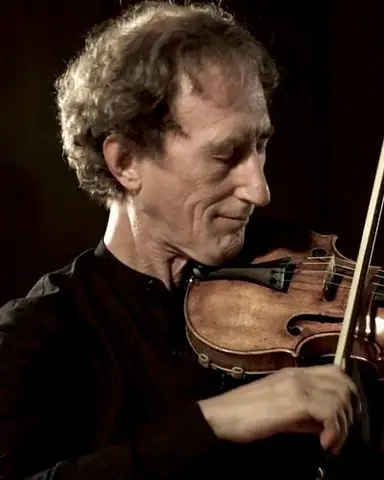
Lesson time: (3min 27sec)
Course preview
This lesson is part of the course The Secrets of Tone Production, Teil 4: abschließende grundlegende Tonübungen
Watch a preview of the full course below.
Lesson transcript:
Music Lesson: Bow Angling Exercises
Exercises 1 to 4 are very straightforward and contain nothing that anyone ever finds confusing or difficult to get pretty quickly. However, in this exercise, angling the bow the right way is the single factor that anyone ever finds confusing.
Getting Started with a Straight Bow
To make things less complicated for the first few times, it's best to start with a basically straight bow parallel to the bridge. You can add angling the bow later.
We've practiced angling the bow and steering in and out of the bridge. But another way of doing this exercise is simply to play with a straight bow.
Practice Steps
-
Into the bridge and out again:
Much better. -
Into the bridge and out again:
You could go further out than that, you know, into the bridge. Go to the fingerboard. That's great. Here we go by the middle of the bow. -
Starting near the bridge:
- Do two in and outs.
- Heavy and away. Save your bow.
-
Heavy and away:
Now, heavy. Go for total purity. Come back. Very good. -
Slow in the bridge:
When you get there, slow. That's perfect. Well done. -
Slow and heavy:
Now, slow and heavy and away. Bravo. Excellent. Thank you. Very good.
Key Concepts
The proportions of the speed at which you go towards the bridge and the increase in weight while slowing down need to be exactly right.
- You're going slightly too fast into the bridge.
- Feel the purity of the sound. All the way.
- Did you hear that? And pure. All the way. Pure.
Advanced Practice
Can you do two in one bow?
- You have to start nearer the bridge.
- When you do more than one, that's it. Go heavy. Heavy, heavy, heavy.
Did you hear the pitch of the note? Go a little bit there. Too much weight. Bravo.
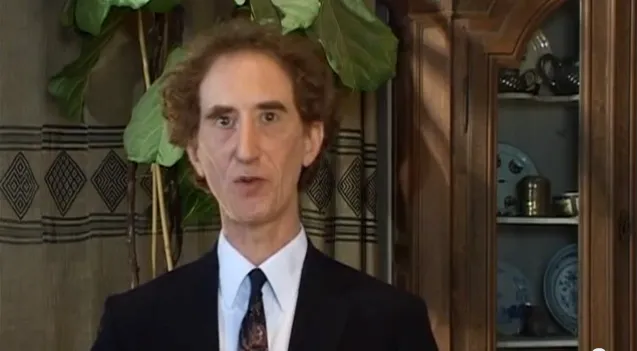
About the instructor
Simon Fischer verfügt über eine herausragende und vielseitige Karriere als Interpret, Pädagoge und Aufnahmekünstler. Er ist weltweit als Rezitalist aufgetreten und hat drei Brahms-Sonaten eingespielt, eine Aufnahme, die im Gramophone-Magazin hohes Lob erhielt. Simon gilt als einer der besten Lehrer der Welt. Er ist Professor an der Guildhall School of Music und hatte Positionen an der Yehudi Menuhin School, der Wells Cathedral School und der Purcell School inne; 15 Jahre lang war er Gastprofessor an der Royal Scottish Academy of Music. Nach seinem Studium in London bei Yfrah Neaman und in New York bei Dorothy DeLay vereint Fischers Ansatz die besten Elemente der französischen, russischen und amerikanischen Violintradition. Fischers publizierte Werke prägen den Violinunterricht maßgeblich. Seit 1991 schreibt er für das Magazin The Strad, und seine monatlichen Artikel haben weltweit eine treue Leserschaft gefunden. Seine bei Edition Peters erschienenen Technikbücher Basics and Practice (übersetzt ins Koreanische, Italienische und Deutsche), Scales und The Violin Lesson sowie die DVD The Secrets of Tone Production (nun über MusicGurus als Stream verfügbar) sind auf vielen Kontinenten zu Standardwerken geworden. Sein Buch und die DVD Warming Up wurden vom Magazin The Strad als „23 Seiten purem technischem Gold“ beschrieben. 2014 wurde Simon Fischer mit dem Preis der European String Teachers Association „in Würdigung eines lebenslangen Beitrags zum Streicherunterricht“ ausgezeichnet. In seinem vierteiligen Kurs Secrets of Tone Production führt dich Simon zunächst dazu, dein Instrument kennenzulernen, und arbeitet dann Schritt für Schritt seine grundlegenden Klangübungen mit dir durch, damit du auf der Violine einen volleren, kontrollierteren und schöneren Klang erzeugen kannst. read more