



Musikalisch spielen
Das steckt im Kurs
11 Lektionen (1h 7m) · 1 gratis
01. Wärme dich für Übung eins mit einer einfachen Übung zum geraden Bogenstrich auf
Gratis-Lektion1:53
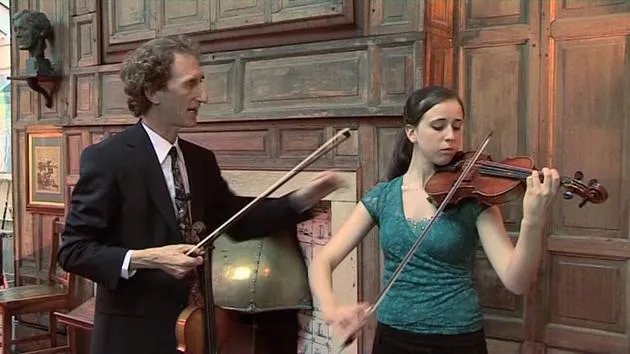
02. Erklärung und Demonstration von Übung eins
27:16
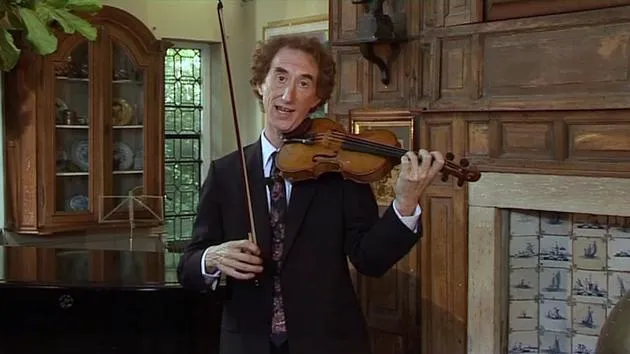
03. Die erste Übung im Detail
12:03
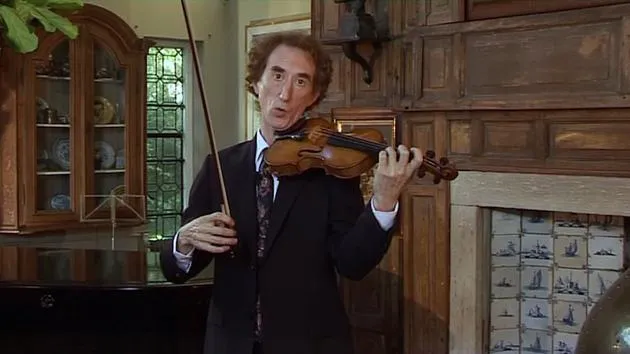
04. Die Elemente isolieren
3:16
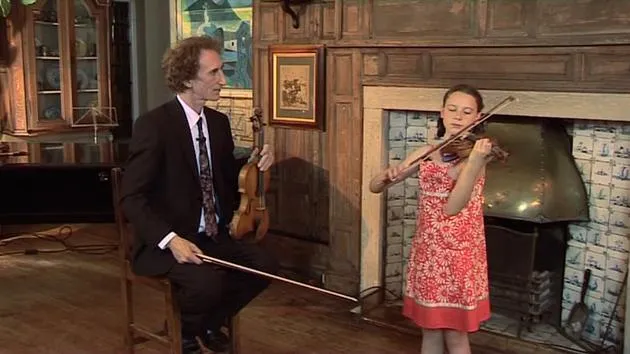
05. Musikalisch spielen
Du bist hier4:41
06. Den perfekten Bogenwechsel machen
7:03
07. Einen unhörbaren Bogenwechsel gibt es nicht
1:22
08. Den Schwung des Bogens spüren
3:18
09. Die Finger der linken Hand hinzufügen
1:15
10. Die Kontaktpunkt-Übung auf Passagen anwenden
2:53
11. So gut klingen wie der beste Spieler der Welt – und zwar sofort
2:08
Transkript der Lektion
Teaching Technique Musically
But after all the talk about technique and how to do it, the most important thing is actually something else:
Play Musically
To play the exercise and all exercises musically. Countless times I've seen people trying to do these exercises using a sort of detached mental control.
- It's as though I am in here somewhere behind my eyes and between my ears.
- I have a hand; I hold the bow with my fingers.
- I have to put the bow on the string and somehow draw it straight to the bridge and adjust the speed and the pressure.
And it just doesn't work like that.
The Importance of Context
Often you hear somebody play a piece of music with talent and a pretty good range of tone. Then, they try to play a sound point exercise, and they sound like this:
"This simply never works."
Instead, all you have to do is to imagine that this one note is in a piece of music:
- A note in a solo piece
- A quartet
- A symphony
Then everything feels different.
Focus on Sound
- "Watch your sound point. Watch it."
- "That's it. Keep it even heavier, Olivia."
- "Play into the string, Olivia. Very good."
With your finger, would you please press the string near the bridge?
"Do you feel how hard it is? Very hard. So you've got to engage that with the bow. Go deep into the string. Keep it even."
Okay, okay. Very good.
Visualization and Emotion
Just one more thing:
"Would you please imagine that this note is in your favorite piece of music? And you love this bit of the music. And this is the bit where you go, oh, yes, oh, yes."
You can think of other instruments, you can think of a rhythm, you can think of whatever you like. Just imagine.
- Play something expressive and heavier.
- "Very good. And vibrate near the bridge expressively. Heavier. Marvelous."
- "Thank you very much."
Adjusting Technique
Elbows:
"That needs to be lighter, Tim. Lighter and lighter. Well done. Careful there. Add vibrato. Bravo."
Now, senza vibrato:
- "Sound point 3. Use all the bow. Yes, yes."
Make it Musical
You know, there's a fantastic thing you can do when you do exercises like this:
"You can pretend they're a piece of music, because you don't want to just play mechanically like this and go."
Imagine it in a piece, and this is what you have to play, or what you get to play in this piece at this moment.
And play musically, see what happens.
- "And deeply in the string. Be musical, expressive."
- "Well, look at that. That's a better contact. That's right. Bravo. Fantastic."
11 Lektionen
1 Std. 7 Min. strukturierte Videolektionen
Erweiterte Videofunktionen
Verlangsamen, Passagen loopen, mitlesen
Handy, Tablet & Desktop
Üben, wo du willst
100 % Zufriedenheitsgarantie
30 Tage Geld-zurück-Garantie
Lern deinen Guru kennen
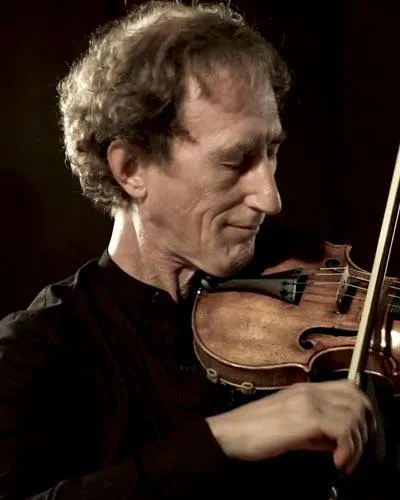
Lern deinen Guru kennen
Simon Fischer verfügt über eine herausragende und vielseitige Karriere als Interpret, Pädagoge und Aufnahmekünstler.
Er ist weltweit als Rezitalist aufgetreten und hat drei Brahms-Sonaten eingespielt, eine Aufnahme, die im Gramophone-Magazin hohes Lob erhielt.
Simon gilt als einer der besten Lehrer der Welt. Er ist Professor an der Guildhall School of Music und hatte Positionen an der Yehudi Menuhin School, der Wells Cathedral School und der Purcell School inne; 15 Jahre lang war er Gastprofessor an der Royal Scottish Academy of Music. Nach seinem Studium in London bei Yfrah Neaman und in New York bei Dorothy DeLay vereint Fischers Ansatz die besten Elemente der französischen, russischen und amerikanischen Violintradition.
Fischers publizierte Werke prägen den Violinunterricht maßgeblich. Seit 1991 schreibt er für das Magazin The Strad, und seine monatlichen Artikel haben weltweit eine treue Leserschaft gefunden. Seine bei Edition Peters erschienenen Technikbücher Basics and Practice (übersetzt ins Koreanische, Italienische und Deutsche), Scales und The Violin Lesson sowie die DVD The Secrets of Tone Production (nun über MusicGurus als Stream verfügbar) sind auf vielen Kontinenten zu Standardwerken geworden. Sein Buch und die DVD Warming Up wurden vom Magazin The Strad als „23 Seiten purem technischem Gold“ beschrieben.
2014 wurde Simon Fischer mit dem Preis der European String Teachers Association „in Würdigung eines lebenslangen Beitrags zum Streicherunterricht“ ausgezeichnet.
In seinem vierteiligen Kurs Secrets of Tone Production führt dich Simon zunächst dazu, dein Instrument kennenzulernen, und arbeitet dann Schritt für Schritt seine grundlegenden Klangübungen mit dir durch, damit du auf der Violine einen volleren, kontrollierteren und schöneren Klang erzeugen kannst.







