



Songstruktur
Das steckt im Kurs
24 Lektionen (1h 31m) · 1 gratis


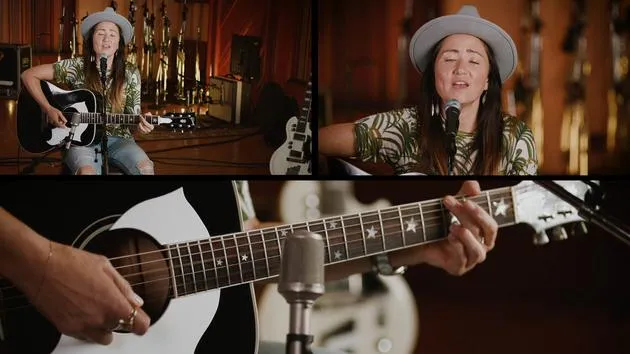
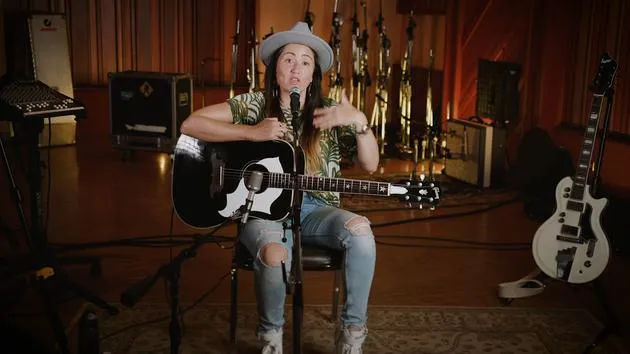
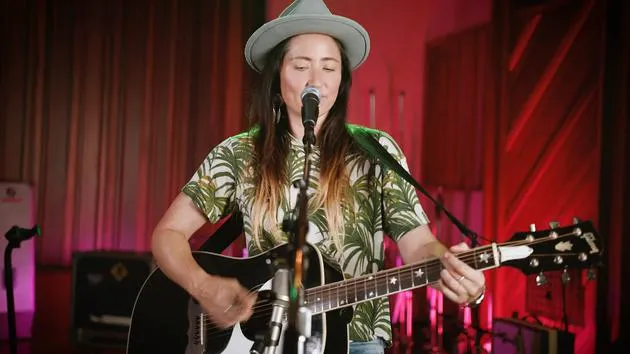


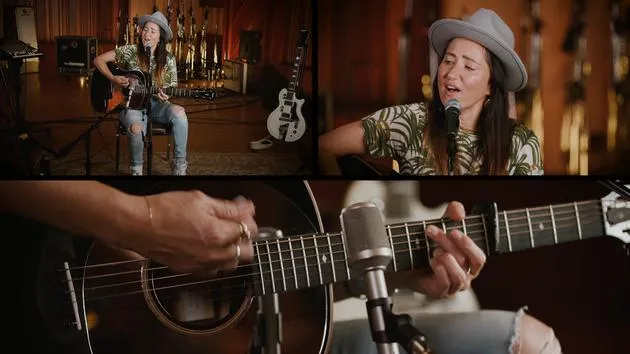
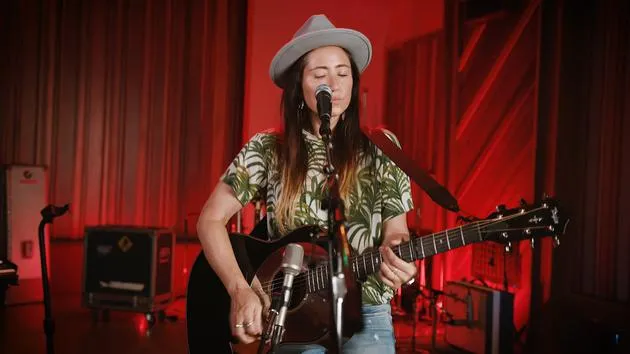


Transkript der Lektion
Exploring Traditional Songwriting: A Journey Through Structure and Emotion
Most of my songs follow an extremely traditional formula:
- Intro
- Verse
- Pre-Chorus
- Chorus
- Re-intro
- Verse
- Pre-Chorus
- Chorus
- Middle Eight or Bridge
- Ramp Up
- Double Chorus Outro
And I'm amazed that, 15 years later, I feel like I'm really delving into different areas of writing. When I'm writing, I still very seldom stray away from that songwriting formula. I just love it. I love that roadmap, and I love the journey that it takes you on.
The Key of D: My Happy Place
It's in the key of D, the happiest chord on earth. It's got a very traditional chord structure; I found that when I was writing it, particularly the pre-chorus (which I love), that chord which is F# major, seventh major, seventh minor, seventh, F#7.
I've noticed people in contemporary songwriting are quite scared of those chords because they're cheesy. But I don't care. I love kind of more old-fashioned songwriting. If you were going to play in a less potentially old-fashioned way, you would play F# minor. Everything around her is A, so, you know...
And I mean, I just went for it! I decided I didn't care, and I was just going for it. It's fun, right? It sounds more fun.
Chorus Connection
The other chord is in the chorus:
"Suddenly I see, this is what I want to be. Suddenly I see."
Here it comes. Yes, classic G minor W. It means so much to me. It's like it's pulling more from really old-fashioned writing than from contemporary stuff that uses chords like that.
Embracing Complexity
There's quite a lot of chords in this song, and usually, that can be off-putting in terms of a song reaching a larger population if it's moving chords all the time. But if you hit it right and the melody, melody, melody, melody, doesn't distract from the melody and helps the melody along, then use what you want.
The Middle Eight: A Creative Pivot
Let's talk about the middle eight or the bridge, maybe my favorite aspect of songwriting. It's a minute for you to completely change course if you want to, or you can just stop. You can pause somewhere and not move from there, giving a breather. You can go somewhere lyrically very different.
I think Chris Martin is an amazing writer of these sections in songs. In the first couple of Coldplay records, I was always completely delighted with where the song would go. Sometimes it would happen at the end of the song, completely changing and going somewhere else.
It's a beautiful opportunity to bring in a completely new melody, maybe even a completely new idea, still all sitting within that magical three-and-a-half to four-minute song structure. You just take a left turn and go somewhere else.
With this song, it was a pause; it was a stop point where I decided to just vamp.
"Suddenly I see, why the hell it means so much to me, you know?"
This gives everyone a chance to go wild in the audience.
Creating Space and Emotion
The feeling that I want to evoke with this section is important. Because the song is upbeat, full-on, rhythmic, and really in-your-face up until this point, this is really taking a breath, stopping the feeling of driving forward.
"I can see her eyes looking from the page of a magazine."
You're painting a picture. You're just taking a minute to stop and describe something a bit more specific rather than the usual, "Yeah, I'm gonna be amazing."
It's like, okay, let's get a bit more emotional and give us a chance to take a breath for a minute.
I think Bruce Springsteen is amazing at this, just kind of rolling lyrics over a vamp. A lot of lyrical input over simple chord stuff, you know:
"Oh, she's taller than most and she's looking at me."
That was describing her staring at me from the cover of Horses.
Rhythm and Lyrical Play
"I can see her eyes looking from the page of a magazine, interviews.
And she makes me feel like I could be a tower, big, strong tower."
Yeah. Power to be powder.
That part is really also about coming back to the rhythm.
"Par beat, parque, parce. Yeah, yeah. Par beat, parque, par beat, parque, parc."
So that's another interesting thing. It's really helpful to come up with the rhythm of what you want to write and just use gobbledygook.
Paul McCartney talks about this: you'll just be using rhythmic sounds.
So I might be writing and go,
"Okay, I know I want it to go: Baba dee da da, burger and fries, burger and fries, pizza and fries, yeah, yeah."
You can come up with any lyrics, and often it's good just to use the consonants you want:
"Bub da da da da da ba ba duba da da."
Then, take those consonants and just write lyrics around the rhythm and the beats you want. It's actually a really nice exercise to come up with lyrics that you might not have written otherwise.
The Key Change That Almost Was
I think the only thing "Suddenly I See" is missing to be like a fully traditional, cheesy old song is a key change. If it had a key change on that last chorus... but, you know, it was an extraordinary experience with this song; it just completely blew up.
Lasting Impact of a Song
The most surprising thing about this song is that, 15 years later, it's still getting played on the radio, still being used in films and television, and it's still communicating and exciting younger people who've grown up with the album with their parents playing it.
That's wild! It's a really crazy experience, seeing a song have staying power like that.
When I think about when I wrote this song, it was all about freedom, to just do what felt good and not worrying at all about whether it was cool, mysterious, or poetic enough.
I didn't worry about any of that stuff and just literally said it how it was and followed some fun within the song.
And it was, it really worked.
In the studio, making that song as well, it was really respecting the rawness of the influence of that old blues music and not getting too fancy, just trusting that you don't need too much.
I've done that on other records where there's too much production going on, but we were just having too much fun.
24 Lektionen
1 Std. 31 Min. strukturierte Videolektionen
Erweiterte Videofunktionen
Verlangsamen, Passagen loopen, mitlesen
Handy, Tablet & Desktop
Üben, wo du willst
100 % Zufriedenheitsgarantie
30 Tage Geld-zurück-Garantie
Lern deinen Guru kennen

Lern deinen Guru kennen
Fotocredit: Tom Oxley
Seit ihrem weltweiten Erfolg mit ihrem Debütalbum 'Eye To The Telescope' im Jahr 2004, das sich über 5 Millionen Mal verkaufte, gehört KT Tunstall unverändert zur Spitze der britischen Singer-Songwriter.
KT ließ diesem frühen Erfolg die Alben 'Drastic Fantastic', 'Tiger Suit' und 'Invisible Empire // Crescent Moon' in den Jahren 2007, 2010 bzw. 2013 folgen, hielt die Platinverkäufe am Laufen und festigte den Ruf der schottischen Singer-Songwriterin als bedeutendes Aufnahmetalent und zugleich als fesselnde Liveinterpretin.
2012 und die folgenden Jahre brachten einen tiefgreifenden Wandel in ihrer Lebensausrichtung: den Verlust ihres Vaters, eine Scheidung und einen Umzug nach Venice Beach, Kalifornien.
Nach einer Zeit der Heilung, der Selbstfindung und eines Tapetenwechsels markierte 2016 das Erscheinen des ersten Teils einer Album-Trilogie von KT Tunstall, des von der Kritik gefeierten britischen Top-10-Albums 'KIN'. Die Trilogie beschwört, einzeln und in ihrer Abfolge, Geist, Körper und Verstand. Während 'KIN' ihr wie ein Phönix aus der Asche auferstandenes 'Geist'-Album war, markierte 2018 den zweiten Teil dieser Trilogie, das 'Körper'-Album 'WAX'.
KT Tunstall ist viele Male um die ganze Welt getourt. 2005 verkaufte sie mehr Platten als jede andere Künstlerin im Vereinigten Königreich, gewann 2006 den Brit Award als Best British Female Solo Artist, den Ivor-Novello-Preis für den besten Song mit ihrem riesigen, selbst geschriebenen Hit 'Suddenly I See' sowie einen Q Award für den Track des Jahres.
Außerdem erhielt sie mit 'Black Horse and the Cherry Tree' eine Grammy-Nominierung für die beste weibliche Pop-Gesangsdarbietung und steuerte ihre Songs zu zahlreichen Filmen und Fernsehsendungen bei ('Suddenly I See' erklingt in der ikonischen Eröffnungsszene des modernen Klassikers mit Meryl Streep 'Der Teufel trägt Prada').
Die erste Single ihrer jüngsten Veröffentlichung, 'The River', wurde vom Rolling Stone zu einer der 'Songs You Need To Know' gekürt.
Die vergangenen Jahre bedeuteten für KT Tunstall eine Art kreative Wiedergeburt. Nach ihrem Umzug an die Westküste der USA wurde sie als eine von sechs jährlichen Fellows für das Composers Lab des Sundance Film Institute (ausgerichtet auf George Lucas' Skywalker Ranch in Nordkalifornien) aufgenommen und hat seither Musik für Kurz- und Spielfilme komponiert.
Zudem wurde sie bei den Women In Music Awards mit der Auszeichnung als Inspirational Artist geehrt und als erste Frau überhaupt (nach Persönlichkeiten wie Sir Sean Connery) zum Grand Marshal gewählt, um im April 2018 die jährliche Tartan-Week-Parade in New York anzuführen. Im Mai 2018 veröffentlichten sie und Mike McCready von den legendären, millionenfach verkauften Pearl Jam eine Coverversion von Tom Pettys großem Hit 'I Won't Back Down', deren Erlöse an Pearl Jams Vitalogy Foundation gingen.
2018 gab KT ausverkaufte, intime Headliner-Shows im gesamten Vereinigten Königreich und in den USA und tourte weltweit als Support gefeierter Künstler wie Simple Minds, The Pretenders und Barenaked Ladies.
2019 unternahm KT mit ihrer rein weiblichen Band eine große Headliner-Tour durch das Vereinigte Königreich und Europa und spielte auf Festivals im ganzen Vereinigten Königreich (darunter ein Headliner-Auftritt beim Glastonbury Festival). Sie tourte durch die USA und Kanada, Japan, China, die Niederlande, Mexiko und Brasilien und war zudem Support von Hall & Oates auf deren britischer Arena-Tour.
Anfang 2020 setzte KT ihre Tourneen mit Headliner-Shows in den USA fort, trat mit Jools Holland in ganz Europa auf und spielte im legendären Madison Square Garden in New York als Support von Hall & Oates.
In ihrem Kurs Song Studies zieht KT den Vorhang zurück und zeigt die Gitarrenparts und das kompositorische Handwerk hinter ihren größten Hits - eine seltene Gelegenheit zu lernen, wie eine Brit-Award-Gewinnerin und Grammy-nominierte Songwriterin tatsächlich einen Song aufbaut.







