



Tonleitern - Stufe 4
Die Klavier-Tonleitern, -Arpeggien und -Akkorde der Stufe 4 - beidhändig gespielt in geradem und geswingtem Feeling, mit Tipps für die kniffligeren Fingersätze.

Das steckt im Kurs
29 Lektionen (2h 21m) · 1 gratis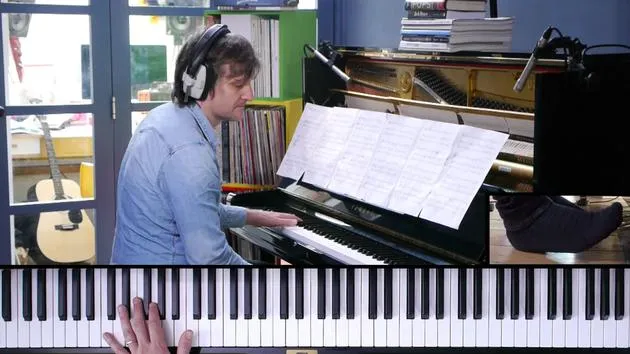
01. Hallelujah I Love Her So, Ray Charles (Interpretation)
Gratis-Lektion2:39
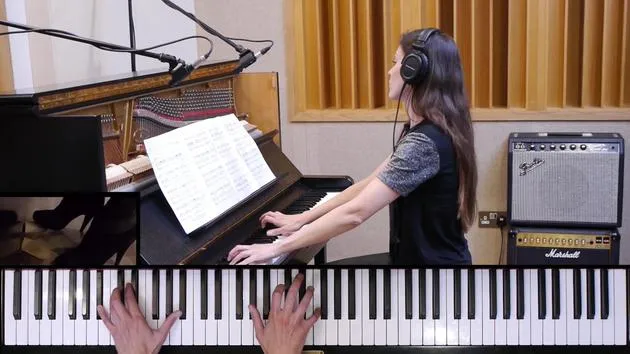
02. I See Fire, Ed Sheeran (Performance)
2:40
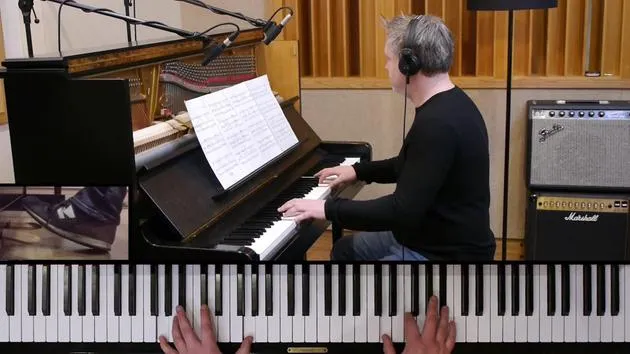
03. Your Song, Ellie Goulding (Interpretation)
3:35
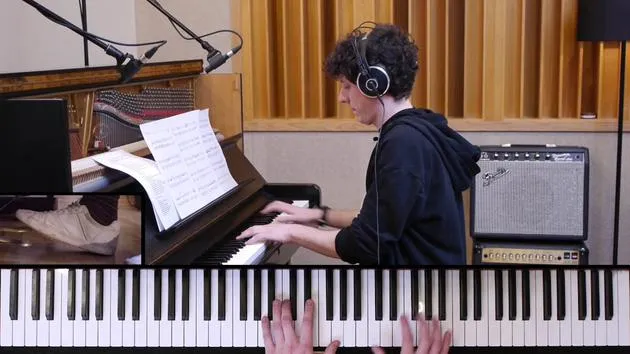
04. Funkometer, Kit Morgan (Performance)
2:21
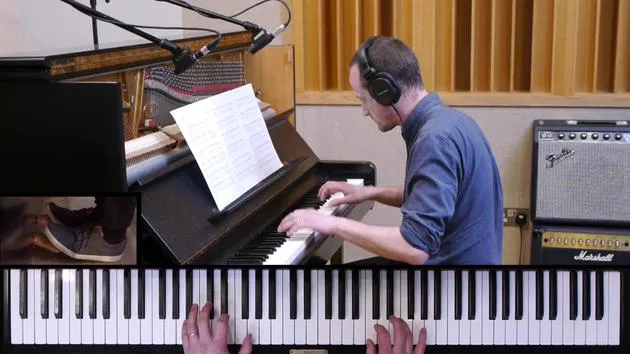
05. Crop Duster, Kit Morgan (Aufführung)
2:10
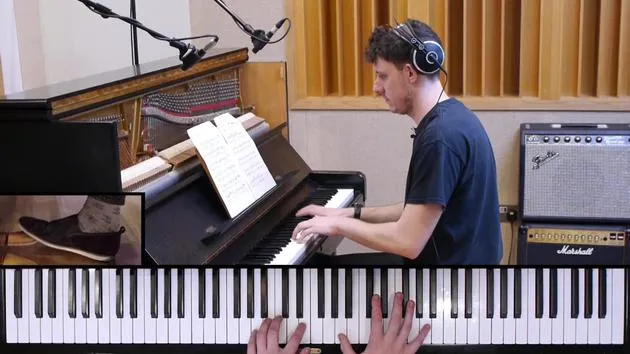
06. Circus Experience, Joe Bennett (Vortrag)
2:19
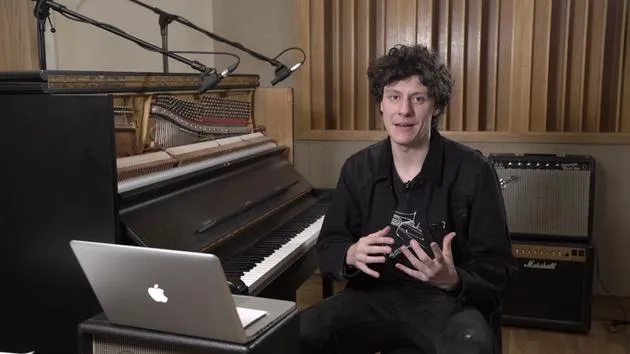
Transkript der Lektion
Grade Four Technical Exercises
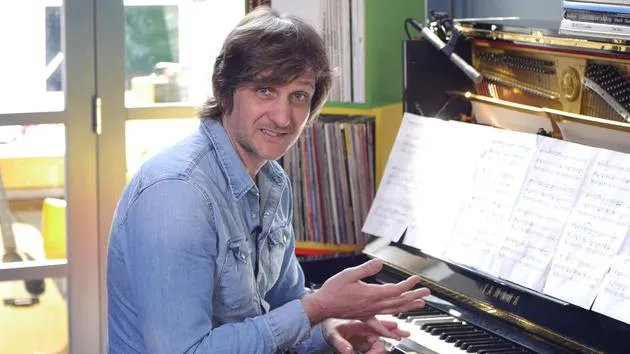
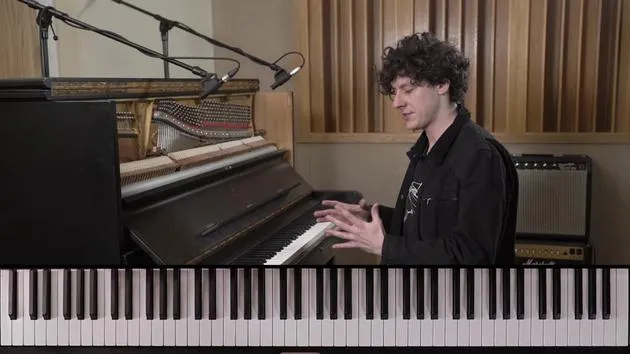
Hey, guys, it's James here. Today, we're looking at the grade four technical exercises: scales, arpeggios, and chords.
Key Points to Remember
- Tempos: The tempos are starting to get a little bit faster, making the technical exercises slightly more challenging to play.
- Play Hands Together: You'll need to do these things hands together, which can be quite tricky because of the different fingerings.
If you're having a hard time with this, here are some tips:
- Slow It Down: If the tempo feels too fast, slow it down and practice hands separately until you get it right.
- Put It Together: Once you're comfortable, put them together.
Scales: Straight and Swung Feel
You'll also need to play some of the scales in either a straight or swung feel.
Swung Feel
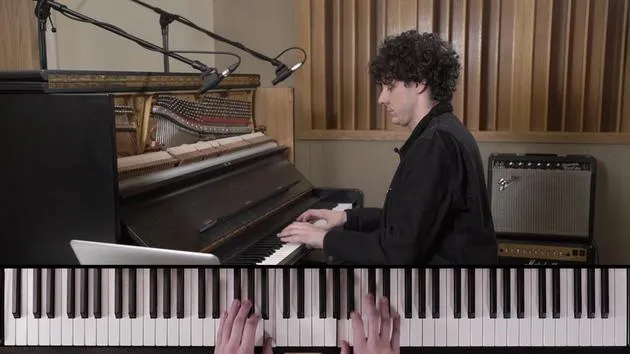
A swung feel is basically achieved by using swing triplets. I'll demonstrate that now with the E major contrary motion scale, which is number two.
With the triplets, you're basically going:
"Duck. Did that, get that, did that, did that."
Even though this swing is quite rigid, it will be effective enough for the exam, as it shows you learned to play in two different styles.
Straight Scales
Conversely, you will be playing some straight scales as well. Here's a B flat major scale in a straight style. There are quite a lot of scales here that you're probably already familiar with.
- Minor Scales: In the minor section, we're dealing with some harmonic and natural minors.
- Harmonic minors have a leading note (the seventh of the chord).
- For example, in F harmonic minor, we have the leading note, whereas in A natural minor, we would have the flat 7.
This is F harmonic minor scale, played at around 104 bpm (crotchet).
- Remember: The quavers are obviously twice that speed.
Again, if you feel uncomfortable with any of this, it's totally fine to slow it down and practice hands separately.
Practice Tips
- Separate Practice: The only way to properly practice scales is to do it hand separately, and then when you're comfortable, put it all together.
- General Approach: This is a bit like all piano music; it is typically practiced separately before coming together at the end.
C Phrygian Scale
The scale you might be a bit unfamiliar with is the number 9: C Phrygian scale.
Phrygian has an interesting sound. Think Spanish-sounding chords!
- We're using this flat second, which is a very strong and interesting sound that you may not have played before. Here's what it sounds like:
"It's a very Spanish sounding scale."
Conveniently, when playing C Phrygian, you're starting on C, but it's actually an A flat major scale, the same notes, just starting in a different place.
Chromatic Scales
New to grade four, if you've been working through previous grades, are the chromatic scales with both hands.
- Chromatic scales play much closer together, and the fingerings are tighter.
- You'll primarily use the first, second, and third fingers from each hand; the fourth and fifth fingers are not used much because they're weaker and not really needed.
Exercise
We will be doing two octaves of chromatic scales in both hands, starting on:
- E
- A flat
For the A flat scale, if you're following along in your technical book and notice that the notes run out at the end (it says "etc."), don't worry! Just carry on going down.
You're going to drop down right to the bottom, going all the way up two octaves, and then back down again.
And I'll show you that now...
29 Lektionen
2 Std. 21 Min. strukturierte Videolektionen
Erweiterte Videofunktionen
Verlangsamen, Passagen loopen, mitlesen
Handy, Tablet & Desktop
Üben, wo du willst
100 % Zufriedenheitsgarantie
30 Tage Geld-zurück-Garantie







