



Old Bones Blues
Ein Leitfaden zum 12-Bar-Blues 'Old Bones Blues' in E: das Swing-Feel finden, die dominantischen I-IV-V-Akkorde und das Blues-Phrasing mit Double Stops, Bends und Slides.

Das steckt im Kurs
43 Lektionen (3h 11m) · 1 gratis
01. Einführung in die Ansätze zur Improvisation
1:00
02. Erste Schritte mit der Improvisation
9:22
03. Über Akkordtöne improvisieren
10:18
04. Aufgabe: Akkordtöne finden
4:05
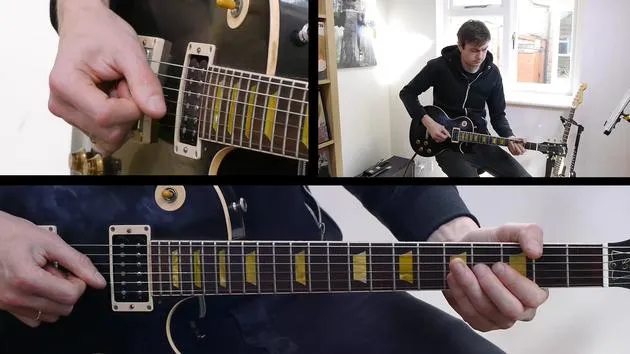
05. Deinen Soli rhythmisches Interesse verleihen
4:11
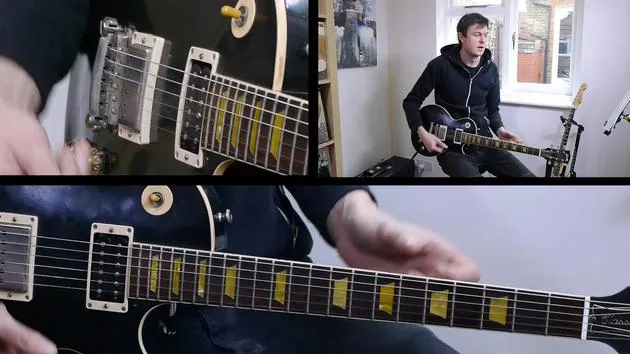
06. Aufgabe: Improvisieren über einen Akkordwechsel
2:52
07. Challenge: Reiche deine Improvisation ein
0:24
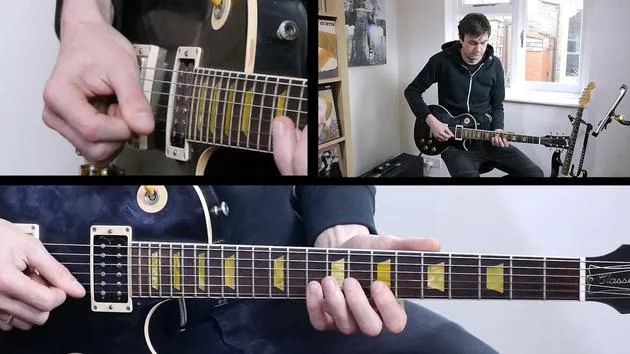
08. Eine Melodie verzieren
5:36
09. Challenge: Reiche deine Melodie ein
0:26
10. Rhythmische Improvisation und Comping
9:55
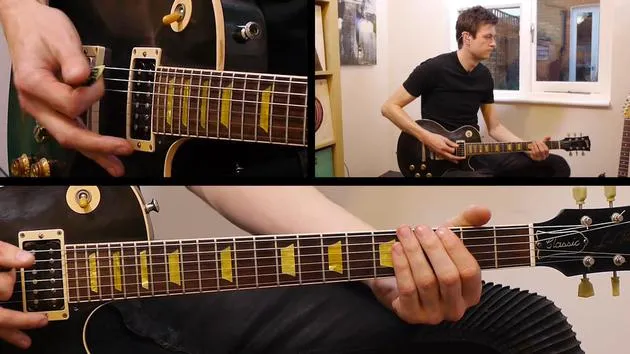
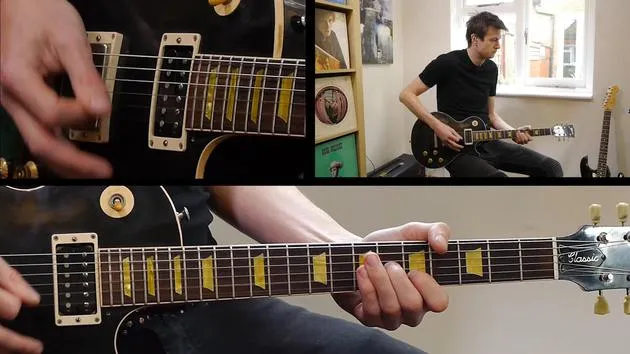
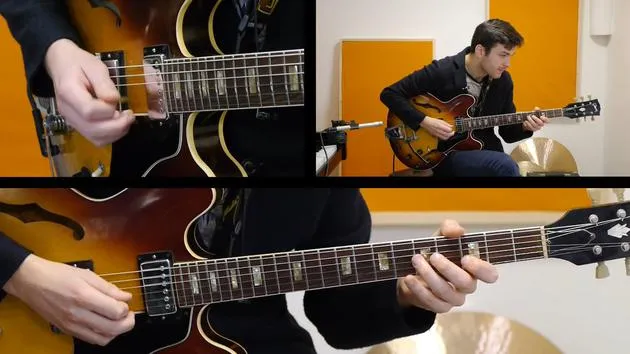
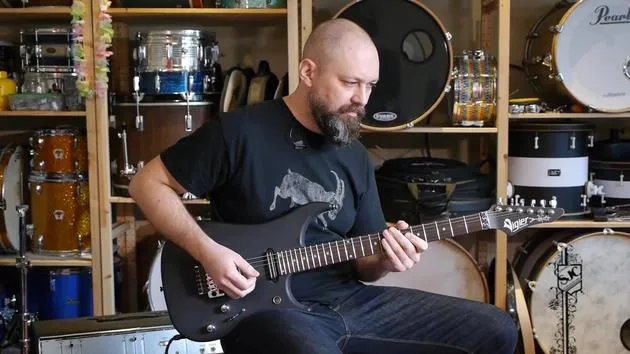

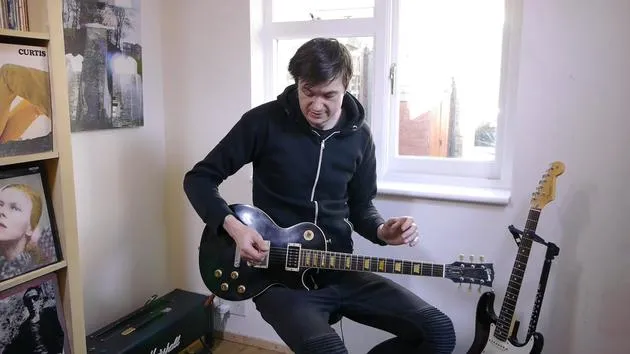
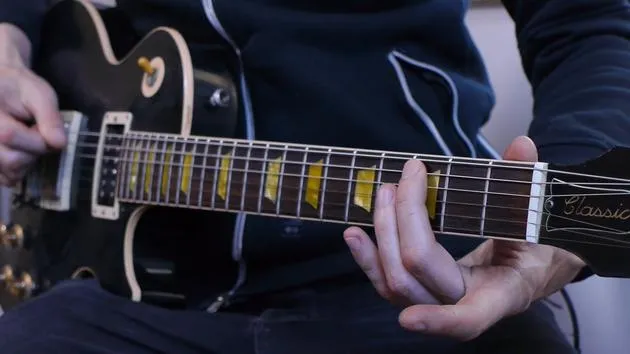
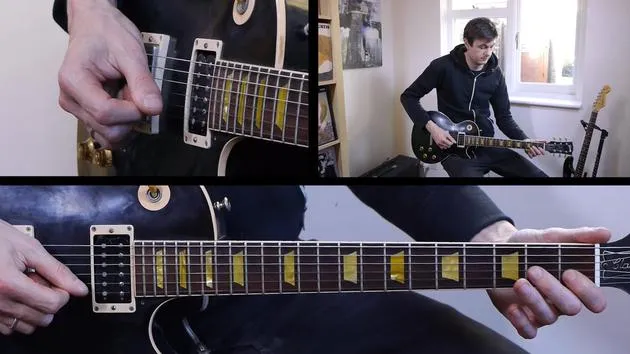
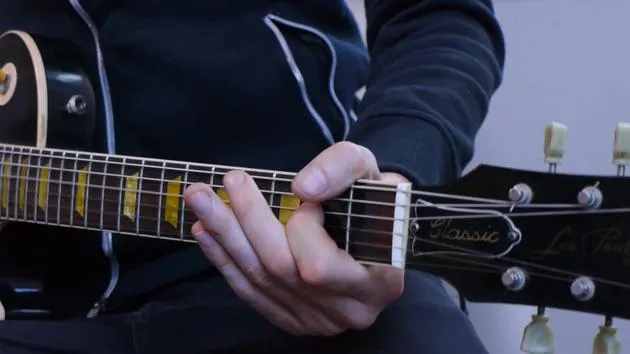
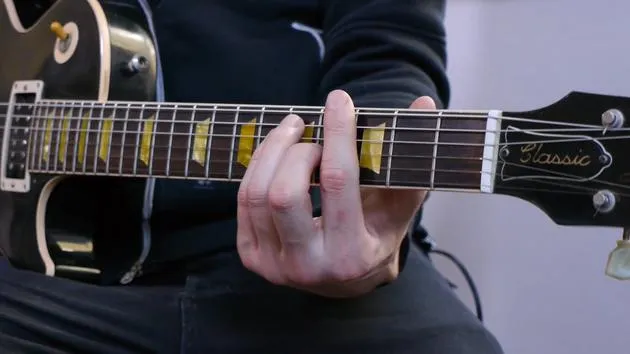
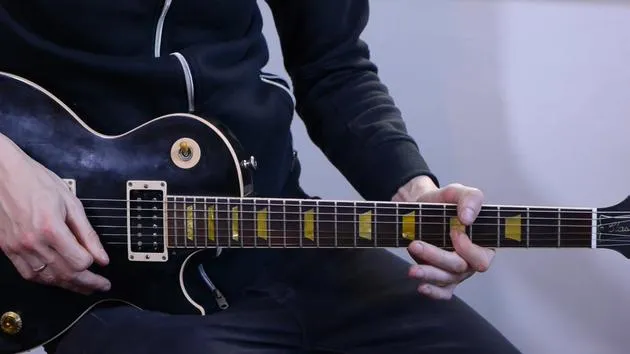
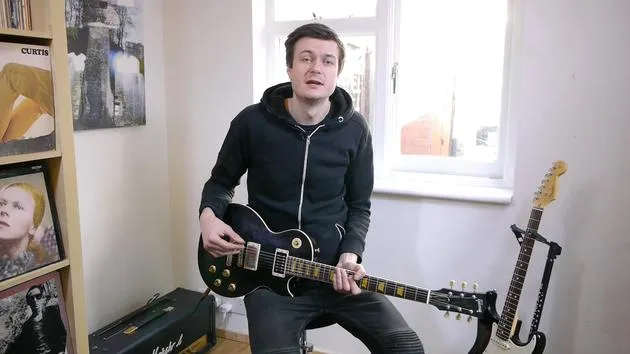
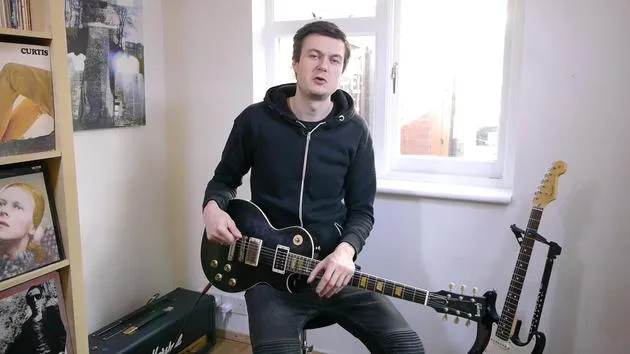
Transkript der Lektion
Old Bones Blues Music Lesson
Introduction
Old Bones Blues is a blues with a swing feel. It's essential to establish this feel before you start working through the piece. Instead of counting rigidly like this:
Counting Rigidly
1 and 2 and 3 and 4,
A swing feel feels more like the notes are long and short. So think of it this way:
Swing Feel
1 and a two and a three, three and a four and a da da da da da da da da.
Practice the Feel
Spend some time with your teacher getting used to that feel and rhythm before learning the piece.
Chord Structure
The blues often follows a 1, 4, 5 structure. In the key of E:
- 1 chord: E
- 4 chord: A
- 5 chord: B
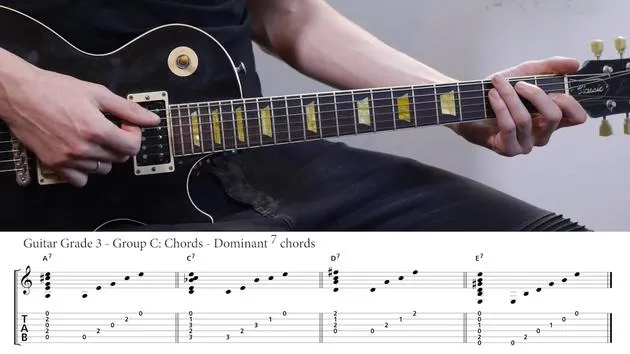
These are played as dominant chords as well, yielding:
- E7
- A7
- B7
These are the classic chord voicings for playing blues.
Blues Artists to Listen To:
- Muddy Waters
- B.B. King
- Freddie King
These artists exemplify what's often referred to as the Chicago blues sound.
Stylistic Features
Blues music has several common stylistic features:
- Use of the blues scale: In the key of E, this can be played in the open position or around the 12th fret.
- Double Stops: Playing two notes simultaneously.
- Bends: Incorporate bends, hammer-ons, pull-offs, and slides into your phrasing.
- Staccato Notes: Play the note and stop it immediately.
Solo Elements:
In addition to riffs and phrases, we have a solo to consider in this tune.
Dynamics and Equipment
Blues guitar players often utilize a good dynamic range, allowing them to play softly and then dig in for more expression:
Equipment:
- Guitar: Any guitar is suitable, but typical choices include:
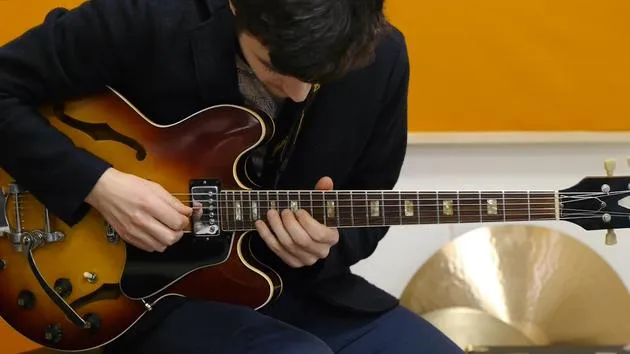
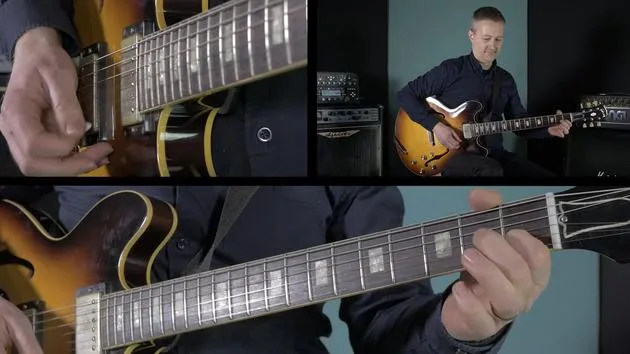
- Gibson 335
- Fender Stratocaster
- Fender Telecaster
Pickup Choices: Experiment with different pickup selections:
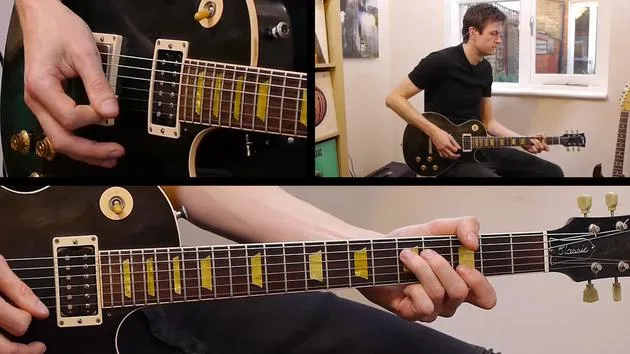
- Focus mostly on the bridge pickup for a bitey, trebly sound.
- Use the neck pickup for a warmer sound in certain sections.
Structure of the Piece
Blues often features distinct intros and endings. Old Bones Blues begins with a turnaround:
- Starts with a riff based around the B chord
- Moves down to the A chord
- Returns to the I chord (E7)
- Ends back at the B7 again
The turnaround is outlined with riffs, and a similar turnaround concludes the piece.
Importance of the Swing Feel
The swing feel is crucial for that authentic sound. Here's how the intro section sounds without swing:
Straight Counting:
1, 2 and 3, 4
1, 2 and 3, 4
1, 2, 3, 4
1, 2 and 3, 4
Now, let's apply the swing feel without changing the tempo:
Swing Counting:
1, 2, 3, 4
1, 2 and 3, 4
1, 2, 3, 4, 2
Practice these ideas with your teacher in both straight and swing versions to internalize the swing feel.
Double Stops and Passing Notes
Double Stops:
These can thicken the sound, especially in the B section and on the A7 chord. You can effectively incorporate double stops into solos.
Passing Notes:
These notes don't belong to the scale but create brief moments of tension. For instance, the note on fret 4 (E flat) adds tension but shouldn't be held too long.
Listening and Learning
It's essential to go beyond the written music for "Old Bones Blues." Listen to as much blues as you can and ask your teacher for guidance. Great albums to consider:
- Freddie King's work
- B.B. King's Live at the Regal
Learning phrases from these artists could enhance your soloing.
Expression in Blues Playing
Blues guitar techniques focus on expression, often mimicking the sound of the human voice through:
- Slides: Smooth transitions between notes.
- Bends: Particularly quarter note bends, which add character to your sound.
Practice Tips:
- If sliding from fret 3 to fret 5, ensure accuracy in landing on the correct fret.
- Incorporate hammer-ons and pull-offs into scales along with sliding techniques.
Crafting Solos
Playing blues guitar solos can be challenging. Here are some strategies:
- Learn parts of famous solos or create short ones of your own.
- Use call and response techniques by playing a phrase, then modify it slightly for the response.
Scale Choices:
- Utilize the E minor pentatonic and E blues scales, both in the open position and higher up the fretboard.
Incorporate Techniques:
- Employ phrasing devices like double stops, slides, and bends.
- Ensure to maintain rhythmic integrity with swing feel.
Solo Construction
When building your solo:
- Leave space between notes to avoid clutter.
- Use quarter-tone bends sparingly for added authenticity.
- Aim for repetition to create memorable phrases.
Solo Length:
You only have eight bars, so make each note count, starting softly and increasing intensity can create a compelling solo arc.
Key Challenge:
Be mindful of the transition back to the written phrase at the end of the solo, which consists of triplets. Maintain focus on the beat as you conclude.
Final Thoughts
Treat your blues solo like a mini-composition. Have your ideas ready and be free in your expression, but always remember the two critical elements:
- The swing feel
- Incorporation of various techniques.
Enjoy the journey into Old Bones Blues!
43 Lektionen
3 Std. 11 Min. strukturierte Videolektionen
Erweiterte Videofunktionen
Verlangsamen, Passagen loopen, mitlesen
Handy, Tablet & Desktop
Üben, wo du willst
100 % Zufriedenheitsgarantie
30 Tage Geld-zurück-Garantie







