



Meet Darth Ear (Analyse)
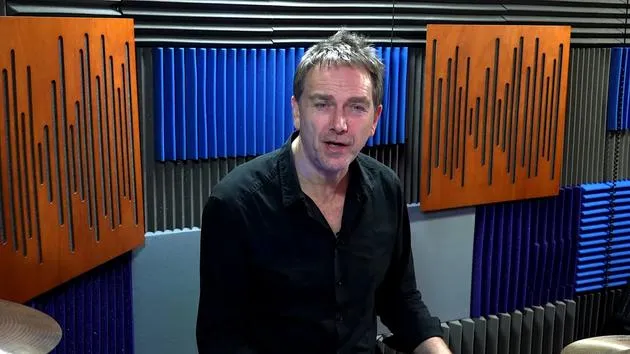
Rich Hawking von Hacktivist analysiert das Grade-8-Stück 'Meet Darth Ear', ein Prog-Track, der von einem synkopierten 4/4 in gemischte Unterteilungen und lange Passagen in 7/8 übergeht.

Das steckt im Kurs
29 Lektionen (3h 3m) · 1 gratis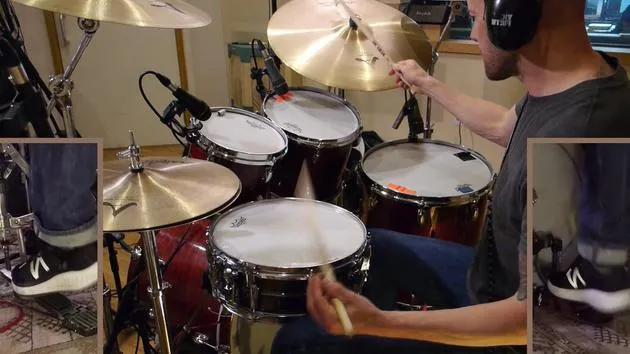
01. All Of You – Cole Porter
3:13
02. Last Time – Moderat
2:50
03. Red Baron – Billy Cobham
5:11
04. Some Skunk Funk – Brecker Brothers
2:49
05. Hit Me – Dirty Loops
2:55
06. Bonfire – Knife Party
2:47
07. Meet Darth Ear
3:02
08. Mind the Gaps
3:47
09. Lead Sheet
3:09
10. Freightshaker
Gratis-Lektion3:14
11. Nosso Samba
3:15
12. Dark Matter
3:11
01. Last Time – Moderat (Analyse)
10:31
02. All Of You – Cole Porter (Analyse)
14:36
03. Bonfire – Knife Party (Analyse)
14:02
04. Some Skunk Funk – Brecker Brothers (Analyse)
12:09
05. Hit Me – Dirty Loops (Analyse)
14:23
06. Red Baron – Billy Cobham (Analyse)
12:19
07. Meet Darth Ear (Analyse)
Du bist hier10:56
08. Mind the Gaps (Analyse)
5:22
09. Lead Sheet (Analyse)
9:09
10. Freightshaker (Analyse)
8:14
11. Nosso Samba (Analyse)
8:31
12. Dark Matter (Analyse)
5:55
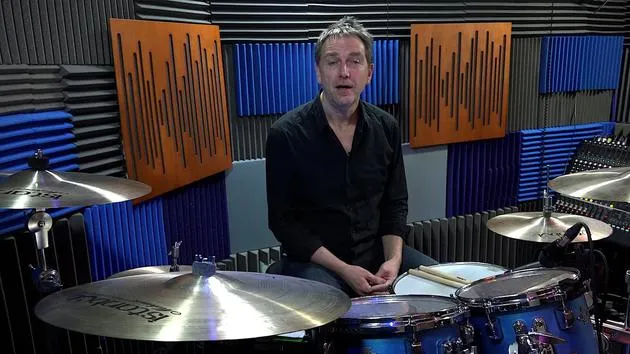
Transkript der Lektion
Lesson Overview: Meet Darth Ear
Welcome to this lesson on Darth Ear. This track is a doozy, featuring a progressive and hard-hitting style. Here's what you can expect:
- Initial Section: A bass drum-heavy, syncopated pattern in 4/4.
- Transition: A mixed-subdivision, mixed time signature riff.
- Main Focus: Navigating through the majority of the piece in 7/8.
There's a lot to get your teeth stuck into!
Recommended Listening
Before diving in, it's essential to familiarize yourself with the style. If you're not confident with prog rock or prog metal, make sure to listen to some bands while you work on this piece. Recommended bands include:
- Dream Theater
- Rush
- Animals as Leaders (modern instrumental progressive)
These artists will help you process odd feels and start to make them more familiar.
Part 1: The Syncopation
Let's break this down beginning with the 645434 section after you navigate the bass drum syncopation. My recommendation is:
- Start by reading the notation.
- Make some notations to help figure it out.
- When you play, focus on feeling it rather than counting.
Key Tip:
This approach is emphasized by many progressive drummers, focus on feeling your phrases instead of counting odd numbers that might feel unfamiliar. Use counting and notation as a foundation for understanding, especially when developing improvised sections, drum fills, and complementary drumming for solos.
Work Through the Mixed Time Signature:
- Progress through that mixed time signature section bar by bar.
- Collaborate with your teacher to figure it out quickly.
Part 2: Playing in 7/8
Now, let's tackle playing in 7/8. While it might feel odd, breaking it down will make it much easier.
Counting Strategy:
When counting 7, here's a technique I learned from Mike Portnoy:
- Don't use two-syllable numbers. Cut off the word seven (the first syllable) to count pulse by pulse:
1, 2, 3, 4, 5, 6, 7.
1, 2, 3, 4, 5, 6, 7.
This will help you avoid accidentally counting it as 4/4 or 8/8.
Accent Practice:
Practice placing a strong hit on the first beat and alternating sticking:
- Hit snare or hi-hat.
- Follow with accents on every note until the start again:
1. 2. 3. 4. 5. 6. 7.
Play it until it feels familiar. This is foundational for many sections in the piece, notably the ride and hi-hat sections.
Part 3: Supporting Solos
As you progress, think about how to support solos effectively. Here are some actionable tips:
- Listen to the music. Get the backing track only version and hear what's happening in the guitars and solos.
- Pick out hard accents during the guitar solos.
- Apply the same strong accented notes to other 7/8 sections (tom and hi-hat sections) to find where tom hits and crashes typically fall.
Part 4: Cross Stick Pattern & Bell Ostinato
Breaking It Down:
The cross-stick pattern combined with the changing bell ostinato can be challenging. Here's how to tackle it:
- Split it up. Focus on the regular placement of the cross stick and practice:
1, 2, 3, 4, 5, 6, sev.
-
Play hands separately first, then bass drum and cymbals with the bell pattern.
-
Once comfortable, slow it down and piece it all together.
Part 5: The Solo Section
Expressing Yourself:
The solo section is where you can get really expressive. Use your listening experience from the prog tracks to inspire your playing.
- Listen to "Tom Sawyer" by Rush, Neil Peart's drumming in the 7/8 section is an excellent reference.
- Incorporate licks and techniques from Dream Theater and Mike Portnoy.
Performance Tips:
- Start simply in solo sections.
- Save your biggest, most confident lick for the second half, ideally during bar six and the beginning of bar seven when following the guitar riff leading into the final section.
Conclusion
That wraps up our lesson!
- Have fun with it!
- Dive into the recommended listening.
- Don't hesitate to seek help from your teacher.
Enjoy the journey with this challenging, yet rewarding piece, Darth Ear!
29 Lektionen
3 Std. 3 Min. strukturierte Videolektionen
Erweiterte Videofunktionen
Verlangsamen, Passagen loopen, mitlesen
Handy, Tablet & Desktop
Üben, wo du willst
100 % Zufriedenheitsgarantie
30 Tage Geld-zurück-Garantie







