



Dark Matter (Analyse)
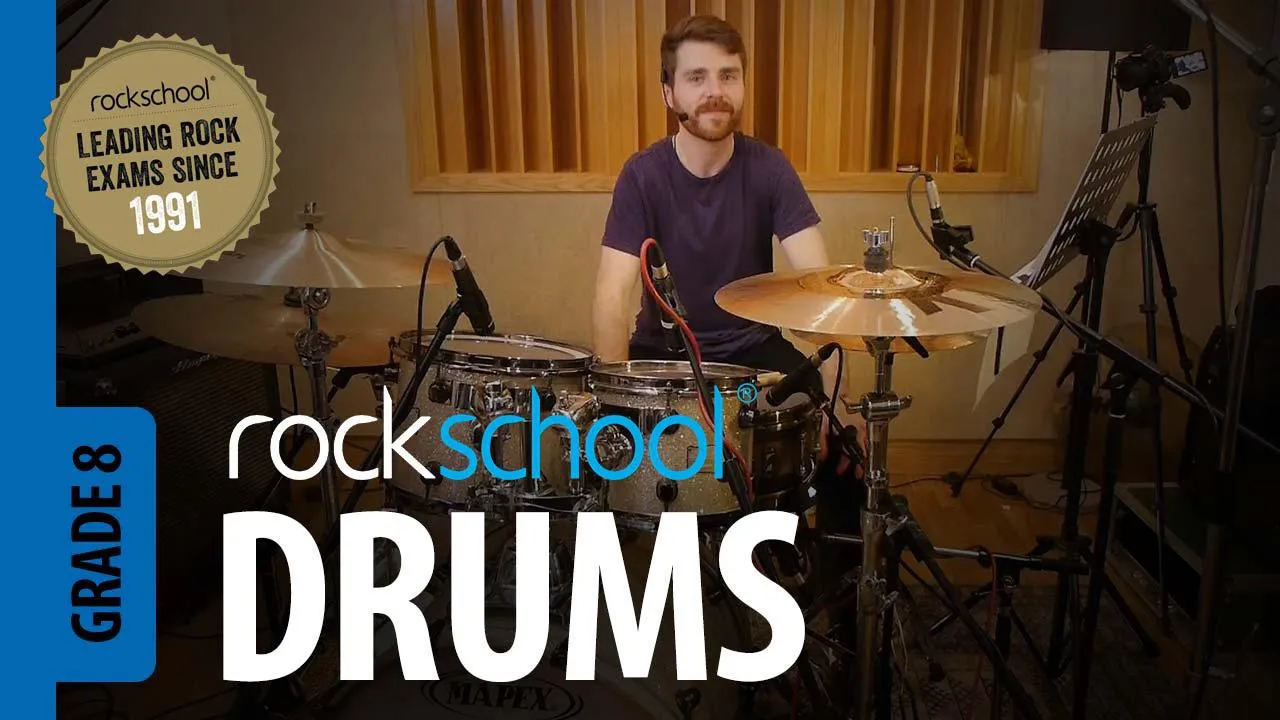
Harry Pope nimmt das Grade-8-Stück „Dark Matter" auseinander - eine groovige, funkig angehauchte Jazz-Schlagzeugstimme, die auf soliden Rim-Shot-Backbeats und leisen Ghost Notes aufbaut.
Das steckt im Kurs
29 Lektionen (3h 3m) · 1 gratis
01. All Of You – Cole Porter
3:13
02. Last Time – Moderat
2:50
03. Red Baron – Billy Cobham
5:11
04. Some Skunk Funk – Brecker Brothers
2:49
05. Hit Me – Dirty Loops
2:55
06. Bonfire – Knife Party
2:47
07. Meet Darth Ear
3:02
08. Mind the Gaps
3:47
09. Lead Sheet
3:09
10. Freightshaker
Gratis-Lektion3:14
11. Nosso Samba
3:15
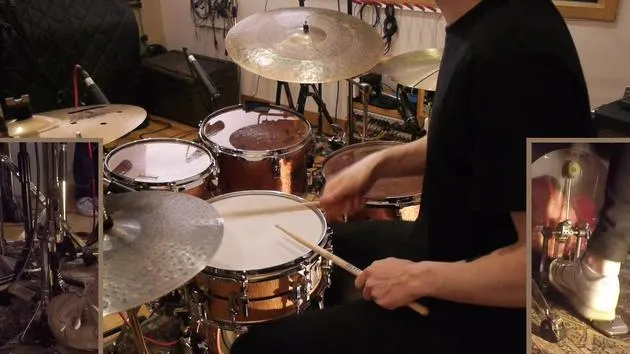
12. Dark Matter
3:11
01. Last Time – Moderat (Analyse)
10:31
02. All Of You – Cole Porter (Analyse)
14:36
03. Bonfire – Knife Party (Analyse)
14:02
04. Some Skunk Funk – Brecker Brothers (Analyse)
12:09
05. Hit Me – Dirty Loops (Analyse)
14:23
06. Red Baron – Billy Cobham (Analyse)
12:19
07. Meet Darth Ear (Analyse)
10:56
08. Mind the Gaps (Analyse)
5:22
09. Lead Sheet (Analyse)
9:09
10. Freightshaker (Analyse)
8:14
11. Nosso Samba (Analyse)
8:31
12. Dark Matter (Analyse)
Du bist hier5:55
Transkript der Lektion
Dark Matter: Grade Eight Drum Lesson
Introduction
Okay, so Dark Matter, grade eight. You made it. Congrats! This is a hard one, I won't lie to you. So, you know, all hands on deck.
Stylistic Approach
- Context: It's within a jazz context, but it's groovy jazz as well.
- Influences: Influenced by funk and groove music.
Key Elements
- Backbeat: A nice solid backbeat is really, really important. I'm rim shotting on every backbeat, and they've actually written this in, so that's essential.
- Ghost Notes: They've got to be quiet, really, really quiet, to emphasize the difference between the two. This is something they'll be looking for. It's crucial to the style of the music.
Recommended Drummers
- Dennis Chambers: Mentioned by the piece.
- Mark Giuliani: A personal favorite, check him out!
- Nate Wood: From Knee Body. His style is really, really useful.
Structure of the Piece
- Intro: We've got an intro, and then we have section B, which is essentially the same but just a bit more built up with some additional ghost notes.
- Key Focus: Pay attention to the ride pedaled hi-hat.
- Bass solo
- Drum solo
- Guitar solo
- Return to the start and play the head to finish.
Technique and Flow
- Relaxation: Stay really, really relaxed to maintain the flow across the music.
- Ride Consistency: Keep the ride very, very consistent at all times. You want to maintain quarter notes and eighth notes evenly, even while grooving.
Coordination Challenge
- The section with the ride and pedaled hi-hats will require work on your bass drum placement. It's crucial to find your way into the gaps of the hi-hat. Work through this with your teacher and practice it by yourself, with a metronome!
Practice Tip: "Say it with me: With a Metronome, please."
It's incredibly worthwhile to practice the bass drum on all four semiquavers.
Example Practice
You can play with doubles on the bass drum if you want to get really adventurous. It's very helpful and has aided my progress significantly.
Timekeeping in Jazz
- Flexibility: In the jazz genre, although you are keeping time, it's flexible. You're phrasing with the band and improvising, playing a part in how the music grows.
- Don't feel obligated to play a backbeat on two and four all the time. Move away from it, especially when accompanying the guitar solo.
Tempo Management
- It's quite fast, so resist the temptation to slow down or speed up.
- Vocab Essentials: There are classic patterns in here, with lovely grooving a la Dennis Chambers.
Specific Techniques
- Hard Fill: There's that tricky fill on the second time bar of F. Practice it slowly.
- Practice Cells: Focus on each cell individually first, as set out in the walkthrough. Then practice combining them together.
Drum Solo
- A drum solo occurs at sections E and D. This is exciting for any grade eight drummer, getting to chop out over a vamp.
- Repeat this four times:
- First Two Times: Play over just the bass and guitar playing a vamp, stay rhythmic.
- Third and Fourth Repeats: Catch the chords going "bow, bow." This will showcase your skills.
- Repeat this four times:
Transitioning from Bass to Drum Solo
- Note that you go straight from a bass solo into a drum solo. Maintain your phrasing from the bass solo into the drum solo for a cohesive sound.
Final Thoughts
It's a really, really cool tune, and I had a great time learning it.
Remember: Use a metronome. Have fun, and keep up the hard work!
Take care!
29 Lektionen
3 Std. 3 Min. strukturierte Videolektionen
Erweiterte Videofunktionen
Verlangsamen, Passagen loopen, mitlesen
Handy, Tablet & Desktop
Üben, wo du willst
100 % Zufriedenheitsgarantie
30 Tage Geld-zurück-Garantie







