



Slam Dunk Funk (Analyse)
Harry Pope analysiert das Rockschool-Grade-5-Stück 'Slam Dunk Funk' mit seinem Sly-Stone- und Red-Hot-Chili-Peppers-Feel und dem lässigen, funkigen Timing, das es braucht.

Das steckt im Kurs
29 Lektionen (2h 38m) · 1 gratis
01. Hold The Line – Toto
2:49
02. Don’t Let Go (Love) – En Vogue
2:47
03. Window Seat – Erykah Badu
2:43
04. Chuck E’s In Love – Ricky Lee Jones
2:55
05. 444 – Jay Z
2:32
06. Hard to Handle – Otis Redding
2:39
07. Geek
2:27
08. Rollin'
2:39
09. Do Balanço
2:30
10. Tiberius
2:31
11. Smack Talk
2:25
12. Slam Dunk Funk
Gratis-Lektion2:38
01. 444 – Jay Z (Analyse)
10:51
02. Chuck E’s In Love – Ricky Lee Jones (Analyse)
12:28
03. Window Seat – Erykah Badu (Analyse)
11:46
04. Hard to Handle – Otis Redding (Analyse)
7:23
05. Hold The Line – Toto (Analyse)
13:24
06. Don’t Let Go (Love) – En Vogue (Analyse)
6:55
07. Geek (Analyse)
14:24
08. Rollin' (Analyse)
6:10
09. Do Balanço (Analyse)
6:22
10. Tiberius (Analyse)
8:16
11. Smack Talk (Analyse)
7:17
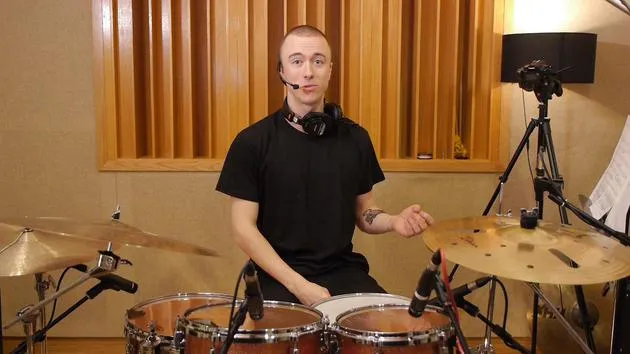
12. Slam Dunk Funk (Analyse)
Du bist hier4:49
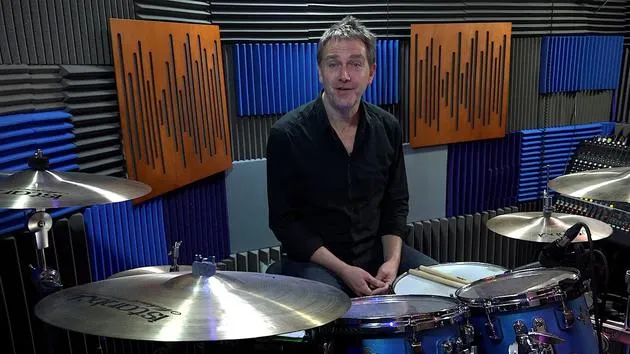
Transkript der Lektion
Slam Dunk Funk - Grade Five Rock School
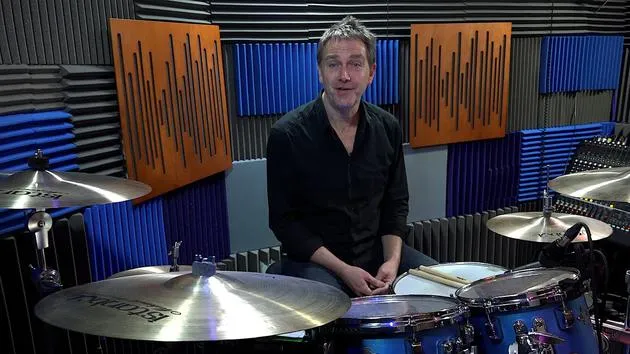
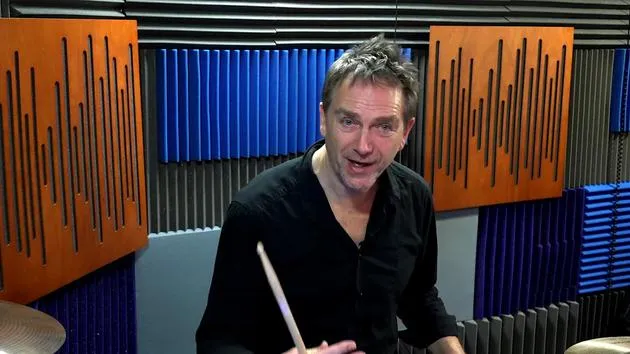
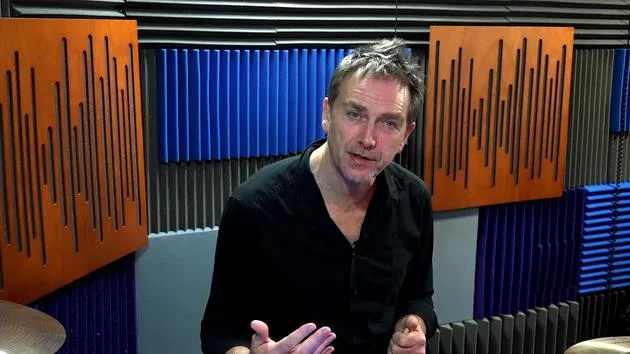
Hey! So, Slam Dunk Funk is a sick one. I really like it a lot. The stylistic approach we're looking at is influenced by Sly and the Family Stone and the Red Hot Chili Peppers, as it says in your book that you're checking daily. I hope so!
Key Points to Focus On
Timekeeping
- We are influenced by the Red Hot Chili Peppers, so we want really strong, funky, laid-back timekeeping at all times. That's just a given.
Structure
- Intro
- B Section: Transition to the ride, which is really important.
- Be very clear with every single hit during this section.
- Bass Solo
- Drum Solo
- Guitar Solo
It's pretty straightforward, but it's really beneficial to keep looking ahead. For example, at the end of the section with the ride bell, the bass solo might be quite tricky if you haven't planned ahead.
Soloing
- For your solo, please try not to overcomplicate it. For the love of God, keep it simple.
Technique
When we say funk, we also need to acknowledge the slightly rocky influences, especially from the Red Hot Chili Peppers.
- For example, if the Groove A sounds lame, adding a lovely, sizzly open hi-hat immediately adds depth.
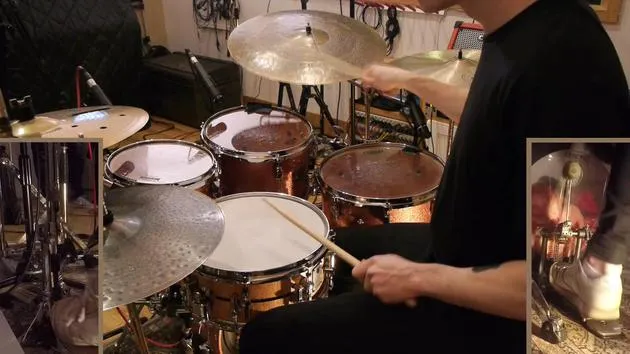
- Pay attention to my left arm while playing. Your teachers may have already discussed this, but molar technique is crucial for those rim shots.
- The lovely whiplash motion will make your backbeat coherent, very important for coordination.
Hi-Hat and Timekeeping
-
There's no pedal hi-hat whatsoever, even on the ride in the chart. If you want to add it, it will sound sick, but don't feel obliged.
-
Timekeeping is where I really want you to focus. It's a slow funk piece, and it's tempting to speed up since not all of it is technically demanding.
- For example, Groove E is easy to speed up, but don't give in to that temptation!
Soloing Strategies
-
During your solo, keep to the slow tempo.
- It's easy to play semiquaver licks and throw yourself across the drums, but keep it simple.
- Just because it says "solo" doesn't mean you have to throw every chop at it. You're playing over a groove, so maintain that groove throughout.
-
I actually started my solo just by grooving. I recommend this, especially if you're not comfortable with soloing vocabulary.
Adding Flams
- There are a lot of flams in the piece, and I've added drags within the groove, which fills it out nicely from a professional perspective.
- Practice the semiquavers with flams separate from the groove, and consider trying them around the kit as they sound great.
Guitar Solo Development
At the guitar solo, you've been told to develop on the repeat. That's music to any jazzer's ears!
-
I highly recommend checking out Chad Smith's playing. When he moves to the ride cymbal, everything sounds open and washy, yet maintains depth and strength in the kick and snare.
-
Just remember that even though you're told to develop, it's crucial not to lose sight of the fact that you're playing a groove tune.
Final Thoughts
That's it from me. Please read the walkthroughs, check the chart, and listen to your teacher. Work through it with them, and I'll see you again soon.
It's a great chart, I hope you enjoy it! Take care.
29 Lektionen
2 Std. 38 Min. strukturierte Videolektionen
Erweiterte Videofunktionen
Verlangsamen, Passagen loopen, mitlesen
Handy, Tablet & Desktop
Üben, wo du willst
100 % Zufriedenheitsgarantie
30 Tage Geld-zurück-Garantie







