



Flams, Drags und Ruffs
Mit
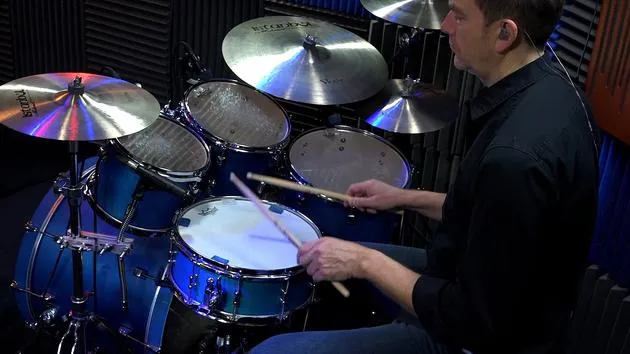
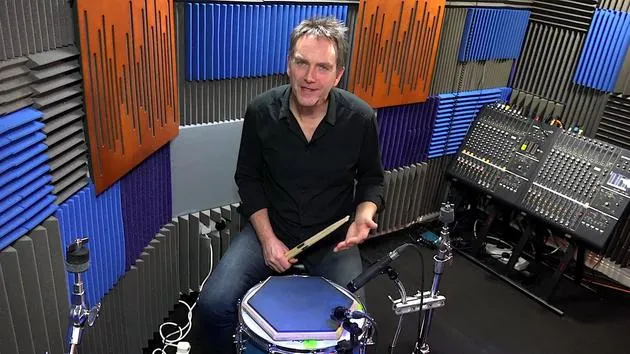
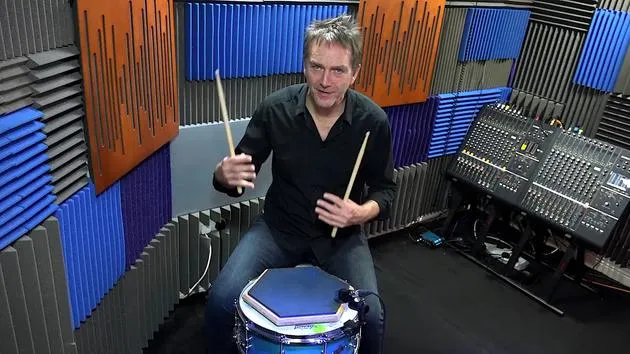
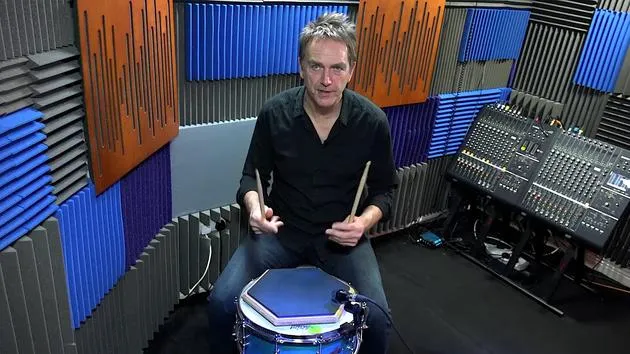
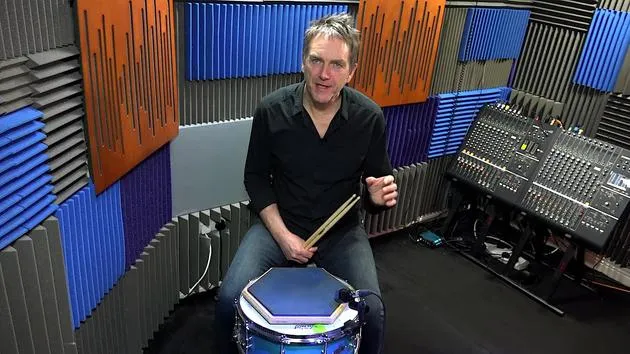
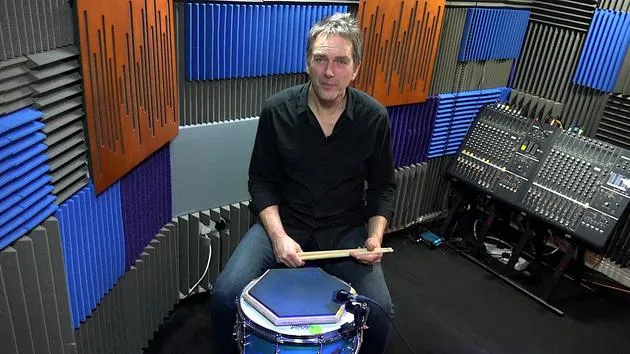
Paul ElliottPaul Elliott demonstriert Flams, Drags und Ruffs, die Verzierungs-Rudiments, die einem Hauptschlag Vorschlagsnoten hinzufügen, um ihn voller und texturreicher zu machen.
Das steckt im Kurs
11 Lektionen (0h 48m) · 1 gratis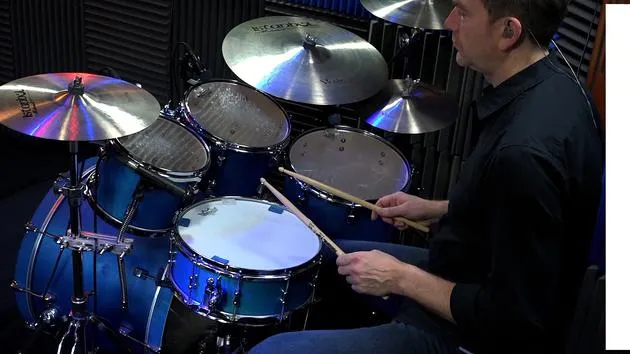
01. Demonstrationen der technischen Anforderungen für Grade 0
0:53
02. Demonstrationen der technischen Anforderungen für Grad 1
1:07
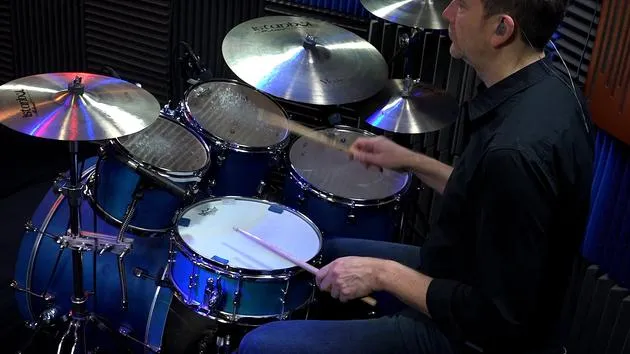
03. Demonstrationen der technischen Anforderungen für Grade 2
1:25
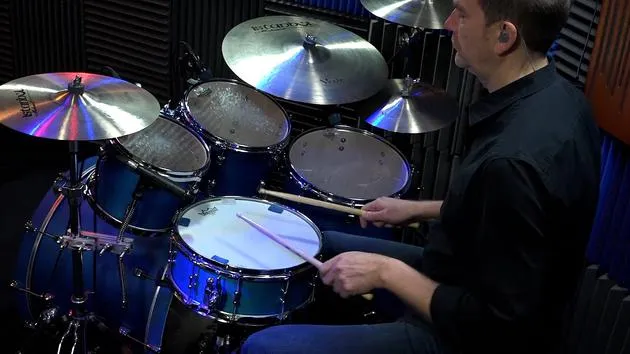
04. Demonstrationen der technischen Anforderungen für Grad 3
2:05
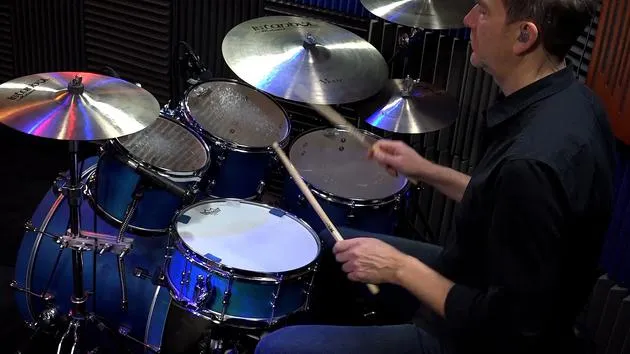
05. Demonstrationen der technischen Anforderungen für Grade 4
3:34
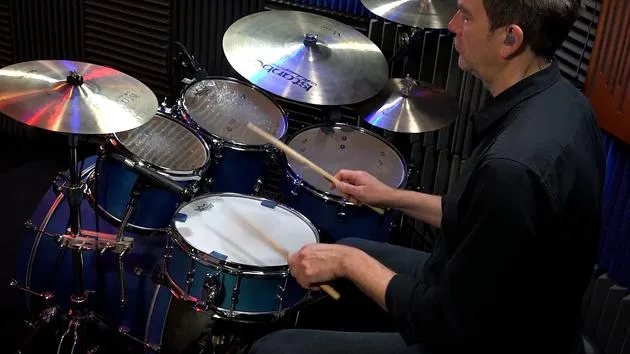
06. Demonstrationen der technischen Anforderungen für Grade 5
3:14
Transkript der Lektion
Embellishment Rudiments: Flams, Drags, and Rufts
Flams, drags, and ruffs are embellishment rudiments. By this, I mean that they attach themselves to other notes, the main or primary note or parts of a rhythm, generally accents, so that they thicken the note and add texture.
Key Concepts
- Note Values: In strict rudimental terms, flams, ruffs, and drags don't have note values. This is very important to understand.
- Starting Slow: When first learning to play flams, drags, and ruffs, it can be challenging to get them close to the main note that you're flamming or dragging. Start very slowly and don't worry if it doesn't sound exactly like a military flam or drag.
Modern vs. Military Playing
- In modern drumming performance contexts, the flam might be a bit looser, and the drag may actually have a note value, sometimes even the ruff might have one.
- My demonstrations are in a military context to show how closely I can get to the note.
Execution of Flams, Drags, and Rufts
The Flam
-
General Approach:
- When playing the flam, we often flam the accent.
- In technical studies, most flams come before accents; this means playing a grace note or quieter note before the accent.
-
Avoiding Unisons:
- It's crucial to maintain a distinct separation between the flam and the primary note.
- For instance, if we start with a right, left, right, left pattern, we need to drop the flam note closely, but if it's too close, it becomes a unison.
-
Practicing Flams:
- Begin with a wider flam for practice.
- This will help you distinguish between the flam and the primary note.
"You can almost pick out the note value there."
The Drag
-
General Approach:
- A drag consists of a double tap and, like the flam, it serves as a control exercise.
- In military terms, it's not as frequently used in modern drumming, but it's beneficial to master this for the sake of control and technique.
-
Playing the Drag:
- Using the same right, left, right, left pattern, play a wide drag to hear the note value.
- Aim to maintain a double tap without creating a buzz.
"We need to hear the double stroke; we need to hear that double tap."
The Ruff
-
Structure:
- A three-stroke ruff can be practiced as right, left, left and left, right, right.
- It's common to play this before an accented note.
-
Practicing:
- Start by keeping some distance from the main note.
- Gradually bring the three-note ruffs closer to the main note to enhance the traditional feel.
"It's starting to sound more traditional, more rudimental, more marching band context."
Final Notes
- Key Takeaways:
- We need to hear the flam, not the unison.
- We need to hear the double tap, not the buzz roll.
- And with the three-note ruff, we need to hear it getting as close as possible to the main note.
Practice these rudiments thoroughly to improve your technique and confidence in executing flams, drags, and ruffs effectively.
11 Lektionen
0 Std. 48 Min. strukturierte Videolektionen
Erweiterte Videofunktionen
Verlangsamen, Passagen loopen, mitlesen
Handy, Tablet & Desktop
Üben, wo du willst
100 % Zufriedenheitsgarantie
30 Tage Geld-zurück-Garantie
Lern deinen Guru kennen
Lern deinen Guru kennen
Paul Elliott ist ein angesehener Schlagzeugpädagoge und Clinician, dessen Schüler in der ganzen Branche Spitzenjobs innehaben, darunter die Schlagzeuger von Kylie Minogue (Tom Meadows), Ricky Martin (Laura Fares) und The Cure (Jason Cooper). Er hat sich Clinic-Bühnen mit Steve Smith, Manu Katché, Simon Phillips und Gary Husband geteilt, und seine eigene Spielerkarriere umfasste Arbeiten mit Frank Gambale, Guthrie Govan und Shaun Baxter. Schlagzeuger wie Phil Selway (Radiohead) und Ash Soan (Adele) kommen für technischen Rat zu ihm. In seinen Kursen arbeitet er die technischen Anforderungen Grade für Grade durch, demonstriert jedes Rudiment und erklärt nicht nur, wie man es spielt, sondern was es dir am Schlagzeug ermöglicht, wenn du es beherrschst.







