



Schluss

Mit
Paddy Milner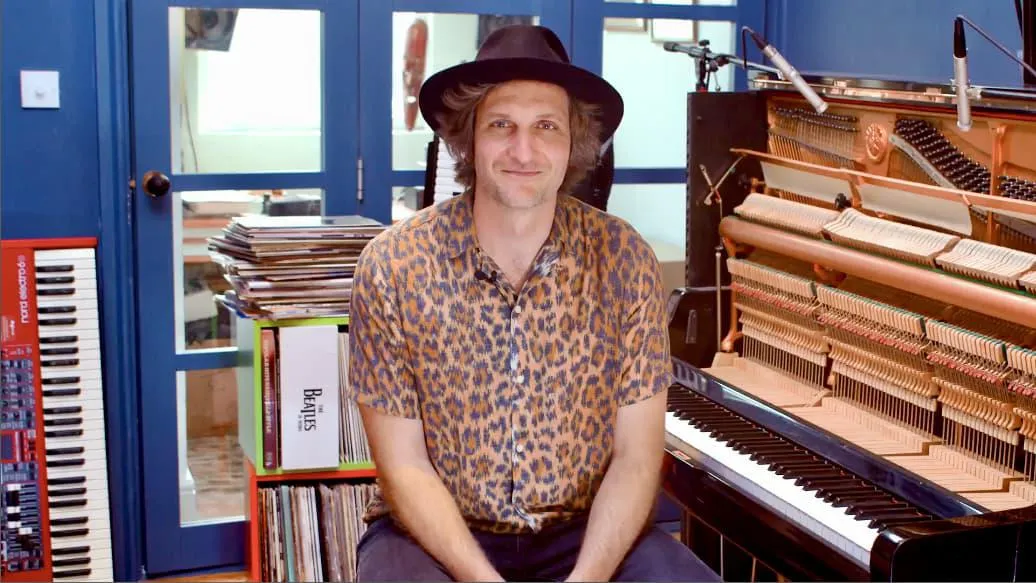
Das steckt im Kurs
35 Lektionen (2h 23m) · 1 gratis
01. Dive Bomber (Pete Johnson) - Klavieraufführung von Paddy Milner
3:00
02. Einführung in das Stück
Gratis-Lektion5:30
03. Erster Refrain
6:09
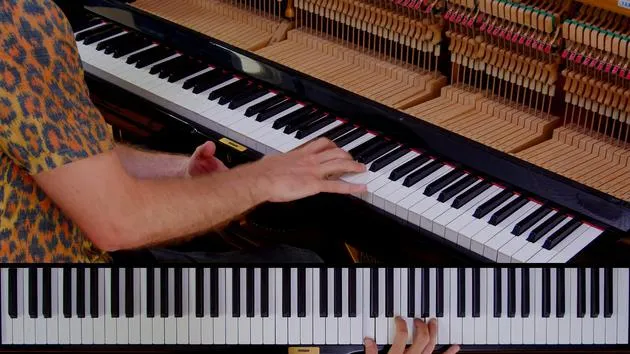
04. Zweiter Chorus
1:49
05. Nächster Abschnitt
2:36
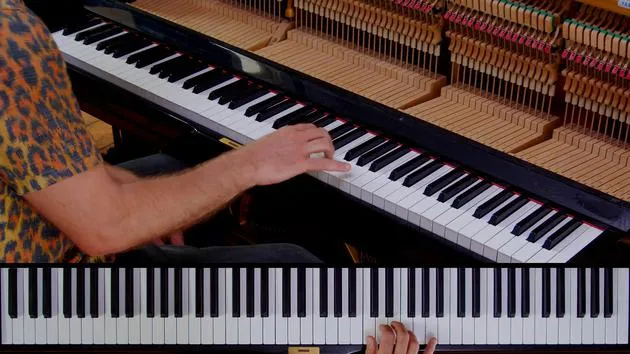
06. Turnaround
0:49
07. Erster Break
4:17
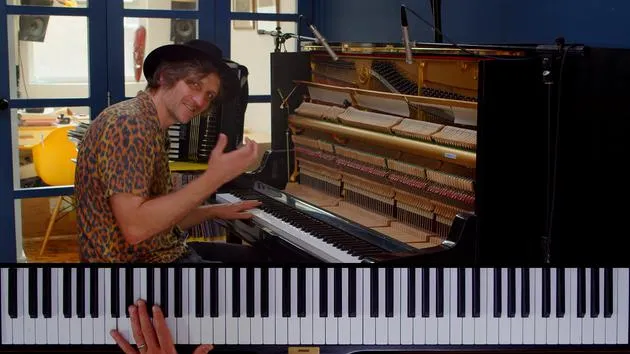
08. Einstimmige Linie
2:26
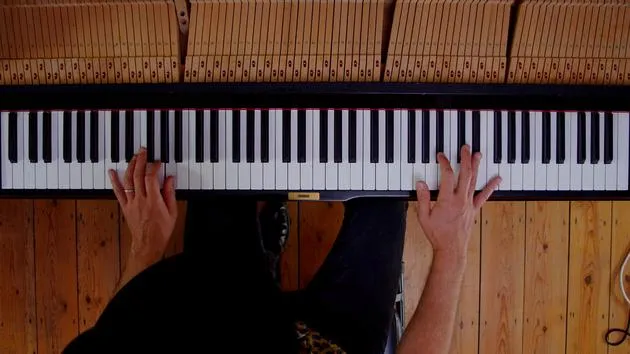
09. Nächster Chorus
2:43
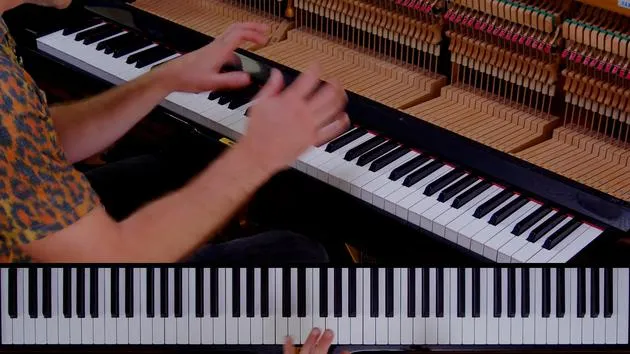
10. Das nächste Break
4:25
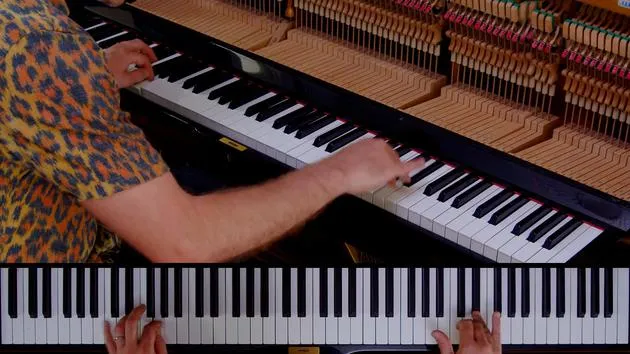
11. Der nächste Chorus
5:15
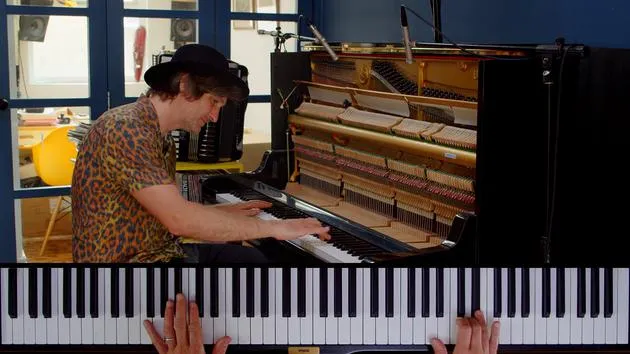
12. Riff der IV. Stufe
2:04
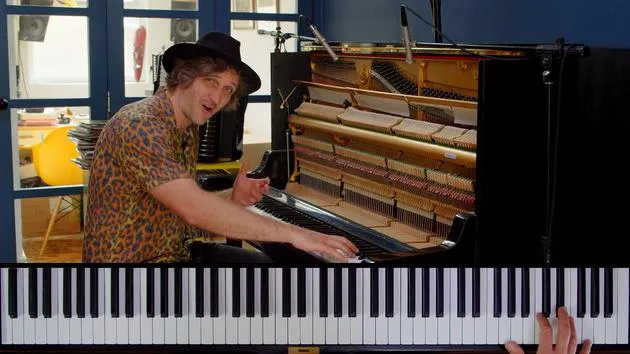
13. Hoher Abschnitt
8:24
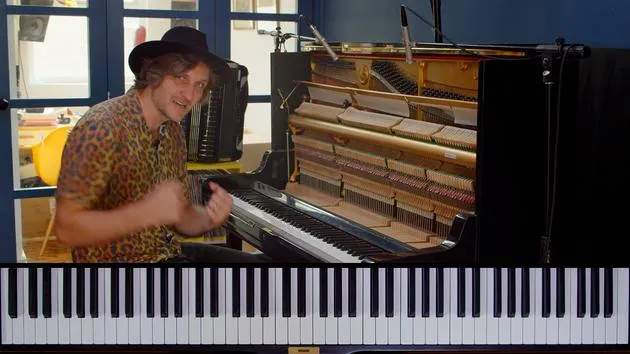
14. Letzter Chorus
5:00
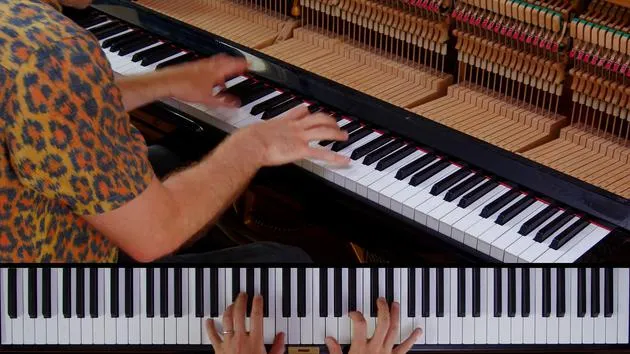
01. Honky Tonk Train Blues (Meade Lux Lewis) - Klavierinterpretation von Paddy Milner
3:01
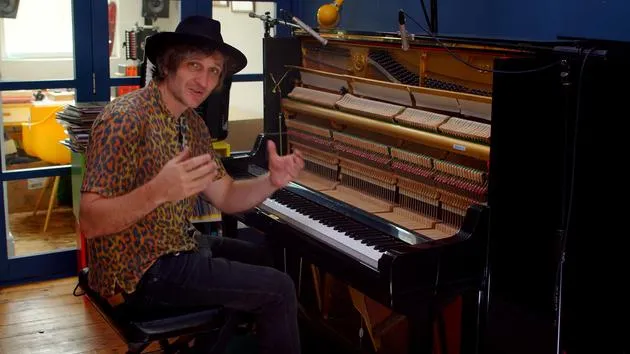
02. Das Intro - Alle einsteigen!
2:56
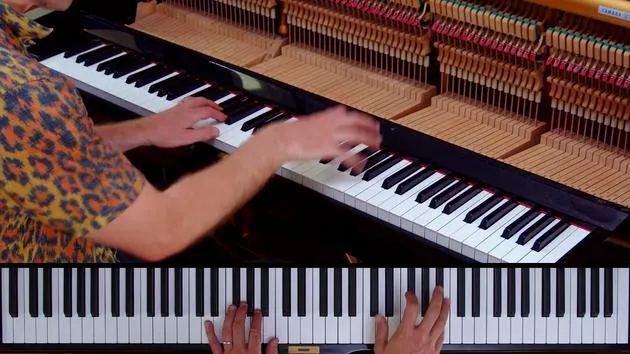
03. Die linke Hand - Der Motor
4:03
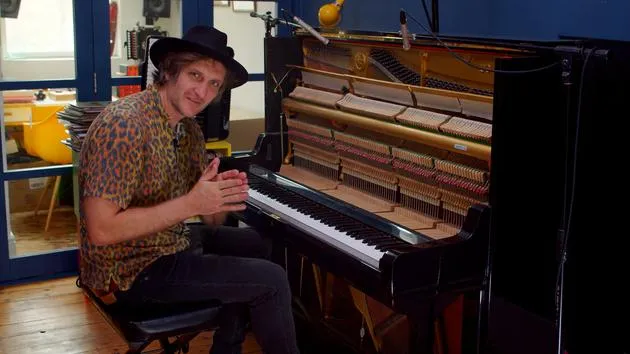
04. Erster Chorus und Turnaround
8:11
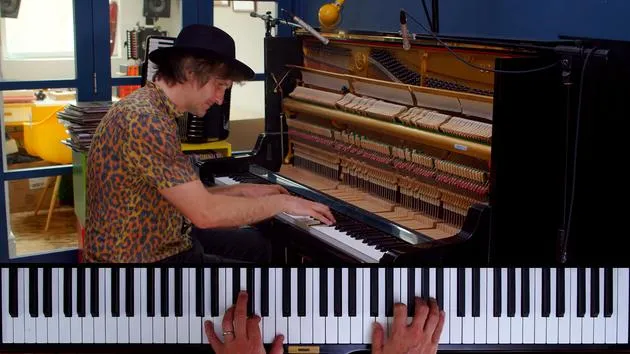
05. Zweiter Chorus - 3-gegen-2-Polyrhythmus
1:54
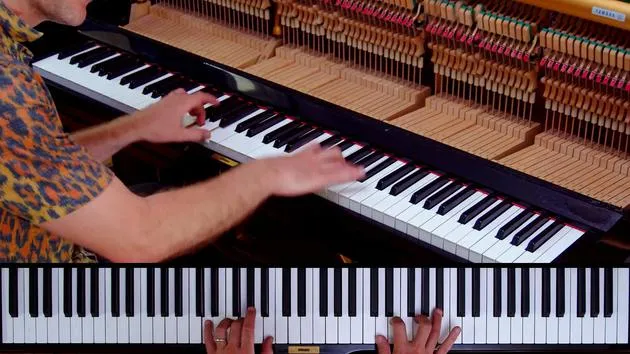
06. Dritter Chorus - Zugpfeifen-Triller
4:44
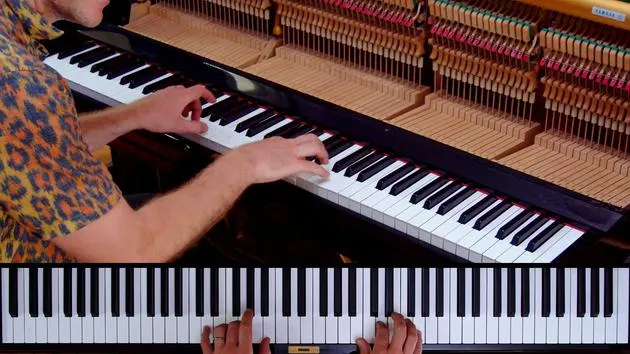
07. Vierter Chorus - Wiederholte Triolen
2:56
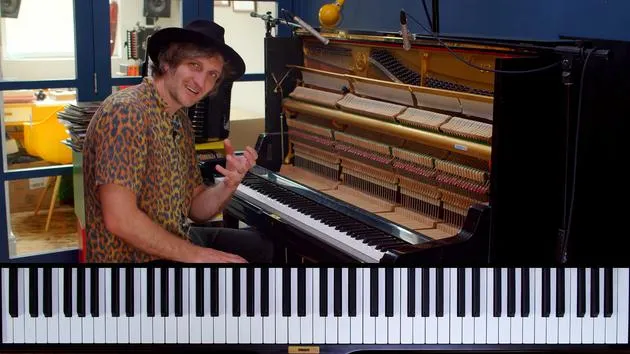
08. Sechster Chorus - Em-G6-Harmonie
7:03
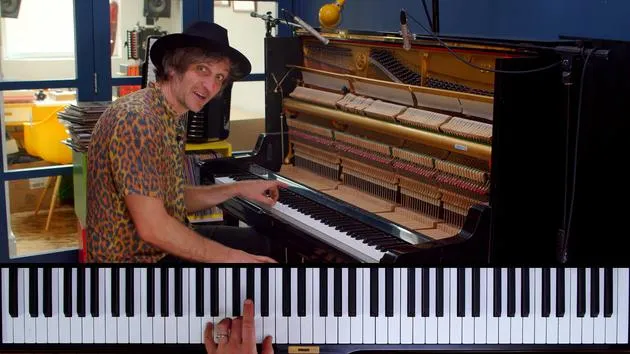
09. Siebter Chorus
2:33
10. Achter Chorus
2:51
11. Ende des letzten Chorus - Einfahrt in den Bahnhof
2:28
Transkript der Lektion
Music Lesson
So after. Now shake that thing.
So we're back onto that idea.
I think he may have been aiming for that E flat, but on the recording, I hear that he's just hitting a knee twice. That's neither here nor there, but I think that's kind of what happened.
Last Chorus
Okay, so those are all things that we've heard before.
And then for the very last chorus, which is kind of the peak of the tune, this is where the sort of climax of the dancing would happen, he plays this right up at the top of the register, which we haven't been to before.
High Register
- He saved that high register bit for the end of the tune.
- This is where the frenzy would be happening.
There's more triplets in there as well, adding a level of complexity and intensity to it.
New Material
He also brings in this little chromatic thing, which he hasn't done before in the tune.
- There's this kind of new material for the ear to listen to.
- That little bit adds variety and interest.
Then, we have a kind of strange ending. It's not at the end of the 12-bar form.
Ending
He does it after coming down from the F chord.
- I'm not sure why that is.
- Maybe the idea of the 12-bar form hadn't fully crystallized at that point.
- Or maybe it's because the recording had to be a certain length before they ran out of wax on the cylinder or something.
I'm not exactly sure what the recording process was.
Anyway, he finishes it sort of halfway through the 12-bar, not at the end of the 12-bar.
And then, there is a very simple turnaround ending, just very simple. There's no big flourish, none of that. No, just very simple.
Conclusion
So there you go. That is pretty much as far as I could work it out from the record, what Pine Top Smith played on his 1928 recording.
So, yeah, good luck playing it! I hope these tips have helped.
And as always with this music, which is improvised music, take these ideas and do your own things with them.
35 Lektionen
2 Std. 23 Min. strukturierte Videolektionen
Erweiterte Videofunktionen
Verlangsamen, Passagen loopen, mitlesen
Handy, Tablet & Desktop
Üben, wo du willst
100 % Zufriedenheitsgarantie
30 Tage Geld-zurück-Garantie
Lern deinen Guru kennen
Lern deinen Guru kennen
Paddy Milner gilt als einer der besten Blues-Pianisten der Welt – derzeit ist er der Stammkeyboarder von Sir Tom Jones, nach mehreren Jahren an der Seite des großartigen, verstorbenen Jack Bruce –, aber er ist auch ein hervorragender eigenständiger Songwriter und ein unverwechselbarer Sänger. Lies einfach das Lob von Größen wie Dave Brubeck weiter unten! Sein Spiel war auf dem Soundtrack des Kinohits 'Rocketman' von 2019 zu hören.
Zweimal wurde er bei den British Blues Awards als bester Keyboarder ausgezeichnet, und als Gründungsmitglied der Ronnie Scott's Blues Explosion hat er eine langjährige Residency im weltberühmten Club Ronnie Scott's.
Seine aktuelle Band LONDONOLA spielt selbst geschriebene britische Musik mit einer kräftigen Portion New-Orleans-Geist, und sein gemeinsames Projekt JAWBONE geht seit der Veröffentlichung des gleichnamigen Debütalbums von Stärke zu Stärke.
- „Ich liebe es... da ist einer, der wirklich Klavier spielen kann" - Dave Brubeck
- „Ich kann es nur wärmstens empfehlen. Irgendwie fängt alles an, sich viel besser anzufühlen!" - Jack Bruce
- „Der beste Blues-Pianist Europas..." - Blues Access, USA
- „Beeindruckend und originell" - The Times
- „Blendend" - The Independent
In seinen Kursen zerlegt Paddy den authentischen Blues-Shuffle, Slow Blues, Boogie-Woogie, Rock 'n' Roll und das New-Orleans-Piano – bis hin zu drei klassischen Boogie-Woogie-Songs –, damit du diese Stile bei einem der Allerbesten des Fachs lernst.







