



Sechster Chorus - Em-G6-Harmonie

Lesson time: (7min 3sec)
Paddy Milner unterrichtet den sechsten Chorus von 'Honky Tonk Train Blues', aufgebaut auf einem warmen e-Moll-/G6-Voicing in der rechten Hand, plus dem Triller aus lockerem Handgelenk, der den Sound ausfüllt.
Course preview
This lesson is part of the course Lerne drei klassische Boogie-Woogie-Songs
Watch a preview of the full course below.
Lesson transcript:
E Minor Harmony and Trills
So, yeah, moving on to the next two sections, which are built on this nice E minor harmony in the right hand, functioning like a G6.
- A G triad with the 6th would be that.
- Midlux Lewis has this voicing, which is very much an E minor triad since we're in the key of G.
- It has a G6 ring to it, but still provides a really nice warm harmony on top of a bass that's chugging away underneath.
The Trill Technique
Okay, so let's look at that trill.
- Remember to keep a really loose wrist.
- Allow for rotation, it's not just your fingers waggling; it's your whole forearm.
- I'm kind of rotating it around that G.
After I've kind of skipped off the F sharp to the G, I'm using that as a pivot for the trill.
- This movement fills the sound.
- By playing a very strong G chord, we solidify the G tonality and create a rich G6 sound.
The Harmony Shift
There's a nice disparity between the major sound going to a much darker tone on the four chord, then back to the brighter G6.
- Not much to say about that, apart from it's based on a more bluesy feel with chugging cross rhythms again.
The Next Chorus
Now, this next chorus is again built on that kind of E minor / G6 structure.
- Not sure sometimes if it's a full E minor chord or just a simplified version, so make sure it really rings out at the top of the voicing.
- To me, that sound resembles the warning bell at a railroad crossing, at least, that's what it always reminds me of.
Similar Ideas and Rhythm Changes
When we get to this section, it's a kind of similar idea to the turnarounds, but on the chord four.
- Maybe it's played as the full chord, or just another variation.
- Then we've got A or perhaps it hasn't got the E in it, maybe it's just a D alter.
Ultimately, that doesn't affect the impression of the music.
- The rhythm here is slightly different.
- We've moved from triplets to kind of 16th notes.
In this bit, with that added line at the bottom, sometimes I can't tell on the recording if there's an extra note, like a bottom F sharp.
- Again, it doesn't really affect things, but it's something to bear in mind if you want a little bit of variation.
About the instructor
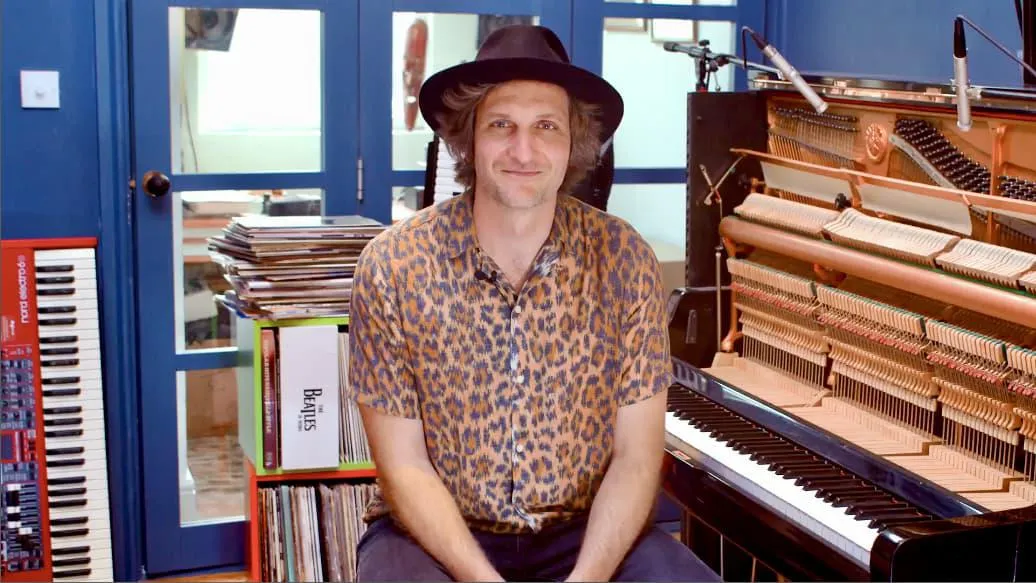
Paddy Milner gilt als einer der besten Blues-Pianisten der Welt – derzeit ist er der Stammkeyboarder von Sir Tom Jones, nach mehreren Jahren an der Seite des großartigen, verstorbenen Jack Bruce –, aber er ist auch ein hervorragender eigenständiger Songwriter und ein unverwechselbarer Sänger. Lies einfach das Lob von Größen wie Dave Brubeck weiter unten! Sein Spiel war auf dem Soundtrack des Kinohits 'Rocketman' von 2019 zu hören. Zweimal wurde er bei den British Blues Awards als bester Keyboarder ausgezeichnet, und als Gründungsmitglied der Ronnie Scott's Blues Explosion hat er eine langjährige Residency im weltberühmten Club Ronnie Scott's. Seine aktuelle Band LONDONOLA spielt selbst geschriebene britische Musik mit einer kräftigen Portion New-Orleans-Geist, und sein gemeinsames Projekt JAWBONE geht seit der Veröffentlichung des gleichnamigen Debütalbums von Stärke zu Stärke. „Ich liebe es... da ist einer, der wirklich Klavier spielen kann" - Dave Brubeck „Ich kann es nur wärmstens empfehlen. Irgendwie fängt alles an, sich viel besser anzufühlen!" - Jack Bruce „Der beste Blues-Pianist Europas..." - Blues Access, USA „Beeindruckend und originell" - The Times „Blendend" - The Independent In seinen Kursen zerlegt Paddy den authentischen Blues-Shuffle, Slow Blues, Boogie-Woogie, Rock 'n' Roll und das New-Orleans-Piano – bis hin zu drei klassischen Boogie-Woogie-Songs –, damit du diese Stile bei einem der Allerbesten des Fachs lernst. read more