



Lateinamerikanische Akkordrhythmen

Mit
Tim RichardsEinige gängige lateinamerikanische Rhythmen für deine Akkorde in der rechten Hand
Das steckt im Kurs
29 Lektionen (1h 19m) · 1 gratis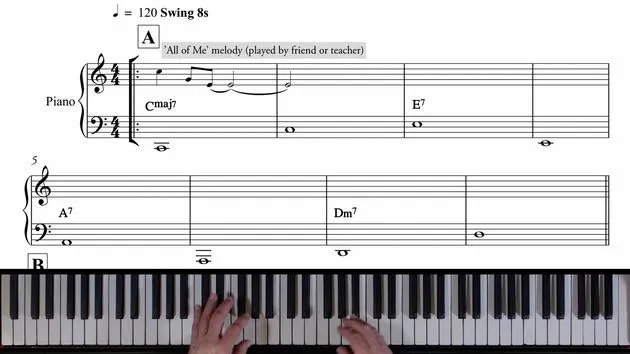
01. Die Grundtöne spielen
2:34
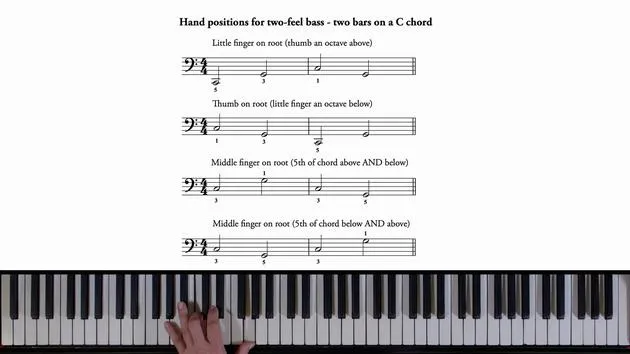
02. Basslinie im Two-Feel
2:26
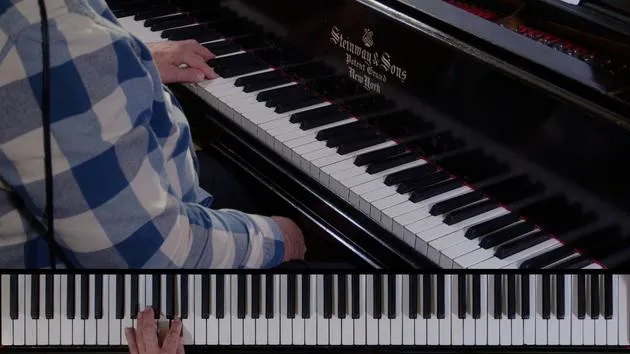
03. Bassline im Two-Feel (Performance)
1:12
04. Guide Tones
3:00
05. Two-feel-Bass mit Guide Tones (Performance)
1:06
06. Akkorde mit der rechten Hand hinzufügen
2:37
07. Two-Feel-Bass mit Akkorden (Aufführung)
1:08
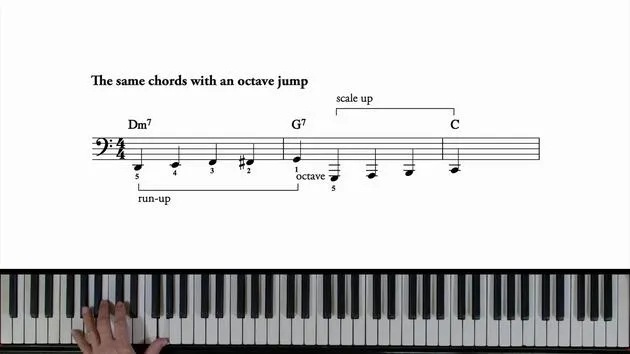
08. Walking-Bass-Linien
5:31
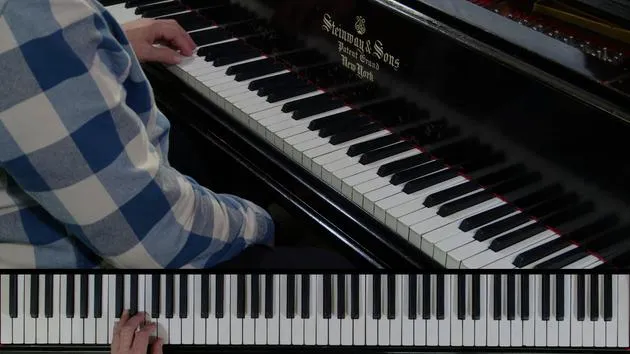
09. Walking Bass Line (Aufführung)
2:12
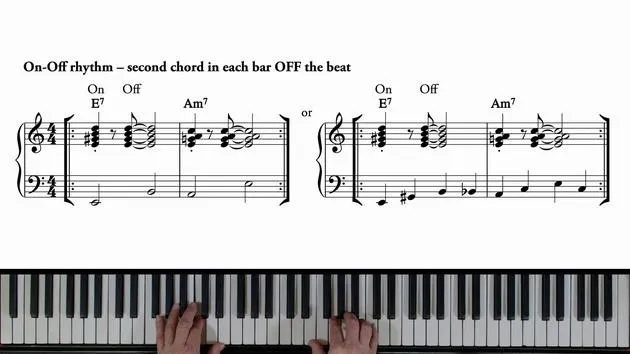
10. Akkordrhythmen
5:05
11. Grundtonlose Voicings
5:15
12. Walking-Bass-Linie mit grundtonlosen Akkorden (Aufführung)
1:10
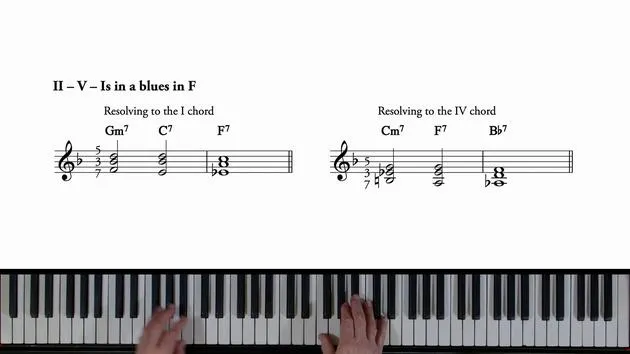
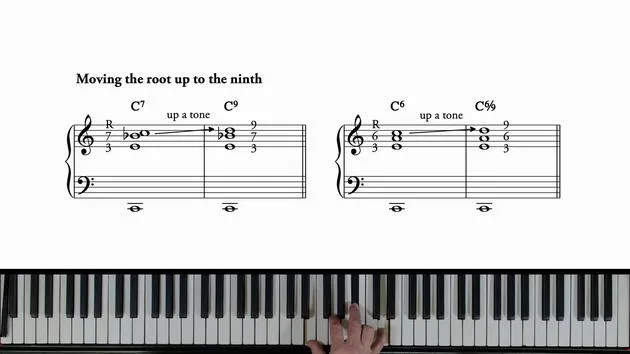
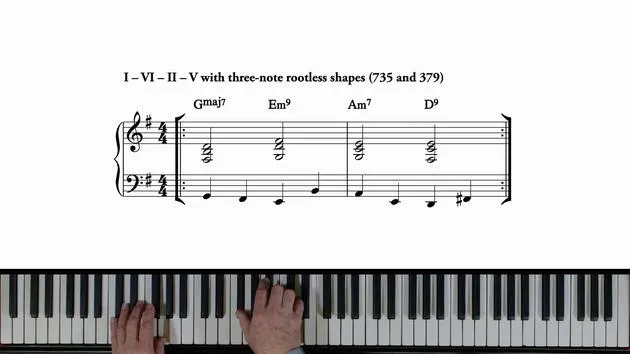
Transkript der Lektion
One Note Samba: Adding Chords in the Right Hand
If you managed to play the two-feel bassline for "One Note Samba" in the last lesson, you can now try adding some chords in the right hand. In this lesson, we'll look at some chordal rhythms that you could use in a Latin bossa style.
Understanding Chord Symbols
It's really important that you understand what all those chord symbols mean and can play the chords confidently.
- B7b5: This chord is like B7 but with an F instead of an F sharp.
- Bb6: Go through all the chords in the tune and make sure that you're familiar with the basic shapes and their inversions.
Importance of Inversions
You need to know the inversions because when you have, say, a two-five-one progression, you're probably going to be alternating. You don't want to be jumping around all over the place.
- For instance, in the key of Eb, the two chord is F minor.
- F Minor: Second inversion
- Bb7: Root position
- Eb Major: Second inversion
This setup avoids unnecessary jumping around. Do something similar with the key of Db major.
Chords from One Note Samba
All these chords are from "One Note Samba":
- Eb Minor: Third inversion
- Move One Note and you get Ab9: First inversion
- Finish up back on Db Major: Third inversion
Another Example
Starting with root position:
- C# Minor
- F#7: Top two notes move down
- Keep the top two notes there, and you get B Major.
In this position, you're sharing two notes between each chord pair. It's another sort of practice pattern that you could take around the cycle of two fives.
Introducing Latin Rhythms
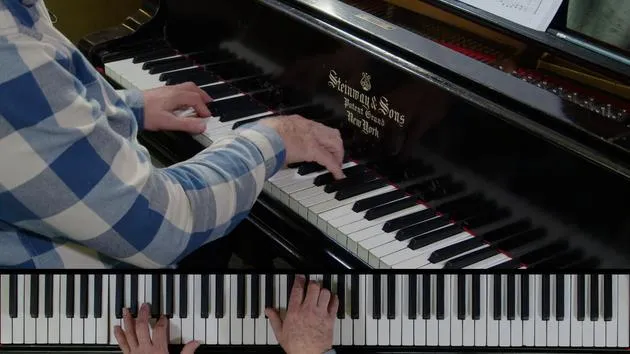
Now let's put some of these things in the right hand with a two-feel bass. I'm going to show you some really important Latin rhythms.
-
Basic Rhythm:
- Two notes on beats one and two
- Two chords on beats one and two
- However, the third chord is played half a beat later on three.
This creates a nice relaxed rhythm.
-
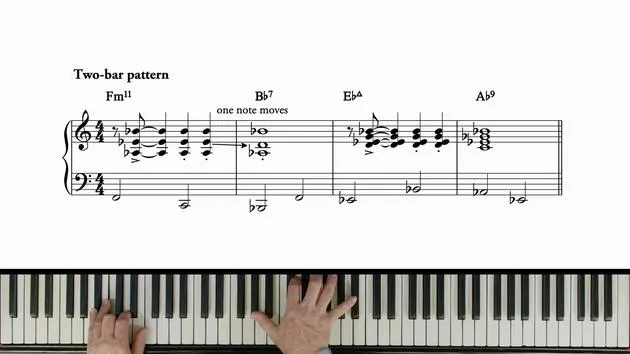
Authentic Two-Bar Pattern:
- Most Latin rhythms are in fact two-bar patterns, unlike the previous rhythm.
- Notice how the chords alternately come in off the beat with one hand and on the beat.
In this pattern, only one chord is off the beat (that's the first one).
-
Reversed Pattern:
- Let's reverse that pattern and start with the on-the-beat chord.
- In all these three examples, the top note of the chord remains the same.
Effective Device
This technique is a really effective device we've seen before. Keeping the top note the same for all four chords:
- Provides continuity
- Also avoids unnecessary jumping
You'll be doing this in the next tune: Bossa bass with chords.
29 Lektionen
1 Std. 19 Min. strukturierte Videolektionen
Erweiterte Videofunktionen
Verlangsamen, Passagen loopen, mitlesen
Handy, Tablet & Desktop
Üben, wo du willst
100 % Zufriedenheitsgarantie
30 Tage Geld-zurück-Garantie
Lern deinen Guru kennen
Lern deinen Guru kennen
Der von der Kritik gefeierte Jazzpianist und Komponist Tim Richards ist einer der erfahrensten Jazzpädagogen Großbritanniens und unterrichtet seit über 30 Jahren privat Klavier sowie am Morley College, am Goldsmiths College, an der University of Surrey, in den Premises Studios und an weiteren Orten im Vereinigten Königreich und im Ausland. Er hat zahlreiche Titel für Schott Music produziert, darunter die zweibändigen Bestseller Exploring Jazz Piano, Blues, Boogie & Gospel Collection und das gefeierte Improvising Blues Piano. Gemeinsam mit John Crawford ist er zudem Koautor von Exploring Latin Piano und Brazilian Piano Collection.
In jüngerer Zeit hat Schott Jazz, Latin & Modern Collection (15 Stücke für Klavier solo) veröffentlicht, das Originale von Tim Richards neben Stücken von Duke Ellington und Thelonious Monk vereint, sowie das zweibändige Set Beginning Jazz Piano (jetzt ein zweiteiliger MusicGurus-Kurs).
„Die wahre Freude an Tims Musik… liegt darin, dass sie zugleich enorm lehrreich und ein großes Vergnügen zu spielen ist. Jeder, der auch nur das geringste Interesse daran hat, Jazzpiano zu lernen oder zu unterrichten, sollte sich unbedingt eine Sammlung von Tims Büchern zulegen.“ PianoDao
Als Interpret ist Tim seit den 1980er-Jahren eine feste Größe der britischen Jazzszene und spielte auch den Blues mit britischen und amerikanischen Legenden wie Otis Grand, Earl Green, Dana Gillespie, Larry Garner, Joe Louis Walker und Mojo Buford. Er hat über ein Dutzend Alben als Bandleader veröffentlicht (mit vielen der besten Londoner Jazzmusiker, darunter Pete King, Gilad Atzmon, Tony Kofi, Jason Yarde, Seb Rochford, Ed Jones, Dick Pearce und viele andere) und ist mit Besetzungen vom Duo bis zum Nonett durch ganz Europa getourt. Seine jüngste Aufnahme, das Album ‚Telegraph Hill‘ des sechsköpfigen Hextet, wurde im The Observer als "Eine wahre Freude von Anfang bis Ende" beschrieben.
Weitere Informationen finden sich auf seiner Website www.timrichards.ndo.co.uk







