



Bahama Beach (Lektion)
Mit
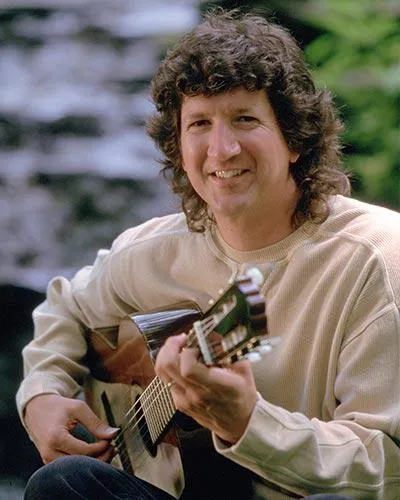
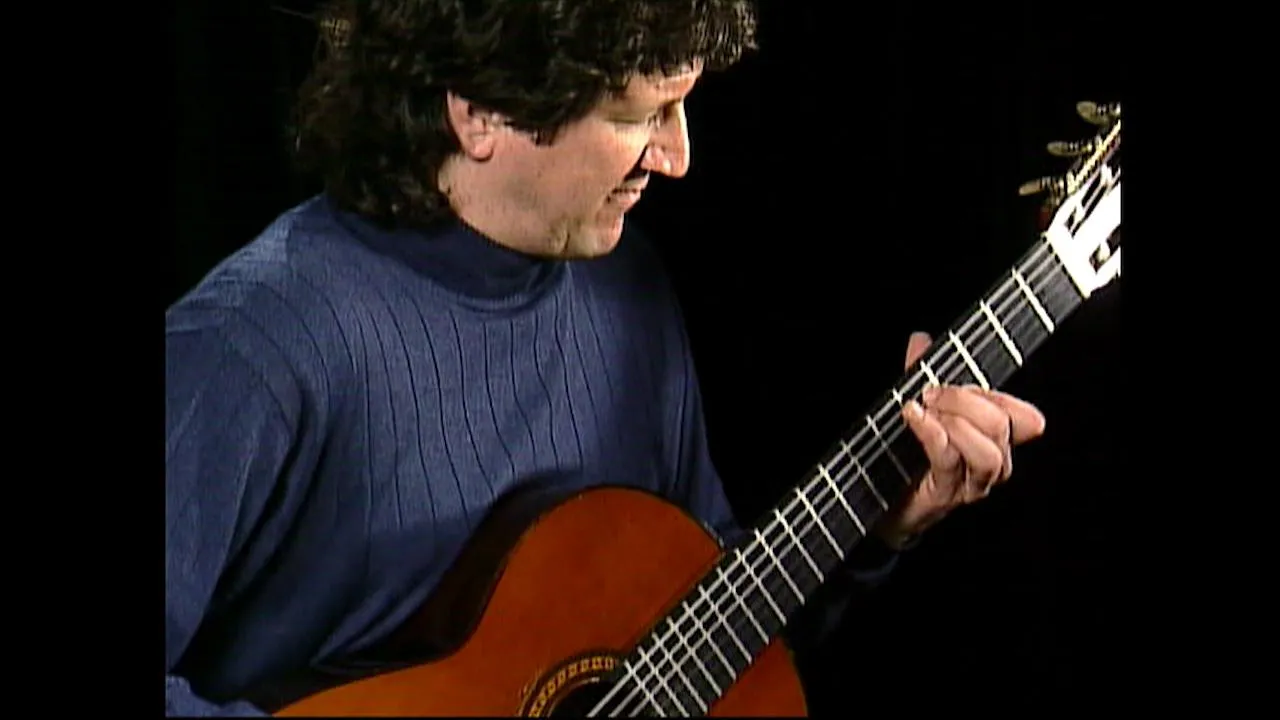
David CullenDavid Cullen unterrichtet sein Stück „Bahama Beach“, einen Reggae-Groove auf der Gitarre aus Flageoletts und abgedämpften Ghost Notes, um das swingende Feeling herauszuarbeiten.
Das steckt im Kurs
14 Lektionen (1h 37m) · 1 gratis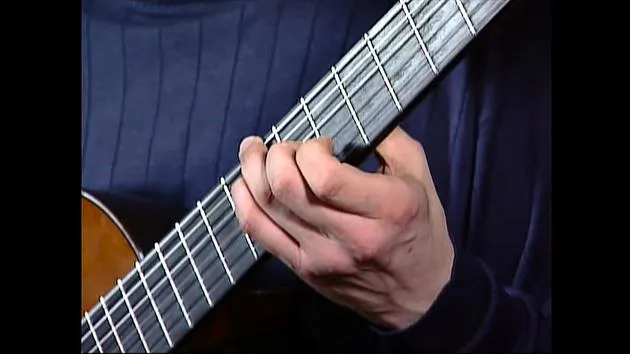
01. Blue Counterpoint (Performance)
Gratis-Lektion4:09
02. Blue Counterpoint (Lektion)
9:44
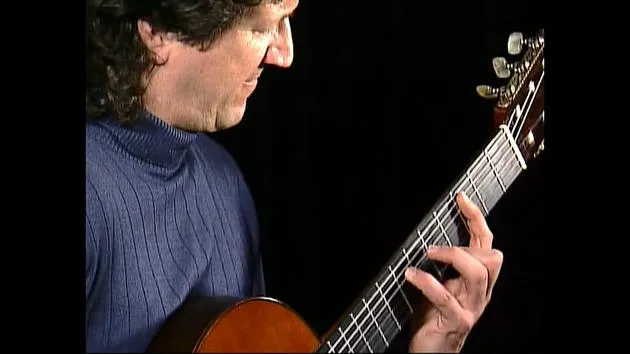
03. Indigo Blue (Performance)
4:32
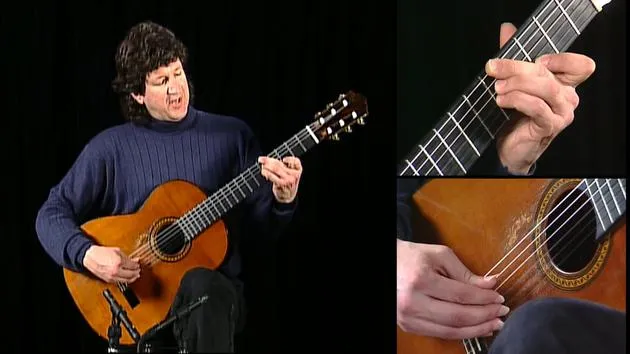
04. Indigo Blue (Lektion)
10:56
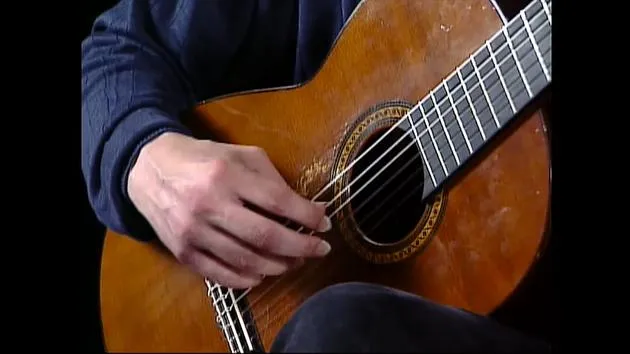
05. Groove Etude (Interpretation)
4:09
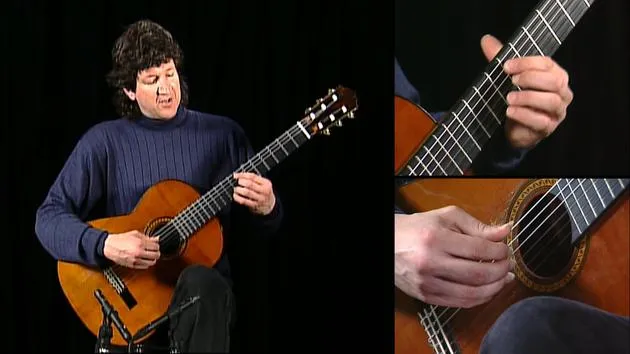
06. Groove Etude (Lektion)
9:20
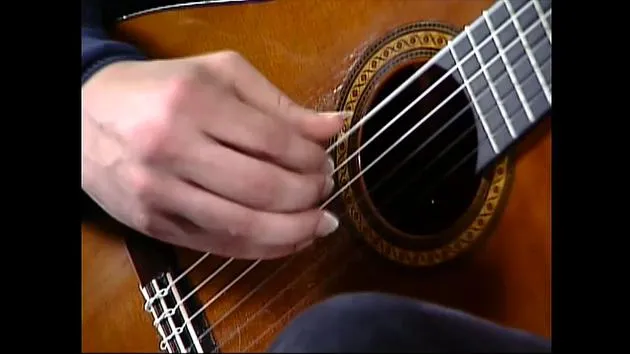
07. Midari (Performance)
4:50
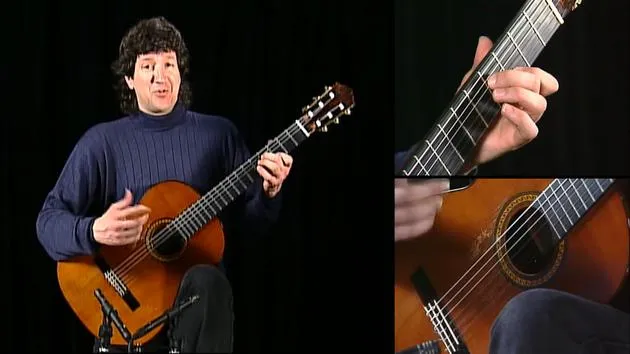
08. Midari (Lektion)
10:09
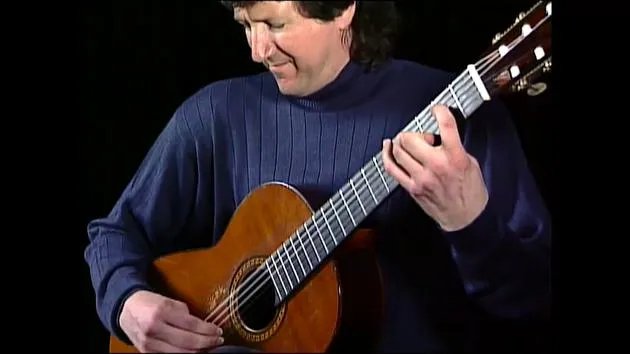
09. Bahama Beach (Aufführung)
5:14
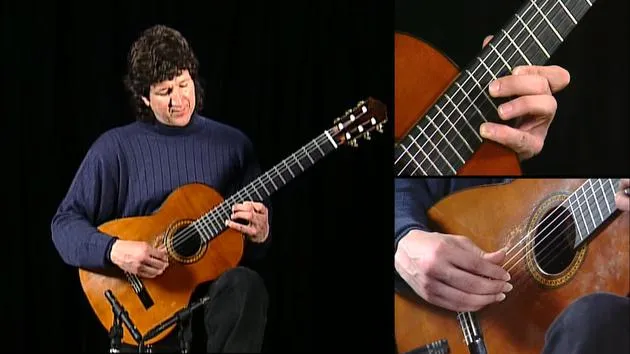
10. Bahama Beach (Lektion)
Du bist hier9:47
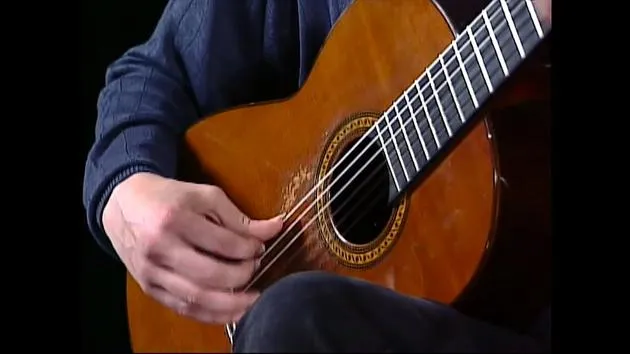
11. Go Ahead And Play (Interpretation)
4:22
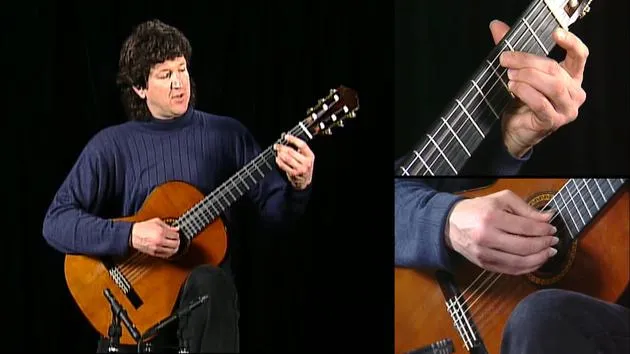
12. Go Ahead And Play (Lektion)
10:10
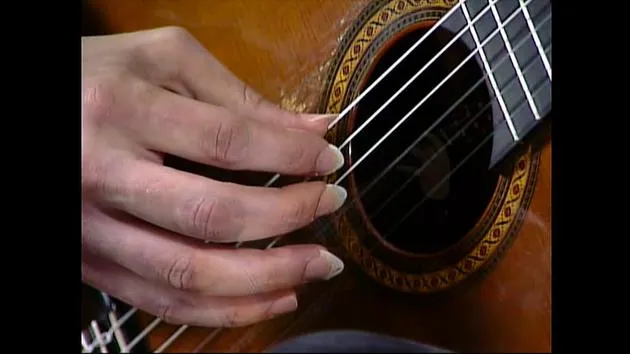
13. BONUS: Coming Home (Performance)
4:14
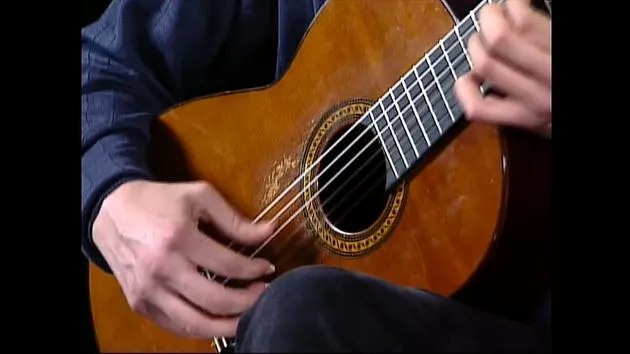
14. BONUS: Ebb And Flow (Interpretation)
5:44
Transkript der Lektion
Reggae on the Classical Guitar
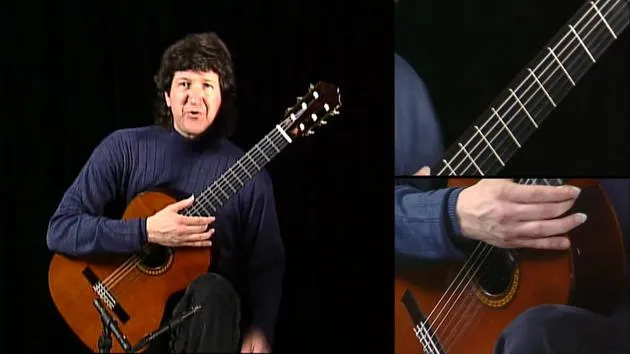
Alright, this tune is a bit of reggae on the classical guitar.
Feel and Rhythm
Reggae on the classical guitar, well, it's all in the feel. It's all in how you start out the tune.
- Swinging Feel: You want to have that swinging feel.
- Count: Think 1 and 2 and 3 and 4 and 1 and 2 and 3, and have that feel going on like this.
- I'm hitting harmonics at the seventh fret.
- I'm also hitting some of those ghost notes on the D strings.
It's not a real note; it's kind of muffled. You want to bring out that feel.
Verse Structure
Let's hear that against a click. This leads us to our verse.
- If we go way up the neck to this shape up here,
- I have another one of these chord clusters where I have:
- An F sharp on top at the 14th fret.
- First finger at the 10th fret playing an A.
- Third finger at the 12th fret playing a G.
- I have another one of these chord clusters where I have:
That takes me to another cluster with D, G, and then F sharp, followed by a D major 7th chord, followed by another D major 7th chord (just clustered a little differently), and then a G major 7th with B in the bass to an E minor 7th chord.
- Repeat that again, but then we use those shapes again up at the ninth fret.
That's a lot of shapes! So you'll have to rewind your DVD and check it out.
- Listen in Time: Let's hear it nice and slowly so you can understand why I place those chords.
- Now a bit more up to speed, which leads us to our second verse.
Second Verse
I like this shape that I start with because I enjoy hearing that C sharp ringing against the D.
- Then to a D chord with F sharp in the bass.
- There's an interesting technique I'm using here:
- I'm using my index and ring fingers (I and A) to split the strings.
- You can see this creates a nice harmony.
See how that creates a lovely harmony there? And a little triplet feel comes down here with the string splitting.
- In Time: Let's hear it in time now, but a bit faster.
Chorus
That leads us to our chorus.
Once again, I have these shapes, and I'm putting a nice reggae feel to it.
- Slower Play: Let's play that a little bit slower so that you can feel it more.
- I slide off beat with the same shapes.
- Now, let's see a bit more up to time now.
Think to yourself:
- I want and two and three and four
- Ready, go to the final chorus.
Conclusion
There's a figure; it's just a groove figure that I play through.
Once again, I want to encourage you to add your own improvisation to this section at the end.
- Groove Setup: Basically, it's set up as a groove like this.
- While you're playing that, feel free to include your little improv , anything in D major will sound good.
When you want to take it out, go to those chords.
14 Lektionen
1 Std. 37 Min. strukturierte Videolektionen
Erweiterte Videofunktionen
Verlangsamen, Passagen loopen, mitlesen
Handy, Tablet & Desktop
Üben, wo du willst
100 % Zufriedenheitsgarantie
30 Tage Geld-zurück-Garantie
Lern deinen Guru kennen
Lern deinen Guru kennen
David Cullen ist Gewinner eines Grammy Awards für die beste instrumentale Pop-Aufnahme. Er ist mit Will Ackerman, Samite, Michael Manring, Victor Wooten und dem Philly Pops Orchestra aufgetreten und erwarb seinen Bachelor of Music in klassischer Gitarre an der Hartt School of Music.
Als Meister der akustischen Solo-Fingerstyle-Gitarre bewegt sich David mühelos zwischen klassischer Technik, Jazzharmonik und Improvisation sowie eigenen Originalkompositionen. Er ist in ganz Nordamerika für Klassikgitarren-Gesellschaften, Jazzfestivals und Kulturreihen aufgetreten, hat 10 CDs beim Akustikgitarren-Label Solid Air Records veröffentlicht, und seine Aufnahmen liefen auf NPR-Sendern in ganz Amerika.
Zu seiner Studioarbeit zählen der Windham Hill Guitar Sampler und weitere Windham-Hill-Kompilationen. David hat außerdem zwei Bücher bei Warner Brothers Publications veröffentlicht: "Jazz, Classical, and Beyond" und "Grateful Guitar".







