



Orkney-Stimmung (Lektion)
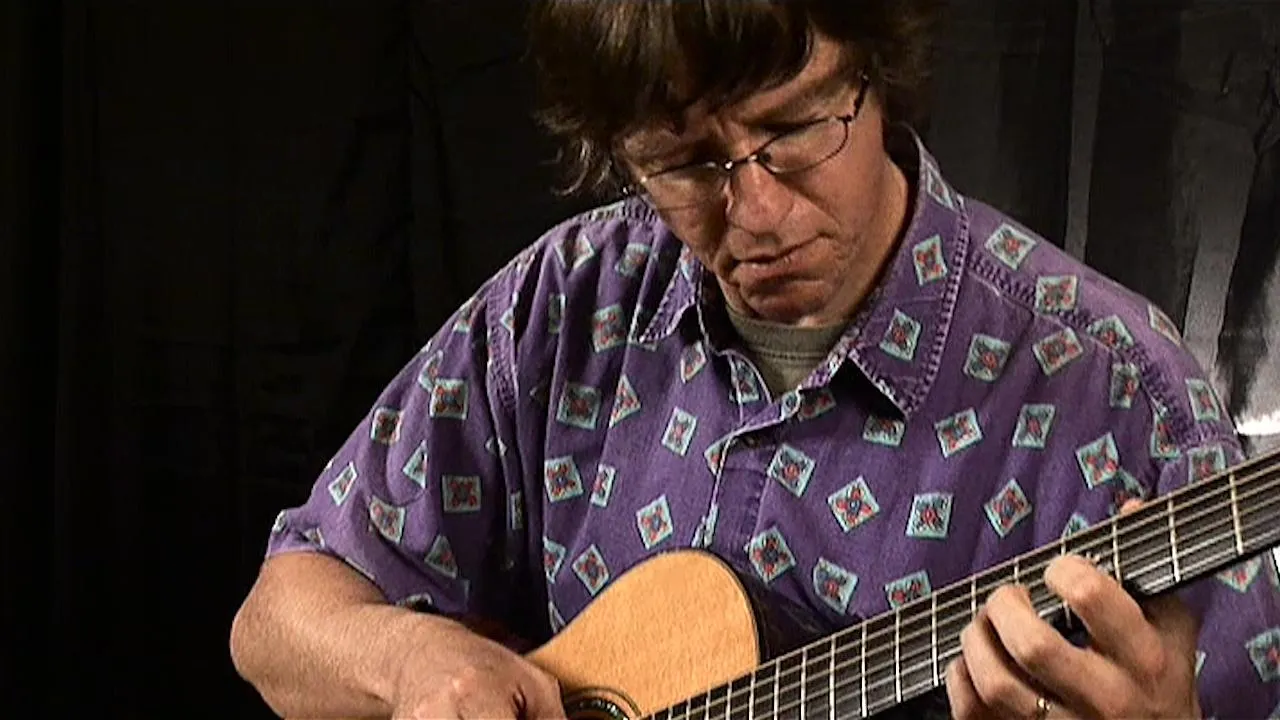
Steve Baughman stellt seine liebste offene Stimmung vor, Orkney (C G D G C D), und zeigt, wie eine einfache C-Form darin klingt.
Das steckt im Kurs
13 Lektionen (1h 9m) · 1 gratis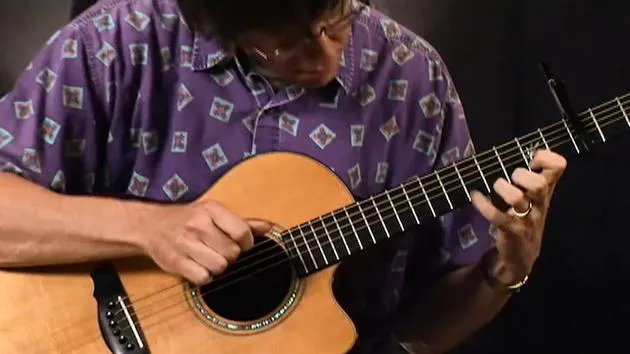
01. Dans A Sailheu - Tavarn - Danse des Deux Pommes Frites (Interpretation)
Gratis-Lektion5:10
02. Dans A Sailheu - Tavarn - Danse des Deux Pommes Frites (Lektion)
10:24
03. Little Beggar Man (Performance)
1:54
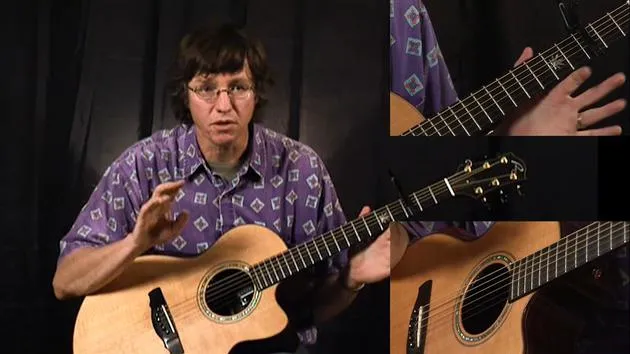
04. Little Beggar Man (Lektion)
8:24
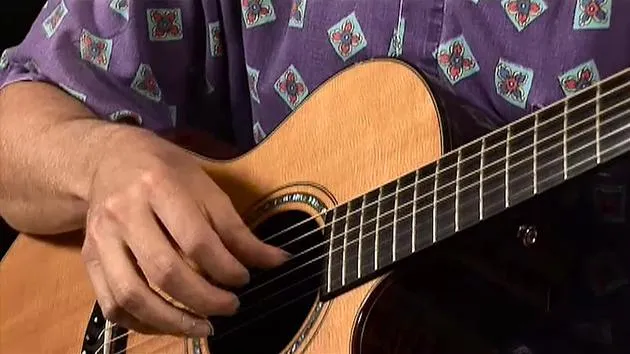
05. Loch Lomond (Vortrag)
3:20
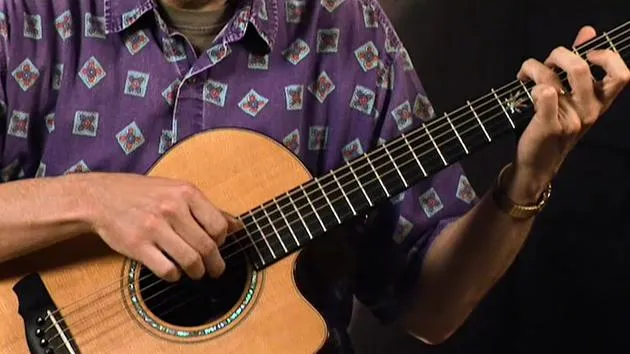
06. Planxty John Irwin (Performance)
3:33
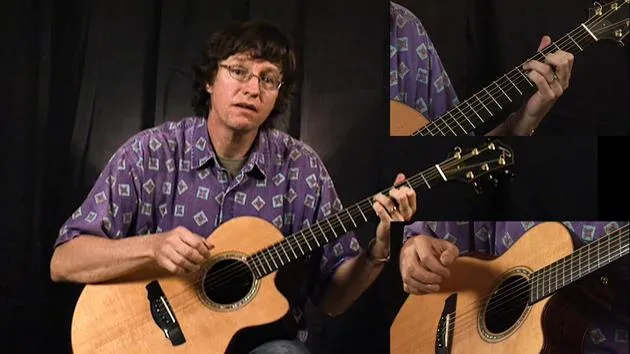
07. Planxty John Irwin (Lektion)
1:29
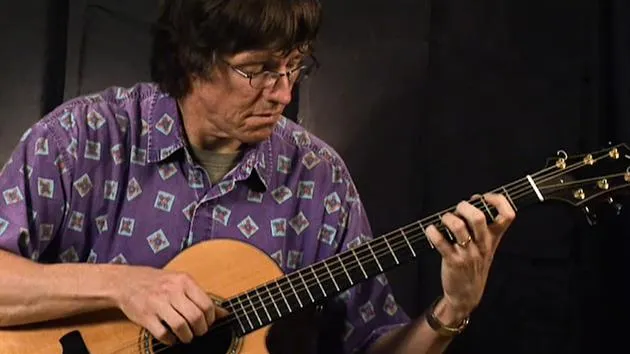
08. Cool A Jig - The Choice Wife (Darbietung)
4:09
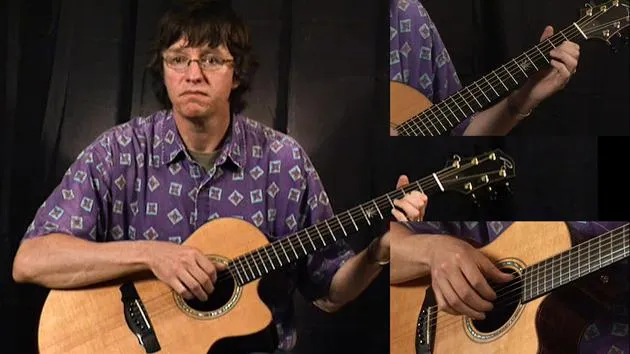
09. Cool A Jig - The Choice Wife (Lektion)
6:09
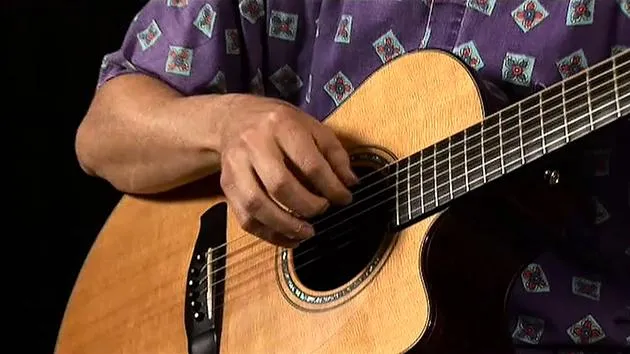
10. Neil Gow's Lament - Devil In The Kitchen - The Tushgar (Performance)
6:24
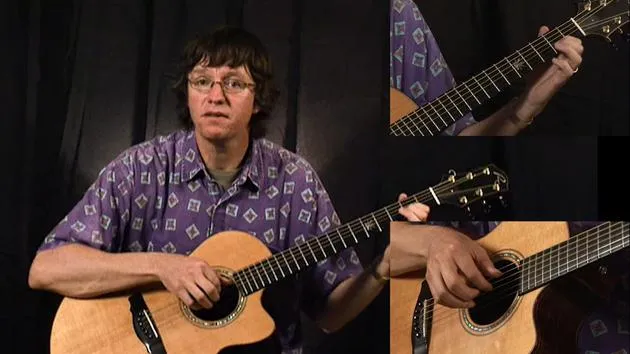
11. Neil Gow's Lament - Devil In The Kitchen - The Tushgar (Lektion)
11:08
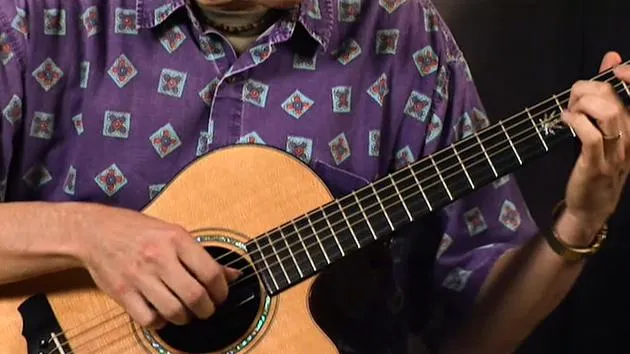
12. Paddy Fahy's Jig (Performance)
2:40
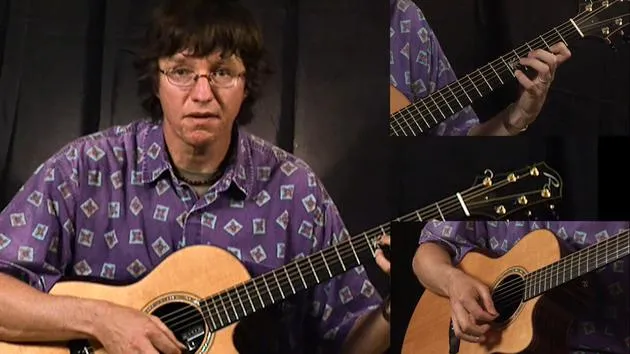
13. Orkney-Stimmung (Lektion)
Du bist hier4:43
Transkript der Lektion
Exploring Orkney Tuning
Before I really leave you, I would like to take the opportunity to show you one little thing about my favorite guitar tuning, the Orkney tuning. I'm going to show you how simple and accessible it is, and how beautiful it can be. After you've spent 45 seconds with it, I'm going to show you.
Basic C Chord
- Look at my left hand.
- Now, the basic C chord:
- Middle finger on the fifth string, fifth fret.
- Ring finger on the fourth string, fifth fret.
- Pinky on the first string, fifth fret.
This is basic C.
You'll notice your index finger hanging out, waiting for something to do. This is a C neutral. It doesn't have any thirds in it; it's just Cs and Gs.
Creating Chords from C Neutral
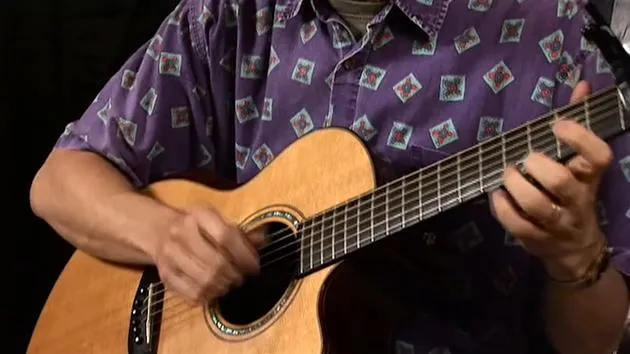
- Simply plop your index finger down in the most natural spot available, which is:
- Second string, fourth fret.
Listen to what happens to this C neutral:
- Suddenly, it's a C major.
- Slide your index finger down 1 fret for C minor.
- Take your index finger over to the third string, third fret for C7.
- Slide it up to the fourth fret of the third string and you've got a very California, New Agey sounding C: C suspended, C major, seventh.
Chords Summary
Here's what you have out of the basic C position:
- C neutral
- C major
- C minor
- C7
- C major (new age 7)
- Back to C neutral
Transitioning to Other Chords
Now, you're obviously going to need more than C's when you play. So, without picking up your pinky or your ring, pick up everything else.
- Take your pinky and ring, slide them up two frets, and bar at the fifth to get an F chord.
- Back to basic C: P and R (Pinky and Ring) up two frets for F chord.
- Slide them up two more for a G chord.
- Slide P and R up one more fret for a nice rich sounding high C chord.
Playing in the Key of G
If you want to play in the key of G, it's just as easy. Here's your G chord:
- I call this wimpy G.
- To put your pinky down on the first string, fifth fret, you get basic G.
- Pivot over to basic C.
This simple pivoting motion gets you from G to C.
Adding the D Chord
You need one more chord to play in the key of G, pretty much any folk song, and that's a D chord:
- Position your fingers on the second string and third string at the second fret.
- For a cool variation, bring your thumb over.
Conclusion
So welcome to the world of Orkney! If you have any questions about Orkney Tuning or anything else related to this project we've discussed today, feel free to send me an email.
- My website is CelticGuitar.com.
- You can also contact acousticmusicresource.com to learn about my CDs and find lots of great fingerstyle music from many different genres.
Stay in touch, and I hope you found this to be a worthwhile time. Thank you!
13 Lektionen
1 Std. 9 Min. strukturierte Videolektionen
Erweiterte Videofunktionen
Verlangsamen, Passagen loopen, mitlesen
Handy, Tablet & Desktop
Üben, wo du willst
100 % Zufriedenheitsgarantie
30 Tage Geld-zurück-Garantie
Lern deinen Guru kennen
Lern deinen Guru kennen
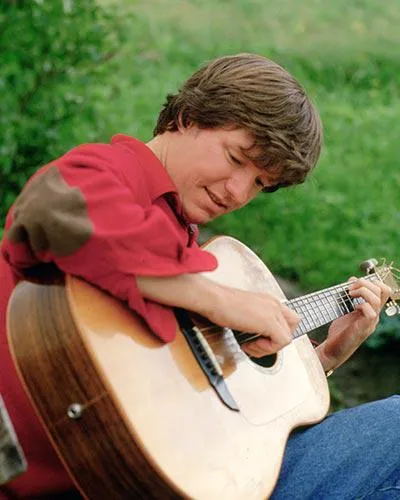
Steve Baughman ist einer der wahren Originale der Fingerstyle-Gitarre - ein Spieler, dessen akustisches, keltisch geprägtes Spiel in offenen Stimmungen auf beiden Seiten des Atlantiks von der Kritik gefeiert wird.
„Ab und zu erscheint ein Album, das dein Denken über Gitarrenmusik verändern kann - Steve Baughmans Farewell to Orkney ist eines davon... Ein Muss für alle Liebhaber der Gitarre und besonders der keltischen Musik.“
--Acoustic Guitar Magazine
„Ein Star der Fingerstyle-Gitarre: sehr geschickt, nachdenklich, leise wagemutig, zutiefst lyrisch und verspielt.“
--Radio National, Australien
„Steves Kunstfertigkeit und Musikalität sind Weltklasse, mit einer Dynamik, einem Timing und einer Interpretation, die stets die emotionale Essenz des Songs zum Vorschein bringen.“
--Sing Out Magazine
„...technische Innovation, Virtuosität und Intensität.“
--Acoustic Guitar Magazine
„Unglaubliche Virtuosität ... stellt die stille Schönheit der akustischen Gitarre in offener Stimmung heraus.“
--Marin Independent Journal (Schade, dass es nicht die Washington Post ist. Aber ich nehme es.)
Sein Album Farewell to Orkney wurde vom Acoustic Guitar Magazine zu einem der „Besten Alben des Jahres 2013“ gekürt.
Und dann ist da noch die Auszeichnung, die Steve nicht recht ernst nehmen kann. Er steht auf der Digital-Dream-Door-Liste der 100 besten Fingerstyle-Gitarristen aller Zeiten, auf der auch bereits Verstorbene stehen. „Früher habe ich das in meine Pressematerialien geschrieben. Aber dann dachte ich mir, das ist nur die einsame Meinung irgendeines Typen oder irgendeiner Frau irgendwo im Cyberspace. Jeder kann eine Liste machen. Außerdem, wie viele Fingerstyle-Gitarristen kann es überhaupt geben? Es muss schwer sein, es nicht in die Top 100 zu schaffen. Ich vermute, die Plätze 81 bis 100 sind alle erfundene Namen. Solange du eine Gitarren-CD gemacht hast, bist du in den Top 80. Ich glaube, ich war auf Platz 77. Vielleicht werde ich jetzt von der Liste gestrichen, wo ich das alles gesagt habe. Aber ich schätze die Leidenschaft desjenigen, der sie zusammengestellt hat. Danke, dass ich dabei bin, und es hat meine Mutter beeindruckt. Vielleicht tut es das jetzt nicht mehr.“
In Celtic Guitar Solos, Tunes & Techniques teilt Steve die offenen Stimmungen und Fingerstyle-Ansätze hinter diesem Sound, damit du ihn selbst spielen kannst.







