



Neil Gow's Lament - Devil In The Kitchen - The Tushgar (Lektion)
Das steckt im Kurs
13 Lektionen (1h 9m) · 1 gratis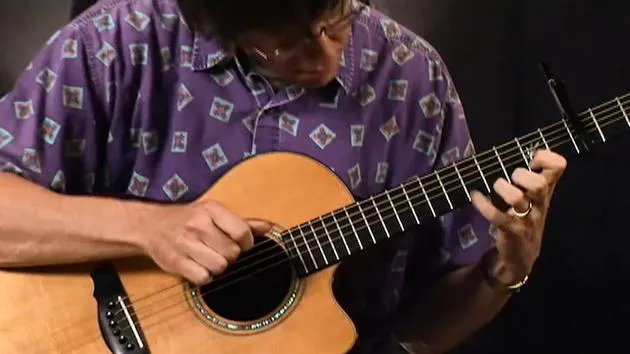
01. Dans A Sailheu - Tavarn - Danse des Deux Pommes Frites (Interpretation)
Gratis-Lektion5:10
02. Dans A Sailheu - Tavarn - Danse des Deux Pommes Frites (Lektion)
10:24
03. Little Beggar Man (Performance)
1:54
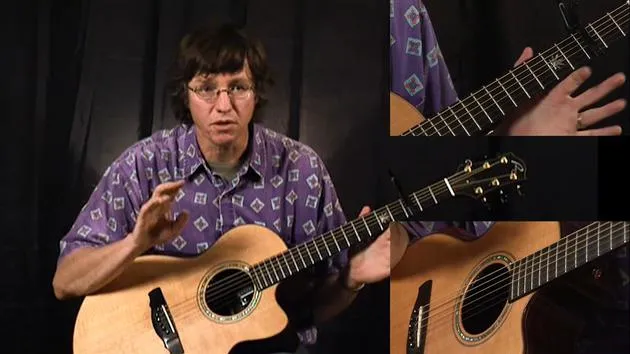
04. Little Beggar Man (Lektion)
8:24
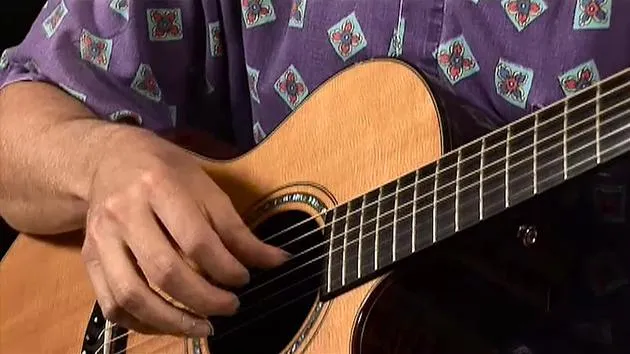
05. Loch Lomond (Vortrag)
3:20
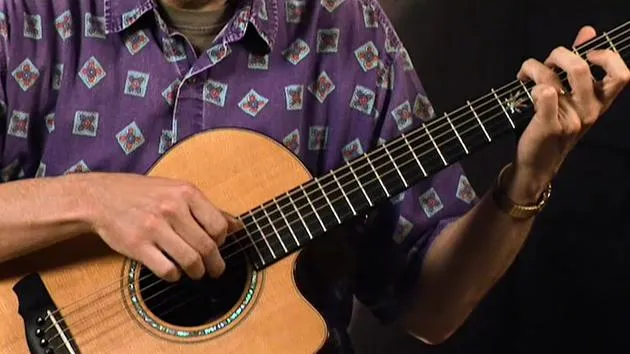
06. Planxty John Irwin (Performance)
3:33
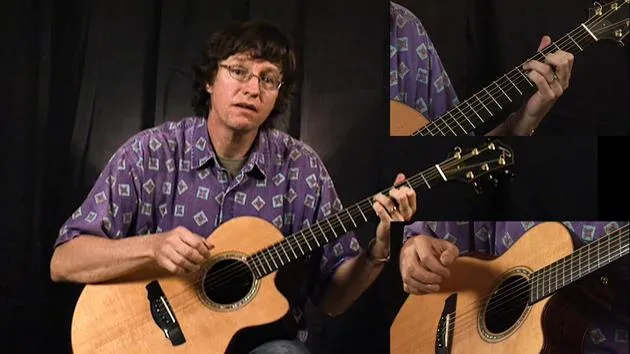
07. Planxty John Irwin (Lektion)
1:29
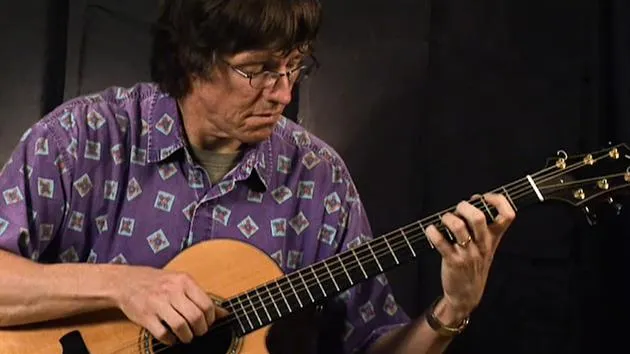
08. Cool A Jig - The Choice Wife (Darbietung)
4:09
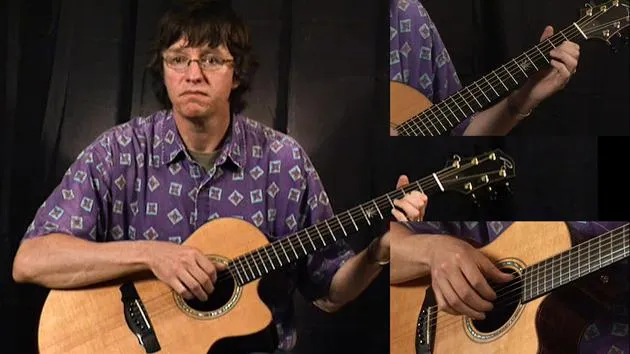
09. Cool A Jig - The Choice Wife (Lektion)
6:09
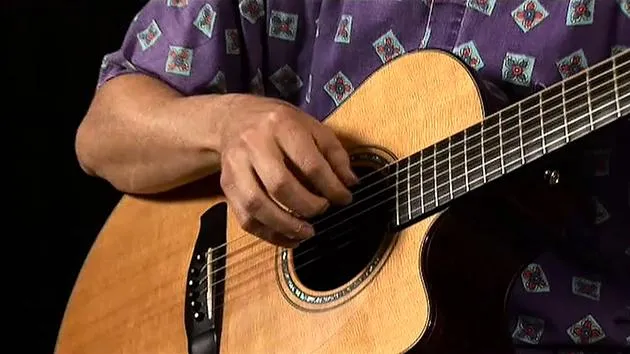
10. Neil Gow's Lament - Devil In The Kitchen - The Tushgar (Performance)
6:24
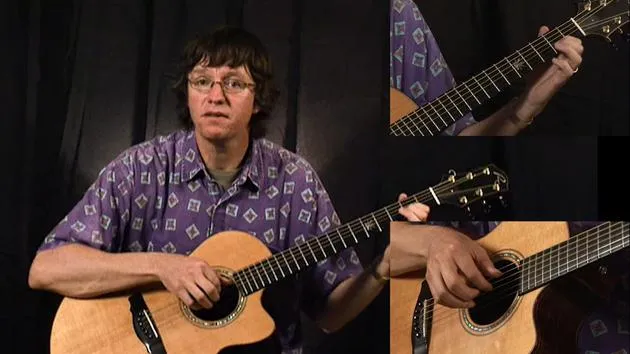
11. Neil Gow's Lament - Devil In The Kitchen - The Tushgar (Lektion)
Du bist hier11:08
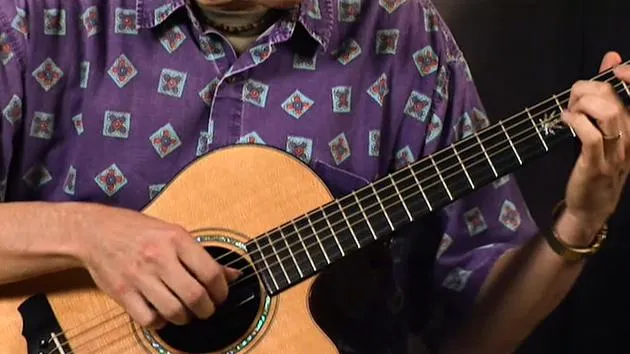
12. Paddy Fahy's Jig (Performance)
2:40
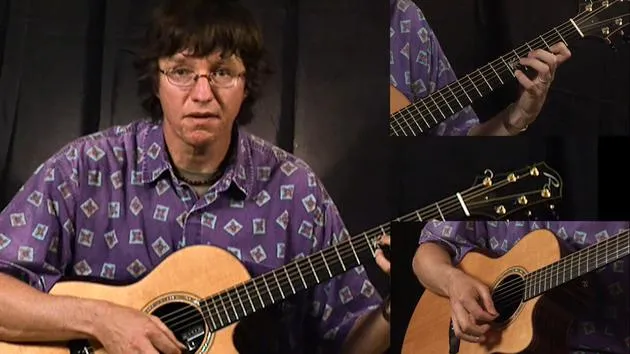
13. Orkney-Stimmung (Lektion)
4:43
Transkript der Lektion
Guitar Lesson: Right Hand Techniques
Okay. When I said I'd teach you what the right hand stuff in there was, what I meant was, I'll show you both hands. Because, of course, when you're playing guitar, both hands are really, really important.
Right Hand Techniques
Slow Air
- The right hand stuff wasn't hugely technical.
- I use the back of my index fingernail a lot because I like the tone it provides:
- It's brighter and sharper.
So, instead of just going straight with my index finger, I like to incorporate this technique.
"Just be mindful that you do have another side to your index fingernail, and it's really kind of fun to use it sometimes."
Neil Gau's Lament
Same thing as with that Planksti Irwin, that Celtic Hawaiian piece I played for you a while back:
- Ring Out: Everything is hugely important for keeping that ring out happening.
- The melody is 50% of the tune, the ring out and overall feel is the other 50%.
So, it's really important to realize that especially in a slow air, you can't just play the notes. You've got to play the ring out and milk it for everything you can.
Devil in the Kitchen
On the second tune, Devil in the Kitchen, I'm using a lot of the jig patterns that I showed you.
- One comment:
- There's a fun little left-hand riff that may seem fancy at first glance.
When you look at the left hand, you realize that I'm kind of cheating and there's nothing really to it.
- My right hand is just doing:
- (demonstrates right-hand motion)
Watch how it sounds when I do that left-hand thing. Same case on the B part, yet another example of us using left-hand fills that are hard to do just on the right hand.
The Tushkar
Now, let's talk about The Tushkar, a wonderful Scottish fiddle tune that's sort of one of the standards.
Ornaments
-
This piece has important ornaments, which are essential for most Celtic fiddle tunes played on the guitar.
-
You can't just play a fingerstyle guitar arrangement; it won't sound right.
- You need to approximate the fiddler's bowing hand.
"You wouldn't want to play the first part of The Tushkar with lots of slurs, it sounds kind of lame."
Basic Right Hand Pattern
Here's the basic pattern:
- It doesn't matter which fingers you use, but you should still bring your thumb all the way up to the second string because it's needed.
Basic Pattern Demonstration:
- (plays basic pattern slowly)
Now, let's apply that to our little Breton riff that we learned at the beginning of our time together.
Triplets and Ornaments
Triplet Techniques
- I used a lot of ornaments:
- The triplet (also called a roll) is this ornament right here:
Here's how I play it real slowly.
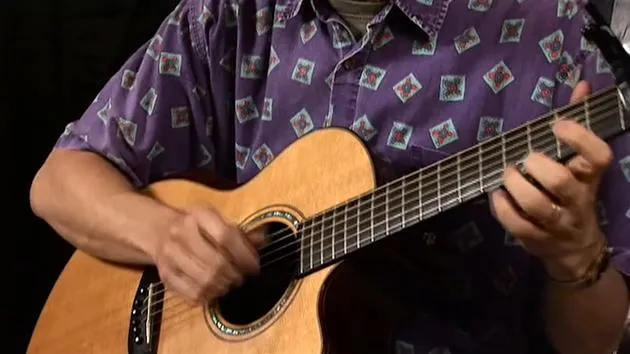
- Use your multi-angle now to isolate my right hand, because that's where the action is.
Basic Triplet:
-
(demonstrates the triplet)
-
I'm pinching strings 1 and 5, and then the ornament is middle, index, thumb.
Alternative Ways to Play
- Most people would probably play it using:
- Ring, middle, index.
"By the way, I have something on my index finger that helps with power, but it's not an endorsement of using picks."
Back to the Triplet:
- Here's how a lot of people would do it:
- (demonstrates ring, middle, index)
What will matter is that you should be willing to commit a lot of time to practice this.
Important Practice Riff:
- (provides tab details for practicing triplets)
Final Techniques
Passage in the B Part
There's a passage in the B part where I go:
- (demonstrates using index finger as flat pick)
Using my index finger like this is just faster and more ergonomic.
Upward Ornament
- For the upward ornament in the B part, I don't usually bring my thumb up:
- I typically use ring, middle, index.
The Teleflake Technique
One last comment:
I have a technique called Finger Locomotion Induced Channel Telekinesis, also known as the Teleflake.
- This technique requires a lot of energy work and is typically used at the end of a piece to impress an audience:
- Assume I'm coming to my final note.
- Your multi-angle focused on my right hand will show that I'm channeling energy from this part of my hand all the way down to a specific string.
"It's really cool. Audiences like it. It's a tantric secret, don't tell anyone I told you this, but use it often."
13 Lektionen
1 Std. 9 Min. strukturierte Videolektionen
Erweiterte Videofunktionen
Verlangsamen, Passagen loopen, mitlesen
Handy, Tablet & Desktop
Üben, wo du willst
100 % Zufriedenheitsgarantie
30 Tage Geld-zurück-Garantie
Lern deinen Guru kennen
Lern deinen Guru kennen
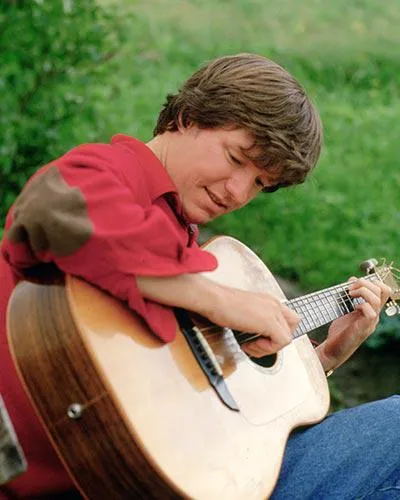
Steve Baughman ist einer der wahren Originale der Fingerstyle-Gitarre - ein Spieler, dessen akustisches, keltisch geprägtes Spiel in offenen Stimmungen auf beiden Seiten des Atlantiks von der Kritik gefeiert wird.
„Ab und zu erscheint ein Album, das dein Denken über Gitarrenmusik verändern kann - Steve Baughmans Farewell to Orkney ist eines davon... Ein Muss für alle Liebhaber der Gitarre und besonders der keltischen Musik.“
--Acoustic Guitar Magazine
„Ein Star der Fingerstyle-Gitarre: sehr geschickt, nachdenklich, leise wagemutig, zutiefst lyrisch und verspielt.“
--Radio National, Australien
„Steves Kunstfertigkeit und Musikalität sind Weltklasse, mit einer Dynamik, einem Timing und einer Interpretation, die stets die emotionale Essenz des Songs zum Vorschein bringen.“
--Sing Out Magazine
„...technische Innovation, Virtuosität und Intensität.“
--Acoustic Guitar Magazine
„Unglaubliche Virtuosität ... stellt die stille Schönheit der akustischen Gitarre in offener Stimmung heraus.“
--Marin Independent Journal (Schade, dass es nicht die Washington Post ist. Aber ich nehme es.)
Sein Album Farewell to Orkney wurde vom Acoustic Guitar Magazine zu einem der „Besten Alben des Jahres 2013“ gekürt.
Und dann ist da noch die Auszeichnung, die Steve nicht recht ernst nehmen kann. Er steht auf der Digital-Dream-Door-Liste der 100 besten Fingerstyle-Gitarristen aller Zeiten, auf der auch bereits Verstorbene stehen. „Früher habe ich das in meine Pressematerialien geschrieben. Aber dann dachte ich mir, das ist nur die einsame Meinung irgendeines Typen oder irgendeiner Frau irgendwo im Cyberspace. Jeder kann eine Liste machen. Außerdem, wie viele Fingerstyle-Gitarristen kann es überhaupt geben? Es muss schwer sein, es nicht in die Top 100 zu schaffen. Ich vermute, die Plätze 81 bis 100 sind alle erfundene Namen. Solange du eine Gitarren-CD gemacht hast, bist du in den Top 80. Ich glaube, ich war auf Platz 77. Vielleicht werde ich jetzt von der Liste gestrichen, wo ich das alles gesagt habe. Aber ich schätze die Leidenschaft desjenigen, der sie zusammengestellt hat. Danke, dass ich dabei bin, und es hat meine Mutter beeindruckt. Vielleicht tut es das jetzt nicht mehr.“
In Celtic Guitar Solos, Tunes & Techniques teilt Steve die offenen Stimmungen und Fingerstyle-Ansätze hinter diesem Sound, damit du ihn selbst spielen kannst.







