



Cool A Jig - The Choice Wife (Lektion)
Steve Baughman bringt dir zwei Jigs bei: 'The Cool A Jig' (6/8) und den Slip Jig 'The Choice Wife' (9/8) – und teilt den Groove der rechten Hand, den er für beide in der Orkney-Stimmung nutzt.
Das steckt im Kurs
13 Lektionen (1h 9m) · 1 gratis
01. Dans A Sailheu - Tavarn - Danse des Deux Pommes Frites (Interpretation)
Gratis-Lektion5:10
02. Dans A Sailheu - Tavarn - Danse des Deux Pommes Frites (Lektion)
10:24
03. Little Beggar Man (Performance)
1:54
04. Little Beggar Man (Lektion)
8:24
05. Loch Lomond (Vortrag)
3:20
06. Planxty John Irwin (Performance)
3:33
07. Planxty John Irwin (Lektion)
1:29
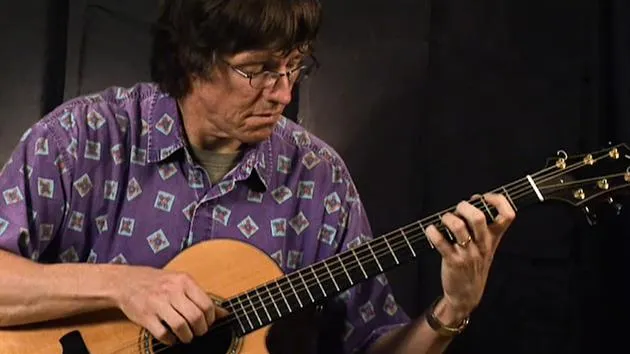
08. Cool A Jig - The Choice Wife (Darbietung)
4:09
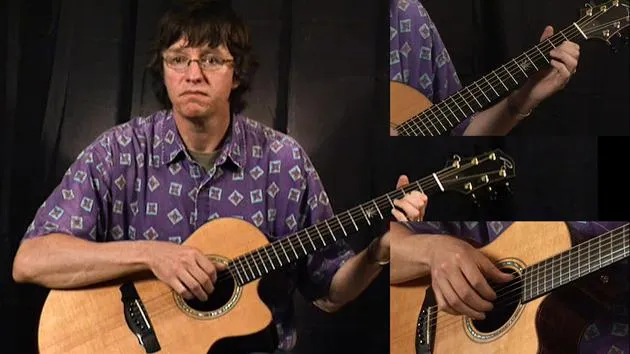
09. Cool A Jig - The Choice Wife (Lektion)
Du bist hier6:09
10. Neil Gow's Lament - Devil In The Kitchen - The Tushgar (Performance)
6:24
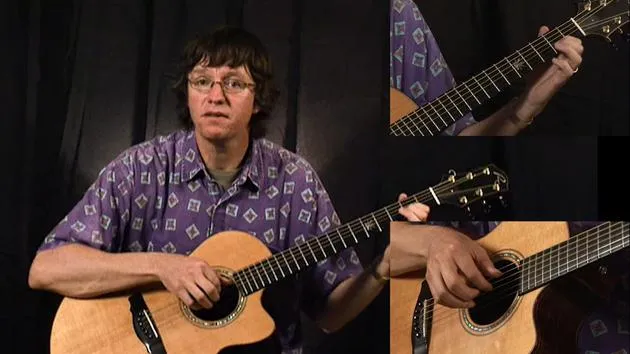
11. Neil Gow's Lament - Devil In The Kitchen - The Tushgar (Lektion)
11:08
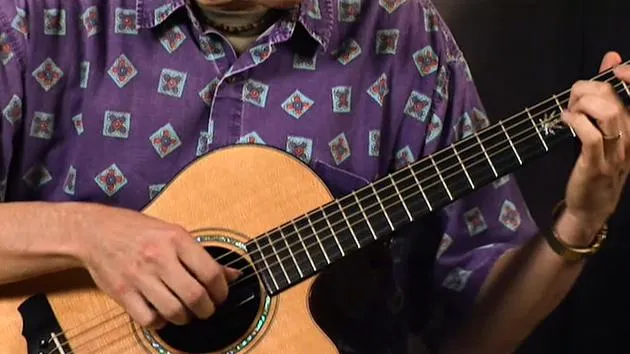
12. Paddy Fahy's Jig (Performance)
2:40
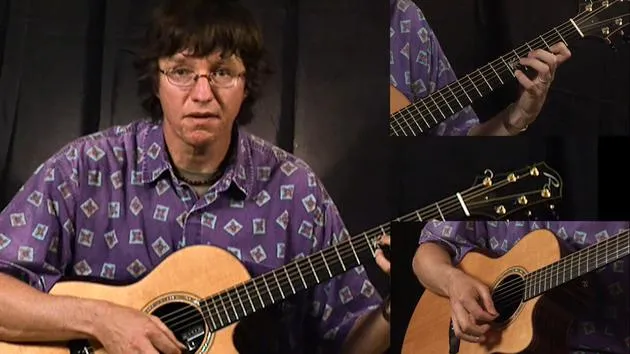
13. Orkney-Stimmung (Lektion)
4:43
Transkript der Lektion
Music Lesson: Jig Patterns
I forgot to tell you the names of those two jigs that I just played.
Jigs Introduced
-
First Jig: The Cool A Jig
- A straight-up six-eight jig.
- "jiggety jiggety, jiggety jiggety."
-
Second Jig: The Choice Wife
- A slip jig, which is a nine-eight jig.
- "So it's 1, 2, 3, 4, 5, 6, 1, 2, 3, 1, 2, 3, 4th, 5, 6, 1, 2, 3."
I use the same right-hand pattern on both of them, even though one's a six-eight jig and the other's a slip jig.
Right Hand Patterns
Speaking of right-hand patterns, now I'm going to take the opportunity to show you the basic jig pattern that I use pretty much on all my jigs.
"I don't necessarily keep the pattern going the whole time through a jig. I'll employ slurs, hammer-ons, pull-offs, open spaces."
This is the basic thing that's going on. Let me show you the basic pattern, then a couple variations on it.
Tuning
Okay, I am back in Orkney tuning, where I'd like you to be if you were going to be practicing all these patterns because it just works out a lot easier here.
Tuning: cgd, gcd
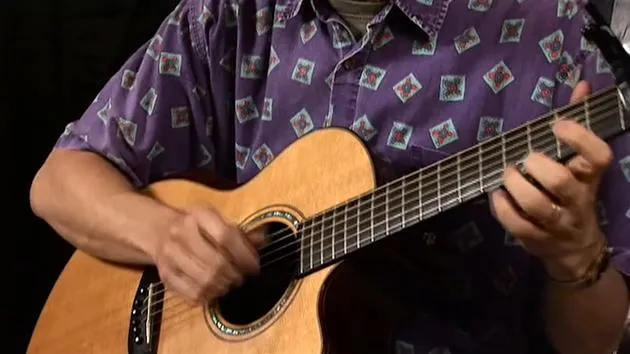
Now, I'm going to keep my index finger on the second string, second fret on the left hand. You might want to have your multi-angle focus on my right hand now because that's where the action is really going to be.
Basic Pattern
The basic pattern is on different strings.
"It doesn't really matter which strings you're doing this on. The important part is the right-hand groove."
Remember, it's not a straight six with a jig.
"It's dotted, jiggety, jiggity, jiggity jiggety."
Variations
Now, another way to play it is by bringing your thumb down to one of the treble strings as opposed to...
Okay, now since that can get pretty darn boring quickly, let me show you a riff from a really well-known Scottish fiddle tune.
- Tune: The Athol Highlanders
- (A T, H, O, L, E. Do not mispronounce that.)
- Here's how it goes, showing how that pattern would apply to that tune.
Now, just to show you that Orkney tuning can also play in a key other than G, I'll do a part of an Irish jig called the Kunla. I'll just employ this pattern to show you how it would work with a different fiddle tune.
Encouragement
Okay. I'm having way too much fun. I just can't stop.
"It really is an invigorating pattern."
"I encourage you to spend as much time as you can just doing them till you internalize them, get them in your blood, and then throw in the left hand. That's the easy part."
Once you have the patterns, you can play pretty much any jig that you would want to play.
Final Thoughts on the Athol Highlanders
Before we move on, let me just alert you to how I would play the Athol Highlanders if I were using my thumb.
Remember I just said that you can do it using these two fingers: pluck, and then middle ring or middle index.
You can also do it with a slightly different feel. I think it's actually a bit more powerful. It may not be right for all jigs, but here's how I would use it:
- With a thumb
- As opposed to without a thumb.
Recap
Okay, so that's the basic jig pattern.
13 Lektionen
1 Std. 9 Min. strukturierte Videolektionen
Erweiterte Videofunktionen
Verlangsamen, Passagen loopen, mitlesen
Handy, Tablet & Desktop
Üben, wo du willst
100 % Zufriedenheitsgarantie
30 Tage Geld-zurück-Garantie
Lern deinen Guru kennen
Lern deinen Guru kennen
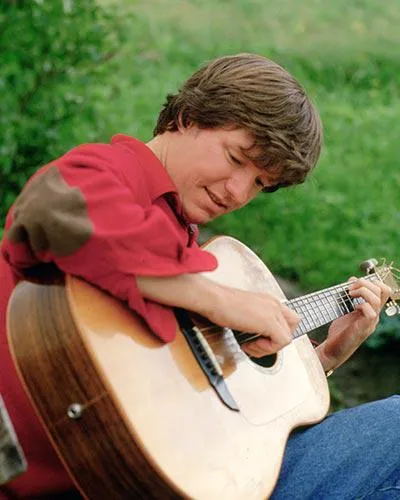
Steve Baughman ist einer der wahren Originale der Fingerstyle-Gitarre - ein Spieler, dessen akustisches, keltisch geprägtes Spiel in offenen Stimmungen auf beiden Seiten des Atlantiks von der Kritik gefeiert wird.
„Ab und zu erscheint ein Album, das dein Denken über Gitarrenmusik verändern kann - Steve Baughmans Farewell to Orkney ist eines davon... Ein Muss für alle Liebhaber der Gitarre und besonders der keltischen Musik.“
--Acoustic Guitar Magazine
„Ein Star der Fingerstyle-Gitarre: sehr geschickt, nachdenklich, leise wagemutig, zutiefst lyrisch und verspielt.“
--Radio National, Australien
„Steves Kunstfertigkeit und Musikalität sind Weltklasse, mit einer Dynamik, einem Timing und einer Interpretation, die stets die emotionale Essenz des Songs zum Vorschein bringen.“
--Sing Out Magazine
„...technische Innovation, Virtuosität und Intensität.“
--Acoustic Guitar Magazine
„Unglaubliche Virtuosität ... stellt die stille Schönheit der akustischen Gitarre in offener Stimmung heraus.“
--Marin Independent Journal (Schade, dass es nicht die Washington Post ist. Aber ich nehme es.)
Sein Album Farewell to Orkney wurde vom Acoustic Guitar Magazine zu einem der „Besten Alben des Jahres 2013“ gekürt.
Und dann ist da noch die Auszeichnung, die Steve nicht recht ernst nehmen kann. Er steht auf der Digital-Dream-Door-Liste der 100 besten Fingerstyle-Gitarristen aller Zeiten, auf der auch bereits Verstorbene stehen. „Früher habe ich das in meine Pressematerialien geschrieben. Aber dann dachte ich mir, das ist nur die einsame Meinung irgendeines Typen oder irgendeiner Frau irgendwo im Cyberspace. Jeder kann eine Liste machen. Außerdem, wie viele Fingerstyle-Gitarristen kann es überhaupt geben? Es muss schwer sein, es nicht in die Top 100 zu schaffen. Ich vermute, die Plätze 81 bis 100 sind alle erfundene Namen. Solange du eine Gitarren-CD gemacht hast, bist du in den Top 80. Ich glaube, ich war auf Platz 77. Vielleicht werde ich jetzt von der Liste gestrichen, wo ich das alles gesagt habe. Aber ich schätze die Leidenschaft desjenigen, der sie zusammengestellt hat. Danke, dass ich dabei bin, und es hat meine Mutter beeindruckt. Vielleicht tut es das jetzt nicht mehr.“
In Celtic Guitar Solos, Tunes & Techniques teilt Steve die offenen Stimmungen und Fingerstyle-Ansätze hinter diesem Sound, damit du ihn selbst spielen kannst.







