



Riff mit einer Vorzeichnung
Mit
Tommy Webb
Das steckt im Kurs
30 Lektionen (0h 55m) · 1 gratis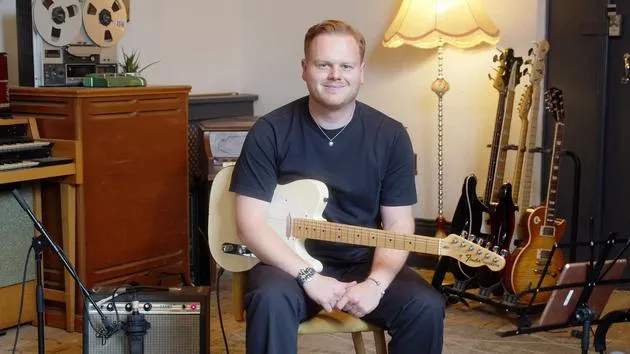
01. Willkommen beim Country
Gratis-Lektion1:29
02. Melodie mit der Note E
2:52
03. Melodie mit dem Ton E (Performance)
0:55
04. Melodie mit halben Pausen
2:34
05. Melodie mit halben Pausen (Performance)
0:47
06. Melodie mit der Note F und Pausen über 2 Schläge
2:33
07. Melodie mit der Note F und Pausen über 2 Schläge (Interpretation)
0:47
01. Melodie mit dem Ton G
3:33
02. Melodie mit dem Ton G (Performance)
0:57
03. Melodie mit punktierter halber Note
2:14
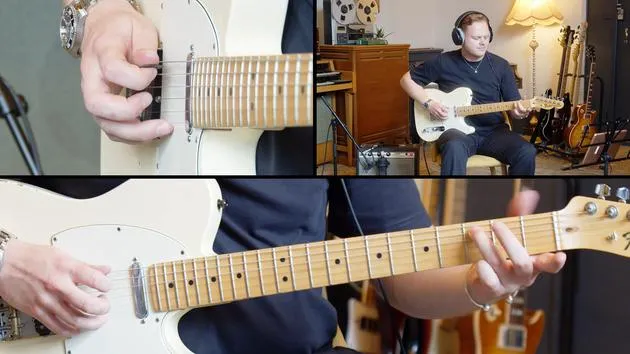
04. Melodie mit punktierter halber Note (Aufführung)
0:53
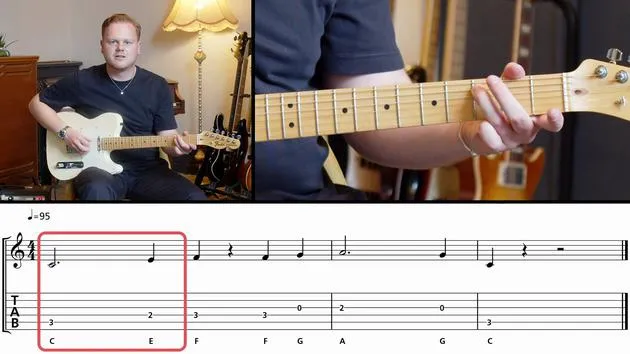
05. Melodie mit der Note A
3:59
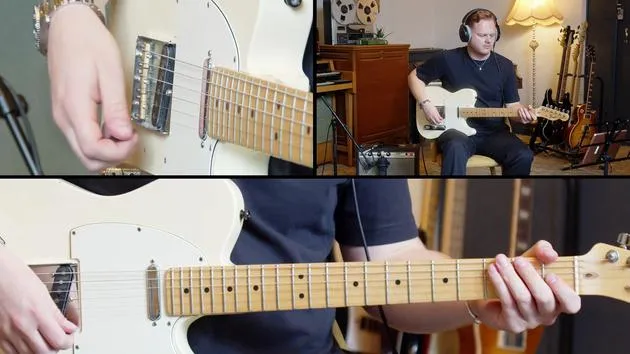
06. Melodie mit der Note A (Aufführung)
0:53
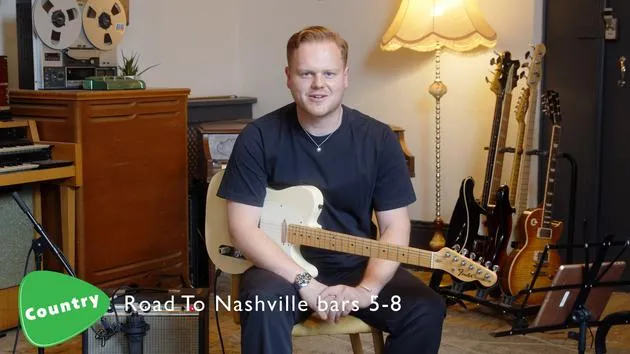
07. Road To Nashville Takte 5-8
2:49
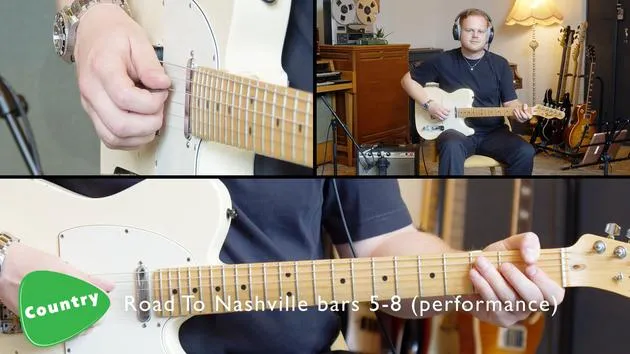
08. Road To Nashville Takte 5-8 (Performance)
1:04
01. Einführung in Metal und Power Chords
2:36
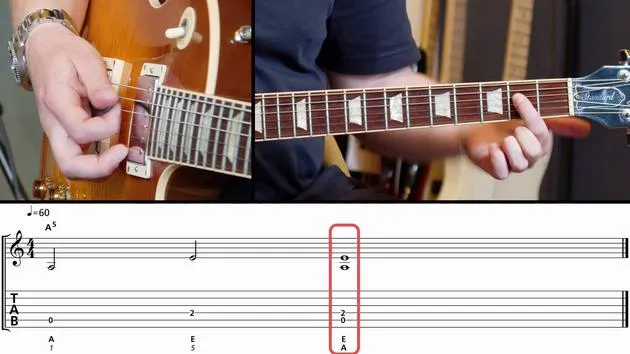
02. Wie man einen Power Chord spielt
2:21
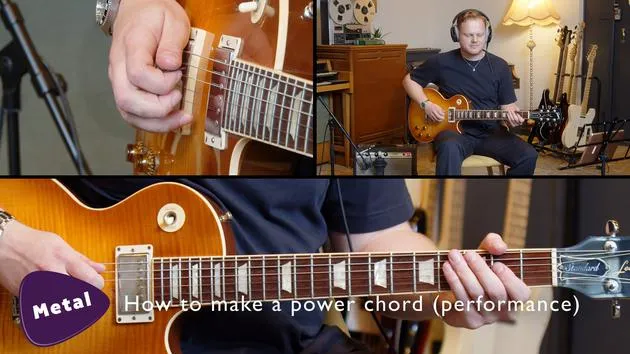
03. Wie man einen Power Chord spielt (Performance)
0:50
04. Riff mit dem A5-Powerchord
3:07
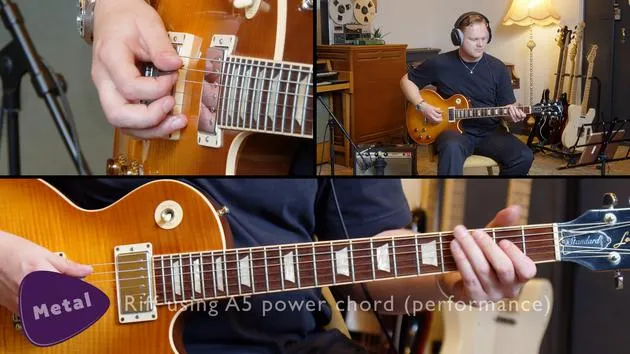
05. Riff mit dem A5-Power-Chord (Performance)
1:02
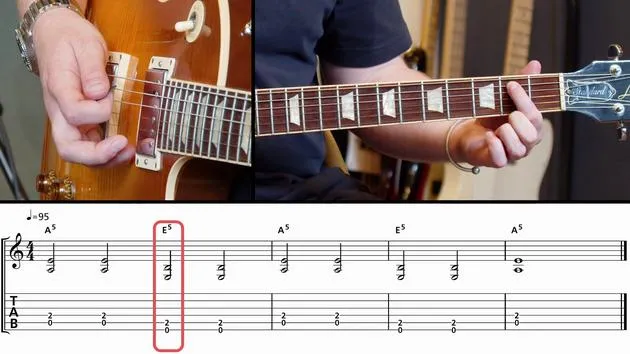
06. Riff mit den Powerchords E5 & A5
1:56
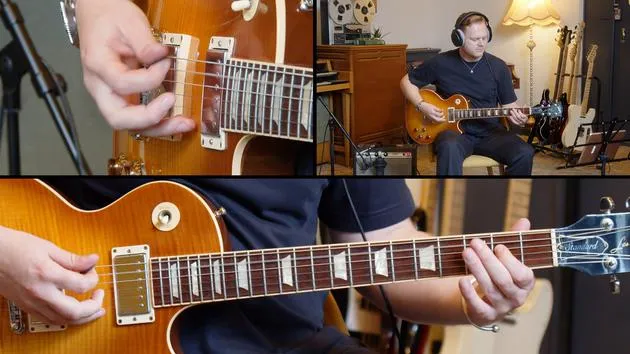
07. Riff mit E5- & A5-Powerchords (Interpretation)
1:03
01. Riff mit der Note Fis
3:47
02. Riff mit der Note Fis (Performance)
0:47
03. Riff mit einer Vorzeichnung
Du bist hier2:00
04. Riff mit einer Tonartvorzeichnung (Interpretation)
0:51
05. Riff aus Power Chords und Einzelnoten
2:07
06. Riff aus Power-Chords und Einzelnoten (Performance)
0:49
07. Lead Boots Takte 13-16
3:07
08. Lead Boots Takte 13-16 (Performance)
0:56
Transkript der Lektion
Key Signatures and Sharp Notes
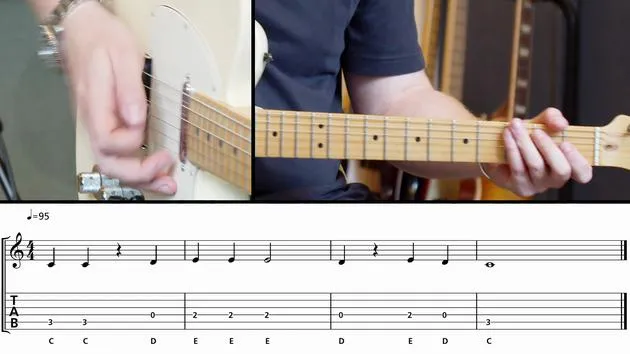
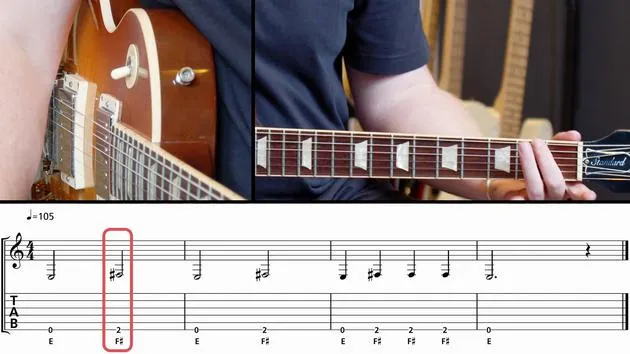
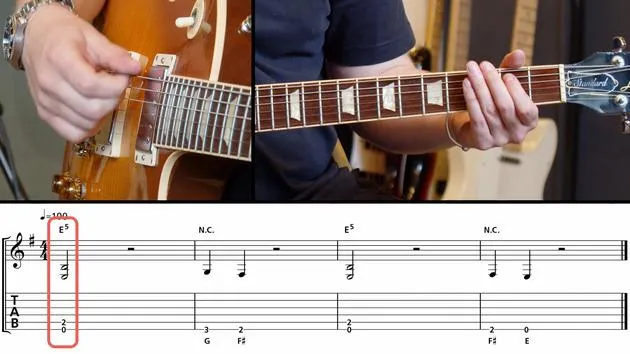
Example 2 of this section is our first look at a key signature.
Previously, we encountered sharps and needed that little hashtag to indicate where to play the sharp note. The key signature conveys this information at the beginning of the piece.
Importance of Key Signatures
- It's advisable to use key signatures if every note we're playing is a sharp.
- For instance, if every note in F is actually F sharp, it seems unnecessary to write the sharp symbol in front of every single note.
- Instead, we place it at the start of the music, indicating that every note represented as F will be F sharp, unless a natural sign appears to indicate otherwise.
Example Breakdown
In this example:
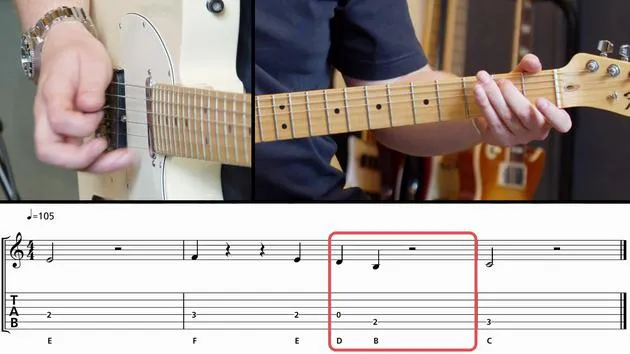
- In the first bar, we see F sharp leading to E.
- The F note does not have a sharp in front of it because the key signature at the start, placed between the treble clef and the time signature, indicates that F is sharpened.
Rhythm and Playing Technique
This example is quite straightforward in terms of rhythms:
- We have quarter notes at the second fret on the E string for our F sharp.
- This F is an upper semitone, thus F sharp.
- There's a repetition of this for three bars.
Key Points to Watch
- At the end, in the last bar, we have an open E that lasts for two beats.
- It's a half note followed by a half note rest, so we need to be mindful of cutting that note short.
Technique Reminder
- To execute this, we can use the palm to stop the note dead by resting our palm on the string.
Practice with Backing Track
Let's give this a go, nice and slowly, before we try it with the backing track.
Count with me:
1, 2, 3, 4.
1, 2, 3, 4.
30 Lektionen
0 Std. 55 Min. strukturierte Videolektionen
Erweiterte Videofunktionen
Verlangsamen, Passagen loopen, mitlesen
Handy, Tablet & Desktop
Üben, wo du willst
100 % Zufriedenheitsgarantie
30 Tage Geld-zurück-Garantie
Lern deinen Guru kennen
Lern deinen Guru kennen
Tommy Webb ist ein in London ansässiger Gitarrist, der einen BA(Hons)-Abschluss in Gitarre an der Academy of Contemporary Music in Guildford absolvierte, wo er bei Sandy Beales (One Direction, Wheatus) und Nicolas Meier (Jeff Beck) studierte. Sein eigenes Spiel bewegt sich frei zwischen Rock, Pop, Indie, Hip-Hop, Country und Metal – genau dem Terrain, das seine Gitarrenmethoden abdecken.
Tommy hat landesweit mit einer großen Bandbreite an Künstlern und Bands gearbeitet, darunter Jarki Monno und Indira May, und teilte sich Bühnen und Sessions mit den Gitarristen Paul Murray (Jess Glynne, Zak Abel) und Adam Chetwood (Paolo Nutini, Mark Ronson) sowie den Schlagzeugern Alex Woodward (Black Honey), Luke Robinson und “Bambi Music” (N-Dubz, Lethal Bizzle, Wretch 32, Tinie Tempah).
Auf der Bühne trat er im Jazz Cafe als Vorband der Soulsängerin Jocelyn Brown auf, dazu in Clubs und auf Festivals wie Ronnie Scott's, Troy Bar, The Watford Colosseum, Camden Assembly, Kensington Roof Gardens, Notting Hill Arts Club, Meraki Festival und Sundown Festival.
Auf Platte und im Radio hat Tommy Live-Sessions für BBC Three Counties Introducing, Vibe FM und Pulse 88 eingespielt, mit Tracks, die auf BBC Radio 1 und Radio 2 liefen. Aufgenommen hat er in Studios wie South Lanes Brighton, Hempstead Road und Titan Studios mit Produzenten wie Steph Carter (Gallows, Lyoness) und TMS / Froe Barnes (Lewis Capaldi, Dua Lipa).
In seinen Gitarrenmethoden gibt Tommy all dieses Wissen eines aktiven Musikers an dich weiter – er lehrt die Techniken, Sounds und das Feeling hinter echten Stilen, von Rock und Pop über Indie, Hip-Hop und Country bis Metal –, damit du die Musik spielen kannst, die du wirklich liebst.







