



Riff mit dem A5-Powerchord
Lesson time: (3min 7sec)
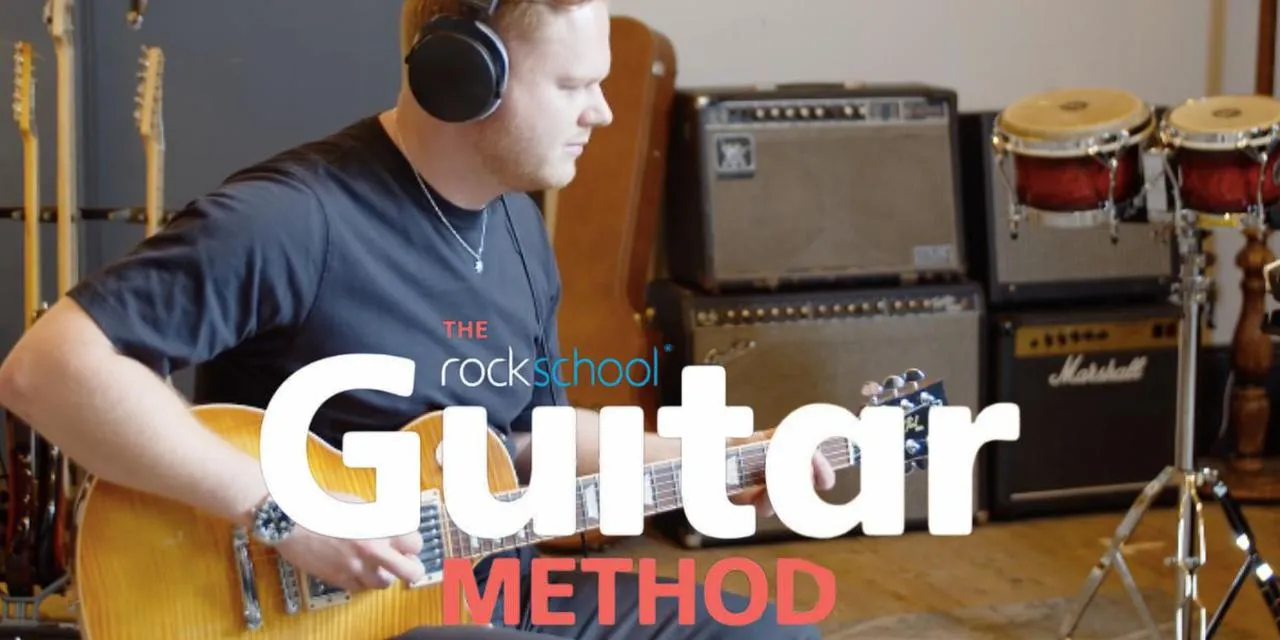
Tommy Webb bringt dir dein erstes Metal-Riff auf dem A5-Powerchord bei, mit Fokus auf sauberes Anschlagen und darauf, den ersten Finger fest auf dem zweiten Bund der D-Saite zu halten.
Course preview
This lesson is part of the course Gitarren-Methode: Country & Metal
Watch a preview of the full course below.
Lesson transcript:
Example 2 of metal, we're looking at the A5 power chord we've just played in the previous example. Here we're really testing our picking skills. So as I mentioned, that circle motion, we're trying to work that into our playing. It's all about muscle memory and repetition. And this is a great example for getting that built into our playing. So what we have is that a five chord for four bars played as half notes, two beats each. 1, 2, 1, 2. In the final bar, the fifth bar, we have this a five chord as a whole note. And we're just going to let that ring out to finish. The key here is we want to keep our first finger pushing down on that second fret of the D string. And this is the first example we've seen in this course so far where we're not playing a finger per fret. You can see we've lifted up the first finger. So now our finger per fret would be fret 2, 3, 4, and 5. But using finger 1 for the second fret, finger 2 for the third, 3 for the fourth, and pinky, the fourth finger for the fifth fret. So it's all about keeping those positions so we can slide up. As we've got plenty of notes up the neck, we need to do that eventually. But it's our first look playing with the first finger on the second fret. This just sets us up really well for playing these chords. With the middle finger, it's easy to kind of block some strings. So using the first finger is key for these kind of chords. So let's try this line here. We're going to try and keep the first finger pushing down the whole time, watching out really carefully. To not hit any other open strings, we only want to hear the two notes that are written, A and D. When playing these chords, it's easy to kind of hit the wrong strings. So I use my palm rested on the bridge to keep a solid bass, so I can hit the same strings accurately each time. What I'm doing here is resting my palm on the bridge behind the saddles. This bit here where the string comes through. If your hand's in front of this and actually on the string, you're palm muting, which is a cool technique, but not one we're looking at yet. So we want to make sure we can play these open first. So we're resting behind the saddles, and that way we're just a bit more accurate. Whereas I find when you're floating, it's very easy to play the wrong strings. You can see I hit some by accident there. I'd like you to practice that over and over again until you're making sure you can definitely only hear those two strings. A good tip as well is to turn the volume on your guitar down. When you have all the distortion going, it's easy to hear notes get lost. Whereas when we have the guit off, you can hear exactly if you're adding too many strings. So making sure we've just got those two. And once you can do that, start to add the distortion back. Let's give this one a go of the backing track.
About the instructor
Tommy Webb ist ein in London ansässiger Gitarrist, der einen BA(Hons)-Abschluss in Gitarre an der Academy of Contemporary Music in Guildford absolvierte, wo er bei Sandy Beales (One Direction, Wheatus) und Nicolas Meier (Jeff Beck) studierte. Sein eigenes Spiel bewegt sich frei zwischen Rock, Pop, Indie, Hip-Hop, Country und Metal – genau dem Terrain, das seine Gitarrenmethoden abdecken. Tommy hat landesweit mit einer großen Bandbreite an Künstlern und Bands gearbeitet, darunter Jarki Monno und Indira May, und teilte sich Bühnen und Sessions mit den Gitarristen Paul Murray (Jess Glynne, Zak Abel) und Adam Chetwood (Paolo Nutini, Mark Ronson) sowie den Schlagzeugern Alex Woodward (Black Honey), Luke Robinson und “Bambi Music” (N-Dubz, Lethal Bizzle, Wretch 32, Tinie Tempah). Auf der Bühne trat er im Jazz Cafe als Vorband der Soulsängerin Jocelyn Brown auf, dazu in Clubs und auf Festivals wie Ronnie Scott's, Troy Bar, The Watford Colosseum, Camden Assembly, Kensington Roof Gardens, Notting Hill Arts Club, Meraki Festival und Sundown Festival. Auf Platte und im Radio hat Tommy Live-Sessions für BBC Three Counties Introducing, Vibe FM und Pulse 88 eingespielt, mit Tracks, die auf BBC Radio 1 und Radio 2 liefen. Aufgenommen hat er in Studios wie South Lanes Brighton, Hempstead Road und Titan Studios mit Produzenten wie Steph Carter (Gallows, Lyoness) und TMS / Froe Barnes (Lewis Capaldi, Dua Lipa). In seinen Gitarrenmethoden gibt Tommy all dieses Wissen eines aktiven Musikers an dich weiter – er lehrt die Techniken, Sounds und das Feeling hinter echten Stilen, von Rock und Pop über Indie, Hip-Hop und Country bis Metal –, damit du die Musik spielen kannst, die du wirklich liebst. read more