



Die Zungentechnik
Mit
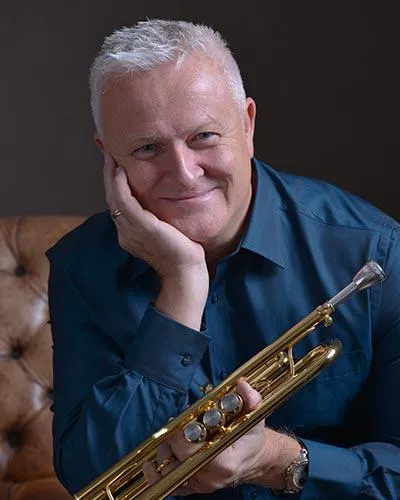
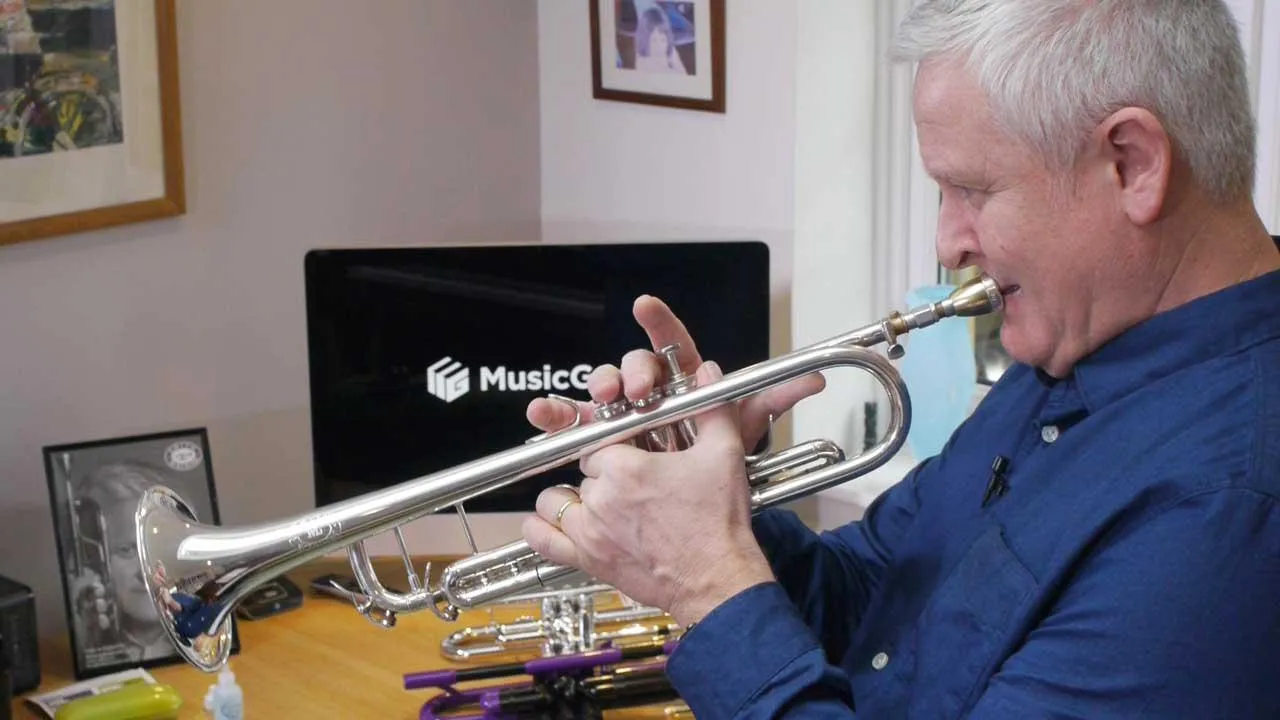
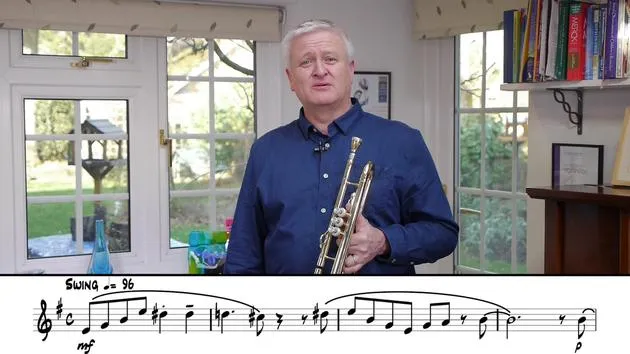
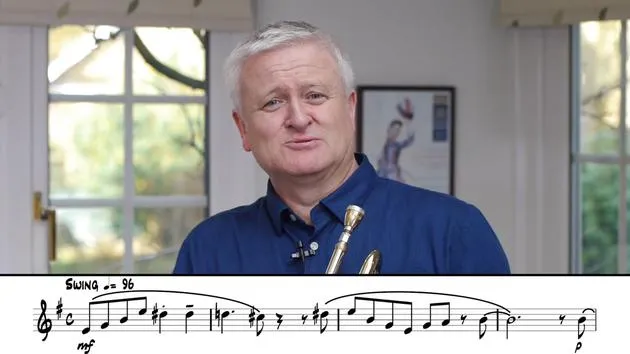
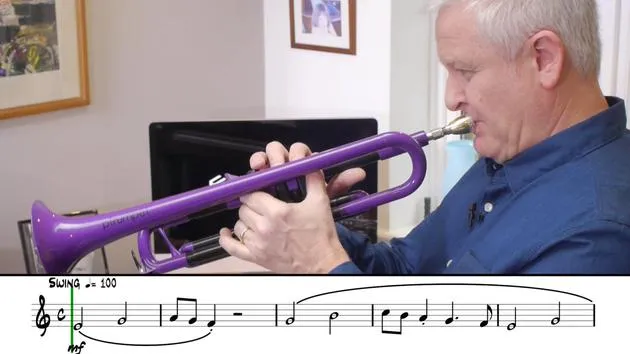
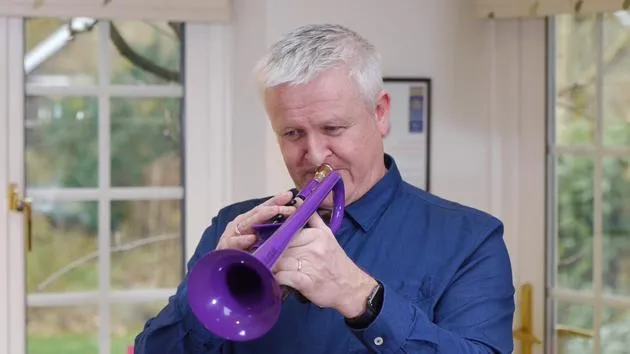
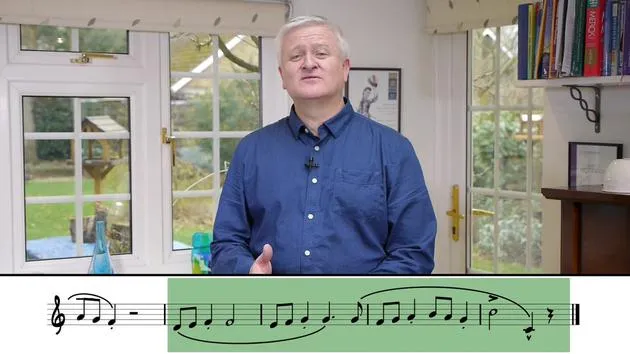
Mike LovattMike Lovatt zeigt, wie die Zungentechnik – ein sauberer 'doo'-Klang – dem einleitenden e-Moll-Arpeggio mehr Schwung und Bewegung verleiht, als es legato zu spielen.
Das steckt im Kurs
29 Lektionen (1h 2m) · 1 gratis
01. Slinky - Einführung und Aufführung
1:38
02. Artikulation
5:21
03. Lange und kurze Noten
1:44
04. Die Zungentechnik
Du bist hier3:12
05. Ventiltechnik
1:13
06. Vibrato
4:19
07. Zusammenfassung
0:53
08. Performance mit Dämpfer
1:05
09. Wie man einen Plunger-Dämpfer benutzt
2:39
10. Challenge (mit Plunger-Dämpfer)
0:49
01. Transposition Blues - Einführung und Vortrag
2:05
02. Struktur
1:51
03. Sich reinknien
2:22
04. Note-Bending
2:40
05. Dynamik
3:00
06. Zweiter Abschnitt, im Stil von Louis Armstrong
2:01
07. Shakes
5:03
08. Scoops
2:35
09. Klang, Stil und Vibrato
3:00
10. Zusammenfassung
1:16
11. Challenge (Louis-Armstrong-Stil)
0:39
Transkript der Lektion
Music Lesson: E Minor Arpeggio Technique
This piece starts with an arpeggio in the key of E minor. The third beat, having the short note there, gives us a fantastic landing point for that arpeggio.
Technique Overview
The technique of playing that arpeggio that I'm using is tonguing. There is a slur mark or a phrase mark over the top of it. However, if you play it completely legato, it doesn't quite sail as much, it doesn't quite travel as far.
Listen and Compare
- Legato: Have a listen to me play it completely legato.
- Tonguing Technique: Now I'll play it using the technique I use, which is tonguing.
A while back, I mentioned using a pattern like this:
D, D, D, D, D, D, D, D, D, D.
You can try saying that:
Do, do, do, do, do.
Now try playing it like that after me.
Air Support
Using the air behind the tongue helps to go up that octave and up the arpeggio. When we practice arpeggios, we can use the air and a slight push of air to help with that arpeggio.
E Minor Arpeggio Practice
Here's the E minor arpeggio, using a bit more air:
- Go up to the top note.
- Then come back down again.
We can take the foot off the gas a bit.
Understanding Air Speed
When we go higher on the trumpet, we need to think about the speed of air. Many people believe that as we go higher, we need more air. That's not entirely true.
- As we go higher, we need to get the air faster.
If I speed up the air, I tend to adjust my tongue position within the oral cavity.
Tongue Position Exercise
- Think about where your tongue is when playing a middle G on the second line of the treble clef.
- Play a middle G and see if you can feel where your tongue position is in your mouth.
I'd say it's quite low in your mouth, and that position is correct for achieving the right speed of the air.
Whistling Analogy
We want the speed of the air to be almost at the pitch of the note, as though you're whistling.
"Like, hopefully, you can hear that note in my airstream."
So as I go up that arpeggio, I'm using the air at the speed it needs to be to play that note.
If I was going to do that just with the air, without the trumpet, it would sound like this:
(Whistling sound)
See if you can replicate that. It's almost like whistling in your mouth.
29 Lektionen
1 Std. 2 Min. strukturierte Videolektionen
Erweiterte Videofunktionen
Verlangsamen, Passagen loopen, mitlesen
Handy, Tablet & Desktop
Üben, wo du willst
100 % Zufriedenheitsgarantie
30 Tage Geld-zurück-Garantie
Lern deinen Guru kennen
Lern deinen Guru kennen
Mike Lovatt studierte am Trinity College of Music, wo ihm die Jon Kelly Jazz Scholarship verliehen wurde. Er ist in einer enormen Bandbreite von Stilen mit Künstlern wie Quincy Jones, Robbie Williams, Eric Clapton, dem Orchestra of the Royal Opera House Covent Garden, dem Royal Philharmonic Orchestra, Michael Buble, Oasis, Michel Legrand, Tony Bennett, Shirley Bassey und Danny Elfman und vielen anderen aufgetreten und hat mit ihnen aufgenommen.
Als Solotrompeter im Londoner West End hat Mike unter anderem in Jesus Christ Superstar, Evita, The Producers, Billy Elliot, Guys and Dolls, Saturday Night Fever, My Fair Lady und Spamalot mitgewirkt. Er hat auf Filmmusiken gespielt, darunter die James-Bond-Filme, Harry Potter mit dem London Symphony Orchestra, das preisgekrönte Chicago, Kevin Spaceys Beyond the Sea, Charlie and the Chocolate Factory, Madagascar und The Corpse Bride. In George Fentons Mrs Henderson Presents ist er an Trompete und Kornett und in Looking for Eric an der Trompete zu hören.
Mike ist Solotrompeter des Grammy-nominierten John Wilson Orchestra und war in dessen gefeierten BBC-Promenade-Konzerten und -Aufnahmen zu erleben.
Mike ist als Lehrer und Clinician sehr gefragt und Professor für Trompete an der Royal Academy of Music und am Royal College of Music. Im April 2013 wurde ihm mit Stolz der renommierte Derek Watkins' Chair of Trumpet an der Royal Academy of Music in London verliehen.
In seinen MusicGurus-Kursen teilt Mike die Geheimnisse seiner Vielseitigkeit und zeigt dir, wie du authentische Trompetenstile in Swing, Rock und Latin triffst, sodass du jeden von ihnen mit Selbstvertrauen und dem richtigen Feel spielen kannst.







