



Verschiedene Register

Lesson time: (3min 48sec)
Juliet erklärt, dass wir zwei Hauptregister haben – dicke Falte und dünne Falte, und führt uns durch Übungen, um sie kennenzulernen.
Course preview
This lesson is part of the course Grundlegende Fähigkeiten für Sänger
Watch a preview of the full course below.
Lesson transcript:
Understanding Vocal Registers
In this lesson, I want to talk to you about vocal registers. For most of us, especially those working with popular singing styles or contemporary commercial styles, I will concentrate on the two main registers.
The Main Two Registers
There are technically four registers, but the main two are:
-
Thick Fold Setting: This is very close to your speaking voice. For example, if you say "oh, oh, oh," it's probably quite close to your speaking voice.
-
Thin Folds: This quality can be accessed by making a sound like "woo, woo, woo, woo," where you feel that thinner quality.
Using Sirens to Smooth Transitions
When we worked on our sirens, we were moving smoothly through the registers, and we will do so eventually. With registers, some people feel that they have a gap between the two.
- By using our sirens, we learn how to control the muscles in a way that makes that feeling more flexible, reducing the gap.
- This gap is often referred to as a break or passaggio, which means transition or change. However, refering to it as a break can be unhelpful since it suggests something is broken. You may feel or hear a difference in the sound.
Be Playful with Your Voice
Another important point is to be playful with your voice in a safe way. Sometimes, when we're being playful, we might:
- Imitate a whining dog, which allows us to naturally access the thin fold quality.
- Some people might call this head voice or falsetto. There can be varying definitions depending on different teachers and schools of thought.
Here are a few additional terms you might hear:
- Speaking Voice
- Speech Quality
- Modal Voice
- Lower Register
- Thick Folds
- Chest Voice
Different people use different terminology, and that's fine. It's good to be familiar with a few terms!
Coordinating Voice Quality
The key takeaway is understanding the changeover between the muscles that give us access to the lower voice quality and the higher one.
- The easiest way to get used to that feeling of change is through using sirens. This method helps smooth the movement of the muscles through coordination.
- For most singers, the ultimate goal is to use your voice efficiently, flexibly, and with versatility, allowing you to call on various aspects of your voice suitable for what you want to sing and communicate.
Expressive Effect of Register Differences
Sometimes we can use this difference in quality between registers for expressive effect. For example:
- In "Zombie" by The Cranberries, there's a very clear register break that is used to great effect.
- Singers like Tom Yorke from Radiohead might use the thinner fold quality to enhance the musical or emotional aspects of their singing.
There's nothing wrong with having a difference in those sounds, but sometimes we want to learn to smooth them over to make the transition less audible.
Conclusion
The main thing to remember from this lesson is that sirens are a pathway to move smoothly between registers and help us develop more flexible vocal musculature.
- Don't worry if it doesn't come right away; over time, it will happen.
- Also, be playful with your voice! Experiment with sounds like little puppy whines or expressing "oh, woo."
Each expression brings out different aspects of your voice, helping you understand how many colors you have to paint with as you grow more accustomed to singing and exploring.
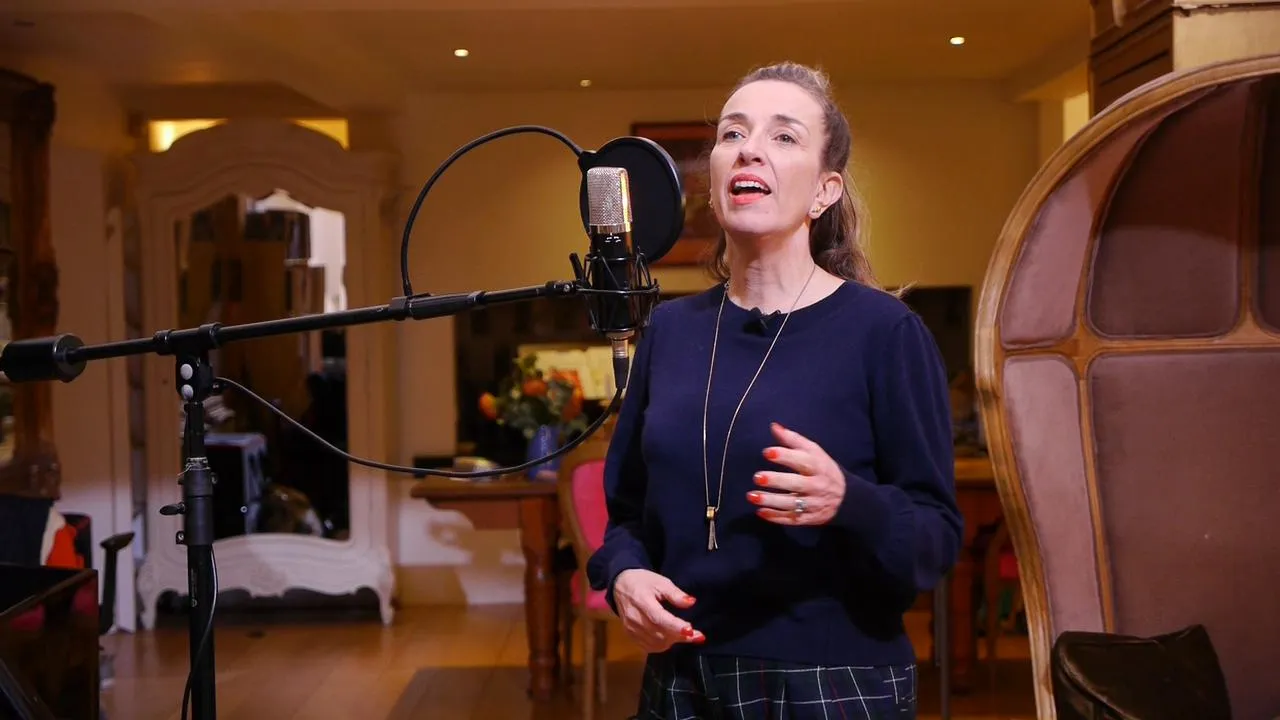
About the instructor
Juliet Russell ist Sängerin, Komponistin, Vocal Coach und Chorleiterin. Es ist ihr eine Herzensangelegenheit, Einzelne und Gemeinschaften dabei zu unterstützen, ihre Stimme und Kreativität zu entfalten. Als Vocal Coach bei The Voice und The Voice Kids von ITV sowie bei Michael McIntyre’s Big Show der BBC hat Juliet auch mit Künstlern gearbeitet, die mit Grammy, Brit, MTV Europe und MOBO Awards ausgezeichnet wurden. Sie hat mit innovativen Künstlern wie Damon Albarn, Imogen Heap, Paloma Faith, alt-J, Yoko Ono, Seal und Ringo Starr zusammengearbeitet und musiziert. 2015 ging sie mit Unterstützung des Arts Council of England mit ihrem Album Earth Meets Sky auf Tour und schuf mit lokalen Musikern und Gemeinschaftschören zehn einzigartige Aufführungen im gesamten Vereinigten Königreich. Regelmäßig wird sie mit neuen Chorwerken und Vokalarrangements beauftragt und ist national wie international aufgetreten. Der Förderung von Künstlern verpflichtet, betreut und coacht Juliet aufstrebende Künstler und arbeitet dabei mit Management-, Platten- und Verlagsfirmen sowie mit unabhängigen Künstlern zusammen. Sie unterhält ein Gesangsstudio mitten in der lebendigen Brick Lane in London. Juliet war Gründungs-Intendantin von Sense of Sound und Creative Director von Sing Up Greenwich und Sing Late im V&A. Sie leitet den Portobello Live Choir, einen Gemeinschaftschor im Westen Londons, und den professionellen Chor Assemble und ist Ausbilderin im Programm Singing for Lung Health der British Lung Foundation. read more