



Rhythmus
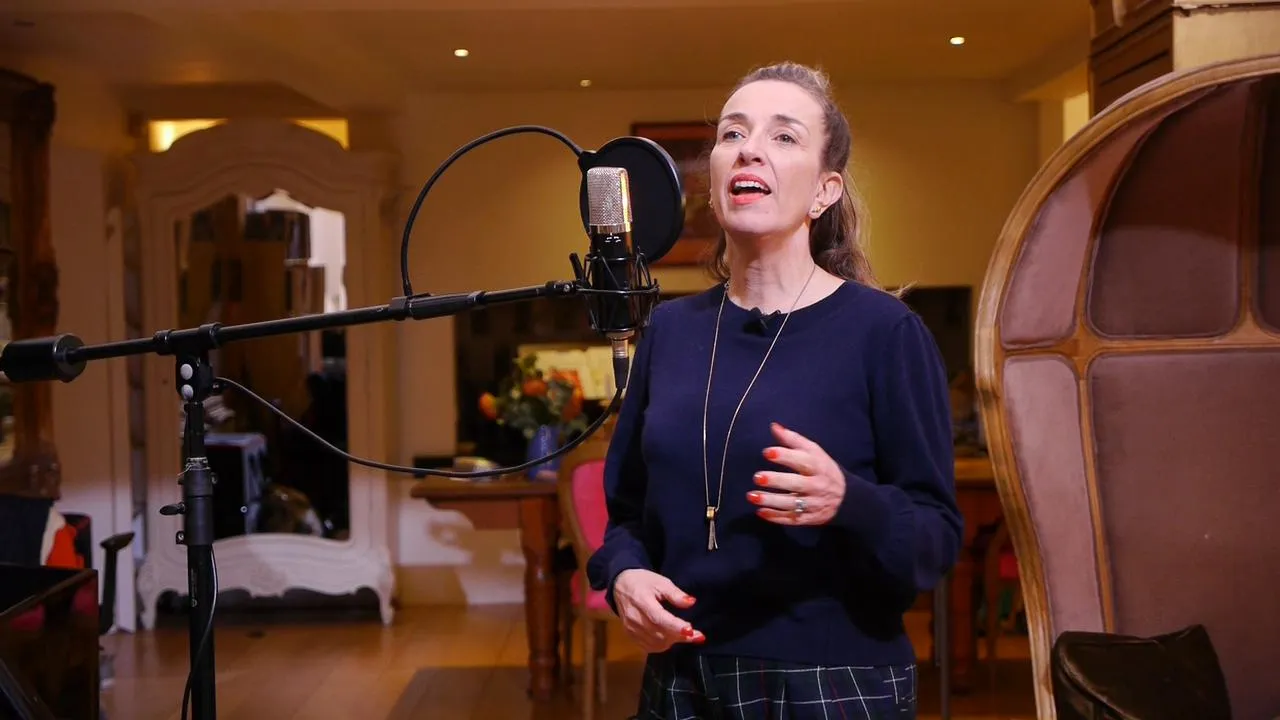
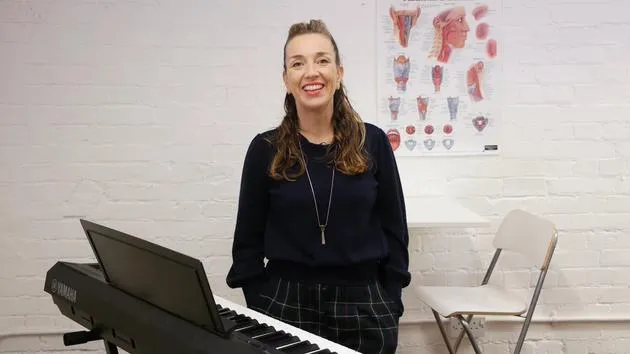
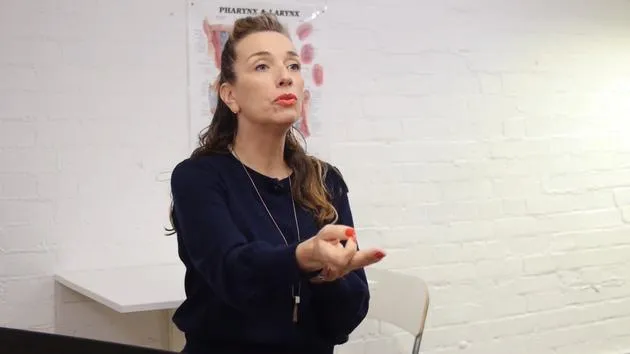
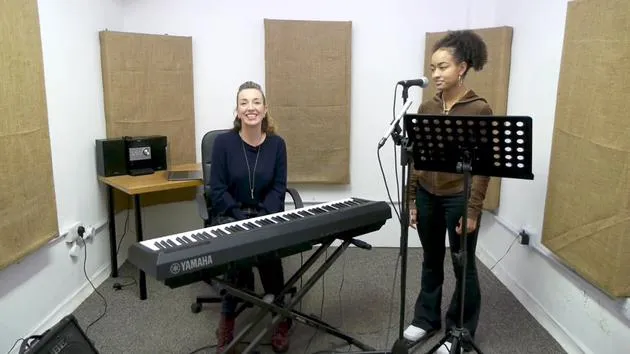
Wie bekommt man ein gutes Rhythmusgefühl? Juliet führt uns mit einigen unterhaltsamen Methoden in Taktarten ein, um die Schläge in einem Song zu verstehen.
Das steckt im Kurs
23 Lektionen (1h 55m) · 1 gratis
Transkript der Lektion
Exploring Rhythm in Music
In this lesson, we're going to explore rhythm.
Embodying Rhythm
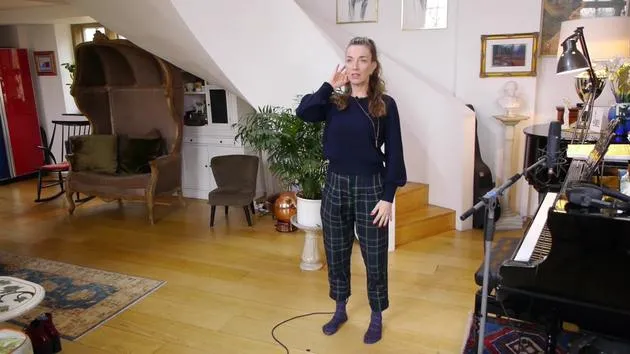
For me, personally, I find a really great way of exploring rhythm is to start embodying it, just moving along to music. This might be while you're listening to a song on the radio or while you're doing something else.
- Keeping that inner pulse in the body is really useful.
Basics of Rhythm and Tempo
To explain some of the very basics of rhythm and tempo:
- Most pop songs (this is a generalization) are in a four-four rhythm. This means there are four beats to a bar.
Counting in Four-Four
Let's count it out together:
- 1, 2, 3, 4
- 1, 2, 3, 4
Join me:
- 1, 2, 3, start to move.
- 1, 2, 3. Walk around the room if you want to.
- 1, 2, 3, 4.
For some people, you might want to use your feet:
- 1, 2, 3, 4
- and
- 1, 2, 3, 4.
Whatever feels good, you can walk around to that rhythm, just practicing it.
Understanding Tempo
Rhythm can speed up or slow down, and that is the tempo of the song.
- So when someone talks about the tempo, it's basically how fast or slow it is.
- Ballads tend to be slower than dance music.
For example, consider a classic disco tune like "Car Wash":
"You might not ever get rich, but let me tell you, it's better than digging a ditch."
You can hear that it's got more tempo and pace. In contrast, some of the songs we're working on in the course are more ballad-like, which means they tend to be slower with longer phrases.
The Four Beats in a Bar
Now, often as a singer, we refer to the four beats in a bar, which are known as crotchets.
- These four beats are counted as:
- 1 and 2 and 3 and 4.
When singing, sometimes we focus on the offbeat, which occurs on:
- and 1 and 2 and 3 and 4 and.
Coordinating Rhythm
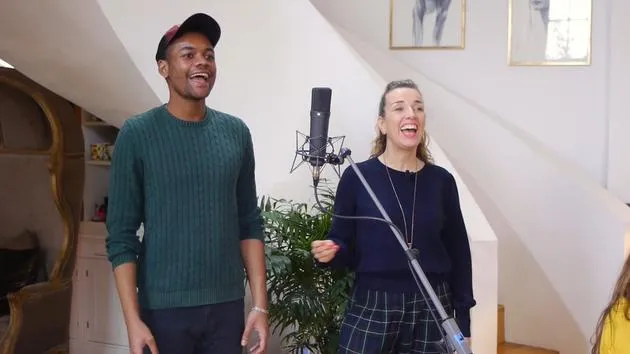
To start embodying that, I would say do a stamp and then a click or a clap, whatever you're comfortable with:
- 1 and 2 and 3 and 4 and
- 1 and 2 and 3 and 4.
This might be difficult to coordinate if you're not used to it.
Physicalizing Rhythm
Another way of doing it is to walk around:
- Just do a 1 and 2 and 3 and 4.
You can use whatever space you have and just learn to physicalize and embody that rhythm.
Time Signatures
There's another thing called time signatures.
- The four-four time we talked about consists of four crotchet beats in a bar, which is what we started with:
- 1, 2, 3, 4.
You can also have three crotchets in a bar, which is called waltz time:
- 1, 2, 3
- 1, 2, 3.
For example, the song "Natural Woman" has groups of three:
"Looking out on the morning rain, I used to feel so uninspired."
Emphasizing the Offbeat
Another thing that happens when we sing pop or soul music is we often think about the rhythm being on the 2 and the 4. For one of the songs we're going to work on, "I Need a Dollar," this is true:
"I need a dollar, a dollar, a dollar is what I need."
Join in:
- 1, 2, 3, 4
- 1, 2, 3, 4.
Click or clap as you join in:
"I need a dollar, a dollar, a dollar is what I need."
Finding Your Rhythm
Just play around with where you feel the pulse of something. This is a great way to get your ears and body attuned to rhythm.
A good way to explore it is to simply dance.
- Nod your head,
- Tap your foot,
- Whatever feels natural.
23 Lektionen
1 Std. 55 Min. strukturierte Videolektionen
Erweiterte Videofunktionen
Verlangsamen, Passagen loopen, mitlesen
Handy, Tablet & Desktop
Üben, wo du willst
100 % Zufriedenheitsgarantie
30 Tage Geld-zurück-Garantie
Lern deinen Guru kennen

Lern deinen Guru kennen
Juliet Russell ist Sängerin, Komponistin, Vocal Coach und Chorleiterin. Es ist ihr eine Herzensangelegenheit, Einzelne und Gemeinschaften dabei zu unterstützen, ihre Stimme und Kreativität zu entfalten.
Als Vocal Coach bei The Voice und The Voice Kids von ITV sowie bei Michael McIntyre’s Big Show der BBC hat Juliet auch mit Künstlern gearbeitet, die mit Grammy, Brit, MTV Europe und MOBO Awards ausgezeichnet wurden. Sie hat mit innovativen Künstlern wie Damon Albarn, Imogen Heap, Paloma Faith, alt-J, Yoko Ono, Seal und Ringo Starr zusammengearbeitet und musiziert.
2015 ging sie mit Unterstützung des Arts Council of England mit ihrem Album Earth Meets Sky auf Tour und schuf mit lokalen Musikern und Gemeinschaftschören zehn einzigartige Aufführungen im gesamten Vereinigten Königreich. Regelmäßig wird sie mit neuen Chorwerken und Vokalarrangements beauftragt und ist national wie international aufgetreten.
Der Förderung von Künstlern verpflichtet, betreut und coacht Juliet aufstrebende Künstler und arbeitet dabei mit Management-, Platten- und Verlagsfirmen sowie mit unabhängigen Künstlern zusammen. Sie unterhält ein Gesangsstudio mitten in der lebendigen Brick Lane in London.
Juliet war Gründungs-Intendantin von Sense of Sound und Creative Director von Sing Up Greenwich und Sing Late im V&A. Sie leitet den Portobello Live Choir, einen Gemeinschaftschor im Westen Londons, und den professionellen Chor Assemble und ist Ausbilderin im Programm Singing for Lung Health der British Lung Foundation.







