



Analyse von Le Nozze di Figaro

Mit
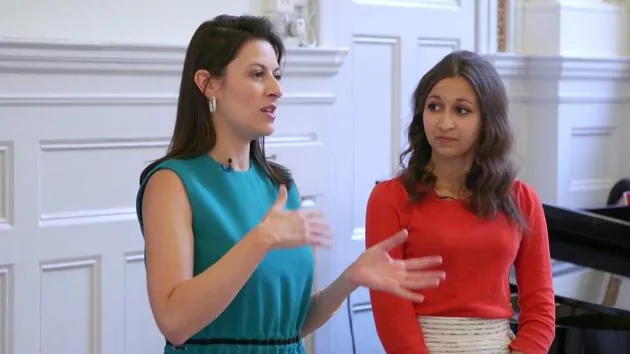
Chen Reiss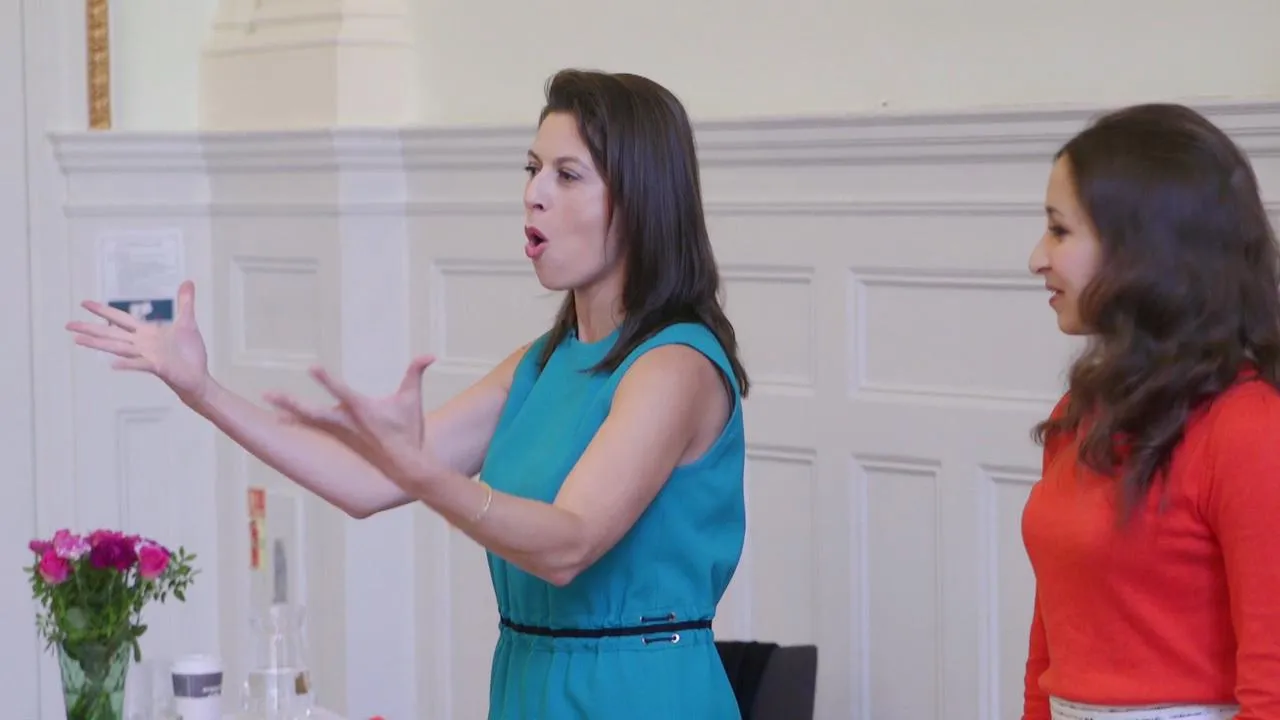
Das steckt im Kurs
13 Lektionen (2h 46m) · 1 gratis
01. Cosi Fan Tutte - Performance
4:45
02. Analyse von Così fan tutte
30:29
03. La Clemenza di Tito – Aufführung
6:23
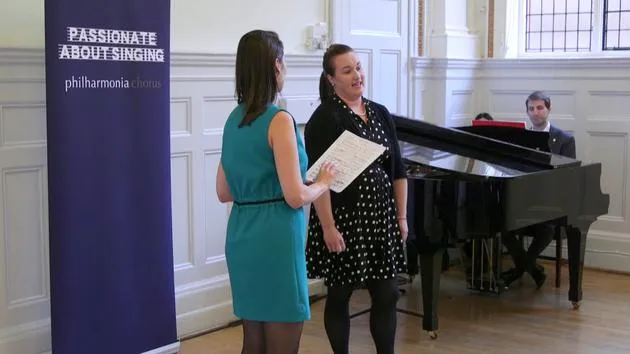
04. Analyse von La Clemenza di Tito
21:29
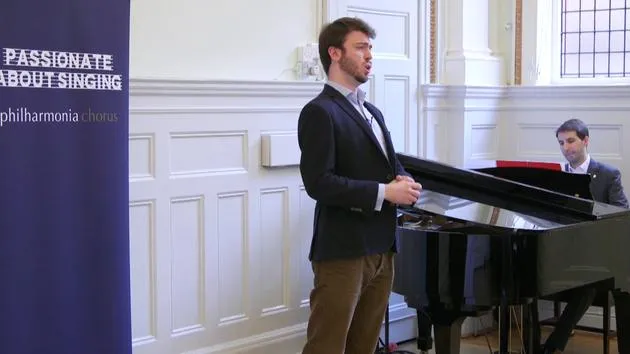
05. Die Zauberflote (Aufführung)
3:01
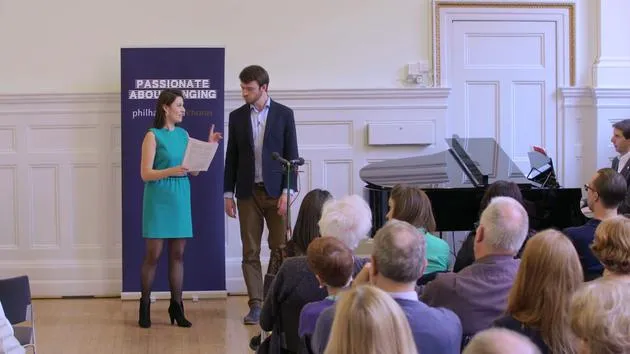
06. Die Zauberflöte – Analyse
17:52
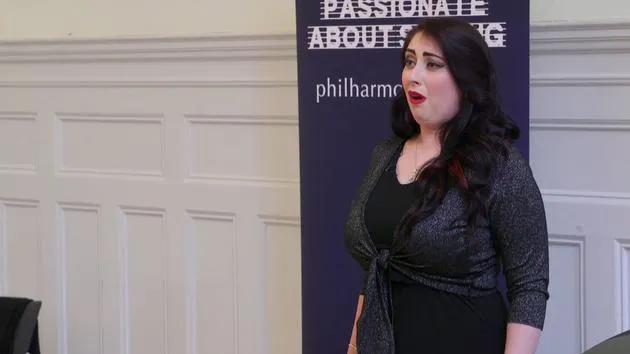
07. Idomeneo-Aufführung
4:14
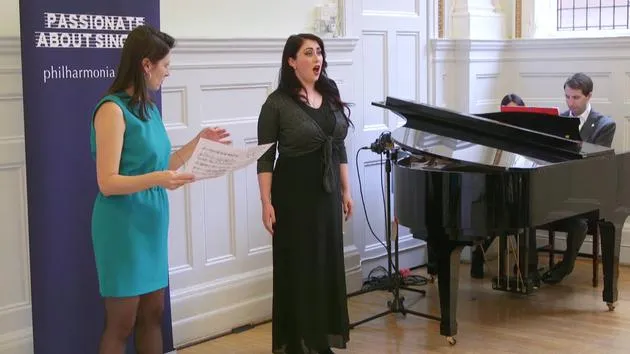
08. Idomeneo-Analyse
26:49
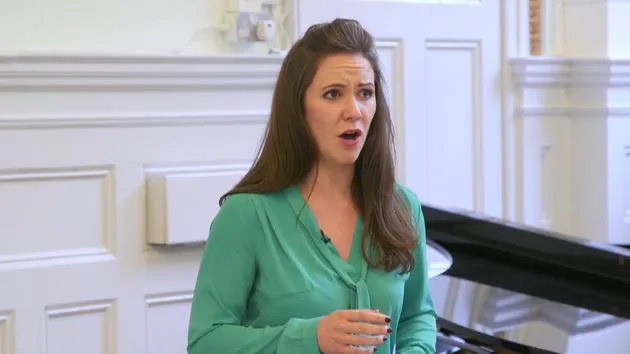
09. Aufführung von Le Nozze di Figaro
2:58
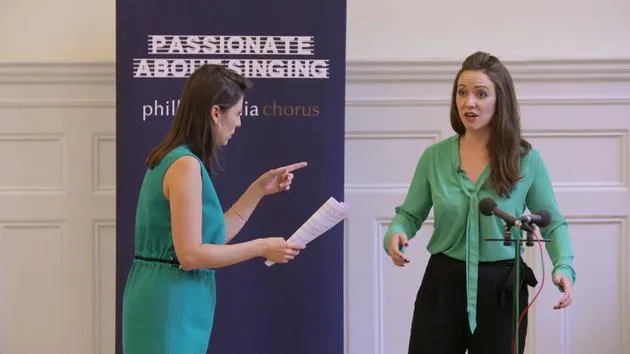
10. Analyse von Le Nozze di Figaro
Du bist hier16:50
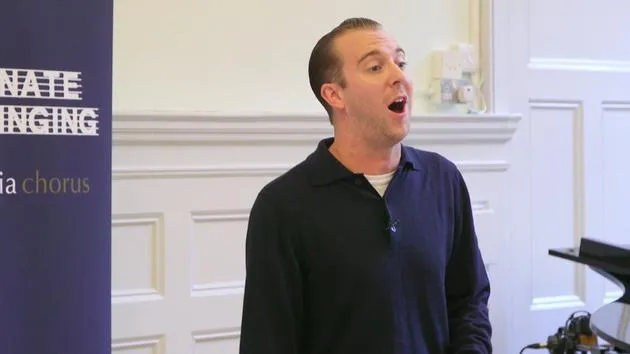
11. Aufführung der Zauberflöte
3:48
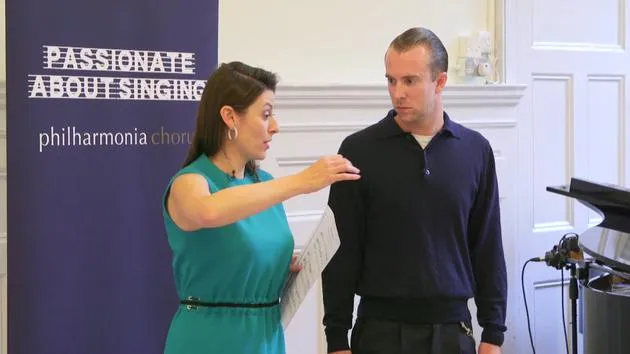
12. Die-Zauberflöte-Analyse
20:58
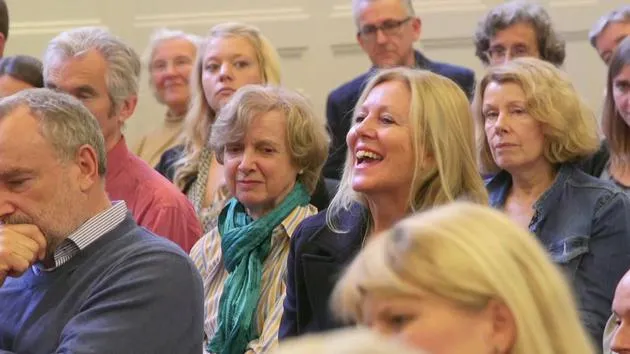
13. Chen Reiss - Fragerunde
Gratis-Lektion7:00
Transkript der Lektion
Music Lesson
Context: Felicity and Cherubino
Felicity discusses vocal techniques with Cherubino, a boy in his early teens who is just discovering his hormones and his interest in women.
Introduction
"Okay, right, so we're going to start again and you're going to be on the breath. You're going to start on the breath because the first line that I really could hear your voice, it was only there. I want to hear your voice from the beginning. So you have to be on the breath because it's fast music, so it's not easy. There's a lot of words, but there has to be a legato."
Breath Support
"Okay, again. Okay, great. But I don't hear it. So, no, another one. You have to have the space open. En can be done only by the tongue. Okay, super. It was so much better. You have to start with the space open and then it's there. I don't need to correct anything. It's great. Do you feel the difference?"
Solo Practice
"Okay, let's go on solo. I know it can be better. Again, open. Because he was... Give her a bar. And again. So look, touch me. You start. You. So, do you feel the difference here?"
Singing Technique
"Okay, so. So you sing on open. R. I didn't understand that. I know it's very difficult. You're doing great. You're doing really, really great."
Notes on Technique
- "Again, SF on the top note. Okay. Really nice.
- It can be this F. Can be nicer. It's a bit hail.
- Okay, release it and the tone coming... The tone afterwards, which comes down. Don't let it sink.
- Okay? Yeah, lift it up."
Opening the Ribs
"The A is a bit... It's still too horizontal for me. It can be. Just release it again. Start on the ribs. Look what you do. You're a bit stuck because you're thinking. You're thinking. Don't think, singers! Don't think. You sing."
Encouragement
"But open your ribs. That's the only thing you need to think about, to open your ribs."
Continued Practice
"Okay. Not quite. It's... Ooh. It's not easy, huh? Okay. From the same place. Yes, but it was much better. Do you feel you have to open the ribs and then sing? And don't... After the tone, after you emit the sound, don't think; it's too late."
Adjusting Sound
"Okay, better. This was really good. It's a bit squeezed. You need to allow more room for the passaggio. Okay, so here, connect the sentences. It will help you because you started from nothing."
Phrasing in Music
"But if you say 'okay, don't do what I did the first time, I dropped. The second time I stay.' Okay, you heard the difference? Super. Really great. Really great."
Common Mistakes
"This was really great. The 'UN' was great for the day. It closed. Why? Because you close your mouth to make a 'D.' We don't close the mouth. Let it open. Don't close."
Closing Remarks on Technique
"Okay, from the first one. Oh, yeah. Okay. Super great. The 'Dazio' is wonderful. But then again, you close your mouth for the kitchen, and we don't need to close the mouth to say, leave the sound out."
Final Thoughts
"But it's really, really great. Unfortunately, Mozart is... It's simple music, but it's really not that easy. Okay, so we do it again. But it's really, really great."
Improving Italian Sound
"'Spiegar' can be also... It's a bit. Your air is a bit too close. It's a bit German. Okay. And it's not... A little bit more Italian. Eh? Can you do that there?"
Anticipation in Performance
"Okay. Yes. Beautiful. Anticipate it. Okay, you're not on the breath. You're singing to yourself. Serve it to us. I'm talking of love. Let's do it again. It can be better. Not bad."
Tips on Vowel Pronunciation
"You have a lot of vowels there. Don't close the mouth. For the 'E,' you have two vowels. And for the 'E,' you close a little bit. So stay open. Try to stay open there. Don't think 'E' this way. Think almost 'U.' Okay?
Continued Focus
"Okay. The second time. Okay. From the G. Great. Great. Again, stay there. Just look what you do. You are there. No, it has to turn because if you do it with your jaw, you don't do it with your breath."
Developing Sound Focus
"Okay, I don't mind if you want to close your mouth, but you have to do it from here. Okay, so better? Okay? Yes. Okay. Sometimes you hold in the middle voice, and you can't. You're a mezzo. You are living in the middle voice. Release it."
Refining Technique
"Okay. Coming down can be... Okay. It's not bad. It goes a little bit to the back. Yes. Allow it to turn to the back, but keep it also hooked in the front.
Observation on Performance
"Okay? Did you see the difference? It's... It's much more. Mozart is much more precise. You don't have to open too much. The space is there, but don't... You cannot, unfortunately, sing like this. You have to still stay focused."
Final Adjustments
"But it was really... Because the sound... Maybe to you, it sounds less sound, but for us, you don't lose your squillo. Okay? Okay. So stay, stay. When it goes down, you don't let it go down this way. You sing the arch this way."
Closing Techniques
"Okay? Not quite. I think it's a 'd'amor.' Okay, so don't close the mouth for the 'D.' Try. Let's do again. You need to reactivate the breath for this."
Conclusion of Lesson
"Going up, going up. You have to... It has to be a bit more focused. Okay? The middle voice, just the middle. Because of where you are going, you're going high, so you cannot carry all the... All the weights up with you."
Final Encouragement
"So do again this cadenza and the 'T' of the... The end of the cadenza. Don't look at me for approval, okay? Because it was a great sound. And then again, you closed it."
"Okay, yes. The 'T' is in the throat. The 've' is gorgeous. The 'T.' You hold your tongue. Okay? Just do 've.' You don't need to close your mouth. Not for the 'N,' not for the 'T.' Better.
"But the 'K' has to start. Correct. The 'T' doesn't have to be that long, in my opinion. Better. I think the 'kale' can still be better. And don't close the mouth for the 'eel.' Okay, let's correct the middle voice. You are too thick here. A little bit. Okay, try. Good.
"Now, now in tempo. And don't close your mouth for the last tone. But it was really good. Okay? Okay. Yes. You are working. Unfortunately, you have to work more here. But then you don't work in the voice. All the middle voice. You have to release them. You have to... Don't hold them. You want to do this as well, but only this is working. Nothing in the voice.
"Okay? Yes. Brilliant."
13 Lektionen
2 Std. 46 Min. strukturierte Videolektionen
Erweiterte Videofunktionen
Verlangsamen, Passagen loopen, mitlesen
Handy, Tablet & Desktop
Üben, wo du willst
100 % Zufriedenheitsgarantie
30 Tage Geld-zurück-Garantie
Lern deinen Guru kennen
Lern deinen Guru kennen
Die israelische Sopranistin Chen Reiss hat Hauptrollen auf vielen der großen Opernbühnen der Welt gesungen, darunter:
- Wiener Staatsoper
- Bayerische Staatsoper
- Théâtre des Champs-Élysées
- Teatro alla Scala
- Semperoper Dresden
- Deutsche Oper Berlin
- Hamburgische Staatsoper
- Wiener Festwochen
- Maggio Musicale Fiorentino
- Opera Company of Philadelphia
- The Israeli Opera
Zu ihrem Opernrepertoire gehören unter anderem Pamina, Adina, Gilda, Nannetta, Oscar, Rosina, Servilia, Blonde, Susanna, Zerlina, Despina, Euridice, Marie (La Fille du régiment), Sophie (Der Rosenkavalier) und Adele.
Auf ihrem jüngsten Album "Die Nachtigall und die Rose" präsentiert sie gemeinsam mit dem renommierten Pianisten Charles Spencer ein romantisches Programm. Im Konzert war sie in Salzburg, Luzern, im Wiener Musikverein, in Berlin, Leipzig und München zu erleben.
Ihr Debüt an der Wiener Staatsoper gab sie 2009 als Sophie und sang dort seither Rollen wie Pamina, Elvira, Waldvogel, Adina, Servilia, Ilia, Xenia und Füchslein Schlaukopf.







