Booker T & The MG's - Chicken Pox

Mit
Joe GlossopJoe Glossop zerlegt 'Chicken Pox' von Booker T & the MG's Teil für Teil an der Hammondorgel und behandelt die Voicings, die Zugriegel-Einstellungen und die ökonomische Phrasierung, die den Groove tragen.
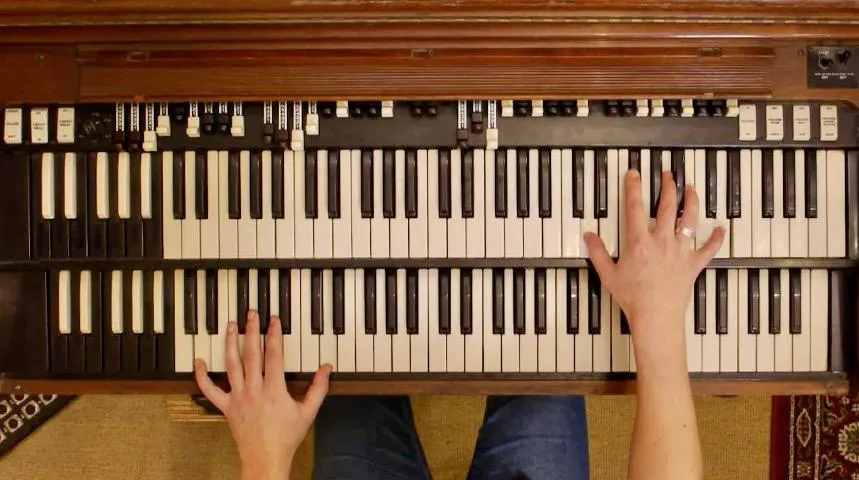
Das steckt im Kurs
24 Lektionen (2h 18m) · 1 gratis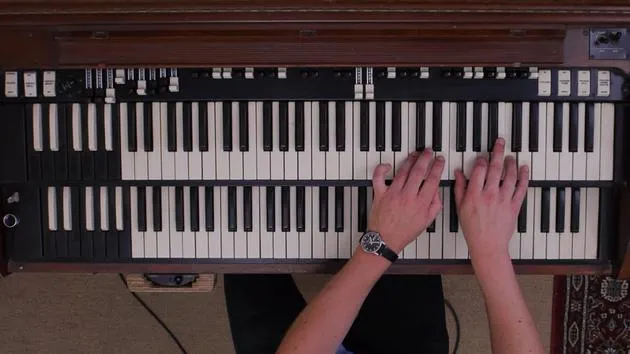
01. The Funk Brothers - How Sweet It Is (Aufführung - Keyboard-Ansicht)
1:42
02. The Funk Brothers - How Sweet It Is
8:51
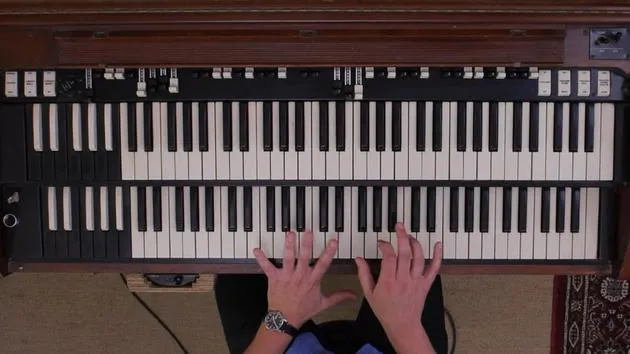
03. Marvin Gaye - What's Going On (Aufführung - Keyboard-Ansicht)
1:54
04. Marvin Gaye - What's Going On
8:49
05. Carole King - You've Got A Friend (Interpretation - Keyboard-Ansicht)
1:51
06. Carole King - You've Got A Friend
8:22
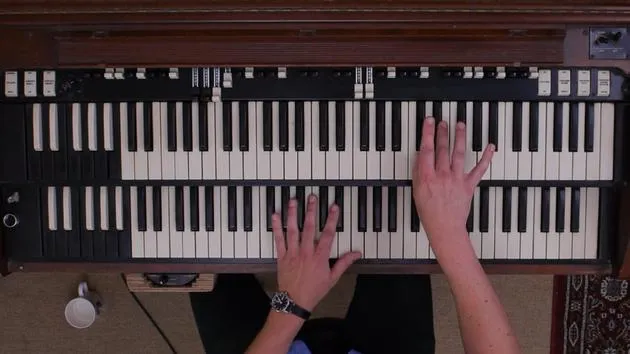
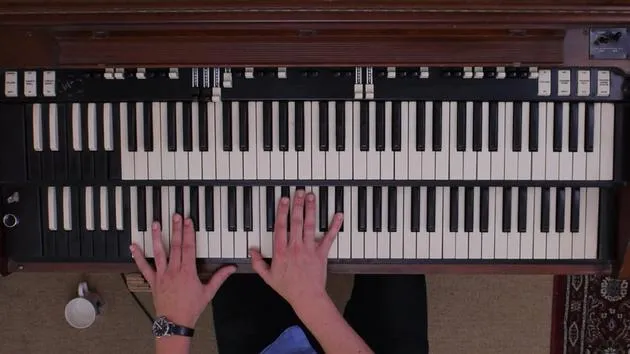
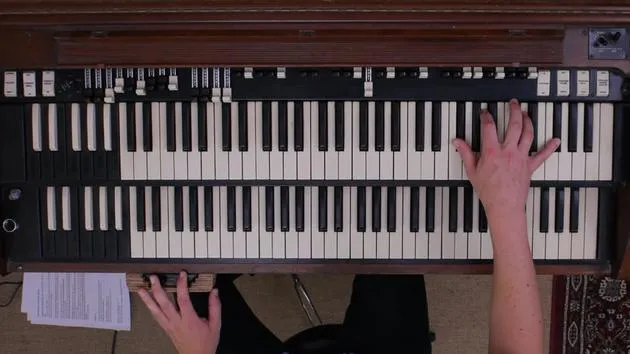
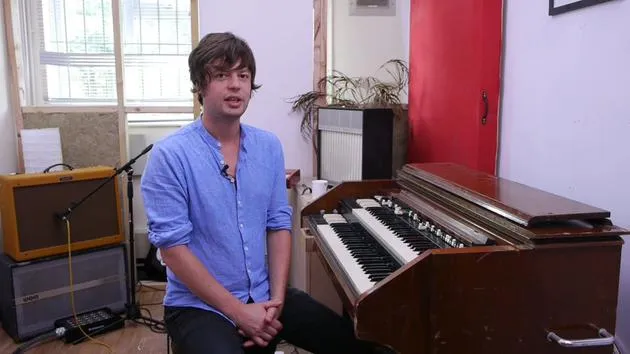
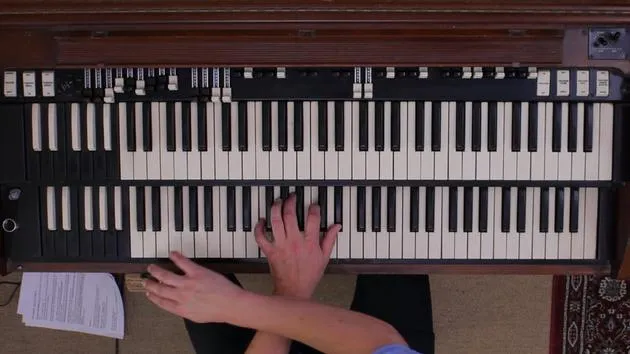
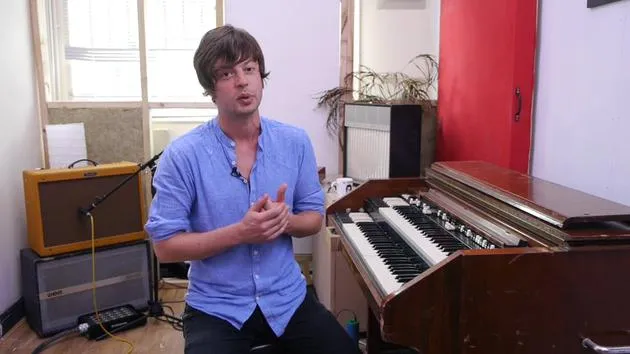
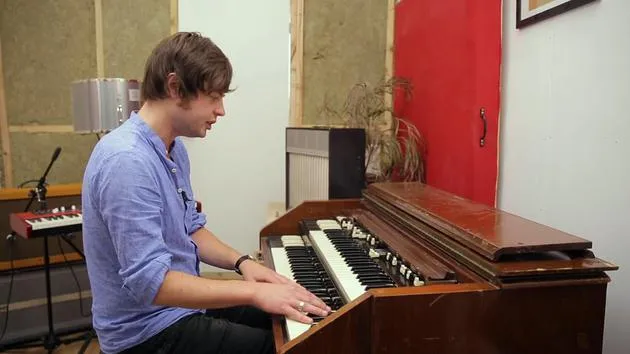
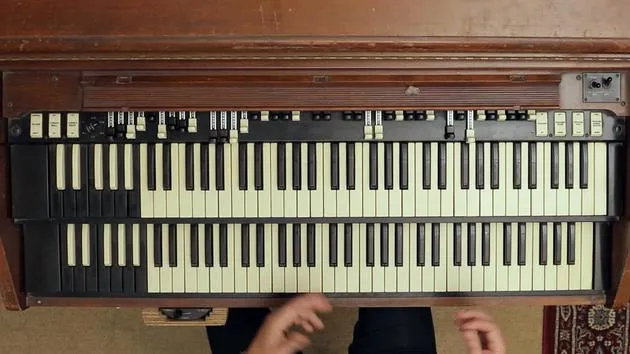
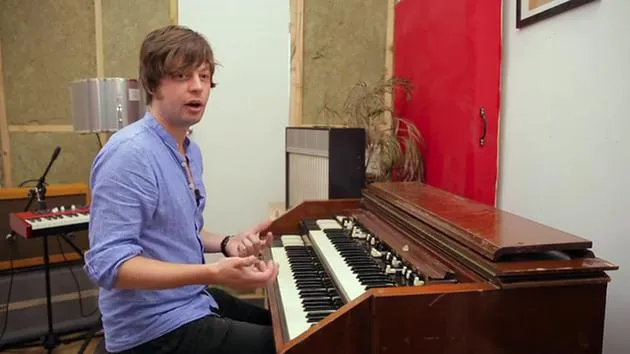
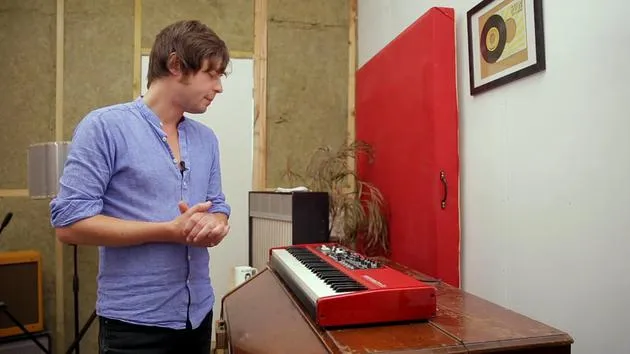
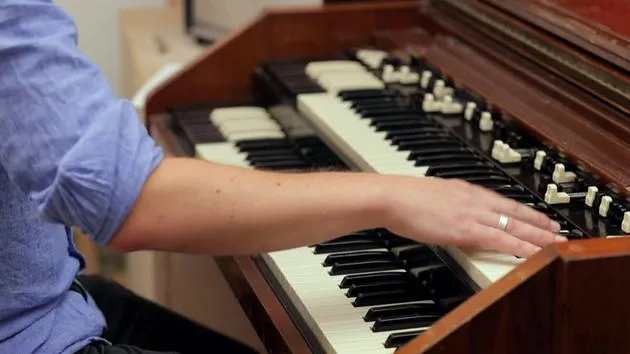
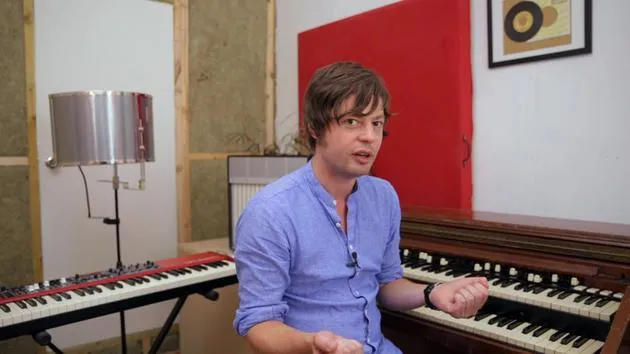

Transkript der Lektion
Music Lesson: Chickenpox by Booker T and the MGs
Introduction
So let's have a look at Chickenpox. It's a song by Booker T and the MGs. You'll all be familiar with Booker T, an amazing player!
In this lesson, I'll run through the song as a whole, give you all the parts, and then break them down.
Context
Listen to this in the context of the track, because these are all parts that fit into the song, rather than being a fully organ-led piece.
Overview of the Tune
So, that's the tune in its entirety. It's not a wildly soloistic tune. Is that a word? I'm not sure. It's more about the parts, sounds, and the economy of how they serve the tune. That's where Booker T is absolutely at his best.
Intro
- Bold and Full Sound: You've got a big, fully voiced intro that often runs up.
- Technique: He often does two sweeps rather than one.
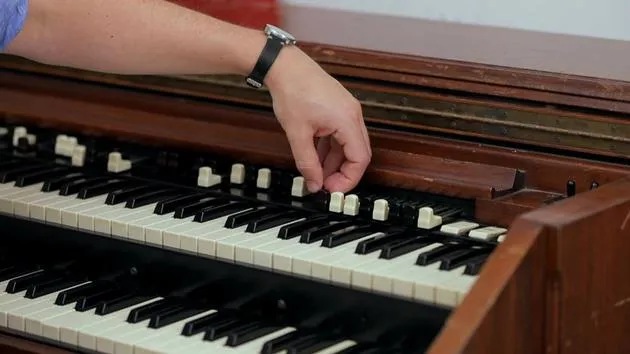
- Sound: I've got the C3 vibrato on there. We're using this set of drawbars for a rich, full sound with all the bass.
"This organ is very top heavy."
- Drawbar Settings: If you've got things at 5 for the top harmonics, you end up with a punchy, full sound. You might need them all the way out.
Variability in Sound
It's just different per organ, per Leslie. Even if you had ten C3s, same models lined up, they would all sound different because they've aged at different rates. The components within them, like capacitors and valves, age and affect the sound cumulatively over time.
Full and Fast Leslie
We've got this full sound. Use the fast Leslie there, switch it up during this part.
- Transition: Just a full D there to a full E, very simple.
Verse
-
Left Hand: Go down to the lower manual and play an open nine chord, right?
- There's no third in it, so it's neither really major nor minor. You'll just have VII, IX, V, and 7.
- This holds throughout this part.
-
Lead Part: You'll have a fifths part up here with the same tone that was used in the intro.
- This part has no vibrato; the top has vibrato on the bottom.
- It's very much in the distance, just a bed for other things to sit on.
Solo Section
For the solo, switch over to the second set of drawbars. You can:
- Put the percussion on here.
- Play it with these four all the way out for a nice, meaty tone.
Licks
- He uses a flat 5 a lot here.
- Here's the lick that he opens with, followed by some blues licks.
"So from the top, you got the flat five stuff falling down to an A chord, part of an A chord, just one and three to a junior B."
- Trills: Add a little trill if you want, it works quite well.
- Falling Parts: These fall from D and G down to E and B, then down to D and A. The same applies up there: E and A, then E and B.
Next Section
Now, for the next section of the song, you'll be doubling a riff. Most people are doubling this riff on the track.
- There's quite a nice swing and swagger in this part; you can phrase it so it bounces along nicely.
Six Chords
Here, we'll use two hands:
- Start: Begin on a D flat six, then to a D six, and walk down by semitones.
- Switching Drawbars: After you play the first time, switch to the other set of drawbars for a fuller sound.
Final Section
The third time, switch the Leslie. So, that section again: back to that intro theme. Then there's a drop-down, mainly guitar and bass.
Variation
When I play the whole thing, I just reference it for context. It's the theme again but with a nice variation.
- Start from the D, walking down like that.
- Consider it as either:
- A D that's an F sharp minor shape,
- A D major 7 shape,
- Or even an F minor shape.
"The only function is to get back to the E."
- So, you play that D (first inversion) then switch it, now it's like an F sharp minor shape to the E.
- Finish with a big D and walk up semitones to E flat.
Conclusion
You can put a few licks in here if you like, holding that high B. And there you have it!
"Booker T is absolutely fabulous on this tune, so enjoy!"
24 Lektionen
2 Std. 18 Min. strukturierte Videolektionen
Erweiterte Videofunktionen
Verlangsamen, Passagen loopen, mitlesen
Handy, Tablet & Desktop
Üben, wo du willst
100 % Zufriedenheitsgarantie
30 Tage Geld-zurück-Garantie
Lern deinen Guru kennen
Lern deinen Guru kennen
Joe Glossop ist ein Keyboarder aus Sheffield, der sich an der Hammond-Orgel einen Namen gemacht hat. Derzeit hat er den Orgelplatz in Tom Jones' Tourband inne und hat mit Van Morrison und James Hunter gespielt, ebenso an Klavier und Rhodes. Seine Kurse holen den echten Hammond-Sound aus jedem Keyboard heraus: die Zugriegel-Registrierung, das Leslie, den Walking Bass der linken Hand und das Begleit- und Solovokabular der Soul-Jazz-, Blues- und Rock-Orgeltraditionen, von Jimmy Smith bis Booker T.