



When Harry Got To Heaven
In diesem Video bringt Laurence dir seinen Song When Harry Got To Heaven bei und spielt ihn.
Das steckt im Kurs
11 Lektionen (1h 58m) · 1 gratis
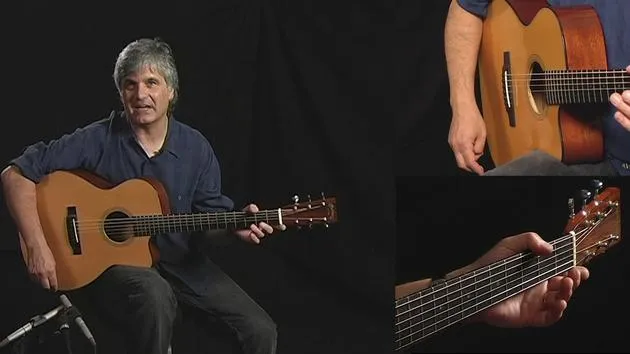
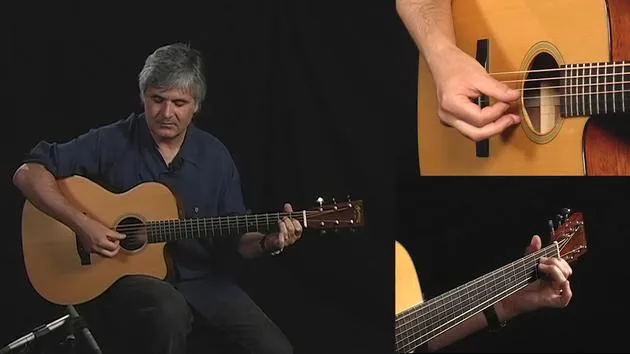
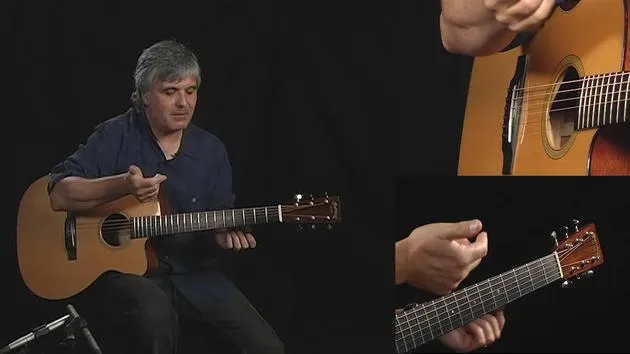
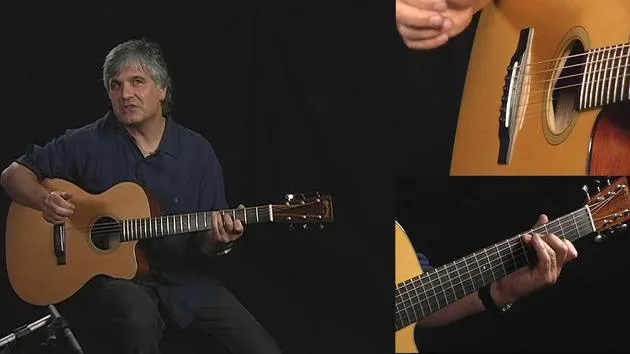
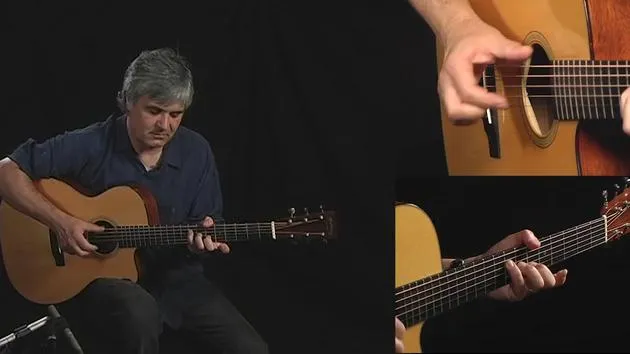
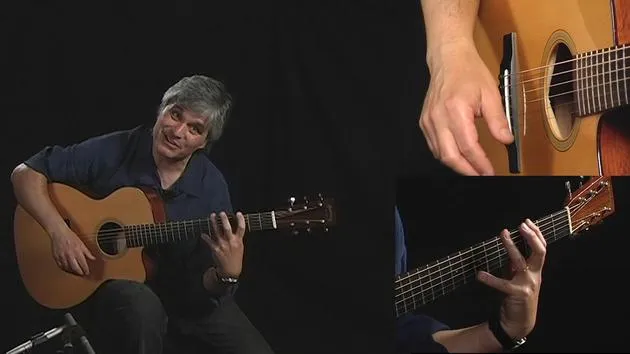
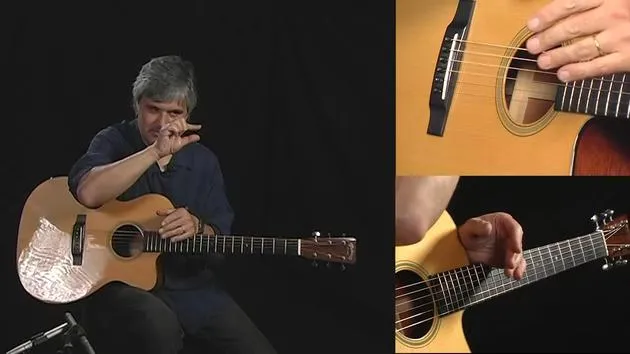
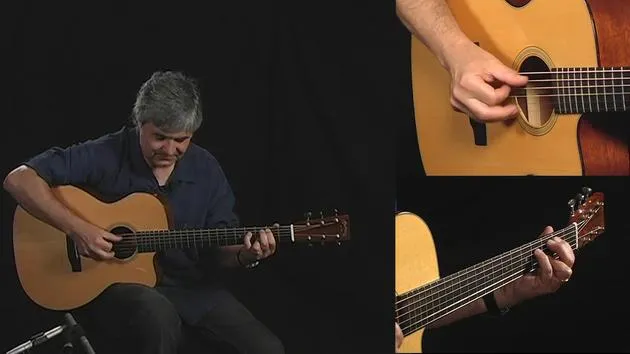
Transkript der Lektion
Music Lesson: When Harry Got to Heaven
That's a tune of mine called When Harry Got to Heaven. I'm not going to do a full breakdown of it, but I'll just talk about some parts of it because it uses certain elements of what we've been discussing in music theory.
Key and Chord Progressions
-
Key: F
This key is not the easiest for guitar in standard tuning because it kind of revolves around the bar or thumb position in the first position. -
Chord Changes:
- F
- Bb Major 7
- A7
Now I got a little tricky movement here. I'm really trying to go for open strings ringing together.
Harmonic Analysis
There, I'm going from a Bb to essentially what is an E7 flat 9, but over a B. Actually, let's analyze it a little differently.
- It is an E7B9 over a B.
- This is a second inversion chord.
Next, I'm going from an F (first inversion F, very dense and low when played as a chord). However, I'm not playing it as a chord; it's part of the counterpoint.
Then, I move to a D minor. Instead of playing a traditional D minor, it's just a D with:
- D bass
- F in the melody
- E in the melody
Melodic Movement
Moving up from:
- E to E7
- A7
- C7
You can see how, instead of playing block chords, I've got bass movement and melodic movement. Within the style, these elements come together. I'm not thinking in terms of the chords themselves, but of the whole texture.
B Section Complexity
It gets tricky in the B section because I go to:
- F sharp (temporarily)
- G
- E minor (which is a long way from my home key of F)
But I manage to get back there by doing:
- B, C, B, C
These are straightforward chord shapes, and then I'm back in F.
Octaves for Melodic Strength
One of the things I really want to point out is how I'm using octaves in the third section to get melodic strength. I don't have to define harmonies there. My basic harmony is a C.
- You hear the C chord, and I love this nice bluesy lick.
- I'm walking down to an A and walking up to a D minor.
Now I'm jumping down to this position and walking down with the bass line, creating contrary motion where the bass and melody are moving in different directions.
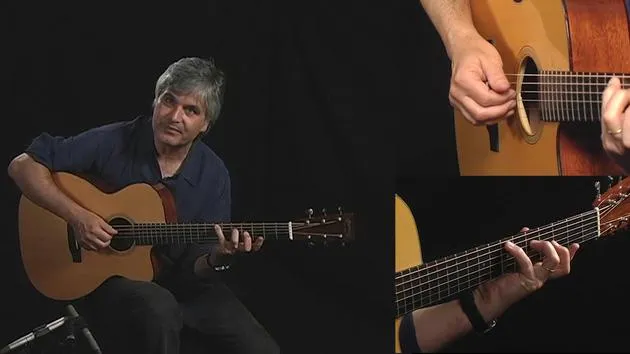
Here's an example where I'm making the stretch, stretching back to the low note:
- Stretching over 1, 2, 3, 4, 5 frets.
- Stretching back makes it easier.
Progression Overview
The whole progression is in octaves, and you don't really miss the harmony because it's forceful and, in the style, it makes sense to do that.
Then I have this kind of progression:
- D minor to G
- A, D
- G to D minor to C
All these things work out in terms of how you can analyze them harmonically. However, it takes it to an advanced level where I'm doing almost a clear-cut chord melody, outlining the whole melody within the chordal progression.
Conclusion
You can study that music and see how far you can take that particular piece.
In the next segment, we will look at the combination of chord melody and also delve into the more advanced area of minor key harmonization.
11 Lektionen
1 Std. 58 Min. strukturierte Videolektionen
Erweiterte Videofunktionen
Verlangsamen, Passagen loopen, mitlesen
Handy, Tablet & Desktop
Üben, wo du willst
100 % Zufriedenheitsgarantie
30 Tage Geld-zurück-Garantie
Lern deinen Guru kennen
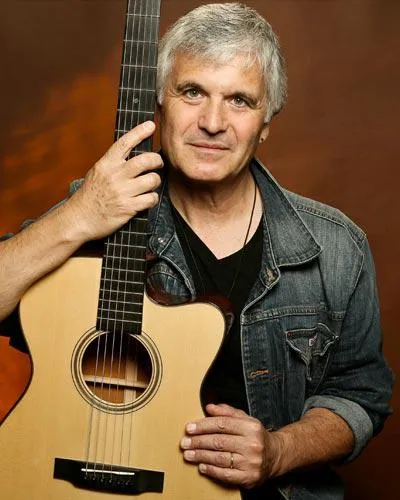
Lern deinen Guru kennen
Laurence Juber wurde zunächst als Leadgitarrist in Paul McCartneys Band Wings bekannt. Seither hat er sich eine Karriere als Fingerstyle-Gitarrist, Komponist und Arrangeur aufgebaut und arbeitet vorwiegend in der DADGAD-Stimmung, die ihm den Beinamen 'the Duke of DADGAD' einbrachte.
Von den Lesern des Fingerstyle Guitar Magazine wurde er zum Gitarristen des Jahres gewählt und vom Magazin Acoustic Guitar zu den besten Gitarristen gezählt – dazu kommen eine lange Liste von Soloalben und Welttourneen.
In seinen Kursen vermittelt er seine Fingerstyle-Technik und die DADGAD-Stimmung, für die er bekannt ist, wie man Melodie, Harmonie und Bass für die Solo-Gitarre zusammenführt, und die Stücke – wie sein charakteristisches 'Wooden Horses' –, die all das vereinen.







