



Quintenzirkel
Das steckt im Kurs
11 Lektionen (1h 58m) · 1 gratis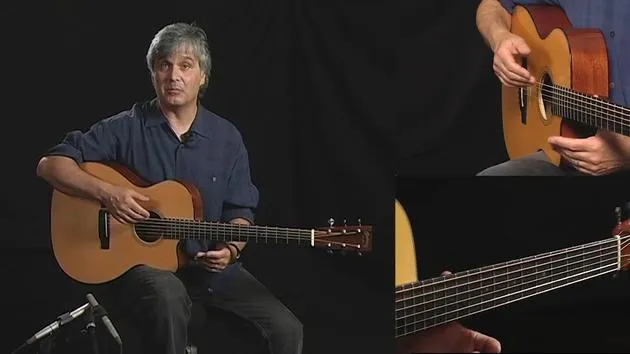
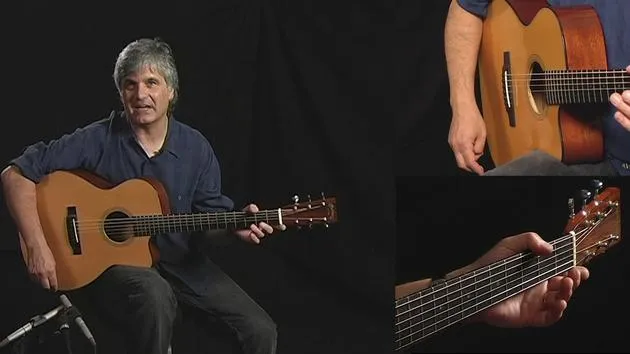
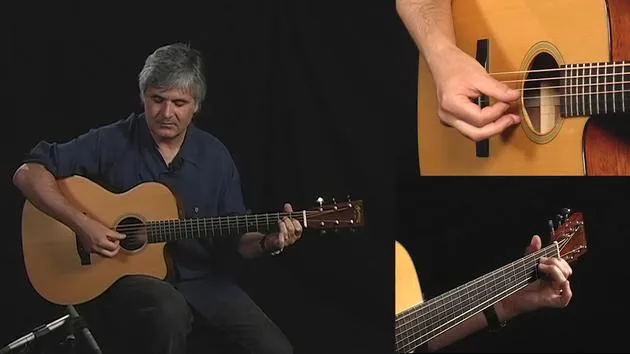
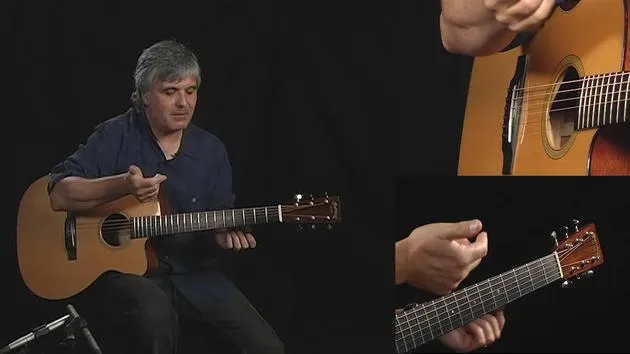
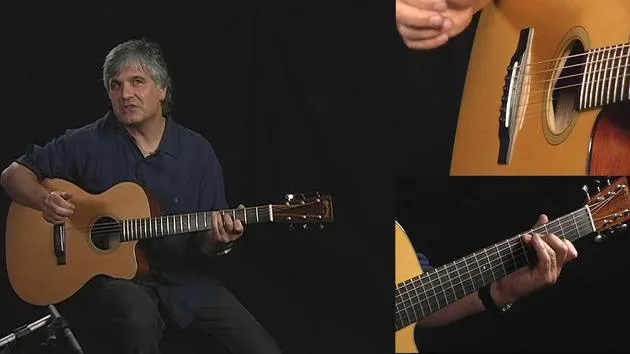
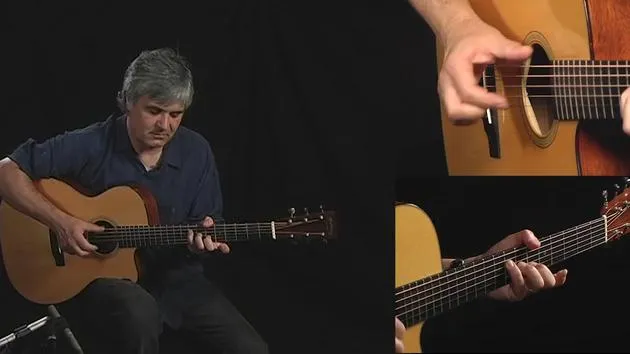
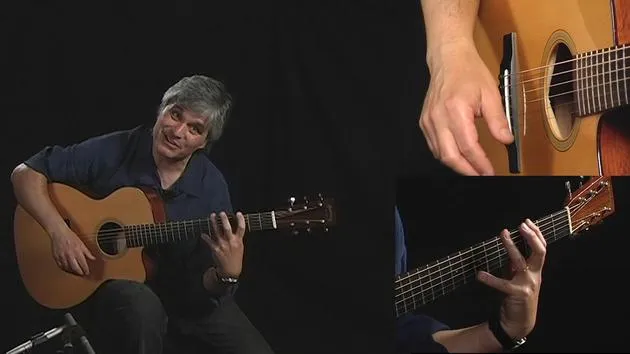
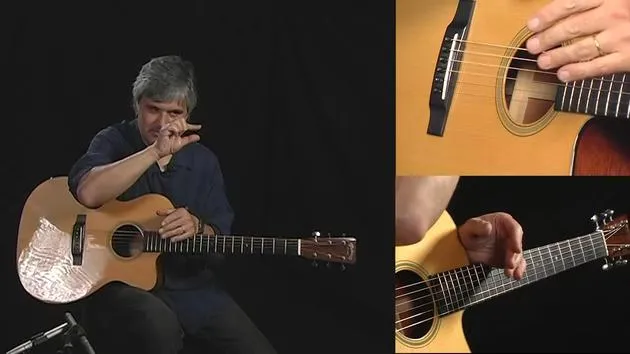
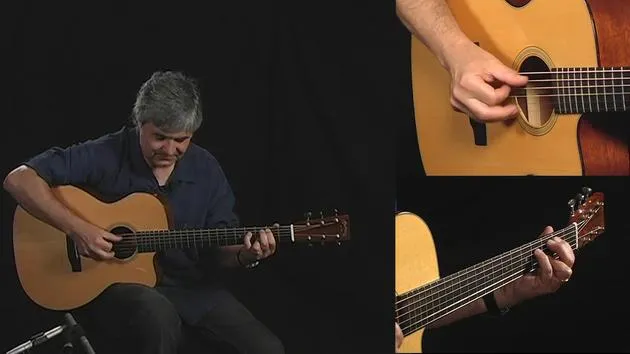
Transkript der Lektion
Music Lesson Recap: Chords in the Key of C
Introduction So to recap, and this time I'm going to put us in the key of C because we're in familiar territory there.
Building Triads on the C Scale
Here's my scale of C. If I build a triad on each degree of that scale, recall that a triad is the root, the third, and the fifth above the root note of that particular scale degree.
Example: C Triad
- C Triad:
- Root: C
- Third: E
- Fifth: G
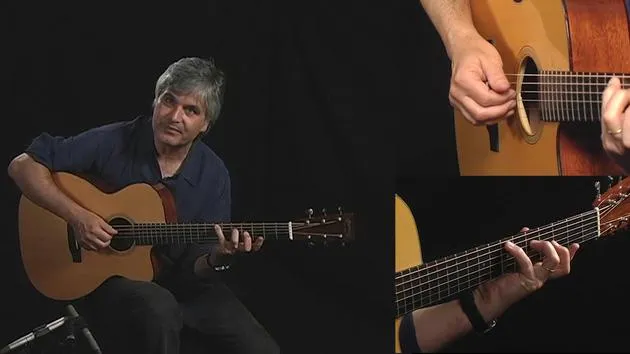
You'll recognize this as part of the shape of a cowboy C chord, but here I'm just dealing with the three-note chord.
Moving to D Triad
Now if I move up to the next degree of the scale, which is a D:
- The third above D in the scale is an F (as there's no F sharp in the C scale).
- I can't play that F and the D on the same string, so I'll move the D to the fifth string.
D Minor Triad:
- Root: D
- Third: F
- Fifth: A
You'll notice that in a major scale, the ii chord (two chord) is minor, not major. If it was major, that wouldn't sound right; it's just not a natural, familiar sound to our ears.
Triads on Scale Degrees
E Minor Triad
- E Minor:
- Root: E
- Third: G
- Fifth: B
F Major Triad
- F Major:
- Root: F
- Third: A
- Fifth: C
G Major Triad (V Chord)
- G Major:
- Root: G
- Third: B
- Fifth: D
A Minor Triad (vi Chord)
- A Minor:
- Root: A
- Third: C
- Fifth: E
B Diminished Triad (vii° Chord)
- B Diminished:
- Root: B
- Third: D
- Diminished Fifth: F
Diminished Chord Characteristics
Normally, you would expect the fifth to be a perfect fifth above a B (which would be F sharp). However, since there's no F sharp in the C scale, the fifth is an F natural.
- When you reduce a fifth by a half step, it is diminished.
Diminished Triad Technicality:
- Think of this as a diminished triad: minor third, diminished fifth.
Adding Sevenths to Triads
As you build a seventh above it, consider this:
- On the C chord, the seventh is a major seventh.
If you stack two major thirds, you get that sweetness:
- C Major 7: C, E, G, B
D Minor 7 Chord
Here's a D minor 7th chord:
- Root: D
- Third: F
- Fifth: A
- Minor Seventh: C
You might actually voice it like this, putting the F on top for a more familiar sound:
- Voiced as: D, A, C, F
E Minor 7 Chord
Now, let's take E minor again. Adding the seventh gives you:
- Voiced as: E, G, B, D
F Major 7 Chord
- F Major 7: Root: F, Third: A, Fifth: C, Seventh: E
G7 Chord (V7)
- G7:
- Root: G
- Third: B
- Fifth: D
- Minor Seventh: F
A Minor 7th Chord
- A Minor 7: Root: A, Minor Third: C, Fifth: E, Minor Seventh: G
B Minor 7b5 Chord
- B Minor 7b5:
- Root: B
- Diminished Fifth: F
- Minor Seventh: A
The Dominant Relationship
The most important and fundamental relationship is between the V chord and the I chord:
- For example, G7 to C (in the key of C), or E7 to A (in the key of A).
V to I Cadence
- G going to C or D going to G is a strong progression, known as a perfect cadence.
Explanation of the Strength
The G chord's chord resolution involves:
- The root moving to the tonic.
- The third of G (B) becomes the tonic of C as it resolves.
This creates church harmony progressions, a familiar sound built on the V to I relationship.
Cycle of Fifths Progression
To illustrate:
- D minor to G to C is a strong 2-5-1 progression.
Strong Relationships
Now, if I make an E chord major:
- The V chord is always major in the key of A minor.
Example Progression
- B minor 7b5
- E7
- A minor
- D minor
- G7
- C
As you cycle through these relationships, you can create satisfying progressions.
Wrapping Up
This setup provides strong structural relationships, which set a roadmap for how chords fit together. In the next segment, we'll add a picking pattern and explore some fingerstyle techniques!
11 Lektionen
1 Std. 58 Min. strukturierte Videolektionen
Erweiterte Videofunktionen
Verlangsamen, Passagen loopen, mitlesen
Handy, Tablet & Desktop
Üben, wo du willst
100 % Zufriedenheitsgarantie
30 Tage Geld-zurück-Garantie
Lern deinen Guru kennen
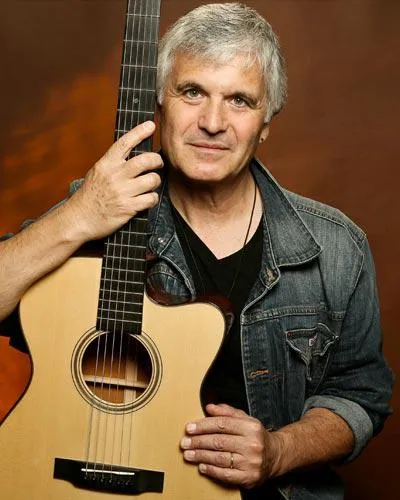
Lern deinen Guru kennen
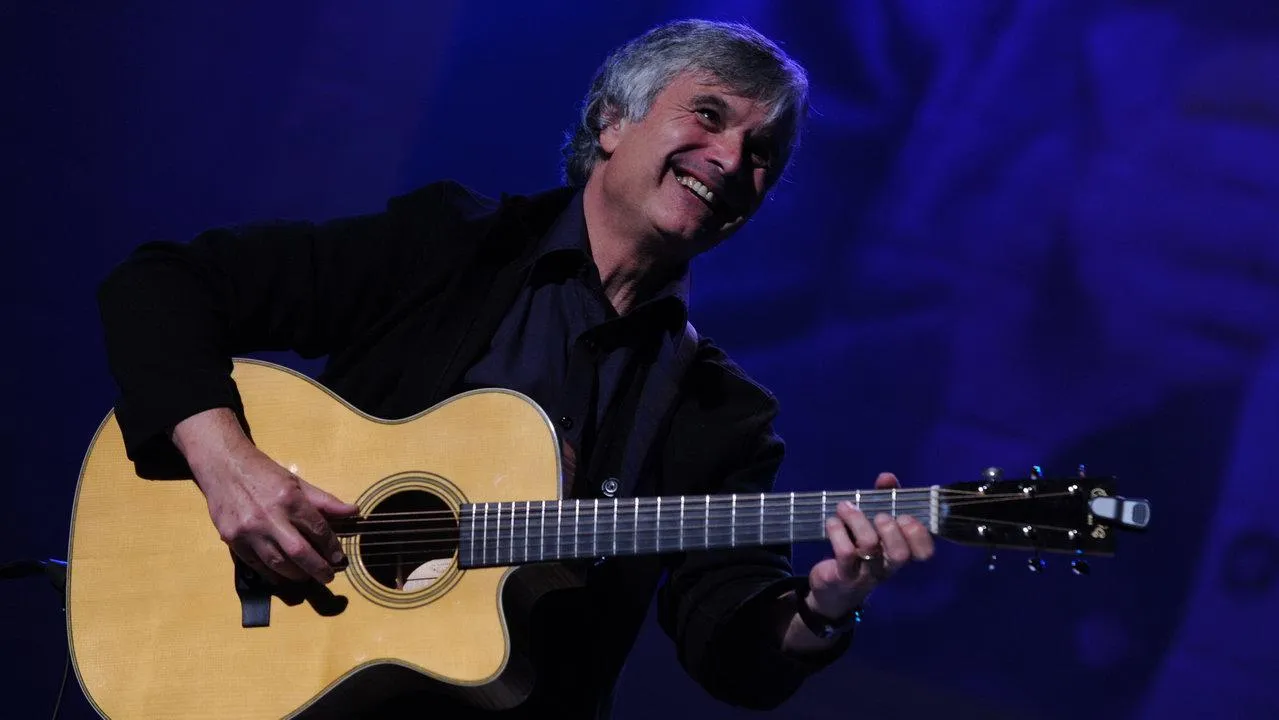
Laurence Juber wurde zunächst als Leadgitarrist in Paul McCartneys Band Wings bekannt. Seither hat er sich eine Karriere als Fingerstyle-Gitarrist, Komponist und Arrangeur aufgebaut und arbeitet vorwiegend in der DADGAD-Stimmung, die ihm den Beinamen 'the Duke of DADGAD' einbrachte.
Von den Lesern des Fingerstyle Guitar Magazine wurde er zum Gitarristen des Jahres gewählt und vom Magazin Acoustic Guitar zu den besten Gitarristen gezählt – dazu kommen eine lange Liste von Soloalben und Welttourneen.
In seinen Kursen vermittelt er seine Fingerstyle-Technik und die DADGAD-Stimmung, für die er bekannt ist, wie man Melodie, Harmonie und Bass für die Solo-Gitarre zusammenführt, und die Stücke – wie sein charakteristisches 'Wooden Horses' –, die all das vereinen.







