



Analysis of the First Movement with Yuri Bashmet
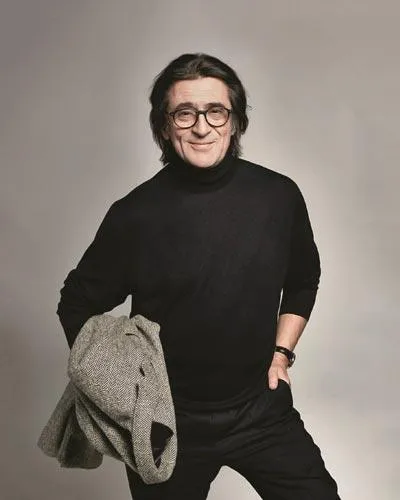
With
Yuri Bashmet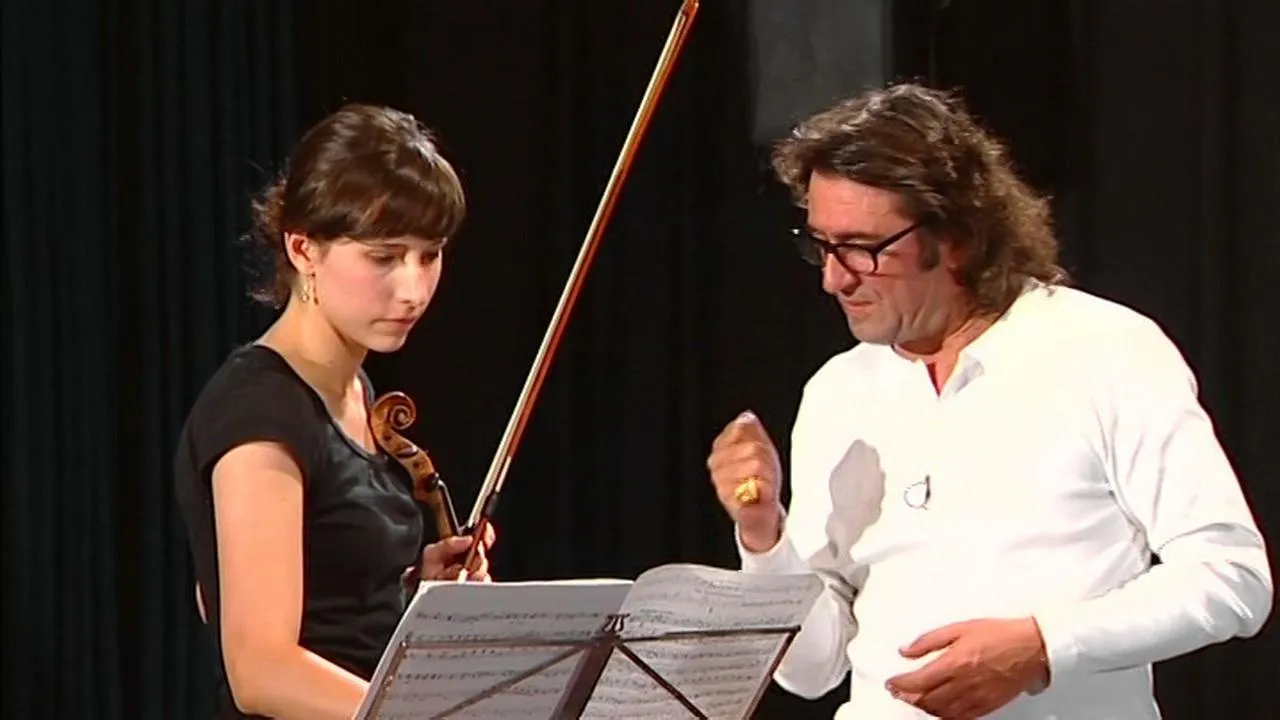
What's in the course
6 lessons (2h 3m) · 1 free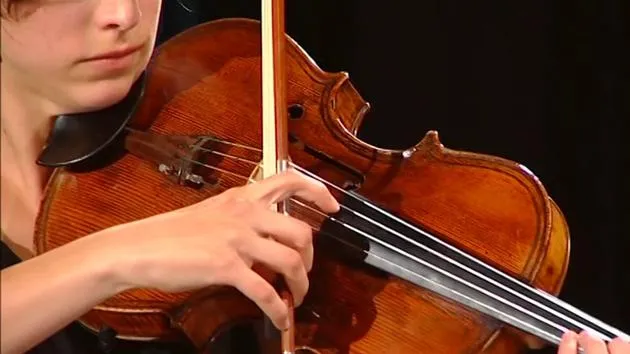
01. Performance of the First Movement by Barbara Buntrock
Free lesson10:15
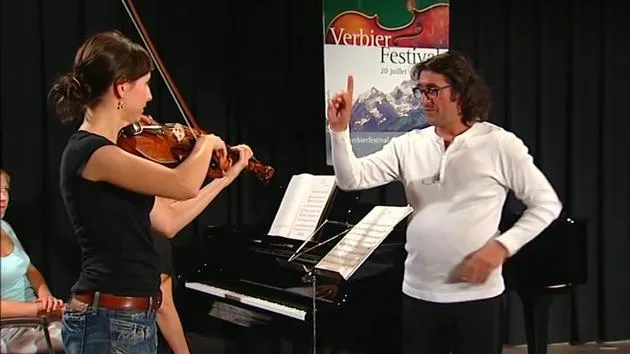
02. Analysis of the First Movement with Yuri Bashmet
You are here49:28
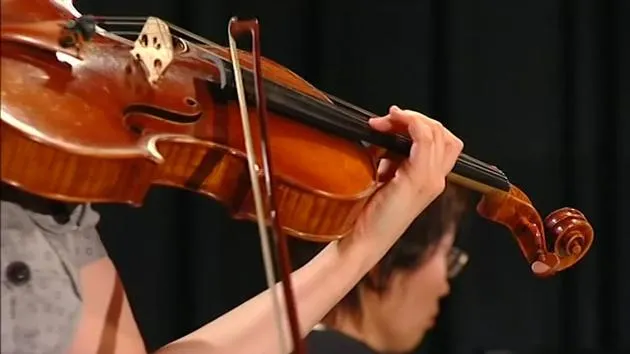
03. Performance of the Second Movement by Lilli Maijala
7:43
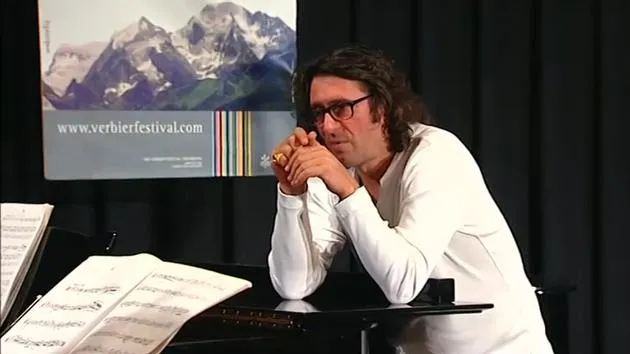
04. Analysis of the Second Movement with Yuri Bashmet
21:18
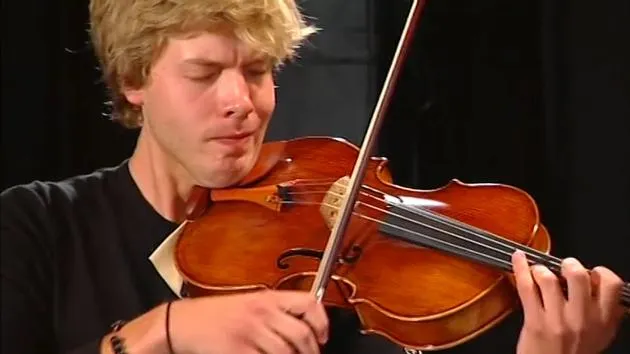
05. Performance of the First Movement by Jan Grüning
14:24
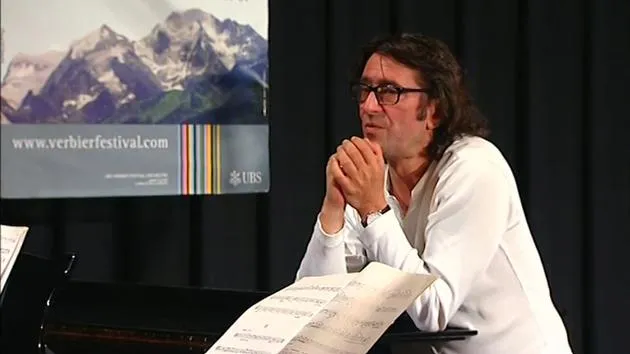
06. Analysis of the Third Movement with Yuri Bashmet
20:41
Lesson transcript
is what happens:
- When you stay rigid, your weight stops in the wrong place.
- If you lean slightly, then you feel all your weight shift to where it needs to be.
Now, do like that and you'll understand the difference. If you do it without leaning, nothing will happen, it'll sound flat.
Example: If you stay like that and move your hand, what happens? Nothing! It becomes unnatural.
Remember, we're all different; some have more weight in their hands, but that weight still has to be felt across your entire body for effective sound.
Fortissimo and Dynamics
Now we see. Yes, exactly.
That weight creates fortissimo, but it should not push. Instead of forcing sound, use good technique to deliver your sound naturally.
- If you exert too much pressure, it will sound stifled.
- You should hear a different quality.
That's why I stop you now, it was a good line but unnecessary.
Main Beats and Articulation
Remember the main beats?
We don't need portato now.
Now, let's do fortissimo. Play alone, without piano.
Look:
That is an image of accomplishment. It's like a cigarette (for an example).
Where is the strongest tension? It's before the result. So, if you think of it that way, each next note should build more and more tension like a magnetic pull.
Try it alone.
- It was better, but it was shorter.
- It has to be longer and stronger.
Musicianship and Interpretation
Now think about your phrasing.
Your phrase depends on how you bow.
When you change the bow, you can cut the phrase, if it happens once or twice, that's okay, but if it happens repeatedly, it doesn't feel right.
You shouldn't feel nervous, but you need to maintain focus.
When you play, remember: play what is written.
- Don't think of just the notes; think about the musicality.
- It has to be more than just mechanics, engage with the music.
Committing to Growth
You're very good!
You can have a solid career with a family, but if you want to be better, your ideas should be stronger and more complex than your current abilities.
- You must understand why you practice.
- Know what you want to achieve, even if it seems difficult.
This will help your technological abilities grow, and musically you'll become stronger because you'll always consider what you're doing.
Can I borrow the piano for a moment?
You need to respect the tension in orchestras and how they create texture, as if they are completely different beasts.
Finding Your Voice
Now, let's continue with the exercise.
- Be patient and push through.
- The idea is to find your specific sound.
Work on these gradual adjustments, and you'll find your musical expression becoming richer.
Ending with Friction
As you play, maintain careful attention to articulation.
Don't rush; if you play too quickly, the results will not yield your best expression.
Listen closely, music is not just noise.
Conclusion
Yes, it is difficult, but remember, it's all about patience and progression.
Practice developing beautiful sound. Aim for clarity and intent. Good luck, and remember to keep striving to excel!
6 lessons
2h 3m of structured video lessons
Advanced video features
Slow down, loop a passage, follow along
Mobile, tablet & desktop
Practise wherever you are
100% satisfaction guarantee
30-day money-back guarantee
Meet your guru
Meet your guru
Through his virtuosity, strength of personality and high intelligence, Yuri Bashmet has given the viola a new prominence in musical life. The pre-eminent viola player of the modern age, he has motivated the leading composers of our time to expand the repertoire with significant new music. He is Artistic Director of the December Evenings festival in Moscow, Principal Conductor of the Symphony Orchestra of New Russia, and the founder and director of Moscow Soloists. He also appears throughout the world in the dual role of conductor and soloist.
Born in 1953 in Rostov-on-Don in Russia, he spent his childhood in Lvov in Ukraine before studying at the Moscow Conservatoire with Vadim Borisovsky (of the Beethoven Quartet) and Feodor Druzhinin. His international career was launched in 1976 when he won the International Viola Competition in Munich. Since then he has appeared with all the world's great orchestras, including the Berlin and Vienna Philharmonics, Royal Concertgebouw Orchestra, Boston, Chicago and Montreal Symphony Orchestras, New York Philharmonic, London Philharmonic and the London Symphony Orchestra, which presented its own Yuri Bashmet Festival.
He has inspired many composers to write for him, enjoying strong personal and professional relationships with Alfred Schnittke and Sofia Gubaidulina in particular. Away from the concert hall he brings an enquiring and perceptive mind to life beyond classical music: he is an enthusiast for the Beatles and Jimi Hendrix and has hosted his own political discussion show on Russian television. He plays a 1758 Testore viola (a similar model to the one Mozart played) which he bought in 1971.
Studying Shostakovich's Sonata for Viola and Piano with Bashmet means learning this towering work from the player who has done more than anyone to put the viola at the centre of the stage. His insights into phrasing, tone and the music's deeper intent are something no score alone can teach.







