



Making the perfect change of bow
With
Simon Fischer
What's in the course
11 lessons (1h 7m) · 1 free
01. Warm up to exercise one with a simple straight-bow exercise
Free lesson1:53
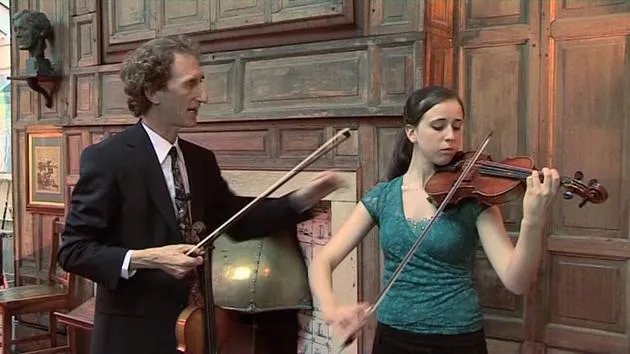
02. Explanation and demonstration of exercise one
27:16
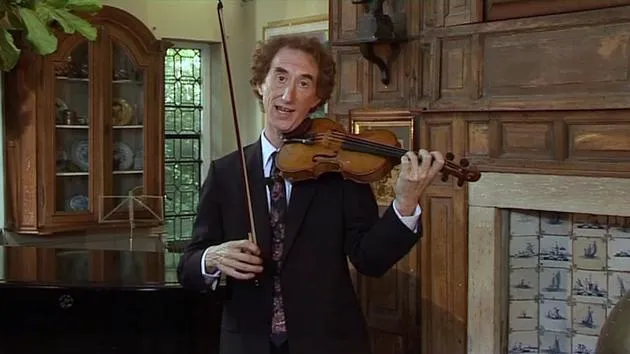
03. Exercise one in more detail
12:03
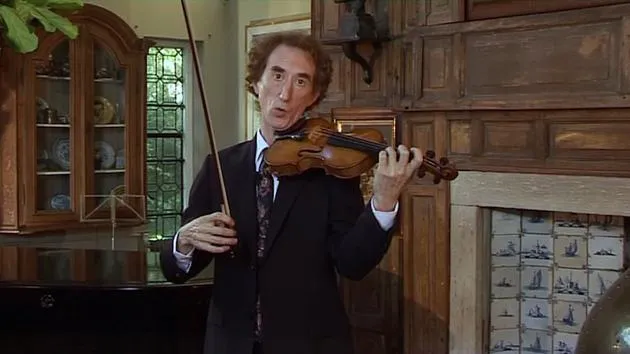
04. Isolating the elements
3:16
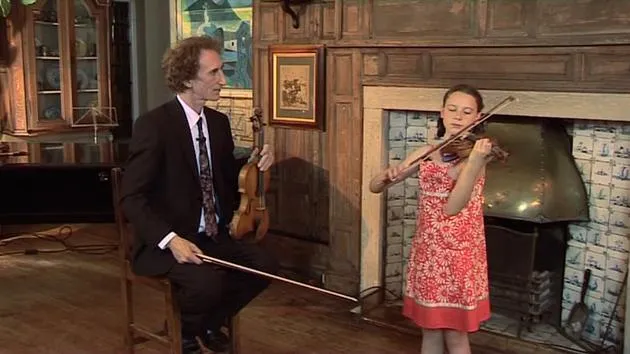
05. Playing musically
4:41
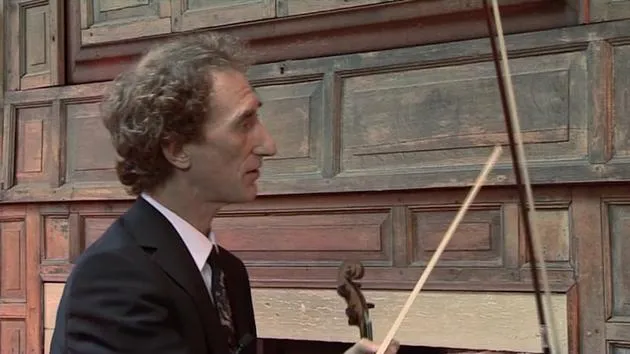
06. Making the perfect change of bow
You are here7:03
07. No such thing as an inaudible bow-change
1:22
08. Feeling the momentum of the bow
3:18
09. Adding the left fingers
1:15
10. Applying soundpoint practice to passages
2:53
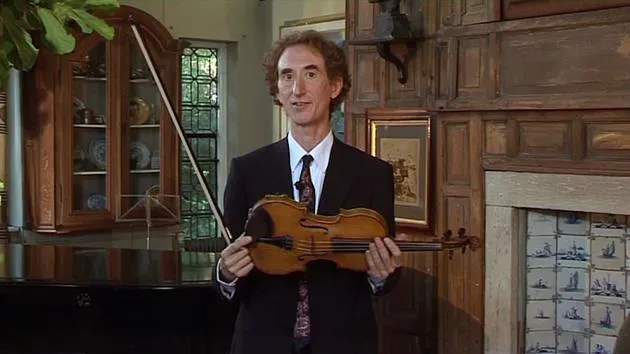
11. Sounding as good as the best player in the world - right now
2:08
Lesson transcript
Mastering Bow Changes in String Playing
One of the most important parts of bowing is being able to change bow seamlessly from:
- Up bow to down bow
- Down bow to up bow
This is essential at both the heel and the point of the bow.
The Illusion of Complexity
In other parts of the bow, it's easy to fall into the trap of thinking that there must be some complicated technique involved to change the direction of the bow perfectly, so that:
- The change is unnoticeable
- The sound appears to be continuous.
In fact, like everything else in string playing, it's actually very simple.
Key Technique for Bow Changes
The only essential thing is that at the very last moment, in the last tiny amount of bow, you need to:
- Slow down slightly
- Lighten the bow even more.
Apart from that, there's no special technique needed at all. You can prove it by changing bow perfectly while holding the bow tightly in your fist.
The Importance of Desire
So how much technique do you need to change the bow perfectly? Obviously, not much. The most important thing is the desire for a particular quality of sound, though it certainly helps if you know to slow down at the last moment.
Holding the Bow
Of course, it's even easier if you hold the bow normally, allowing a feeling of give in the hand and fingers. However, any movement in the fingers mustn't distract from the essential action:
Slow down before you turn the corner.
Avoiding Bad Habits
Slowing down at the heel is crucial to avoid a sort of flick with the fingers, since this has the opposite effect, speeding the bow up just when you want to slow down.
You can do an obvious finger movement if you like, but it has to be controlled, not thrown.
Practice Suggestions
- From here to here, be careful.
- Make that transition really smooth and continue.
Can you just practice:
- Up to down with the heel?
Each time, notice the big break. Try a different bow; it might give you a different feeling. However, aim for continuity.
The Concept of Bow Changes
Do you know all you have to do to make a smooth bow change is:
Slow down before you change direction.
It's reminiscent of turning a corner. You need to:
- Slow down
- Turn the corner
- Speed up again.
So here, focus on this sequence:
- Slow
- Faster
- Slow
- Slow, but sustain.
See if you can feel that gap.
Bravo, bravo!
Now hold those with a deeper intention at the end of the up bow, go deeper into the string.
Transitioning from Down to Up
To change bow smoothly from down to up, it's not only about slowing down in the last half centimeter but also about lightening the bow a fraction at specific points:
- Here
- There
- Here
Try to make it continuous now. Go deeper in the string, maintain more speed, and vibrate.
Keep it steady!
Cause and Effect
Yes, but everything is cause and effect.
- Every action the bow performs on the string is a cause.
- Every sound that comes out of the instrument is an effect.
If you keep making the same cause, you will continue to get the same effect. There must be a cause for the click that you hear at the change:
- Bow speed needs to slow down
- Weight needs to lighten.
That was excellent! Now, focus on slowing down even more when you get to that point:
- Sustain in the slow bit.
- Now deepen the bow.
The Circular Feeling
Everything at the bow change wants to have a circular feeling.
- You don't want the feeling of hitting a wall and then going the other way.
Instead, go around the string without accelerating.
That was amazing!
You still want to maintain that flow:
- Slow there.
Because now you're playing around the string again. From this angle, I can see so clearly your fingers making a little give, which is great!
We don't want to be stiff and inflexible.
However, in that moment of give, the bow accelerates just when you want it to slow down:
Slow.
That's what you want.
Now, try to:
- Slow
- Slow
- Go even slower.
Take a risk and see what will happen:
- Slow almost to stationary and then change direction.
- Repeat: Slow almost to stationary and...
11 lessons
1h 7m of structured video lessons
Advanced video features
Slow down, loop a passage, follow along
Mobile, tablet & desktop
Practise wherever you are
100% satisfaction guarantee
30-day money-back guarantee
Meet your guru
Meet your guru
Simon Fischer enjoys a distinguished and wide-ranging career as a performer, educator and recording artist.
He has performed worldwide as a recitalist, and committed three Brahms Sonatas to record, a recording that received high praise in Gramophone Magazine.
Simon is recognised as having a place amongst the world's elite teachers. He is a professor at the Guildhall School of Music, and has held positions at the Yehudi Menuhin School, Wells Cathedral School and the Purcell School, and for 15 years was a visiting professor at the Royal Scottish Academy of Music. Having studied in London with Yfrah Neaman, and in New York with Dorothy DeLay, Fischer's approach unites the best elements of the French, Russian and American violin traditions.
Fischer's published work greatly influences the teaching of the violin. Having written for The Strad magazine since 1991, his monthly articles have attracted a worldwide following. Published by Edition Peters, his technique books Basics and Practice (translated into Korean, Italian and German), Scales and The Violin Lesson, and the DVD The Secrets of Tone Production (now available to stream via MusicGurus), have become standards on many continents. His book and DVD Warming Up was described by The Strad magazine as "23 pages of pure technical gold".
In 2014 Simon Fischer was awarded the European String Teachers Association prize "In celebration of a lifetime contribution to String Teaching".
In his four-part Secrets of Tone Production course, Simon guides you through getting to know your instrument and then working through his fundamental tone exercises step by step, so you can produce a richer, more controlled and more beautiful sound on the violin.







