



Isolating the elements
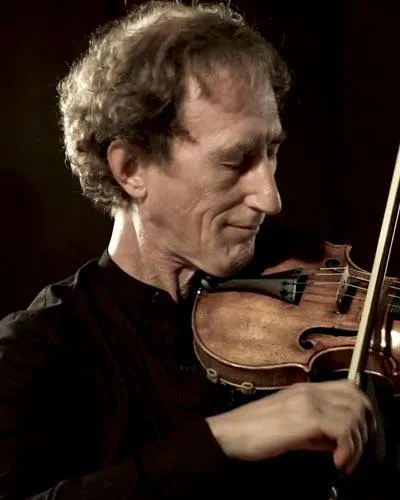
With
Simon Fischer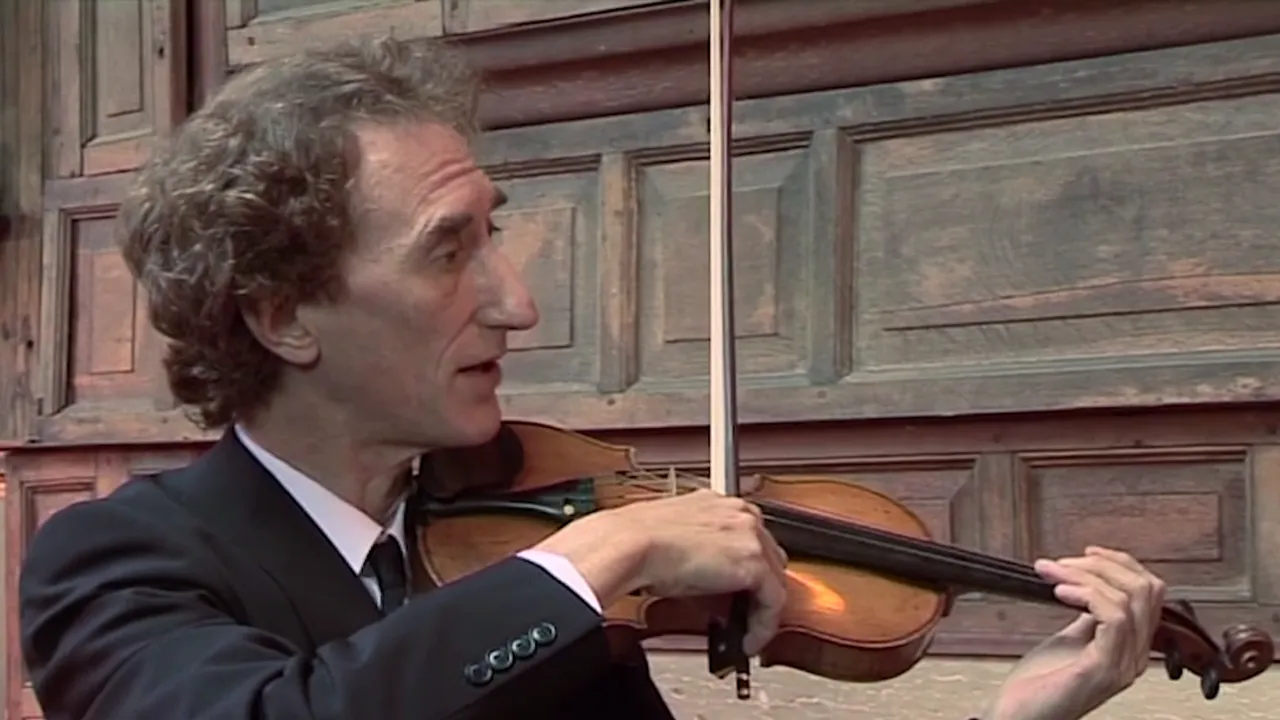
What's in the course
11 lessons (1h 7m) · 1 free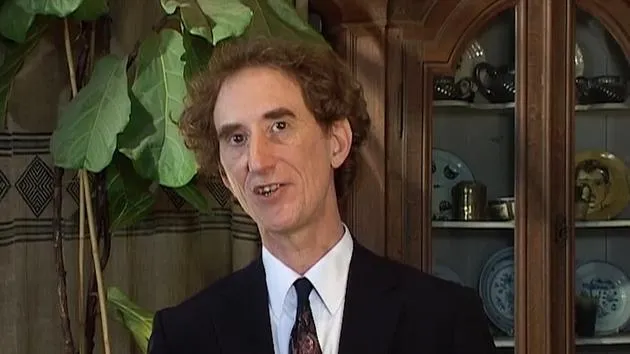
01. Warm up to exercise one with a simple straight-bow exercise
Free lesson1:53
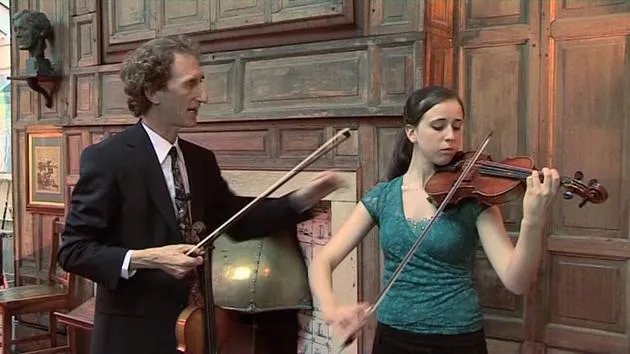
02. Explanation and demonstration of exercise one
27:16
03. Exercise one in more detail
12:03
04. Isolating the elements
You are here3:16
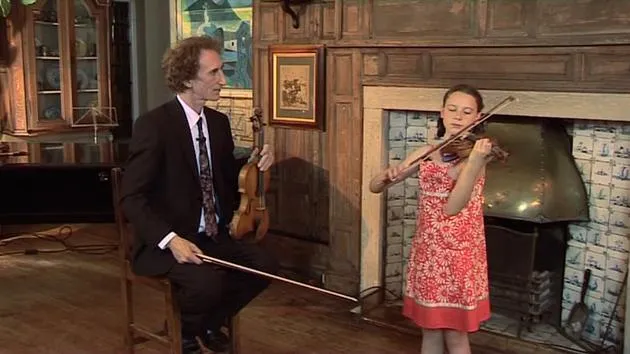
05. Playing musically
4:41
06. Making the perfect change of bow
7:03
07. No such thing as an inaudible bow-change
1:22
08. Feeling the momentum of the bow
3:18
09. Adding the left fingers
1:15
10. Applying soundpoint practice to passages
2:53
11. Sounding as good as the best player in the world - right now
2:08
Lesson transcript
Sound Experimentation in Violin Playing
In a scientific experiment, you have to isolate all the different factors and change things only one at a time. If you change more than one thing, you can't tell what's causing what.
The Three Elements
Practicing this sound exercise, there are only three elements to consider:
- Speed
- Pressure
- Distance
From the bridge, two of the three are basically fixed. You've decided to experiment on a particular sound point, so that isn't going to change much. You're basically using whole bows at a particular tempo, which decides the speed of the bow. So, that isn't going to change much either.
Focus on Weight
This leaves only the weight of the bow.
- Keep the sound point and speed more or less the same.
- Experiment with more and less weight until the string is vibrating at its maximum.
Then, without changing the speed, pressure, sound point, or balance, add vibrato.
Sound Point Three
Here we are on sound point three with whole bows.
"All I'm going to do is try more and less weight until the string vibrates widely."
And there it is. And bravo. Bravo!
Practice Tips
You know, if you practice playing the violin by:
- Going up, down, up, down.
- Practicing down, up.
Just the end of the bow. Start here and just practice the end of the down bow. That's what you want to focus on.
Understanding Sound
When we're working on sound, there are endless sounds and effects that come out of the instrument.
- Some of them we like and want to carry on doing.
- Some of them we don't like and wish we'd stop doing.
But the reason for everything only comes down to these three factors: speed, pressure, sound point.
In other words, there's hardly anything to think about. So if you're struggling to eliminate a noise you don't want, you don't need to search very far.
Key Considerations
Now, wait. The sound point is pretty fixed in this case because we've decided on whichever sound point we're on.
This leaves us with speed and pressure. The speed is pretty fixed because, you know, you're going, "da." That's basically it.
So, the only thing you've got to think about is the weight.
- When you turn the corner, this is the moment we want to focus on and make a pure connection.
"So here we go. Bravo. Do that again. Very nice. Do it at the heel. Now."
11 lessons
1h 7m of structured video lessons
Advanced video features
Slow down, loop a passage, follow along
Mobile, tablet & desktop
Practise wherever you are
100% satisfaction guarantee
30-day money-back guarantee
Meet your guru
Meet your guru
Simon Fischer enjoys a distinguished and wide-ranging career as a performer, educator and recording artist.
He has performed worldwide as a recitalist, and committed three Brahms Sonatas to record, a recording that received high praise in Gramophone Magazine.
Simon is recognised as having a place amongst the world's elite teachers. He is a professor at the Guildhall School of Music, and has held positions at the Yehudi Menuhin School, Wells Cathedral School and the Purcell School, and for 15 years was a visiting professor at the Royal Scottish Academy of Music. Having studied in London with Yfrah Neaman, and in New York with Dorothy DeLay, Fischer's approach unites the best elements of the French, Russian and American violin traditions.
Fischer's published work greatly influences the teaching of the violin. Having written for The Strad magazine since 1991, his monthly articles have attracted a worldwide following. Published by Edition Peters, his technique books Basics and Practice (translated into Korean, Italian and German), Scales and The Violin Lesson, and the DVD The Secrets of Tone Production (now available to stream via MusicGurus), have become standards on many continents. His book and DVD Warming Up was described by The Strad magazine as "23 pages of pure technical gold".
In 2014 Simon Fischer was awarded the European String Teachers Association prize "In celebration of a lifetime contribution to String Teaching".
In his four-part Secrets of Tone Production course, Simon guides you through getting to know your instrument and then working through his fundamental tone exercises step by step, so you can produce a richer, more controlled and more beautiful sound on the violin.







