



Left Hand Ideas
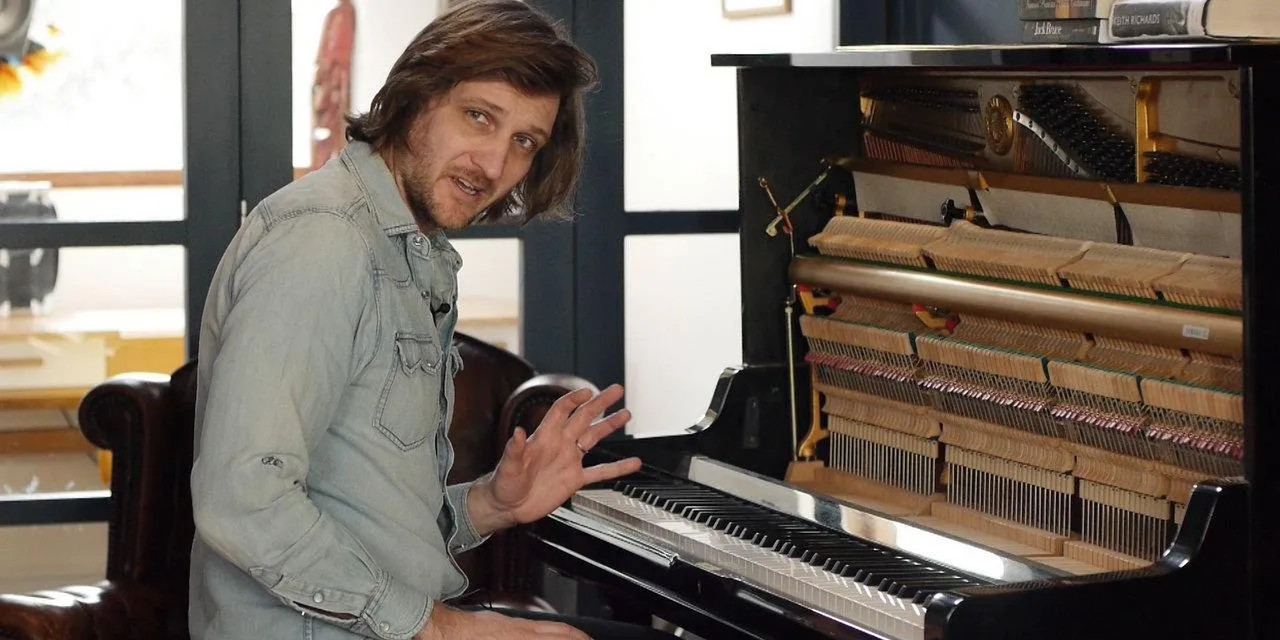
Paddy teaches you techniques and riffs for the left hand on a slow blues
What's in the course
14 lessons (1h 47m) · 1 free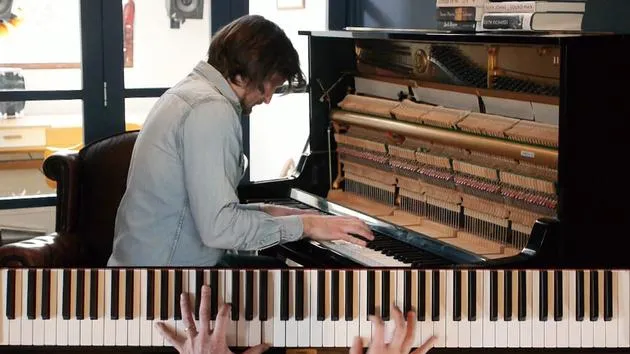
01. Demonstration - let's play a slow blues
Free lesson4:30

02. Left Hand Ideas
You are here11:26
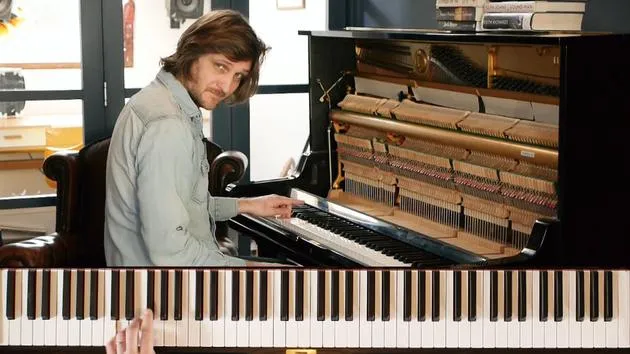
03. Introduction Ideas
9:40

04. Ideas Using 6ths
9:34
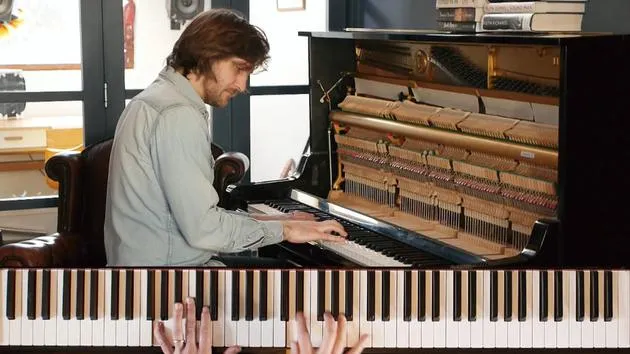
05. Memphis Slim Style Riff
3:28
06. Diminished Chords
7:11
07. Repeated Notes & Phrases
8:34
08. Turnarounds
9:55
09. Ideas For A Breakdown Section
11:10
10. James Booker Style Left Hand
6:58

11. More Right Hand Ideas
8:08
12. Tremolos
6:03
13. Ending Ideas
9:29
14. Slow Burn - The Slow Blues Challenge
1:41
Lesson transcript
Course on Playing Slow Blues
Introduction
Cool. How you doing? Paddy Milner here. And welcome to this course on playing a slow blues.
Quick Recap on 12 Bar Blues in the Key of G
Let's kick off with a quick recap of what a 12 bar blues is in the key of G. We'll be staying around this key, which is the key that I played the tune in that I hope you've checked out on the free video.
Chord Structure
In a 12 bar blues in the key of G, we have:
- 1 bar of G
- 1 bar of C
- 2 bars of G
- 2 bars of C
- 2 bars of G
- 1 bar of D
- 1 bar of C
- 1 bar of G
- 1 bar of D
Those last two bars will serve as a turnaround, and we'll explore different things we can play over that turnaround.
Feel of the Tune
Before we dive into the more complicated right hand riffs, let's discuss the feel of the tune:
- Feel: Four to the bar, very slow - almost like a funeral dirge.
- Left Hand: Just pumping away underneath it all, sometimes moving to the five and up to the C.
Anticipations
You'll notice I'm doing those little anticipations:
- Timing: 1, 2, 3, 4 (just to give it movement).
- They always come before the beat to the five and the four.
Initially, it's a very basic left hand, purely meant to add weight and keep the time flowing beneath the right hand.
Importance of Solid Left Hand Technique
As with boogie woogie and other styles, it's crucial to have that left hand totally solid.
Practice Tips:
- Practice while doing other tasks - have a conversation, read a book, etc.
- Use a metronome to maintain a solid tempo.
Variations
There are a couple of variations I use with that left hand:
- Little passing notes that might sound odd on their own but work well in context.
- For example, after moving to the five and back to G, you can incorporate a little bass line.
Exploring More Complex Left Hand Techniques
On the chord four, coming down from the five, I might do something like this:
- Moving to the tenth, which creates a cool sound.
Often, I'll add those little runs, giving it that basic yet flavorful sound.
Additional Left Hand Ideas
Besides the basic bass, let's consider a more complex left hand approach:
- Starting on chord one, moving to the five.
- Getting more interesting on the four while approaching the G7 by a semitone.
You can also incorporate the Stormy Monday chord sequence or use a five chord in second inversion.
Creative Expression
This is where I really encourage you to start getting creative and do your own thing with it.
- Here's an idea for the left hand, try something like this:
- Introduction of jazz harmony, feel free to experiment!
Alternative Bass Lines
There are many bass lines you can play over a slow blues. For example:
- A simple rhythmic change could lead your entire song.
Triplet Ideas
You might explore triplet fills, inspired by artists like Fats Domino. For instance, something that sounds like this in octaves.
Breakdown Sections
Remember that breakdown section in the tune? The bass line dropped out, marking the bars.
- You could just use a few notes to outline the harmony.
Conclusion
That covers the bass lines generally from that tune. Maybe I'll explore some specific James Booker left hand techniques in a later video.
So, let's move on and look at something else!
14 lessons
1h 47m of structured video lessons
Advanced video features
Slow down, loop a passage, follow along
Mobile, tablet & desktop
Practise wherever you are
100% satisfaction guarantee
30-day money-back guarantee
Meet your guru

Meet your guru
Paddy Milner is recognised as one of the leading blues piano players in the world - he is currently keyboard player of choice for Sir Tom Jones, following several years with the late, great Jack Bruce - but he is also a superb original songwriter and a distinctive singer. Just read the praise from the likes of Dave Brubeck below! His playing was featured on the soundtrack for the hit 2019 film 'Rocketman'.
He has twice won the award for Best Keyboard Player in the British Blues Awards, and he holds a long-standing residency as a founder member of the Ronnie Scott's Blues Explosion at the world-renowned Ronnie Scott's club.
His current group LONDONOLA plays homegrown British music with a strong dose of New Orleans spirit, and his collaborative group JAWBONE goes from strength to strength following the release of their self-titled debut album.
- "I love it... there's a guy who can really play the piano" - Dave Brubeck
- "I highly recommend it. Somehow things start to feel much better!" - Jack Bruce
- "The best blues piano player in Europe..." - Blues Access, USA
- "Impressive & original" - The Times
- "Dazzling" - The Independent
Across his courses, Paddy breaks down authentic blues shuffle, slow blues, boogie-woogie, rock 'n' roll and New Orleans piano - right down to three classic boogie-woogie songs - so you can learn these styles from one of the very best in the business.







