



Impromptu No. 3 analysis with Stephen Kovacevich
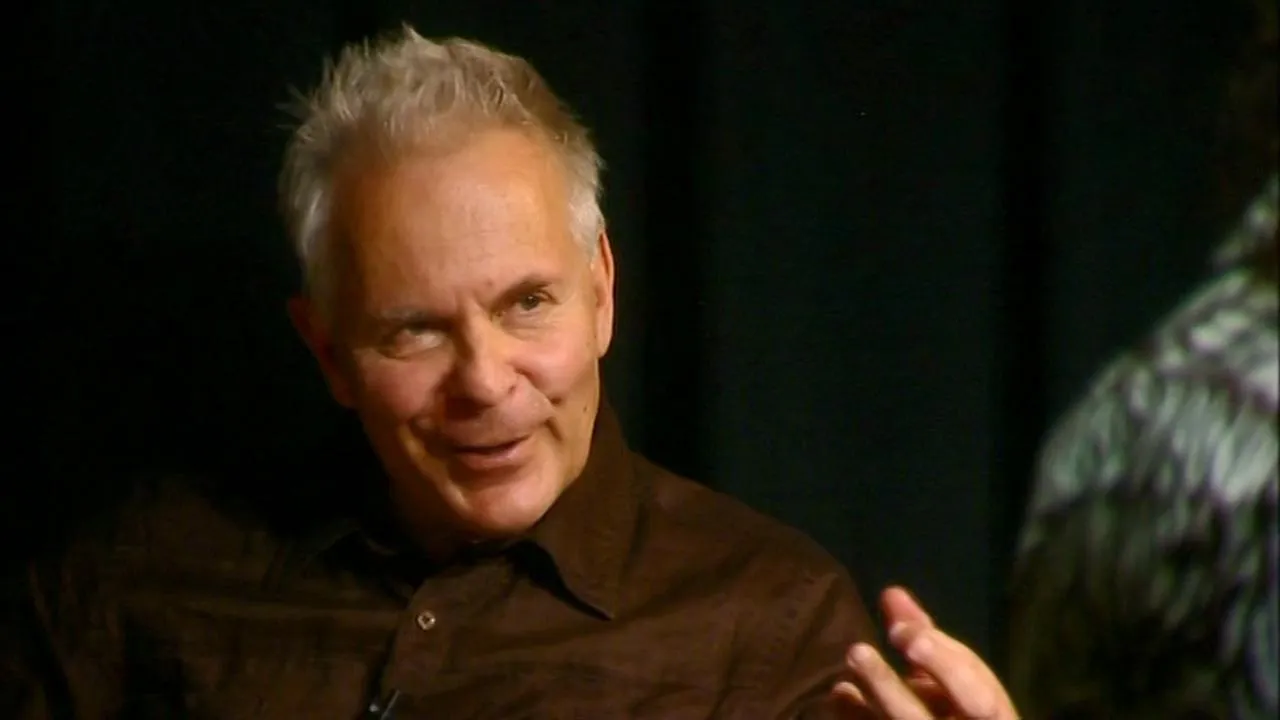
Stephen Kovacevich coaches a student through Schubert's Impromptu No. 3, Op. 90, working on tempo, touch and pedalling.
What's in the course
3 lessons (0h 41m) · 1 free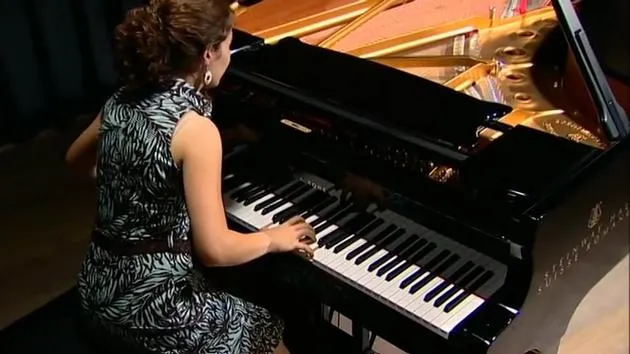
Lesson transcript
Music Lesson Formatting
Introduction
I think we have to go to another one. Can we go to number three, which is one of the greatest of all? You know that when it was first published, it was in G flat major. His publisher sent it back and said, "Nobody can play it. You have to do it in G major."
Tempo and Touch
-
Discussion on Tempo:
- "Okay, okay. I'm going to accept the tempo."
- "I think it can be a little more undaunted, but I'm not going to."
-
Touch Feedback:
- "Your touch, it's you."
- "Begin! Uh. Oh, don't sit on it."
Relationship to Accompaniment
- "It's also the relation to the accompaniment."
- "Maybe let just vibrate a little bit before."
"Okay, that's good. I'm not stopping you because it wasn't good."
Pedaling Techniques
- "Try pedaling as an upbeat to make the piano already vibrating so that you don't start dry."
- "The piano is already... Yeah, good."
Expression and Interpretation
- "It's beautiful, but it's conventional."
- "Try in your head or your heart, or wherever you choose your tempo. Alebrev. It's Alebrev."
"Good. Think ala breve. Okay. It can be like this. It absolutely can be."
Love Declaration
- "But just for today, if it's a love declaration, it's very interesting."
Historical Perspective
"The way we play the codas of the Rachmaninoff concertos today is completely different from the way it was done when Rachmaninoff was playing it and Horowitz was playing it."
- "Today we have... And it's beautiful. We're always spacious."
"I think Hollywood has its, you know, the sunset and everything, but passion is always slow. It's a modern phenomenon."
Emotive Changes
- "And you hear Toscanini and Rachmaninoff, Horowitz footwing. It's often quite fast."
- "In other words, it is a love declaration, but the person is so intoxicated by the feeling. And you have a certain distance when you're too slow. Ala breve."
Expressing Dynamics
- "Okay, I think what shows... I mean, this piece isn't all in one tempo, each bar. Okay, I accept that."
"But I think the fact that he needs to add timpani in the trill means the emotions are really getting quite."
Capturing Colors
- "You're staying away. You don't show the extremes."
- "When he goes down to a pianissimo, this is... I'm sorry to talk. This is someone next to your pillow that you're talking to in pianissimo. And the other is someone in the same room."
"It's all these different things. You have to capture all these colors."
Urgency and Crescendo
- "Good. Go on soto voce. Again. Now it's urgent. Again. Go."
- "Now, crescendo. Go, go. Now open up the piano. Open. Away, away."
Levels of Intensity
- "Okay, I ask you not to repeat the same level of intensity."
- "Your left hand was beautiful, and it's forte again. But not strictly the same. It's more probably the second time."
"You must develop. Go on. Ding. The first one. Now pure forte."
Courage and Dynamics
- "Okay? What was beautiful was the pianissimo. And then you lost courage."
- "You lost courage and you started being bel canto again."
"It was beautiful. And then what does he ask for? Public? You. Me? He asks for three P's."
Striving for Perfection
- "It's like Tchaikovsky asks for five F's, you know, he's much more extreme."
- "Try, and anywhere. Here. This was beautiful. Stay, stay. And then it goes even less."
"Try. Yeah, sure, sure, sure. Beautiful. Three P's."
Final Thoughts
- "Nothing. Okay, that is okay."
- "But what he asked for sforzato in the middle of the second bar, Schubert. Maybe he means suddenly, in a way."
"The music is so impassioned that it needs a trill, needs timpani."
Conclusion
- "Try from before. Yes. Could the trill? The trill break us as well?"
- "Yeah, yeah, yeah. Not so classical now."
- "Real crescendo. Good. Back to pianissimo. Beautiful."
"Okay, end it once more. A couple bars. End it really beautifully. Don't at the end, no accent."
- "Good. You took a bit of time then. That's good. I think that's something to work on. Bravo."
3 lessons
0h 41m of structured video lessons
Advanced video features
Slow down, loop a passage, follow along
Mobile, tablet & desktop
Practise wherever you are
100% satisfaction guarantee
30-day money-back guarantee
Meet your guru
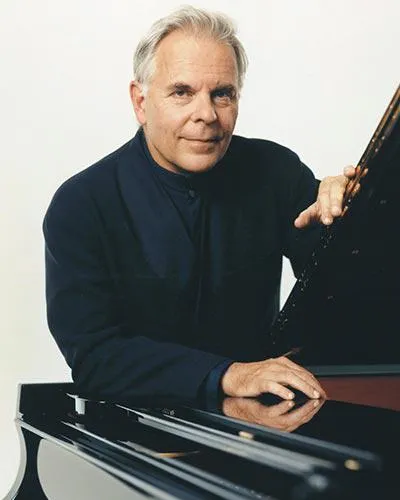
Meet your guru
Stephen Kovacevich is one of the most searching interpreters at the keyboard, winning unsurpassed admiration for his playing of Beethoven, Brahms, Mozart and Schubert. Alongside his long and distinguished career as a soloist he has conducted for many years, earning warm praise for his work with orchestras throughout the world in repertoire from the 18th and 19th centuries.
Born in Los Angeles, he made his concert debut as a pianist at the age of 11. At 18 he moved to England to study with Dame Myra Hess. His international reputation has been built both on his concert appearances, renowned for their thoughtfulness and re-creative intensity, and on the highly acclaimed recordings he has made throughout his career.
Kovacevich has enjoyed two long-term relationships with recording companies, first Philips and then EMI. His concerto recordings for Philips, including Beethoven, Schumann and Bartok, have long been staples of the catalogue. As an exclusive EMI artist, he recorded both Brahms Piano Concertos with the London Philharmonic Orchestra and Sawallisch. The other great projects of his work with EMI were a compelling series of Schubert Sonatas and a set of the 32 Beethoven Sonatas completed in 2003, hailed as one of the most authoritative ever recorded. His recording of the Diabelli Variations for Onyx won the 2009 Classic FM Gramophone Editor's Choice award.
Studying with Kovacevich is a direct line into that interpretive mind: how he shapes a phrase, finds the architecture in Schubert, Beethoven and Chopin, and turns technique into music that genuinely means something. It is a rare chance to learn this repertoire from a pianist who has spent a lifetime living inside it.







